The Physics of Coupling: Fluid Dynamics vs. Mechanical Friction
Manual transmissions and traditional automatics utilize fundamentally different mechanisms to connect the engine rotating mass to the transmission input shaft. While a manual or dual-clutch transmission (DCT) relies on dry or wet mechanical friction, a traditional automatic relies on hydrokinetic fluid coupling. However, when drivetrain anomalies arise, understanding the signs of a failing torque converter versus a deteriorating friction clutch requires a deep understanding of both systems. Misdiagnosing these components can lead to unnecessary transmission teardowns or overlooked internal damage.
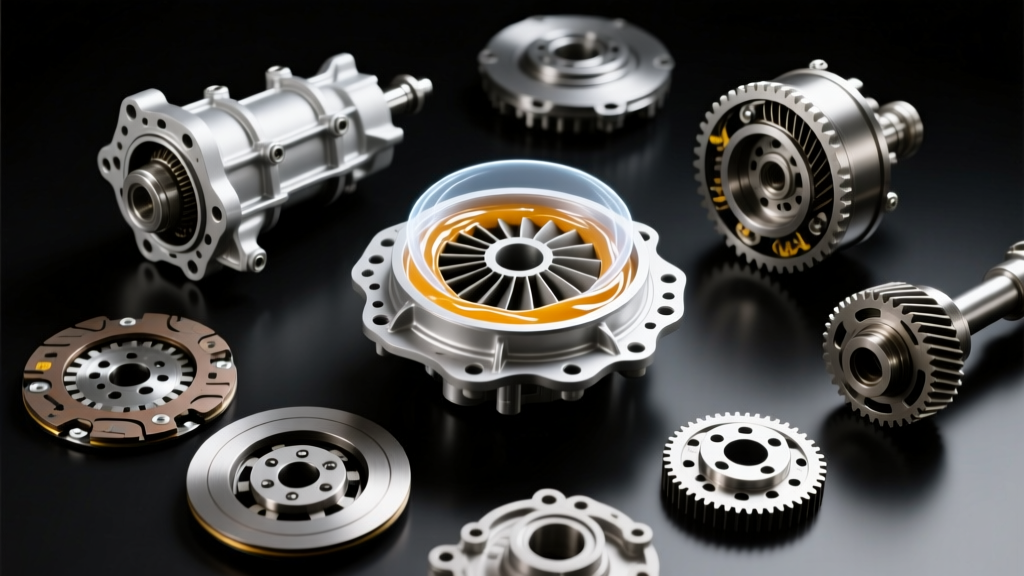
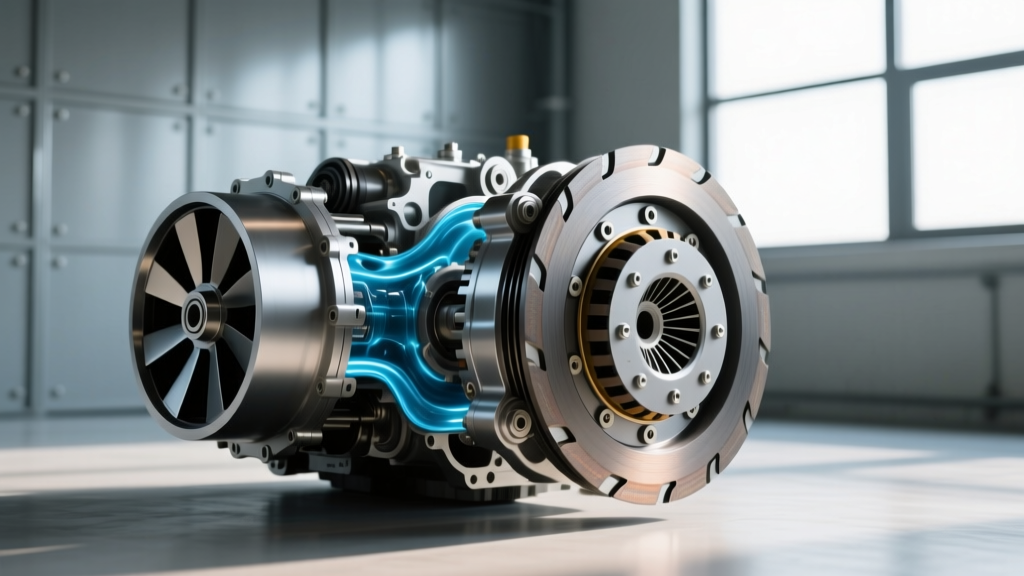
A traditional manual clutch assembly consists of a flywheel, a friction disc, and a pressure plate. Engagement is binary and mechanical; clamping force is applied via springs or hydraulics, locking the engine and transmission together. Conversely, a torque converter is a hydrokinetic device utilizing transmission fluid to transfer power. It consists of three primary elements: the impeller (driven by the engine), the turbine (driving the transmission), and the stator (which redirects fluid flow to multiply torque). Because there is no direct mechanical link at low speeds, the torque converter allows the engine to idle while the vehicle is stationary, a feat impossible without a clutch pedal or internal disconnect mechanism.
Translating Mechanical Wear: Signs of a Failing Torque Converter vs. Clutch
When drivers experience drivetrain slip, shudder, or erratic RPM behavior, the immediate assumption is often internal transmission failure. However, identifying the specific signs of a failing torque converter requires comparing the symptoms against traditional clutch wear. While both systems can exhibit 'slipping,' the nature of that slip is dictated by their distinct operating principles.
| Symptom Category | Manual / DCT Friction Clutch | Hydrokinetic Torque Converter |
|---|---|---|
| Slipping Under Load | RPMs flare while vehicle speed remains static; friction material is physically worn past limits. | RPMs surge but fluid coupling remains intact; often points to stator one-way clutch failure or internal trans slip. |
| Shudder / Vibration | Chatter during takeoff; usually caused by oil contamination on the friction disc or warped flywheel. | Low-frequency vibration at 40-55 mph; classic sign of TCC (Torque Converter Clutch) friction material degradation. |
| Stalling at Idle | Rare, unless the clutch is mechanically seized or the release bearing is locked. | Engine bogs or stalls in gear; indicates the torque converter is not freeing up, often due to TCC solenoid failure. |
| Overheating | Friction generates immense heat during slip; can glaze the disc and crack the flywheel. | Fluid shear generates heat; degraded fluid loses viscosity, accelerating wear on the internal TCC and planetary gears. |
Diagnostic Deep-Dive: Isolating the Fault
To accurately separate torque converter faults from internal transmission or clutch issues, technicians rely on specific dynamic tests and telematics. The most definitive test for a torque converter is the Stall Test.
Performing the Stall Test
The stall test measures the maximum RPM the engine can achieve while the transmission output shaft is held stationary. To perform this safely, the vehicle must be at operating temperature, with wheels chocked and the parking brake fully engaged. The technician holds the service brake firmly to the floor and applies wide-open throttle (WOT) for no more than five seconds.
- GM 4L60E / 6L80 Applications: A healthy torque converter will typically stall between 1,600 and 1,900 RPM, depending on the exact stall speed rating and engine torque curve.
- Low Stall RPM: If the engine cannot reach the specified RPM, the engine is underpowered, or the stator one-way clutch inside the torque converter has seized, preventing fluid redirection.
- High Stall RPM: If the RPM easily exceeds 2,200+, the stator freewheel clutch is slipping, or the transmission internal clutch packs are failing to hold the load.
OBD2 Telematics and Live Data
Modern vehicles provide granular data regarding torque converter health. When diagnosing the signs of a failing torque converter, scan tools are essential. Look for P0741 (Torque Converter Clutch Circuit Performance or Stuck Off) and P0742 (Torque Converter Clutch Circuit Stuck On). Furthermore, monitoring the 'TCC Slip RPM' parameter is critical. In a properly functioning ZF 8HP or GM 10-speed automatic, the TCC slip should drop to near zero (typically less than 10-20 RPM) once the lockup clutch is fully applied in higher gears. Consistent slip of 50+ RPM under steady-state cruising indicates severe friction material loss inside the converter.
The Lockup Clutch (TCC): Where the Two Worlds Collide
The comparison between a torque converter and a clutch is not mutually exclusive; in fact, modern torque converters contain a literal clutch inside them. The Torque Converter Clutch (TCC) is a friction-lined piston assembly that mechanically locks the turbine to the impeller at cruising speeds, eliminating hydrokinetic slip and improving fuel economy by up to 5%.
When the TCC fails, it perfectly mimics the failure modes of a traditional dry clutch. The friction material—often a carbon-fiber composite or specialized Kevlar-paper blend—shears off and contaminates the transmission fluid. According to industry teardown analyses published by Transmission Digest, this debris is pulled into the transmission valve body, where it acts as a lapping compound, destroying precision-machined spool valves.
Expert Insight: If you confirm TCC failure via shudder and debris in the pan, simply replacing the torque converter is not enough. You must install an inline transmission cooler filter (like the Magnefine 5/16-inch inline filter) and perform multiple fluid exchanges to prevent the debris from destroying the new converter within the first 5,000 miles.
For units like the GM 6L80, the TCC apply valve in the valve body is notorious for bore wear, leading to inadequate clamping pressure on the TCC piston. Upgrading to a sleeved valve body kit, such as those engineered by Sonnax, restores hydraulic integrity and prevents premature TCC failure.
Replacement Economics and Teardown Realities
The financial and mechanical realities of replacing a manual clutch versus an automatic torque converter differ vastly due to labor intensity and ancillary parts requirements.
Manual Clutch Replacement
A traditional clutch job requires separating the transmission from the engine block. This involves dropping the driveshaft, unbolting the bell housing, and supporting the engine. A complete kit (OEM Luk or Sachs) including the pressure plate, friction disc, release bearing, and pilot bearing typically costs between $350 and $600. Labor ranges from 5 to 8 hours, bringing the total shop bill to $1,200 - $2,500. Flywheel resurfacing or replacement adds $150 to $800 to the tally.
Torque Converter Replacement
Replacing a torque converter requires the exact same labor intensity as a manual clutch job—the transmission must be physically removed from the vehicle. However, the torque converter itself is generally more expensive than a clutch kit. A new OEM torque converter for a Ford 10R80 or GM 8L90 can range from $600 to $1,400. Furthermore, because the transmission is disconnected, you will lose a significant portion of your transmission fluid.
- Fluid Costs: Modern low-viscosity fluids like Dexron ULV or ZF Lifeguard 8 cost between $12 and $25 per quart. With dry-fill capacities often exceeding 11 quarts, fluid alone can add $150 to $300 to the repair.
- Hardware Specs: When reinstalling, the torque converter-to-flexplate bolts are critical. For example, GM M10 flexplate bolts require exactly 46 lb-ft (62 Nm) of torque, often secured with a medium-strength threadlocker. Over-torquing can warp the flexplate, causing catastrophic pump drive gear failure.
Ultimately, while the physical labor of removal is similar, the hydraulic complexity, fluid requirements, and internal valve-body vulnerabilities make the torque converter a far more sensitive component. Recognizing the early signs of a failing torque converter—specifically TCC shudder and abnormal stall speeds—allows technicians to intervene before metallic and friction debris compromises the entire automatic transmission assembly.