Introduction: Decoding the Shudder
When your vehicle begins to shudder at highway speeds, slips out of gear, or mysteriously stalls at stoplights, the torque converter is often the prime suspect. The torque converter acts as the fluid coupling between your engine and your automatic transmission, multiplying torque and allowing your car to come to a stop without stalling the engine. Inside this sealed metal donut is the Torque Converter Clutch (TCC), a friction-lined piston that locks the engine and transmission together at cruising speeds for maximum fuel efficiency.
If you are a beginner wondering how to diagnose a bad torque converter, the most reliable starting point is your vehicle's onboard computer. Modern vehicles are equipped with a Transmission Control Module (TCM) that constantly monitors TCC slip speeds, solenoid resistance, and hydraulic pressure. When the TCM detects an anomaly, it triggers a Diagnostic Trouble Code (DTC). In this comprehensive 2026 guide, we will translate these cryptic OBD2 codes into plain English, helping you understand exactly what is failing inside your transmission and what it will cost to fix.
Step 1: Pulling the Right Codes (Beyond Basic Engine Scanners)
Not all OBD2 scanners are created equal. A cheap, generic code reader from an auto parts store might only pull basic emissions-related engine codes (P0100-P0499). To properly diagnose a torque converter, you need a scanner capable of reading TCM (Transmission Control Module) codes, which typically fall in the P0700-P0899 range, or manufacturer-specific P27XX codes.
For DIYers and beginners, we recommend investing in a bi-directional scanner or a high-quality Bluetooth dongle like the BlueDriver or the Foxwell NT510 Elite. These tools will not only read the specific TCC codes but also allow you to view live data, such as 'TCC Slip Speed' and 'TCC Solenoid Duty Cycle,' which are critical for advanced diagnostics.
Step 2: The Core Torque Converter DTC Table
Below is a structured breakdown of the most common generic OBD2 trouble codes associated with torque converter clutch failures. Keep this table handy when scanning your vehicle.
| OBD2 Code | Technical Definition | Beginner Translation (What it Means) |
|---|---|---|
| P0740 | TCC Circuit Malfunction | The computer cannot control the TCC solenoid. Usually an electrical or wiring issue. |
| P0741 | TCC Circuit Performance / Stuck Off | The clutch is slipping or not engaging. The engine RPMs will be higher than normal at highway speeds. |
| P0742 | TCC Circuit Stuck On | The clutch is locked and won't release. Your car will likely stall when coming to a complete stop. |
| P0743 | TCC Circuit Electrical | A hard electrical fault. The solenoid coil is burnt out, or a wire is severed/shorted. |
| P0744 | TCC Circuit Intermittent | The clutch is engaging and disengaging erratically. Often felt as a rhythmic highway shudder. |
| P2763 / P2764 | TCC Pressure Control Solenoid | Common in newer 6, 8, and 10-speed transmissions. The specific solenoid controlling TCC fluid pressure is failing. |
Source reference: For a complete database of generic and manufacturer-specific transmission codes, consult the OBD-Codes.com P0741 Guide and related TCM documentation.
Step 3: Deep Dive into the Most Common Codes
Simply reading the code is only half the battle. To truly understand how to diagnose a bad torque converter, you must understand the mechanical realities behind the code. Let us break down the three most frequent offenders across popular transmission platforms.
P0741: The Slipping Clutch (Performance / Stuck Off)
This is the most common code for high-mileage vehicles. The TCM commands the TCC to lock, but the actual engine RPM does not drop to match the transmission input shaft speed. The clutch is slipping.
- GM 4L60E (1993-2013 Trucks/SUVs): A P0741 here rarely means the torque converter itself is dead. More often, the TCC PWM (Pulse Width Modulation) solenoid in the valve body is clogged with debris, or the TCC apply valve bore in the aluminum valve body is worn out, bleeding off hydraulic pressure.
- GM 6L80 / 6L90 (2006-2020 V8 Applications): These units use a variable displacement pump and aggressive TCC apply strategies. A P0741 often points to a cracked TCC piston inside the torque converter itself, or severely degraded Dexron VI fluid that has lost its friction modifiers.
- ZF 8HP (Chrysler, BMW, Ford 10R80 variants): In these highly complex units, P0741 or P2763 usually points to a failing solenoid within the Mechatronic unit (the integrated valve body and TCM). Replacing the ZF Lifeguard 8 fluid and the Mechatronic sleeve is the first diagnostic step.
P0742: The Stalled Engine (Stuck On)
If you pull a P0742, you will know it immediately. When you put your foot on the brake at a red light, the engine will violently shake and stall out, just like a manual transmission car would if you forgot to press the clutch pedal. The TCC is mechanically locked and refuses to release.
The Fix: This is almost always caused by debris (metal shavings or clutch material) lodging itself inside the TCC control valve in the valve body, holding it open. In severe cases, the TCC friction lining has completely disintegrated, and the raw metal piston is wedged against the converter cover. According to industry analyses by Transmission Digest, ignoring a P0742 will rapidly destroy the transmission's internal clutches due to contaminated fluid.
P0743: The Electrical Ghost
This code means the TCM has detected an open or short circuit in the TCC solenoid wiring. Before you drop the transmission pan or replace the torque converter, check the external wiring harness. On older rear-wheel-drive trucks, the transmission wiring harness often rubs against the sharp edge of the bellhousing or the exhaust crossover, melting the insulation and shorting the TCC solenoid wire to ground. Always perform a multimeter resistance test on the solenoid pins at the transmission case connector before condemning internal parts.
Step 4: Beginner-Safe Physical Verification
OBD2 codes tell you what the computer thinks is wrong. Physical verification tells you what is actually wrong. Here are two beginner-safe checks you can perform in your driveway.
1. The Fluid Condition Check
Automatic transmission fluid (ATF) is the lifeblood of the torque converter. Pull the dipstick (if equipped) or crack the inspection plug on the transmission pan.
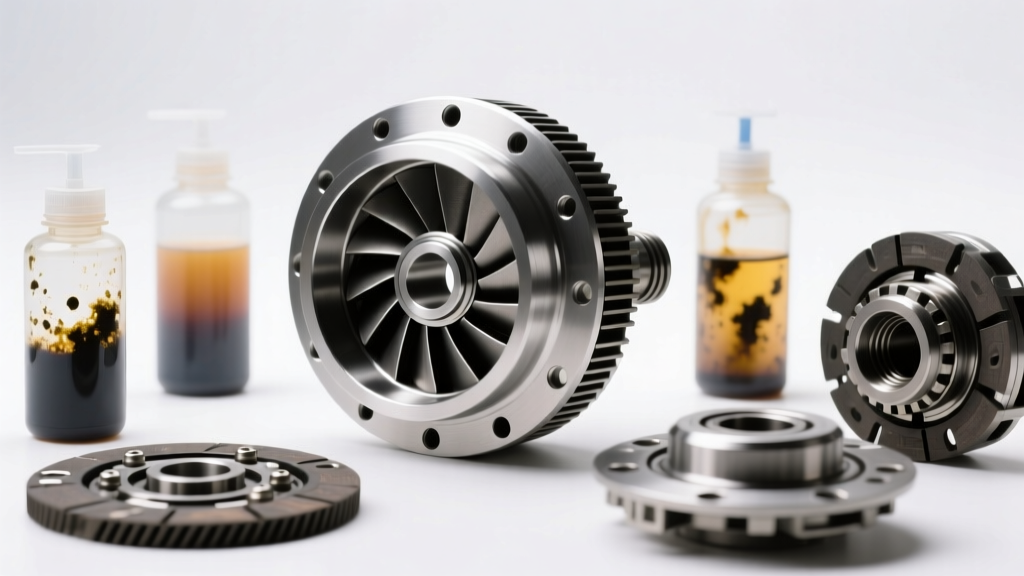
- Healthy Fluid: Dexron VI should be a vibrant, translucent cherry red. ZF Lifeguard fluid is typically a yellowish-green.
- Failing TCC Fluid: If the fluid is dark brown or black and smells distinctly like burnt toast, the friction material on the TCC clutch has burned off and is circulating through the transmission. No solenoid replacement will fix this; the torque converter must be replaced and the transmission flushed.
2. The Highway Slip Test (Live Data)
If you have a bi-directional scanner, plug it in and take the car on the highway. Get into top gear at a steady 65 MPH. Look at the 'TCC Slip Speed' PID. A healthy, locked torque converter will show a slip speed of 0 to 20 RPM. If your scanner shows a slip speed of 150+ RPM while cruising on flat ground, your TCC is physically slipping, confirming a P0741 or P0744 code.
A Warning on the 'Stall Test': Many old-school forums will tell you to perform a 'Stall Test' (holding the brake and flooring the gas pedal) to test the torque converter. Do not do this as a beginner. In modern 2026 vehicles with high-stall or degraded converters, a stall test can instantly overheat the fluid to over 300°F, melting internal seals and turning a $200 solenoid fix into a $4,000 transmission rebuild.
Step 5: 2026 Repair Costs and Realities
Understanding how to diagnose a bad torque converter is only useful if you know what to do next. Here is a realistic breakdown of repair costs based on current 2026 aftermarket and OEM pricing.
| Repair Scenario | Common Causes | Estimated Part Cost | Estimated Labor Cost |
|---|---|---|---|
| TCC Solenoid Replacement | P0740, P0743, P2763 | $45 - $180 | $150 - $350 (Pan drop only) |
| Valve Body Replacement | P0741, P0742 (Worn valves) | $300 - $750 | $250 - $500 (Pan drop only) |
| Torque Converter Replacement | P0741 (Internal piston crack), Burnt fluid | $250 - $650 (OEM/Aftermarket) | $600 - $1,200 (Trans removal) |
| Full Transmission Rebuild | Ignored P0742, Severe debris contamination | $1,500 - $2,500 (Master kit + TC) | $1,500 - $2,500 |
Crucial Installation Specs for DIYers
If you decide to replace the torque converter yourself, you must adhere to strict torque specifications. For example, when installing a new converter on a GM LS-based 4L60E or 6L80, the torque converter to flexplate bolts must be torqued to exactly 35 lb-ft using thread locker. The bellhousing to engine block bolts typically require 37 lb-ft. Furthermore, you must pre-fill the torque converter with 2 to 3 quarts of the correct ATF before sliding the transmission onto the engine. Failing to pre-fill the converter will result in an instant, catastrophic dry-start failure upon engine ignition.
Conclusion: Don't Ignore the Shudder
Learning how to diagnose a bad torque converter via OBD2 codes empowers you to make informed decisions at the repair shop. A P0743 might just be a $50 solenoid and a dropped pan, while a P0741 accompanied by burnt-smelling fluid means you are facing a major drivetrain repair. By combining your OBD2 scanner data with a simple fluid inspection, you can accurately pinpoint the failure, protect your wallet, and keep your vehicle shifting smoothly for years to come. For further reading on transmission hydraulic standards and safety protocols, refer to the SAE International J2534 standards documentation regarding module reprogramming and TCM resets after transmission repairs.