The Hydrodynamic Reality: Why Fluid is the Ultimate Diagnostic Tool
When drivers and technicians alike ask, 'how do you know your torque converter is bad?', the immediate instinct is often to hook up an OBD2 scanner and look for Torque Converter Clutch (TCC) slip codes like P0741 or P0742. While electronic diagnostics are valuable, the torque converter is fundamentally a hydrodynamic coupling device. Its health, efficiency, and eventual failure are inextricably linked to the condition of the Automatic Transmission Fluid (ATF) circulating through it. The fluid acts as the hydraulic medium for torque multiplication, the coolant for the stator and turbine, and the friction interface for the TCC lockup mechanism.
As an automotive transmission specialist, I can tell you that by the time a TCC solenoid throws a hard electrical or hydraulic slip code, the physical damage inside the converter—and the downstream contamination of the transmission valve body—has already occurred. Analyzing the ATF provides a real-time, biological-level readout of the torque converter's internal friction materials, bearings, and seal integrity. Here is an expert guide to diagnosing torque converter fluid issues before they lead to catastrophic drivetrain failure.
How Do You Know Your Torque Converter Is Bad? The Fluid Telltales
Pulling the transmission dipstick or extracting a sample from the cooler return line reveals immediate clues about the internal state of the torque converter. We categorize these fluid telltales into three primary failure signatures.
1. Burnt Smell and Darkened Fluid (Clutch Material Degradation)
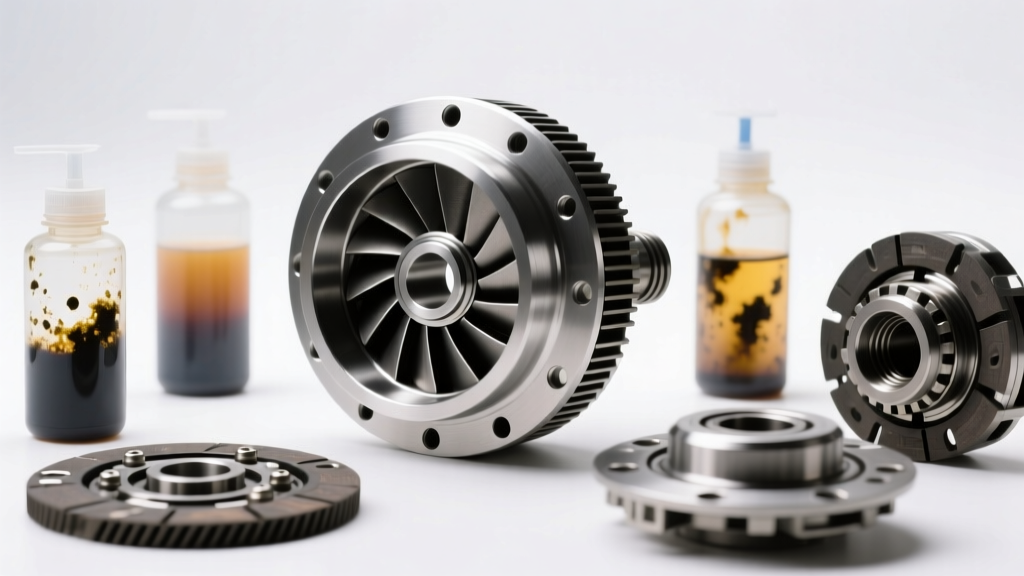
Modern TCC linings are typically composed of advanced cellulose, Kevlar, or carbon-fiber composite friction materials. When the Pulse Width Modulation (PWM) solenoid fails to properly regulate the apply pressure, or when the TCC regulator valve bore wears out, the clutch slips continuously during lockup. This slip generates immense heat, glazing the friction material and eventually burning it off the backing plate. If your ATF smells like burnt toast and has shifted from a translucent red to an opaque, dark brown or black, the TCC lining is actively disintegrating. This debris will inevitably travel through the cooler circuit and lodge in the transmission's lube regulator valve, causing secondary pressure drops.
2. Metallic Glitter and 'Fuzz' (Bearing and Stator Failure)
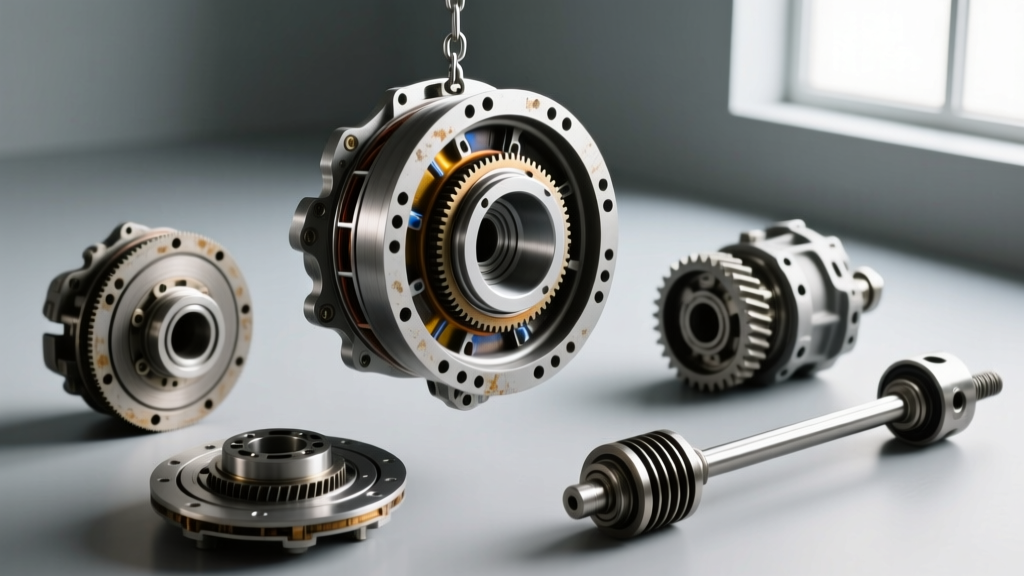
The torque converter relies on a thrust bearing (often a Torrington-style roller or a specialized stator support bearing) to separate the turbine from the impeller and stator. When this bearing fails, or when the one-way sprag clutch inside the stator shatters, it sheds microscopic metallic particles into the fluid. On the dipstick, this looks like a fine metallic glitter or silver 'fuzz'. Unlike the larger metal shavings that collect on the transmission pan magnet, this fine glitter circulates directly into the mechatronic unit or valve body, scoring precision-machined spool valves and destroying hydraulic pressure control.
3. Milky or Frothy ATF (Coolant Intrusion)
While not a failure of the torque converter itself, a ruptured Transmission Oil Cooler (TOC) inside the radiator allows engine coolant to mix with the ATF. The resulting fluid looks like a strawberry milkshake. Because the torque converter holds a massive volume of the system's total fluid capacity (often 3 to 5 quarts alone), coolant rapidly saturates the paper-based friction linings of the TCC, causing them to delaminate entirely within a few hundred miles. If you see frothy fluid, the torque converter must be replaced, as flushing cannot remove coolant trapped in the porous friction material.
Model-Specific Fluid Vulnerabilities & TCC Diagnostics
Different transmission architectures handle torque converter debris in unique ways. Understanding your specific unit is critical for accurate diagnosis.
GM 6L80 / 6L90: The TEHCM Threat
In General Motors' 6L80 and 6L90 transmissions, the Transmission Electro-Hydraulic Control Module (TEHCM) is mounted directly inside the transmission pan. When a torque converter sheds TCC friction material, the debris is drawn directly into the TEHCM's filter screens. A clogged TEHCM filter causes erratic line pressure and TCC shudder. If you are diagnosing a 6L80 with fluid contamination, expect to replace or professionally remanufacture the TEHCM (Part #24252825), which costs between $450 and $700 in 2026, alongside the converter.
ZF 8HP (8HP45/70/75): LifeguardFluid 8 Degradation
The ubiquitous ZF 8-speed utilizes a specialized torsion damper inside the torque converter to manage NVH (Noise, Vibration, and Harshness). When ZF LifeguardFluid 8 shears down and loses its specific friction modifiers, the TCC cannot smoothly modulate lockup at low RPMs, resulting in the infamous 'ZF shudder' between 40-55 mph. While ZF originally marketed this as a 'lifetime' fluid, industry consensus and ZF Aftermarket technical bulletins now strongly recommend a drain and fill every 60,000 to 80,000 miles to preserve the converter's damper springs and friction surfaces.
Ford 6R80: Thermal Bypass Valve Starvation
The Ford 6R80 (based on the ZF 6HP26 architecture) suffers from a unique fluid issue: the thermal bypass valve located in the cooler lines can fail in the closed position. This prevents fluid from reaching the cooler, but more importantly, it can cause localized fluid starvation inside the torque converter during heavy load, leading to rapid overheating and TCC glazing. If a 6R80 presents with burnt fluid but no obvious internal clutch pack wear, inspect the cooler circuit and thermal bypass valve before condemning the internal hard parts.
Diagnostic Matrix: ATF Condition vs. Torque Converter Failure
| Fluid Symptom | Visual / Olfactory Cue | Probable TC Failure Mode | Recommended Expert Action |
|---|---|---|---|
| Burnt / Oxidized | Dark brown/black; smells like burnt toast | TCC clutch lining slip and thermal degradation | Replace TC; flush cooler lines; inspect PWM solenoid |
| Glitter / Fuzz | Silver metallic particles suspended in fluid | Stator sprag failure or thrust bearing disintegration | Replace TC; drop pan; clean valve body/magnets |
| Milky Emulsion | Pink/white frothy consistency | Friction material delamination via coolant intrusion | Replace radiator & TC; perform multiple fluid exchanges |
| Aerated / Foamy | Bubbles on dipstick; fluid level appears artificially high | Converter hub seal leak drawing air into the pump | Replace TC hub seal; inspect pump bushing for wear |
Expert Remediation: Drop-Pan Procedures and Torque Specifications
If your fluid analysis indicates early-stage contamination, a careful drop-pan inspection is your next step. Power-flushing a transmission with a failing torque converter is a cardinal sin in the transmission industry; the high pressure of the flush machine will dislodge trapped debris and force it directly into the valve body or mechatronic unit.
Instead, perform a gravity drain and pan drop. This allows you to inspect the pan magnets and the filter pickup screen. According to guidelines supported by the Automatic Transmission Rebuilders Association (ATRA), the material on the magnets should be a fine, dark paste (normal clutch wear). If you find distinct metal chips or thick, gritty sludge, the torque converter is mechanically disintegrating.
Critical Torque Specs for Pan Reinstallation
When reinstalling the pan, improper torque will warp the filter seal or crack the casting, leading to pump cavitation. Use a calibrated inch-pound torque wrench:
- GM 6L80/6L90 Deep Pan: M6 bolts torqued to 8 Nm (71 lb-in). Note: The filter is integrated into the upper valve body housing; ensure the O-ring is fully seated.
- ZF 8HP Plastic Pan: M6 bolts torqued to 10 Nm (89 lb-in) in a crisscross pattern. The filter is integrated into the plastic pan; always replace the entire pan assembly.
- Ford 6R80 Stamped Steel Pan: M6 bolts torqued to 11 Nm (97 lb-in). Ensure the reusable rubber gasket is free of debris and not pinched.
Expert Tip: When replacing a torque converter due to friction material failure, always cut open the old converter or install an inline aftermarket cooler filter (such as the Magnefine 3/8-inch inline filter). As noted by Sonnax Transmission Parts engineering bulletins, residual TCC debris trapped in the cooler circuit is the number one cause of premature failure in replacement torque converters.
The 2026 Cost Reality: Fluid Service vs. Complete Replacement
Addressing torque converter fluid issues early saves thousands of dollars. A preventative ATF drain and fill using the correct OEM-specified fluid (e.g., ACDelco Dexron ULV for GM 10-speeds, or Motorcraft Mercon ULV for Ford 10-speeds) typically costs between $180 and $350 at a specialized shop.
Conversely, if the fluid analysis reveals severe contamination and the TCC is already slipping, you are facing a complete torque converter replacement. In 2026, the average cost for a remanufactured torque converter, including labor, fluid, and gaskets, ranges from $1,400 to $2,800 depending on the vehicle. For complex units like the ZF 8HP or the Ford 10R80, the integration of the mechatronic unit and specialized alignment tools pushes the labor time to 6.5 - 8.5 hours, significantly increasing the final invoice.
Ultimately, knowing how your torque converter is performing starts with pulling the dipstick. Treat your ATF analysis with the same diagnostic rigor as a computerized scan tool, and you will accurately predict drivetrain health long before the check engine light illuminates.