Hydrodynamic vs. Mechanical Friction: The Engineering Divide
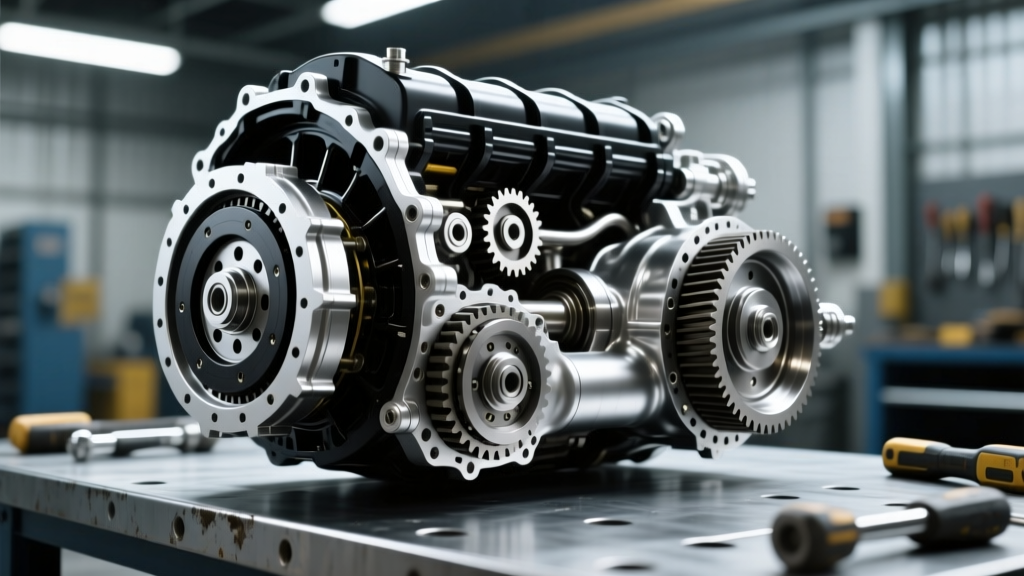
When diagnosing drivetrain slip, technicians and enthusiasts often draw parallels between automatic and manual transmissions. However, comparing a failing torque converter to a worn manual clutch is an exercise in contrasting fluid dynamics with solid-state friction. As of 2026, despite the rise of dual-clutch and electrified drivetrains, the fundamental architecture of the traditional automatic torque converter and the manual dry-friction clutch remains largely unchanged. Understanding the mechanical divide is critical, especially when a torque converter leaking hydraulic fluid mimics the RPM flare of a burnt clutch disc.
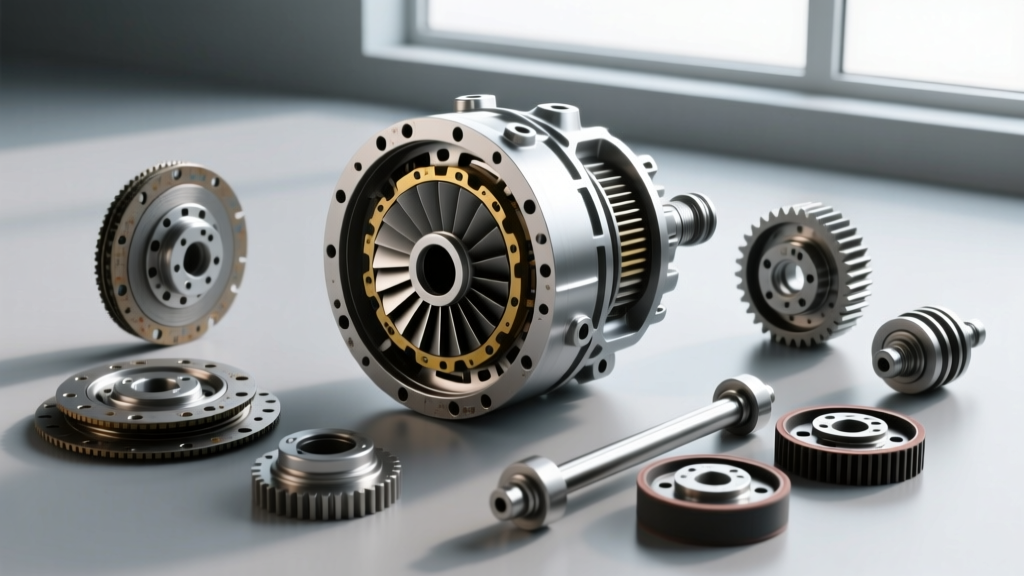
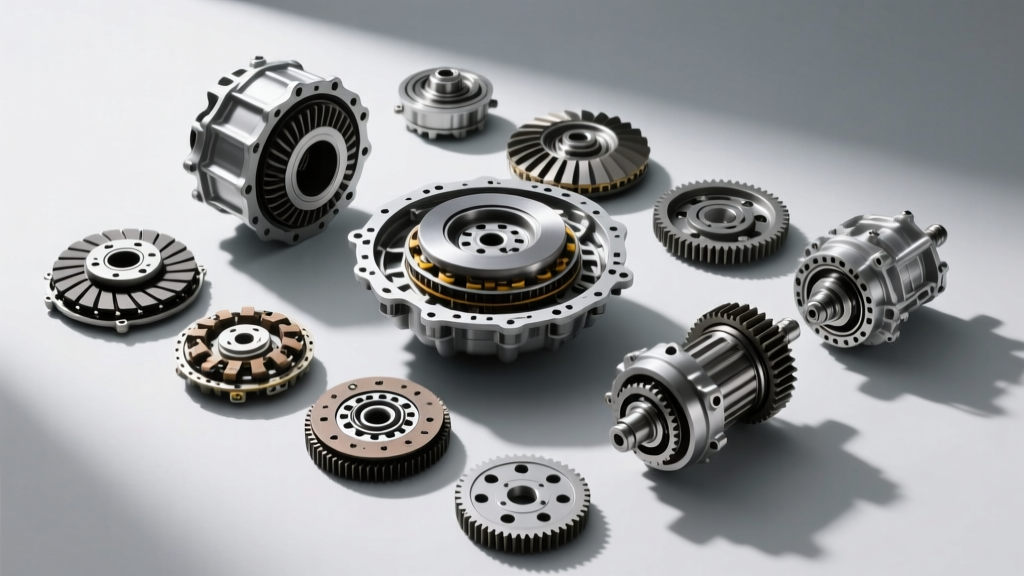
In a manual transmission, power transfer relies on the mechanical clamping force of a pressure plate squeezing a friction disc against the flywheel. In an automatic, the torque converter utilizes hydrodynamic principles—transferring kinetic energy via automatic transmission fluid (ATF) shearing between the impeller, turbine, and stator. When slip occurs, the root causes, diagnostic pathways, and repair economics diverge drastically.
The Anatomy of a Torque Converter Leaking Internally and Externally
A torque converter leaking ATF is one of the most misdiagnosed conditions in modern automatic transmissions, such as the ubiquitous GM 6L80 or the ZF 8HP. Unlike a manual clutch that wears predictably over 60,000 to 100,000 miles, a torque converter leak represents a sudden or progressive failure of hydraulic sealing boundaries.
External Leakage Vectors
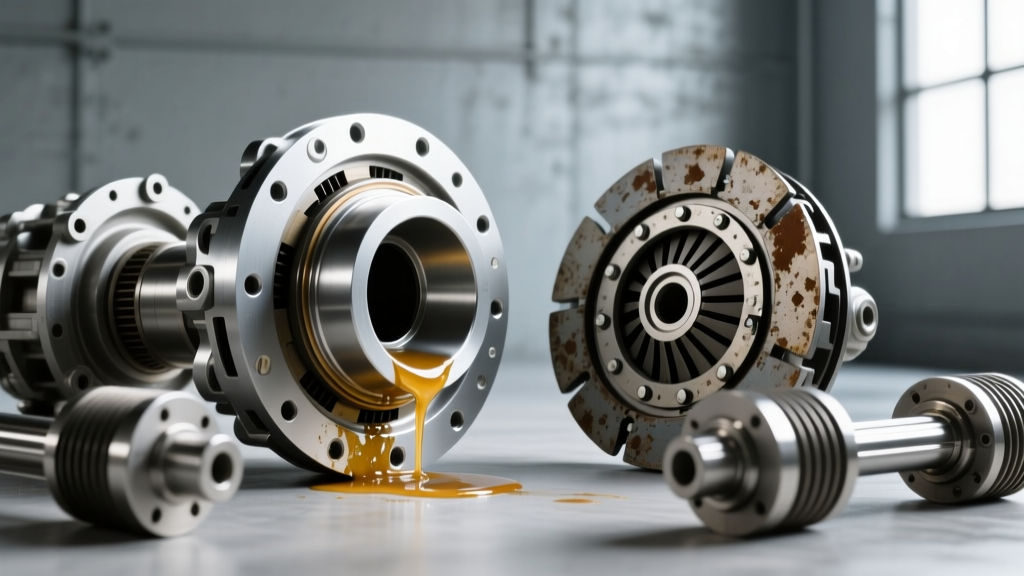
External leaks typically occur at the front pump seal or the converter hub. If the converter hub (the snout that rides in the front pump bushing) develops microscopic grooves due to inadequate lubrication or misalignment, ATF will bypass the seal. This drops the overall fluid volume, leading to aerated fluid, low line pressure, and eventual slip across all clutch packs, not just the Torque Converter Clutch (TCC).
Internal Leakage and TCC Failure
Internal leaks are far more insidious. The TCC piston relies on a precise hydraulic circuit to apply the lockup clutch. If the stator shaft O-rings degrade, or if the TCC piston seal inside the converter cover fails, apply pressure bleeds off. The Powertrain Control Module (PCM) commands a 130-150 PSI apply pressure, but due to the internal leak, actual pressure may only reach 60 PSI. The result is TCC slip, triggering codes like P0741 (Torque Converter Clutch Circuit Performance), which feels exactly like a slipping manual clutch to the driver.
Expert Insight: Never assume a slipping automatic is solely a worn TCC friction lining. In high-mileage 6L80 units, a torque converter leaking apply fluid past the turbine hub seal is the primary culprit for highway RPM flares, long before the actual friction material is exhausted.
Manual Clutch Degradation: Friction Material Exhaustion
Conversely, a manual clutch—such as the Tremec T56 Magnum setup found in performance applications—fails via mechanical attrition. The organic or ceramic friction material physically wears down. As the disc thins, the diaphragm springs of the pressure plate must extend further to maintain contact, altering the pedal geometry and reducing the effective clamp load.
Manual clutch slip is load-dependent. A driver will notice it first in high gears (4th, 5th, or 6th) under wide-open throttle (WOT), where cylinder pressure and drivetrain torque multiplication are at their peak. There is no hydraulic fluid to leak; instead, the failure is characterized by glazing, hot spots on the flywheel, or broken damper springs. Furthermore, hydraulic issues in a manual (like a failing clutch master cylinder or a leaking hydraulic throwout bearing) result in a failure to disengage the clutch, causing grinding gears, rather than the RPM flare seen when a torque converter is leaking apply pressure.
Diagnostic Matrix: Pinpointing the Source of Drivetrain Slip
To accurately separate a fluid-coupling leak from a friction-coupling wear issue, technicians must rely on specific telemetry and physical evidence. The table below contrasts the diagnostic signatures of a leaking torque converter in a GM 6L80 versus a worn clutch in a Tremec T56 Magnum.
| Diagnostic Parameter | Torque Converter Leaking (GM 6L80) | Worn Manual Clutch (Tremec T56) |
|---|---|---|
| Slip Behavior | Occurs during TCC lockup phases (typically 40+ MPH); RPM flares 200-500 RPM. | Occurs under heavy load/high gear; RPM rises without proportional vehicle acceleration. |
| Fluid / Material Evidence | ATF may be low on dipstick; fluid smells burnt; dark particulate in pan. | No fluid loss; distinct acrid "burnt brake pad" smell from bellhousing inspection cover. |
| Pressure Dependency | Slip correlates with commanded vs. actual TCC pressure via bi-directional OBD2 scan. | Slip worsens as clutch pedal free-play decreases and diaphragm spring tension weakens. |
| Thermal Signature | ATF temperatures spike rapidly (220°F+) due to fluid shear and kinetic energy conversion. | Flywheel and pressure plate absorb heat; can warp and cause secondary chatter upon engagement. |
| Stall Test Result | Stall RPM will be normal or slightly high; transmission line pressure remains stable. | Not applicable; vehicle will stall the engine if the clutch is fully engaged and brakes held. |
Teardown Economics and Labor Metrics
The repair protocols for these two systems highlight their engineering differences. Addressing a torque converter leaking scenario requires a complete transmission removal, fluid evacuation, and often a valve body teardown to replace worn solenoids or valves.
- GM 6L80 Torque Converter Replacement: A high-quality remanufactured converter (e.g., with upgraded billet TCC pistons and reinforced hubs) costs between $450 and $750. Labor requires 6 to 9 hours. Crucially, the flexplate-to-crankshaft bolts (often requiring new GM part #12637162) must be torqued to 74 lb-ft with threadlocker, and the front pump seal must be seated perfectly flush to prevent immediate recurrence of the leak.
- Tremec T56 Magnum Clutch Kit: A performance organic clutch kit (disc, pressure plate, throwout bearing) ranges from $350 to $600. Labor is generally 4 to 6 hours. The flywheel must be resurfaced or replaced, and the hydraulic throwout bearing requires meticulous bench-bleeding to ensure exact clutch pedal actuation.
For deeper technical specifications on hydraulic circuits and valve body wear that contribute to internal converter leaks, the Sonnax TCC Operation Guide provides invaluable schematics and pressure testing protocols. Similarly, for manual drivetrain alignment and torque specifications, the Tremec T56 Magnum Installation Guide remains the industry standard reference.
Thermal Cascades: The Hidden Cost of Ignoring Slip
The most severe divergence between these two failure modes lies in the secondary damage they inflict. When a manual clutch slips, the friction material turns to dust, and the flywheel may develop micro-cracks from thermal shock. While expensive to replace, the damage is usually contained to the bellhousing.
However, a torque converter leaking apply fluid creates a catastrophic thermal cascade inside the automatic transmission. The slipping TCC generates immense heat, which is transferred directly into the ATF. This superheated fluid is then circulated through the transmission cooler lines and routed back to the main lube circuit. Within minutes, temperatures exceeding 250°F will bake the friction linings on the internal clutch packs (such as the 3-5-R and 4-5-6 clutches in the 6L80), melt the nylon retainers in the valve body, and degrade the sealing rings on the stator support. What could have been a simple $60 stator shaft O-ring replacement rapidly escalates into a $4,000 complete transmission rebuild.
Conclusion: Respect the Coupling Medium
While the symptom of engine RPM rising without a corresponding increase in vehicle speed is universal, the mechanical reality is entirely dependent on the coupling medium. A manual clutch fails through the honorable attrition of friction materials. A torque converter fails through the loss of hydraulic integrity. Recognizing the precise signatures of a torque converter leaking ATF versus a mechanical clutch slipping under load ensures accurate diagnostics, prevents catastrophic thermal damage, and saves thousands of dollars in unnecessary teardowns.