The High Cost of Drivetrain Mating Errors
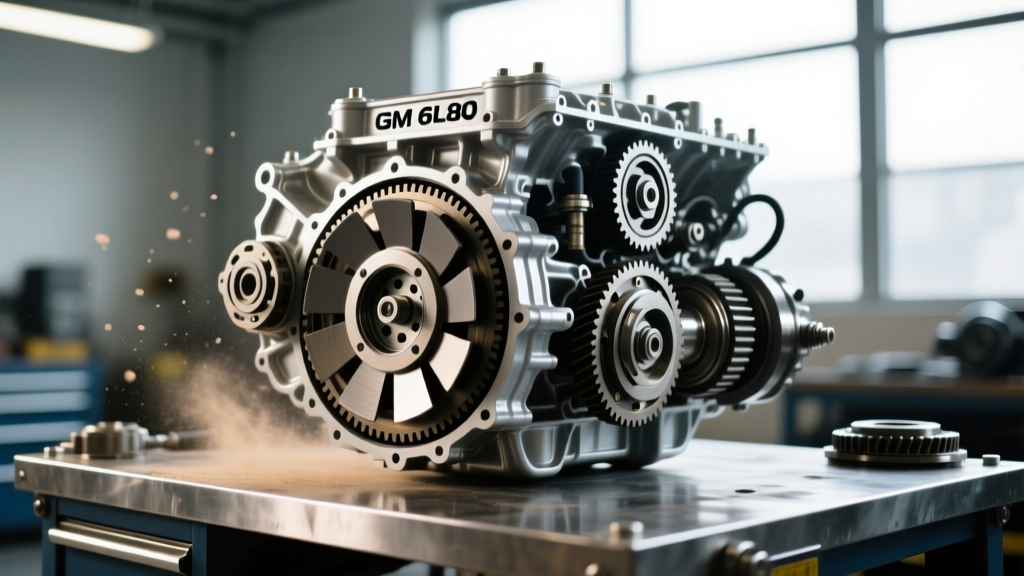
In the modern automotive landscape of 2026, automatic transmissions have evolved into highly complex, tight-tolerance marvels of engineering. Units like the GM 10L80, Ford 10R80, and ZF 8HP75 operate with microscopic clearances and rely on precise hydraulic pressures to manage immense engine torque. Because of these extreme tolerances, the final mating process between the engine and the transmission is arguably the most critical step in any drivetrain rebuild or replacement. When a technician rushes this process, the resulting failures are rarely silent. In fact, when evaluating the symptoms of incorrectly installed torque converter assemblies, auditory feedback is your earliest and most reliable warning system.
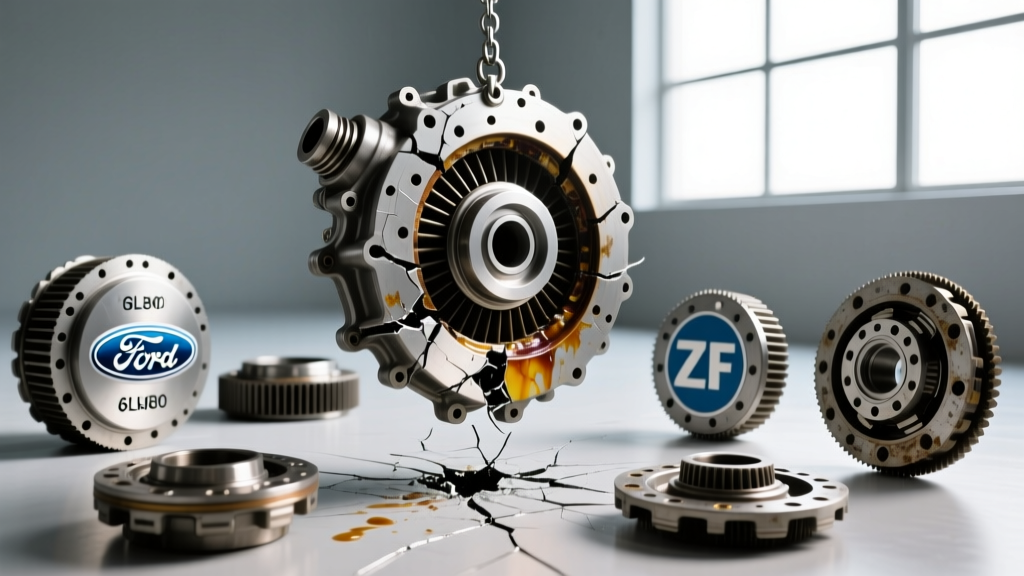
A torque converter that is not fully seated into the transmission pump before the bellhousing is bolted to the engine block will cause catastrophic mechanical interference. The engine's torque will forcefully pull the transmission forward, crushing the pump gears, warping the stator support, or fracturing the pump housing. This guide serves as a comprehensive preventive maintenance manual for diagnosing installation-induced noise, understanding the mechanical failures behind the sounds, and implementing strict verification protocols before a vehicle ever leaves the lift.
Auditory Red Flags: Mapping the Sounds of Failure
Recognizing the symptoms of incorrectly installed torque converter units early can mean the difference between a simple fluid top-off and a complete transmission teardown. The noise profile will change depending on the exact nature of the installation error. Below is a diagnostic matrix to help you cross-reference auditory symptoms with specific mechanical failures.
| Noise Profile | RPM / Load Dependency | Probable Installation Error | Immediate Diagnostic Action |
|---|---|---|---|
| High-Pitched Whine or Growl | Present at idle, pitch rises linearly with engine RPM | Pump gear bind, dry cavitation, or cracked pump cover | Drop transmission pan; inspect for metallic debris and check pump pressure |
| Rhythmic Knocking or Clunking | Load-dependent; worsens under acceleration or torque management | Flexplate runout, warped TC hub, or incorrect bolt torque | Remove inspection cover; use dial indicator on flexplate and TC pad |
| Metallic Shriek or Grinding | Immediate and severe upon initial engine startup | Stator support tube interference or input shaft misalignment | Halt engine immediately; do not attempt to drive; remove transmission |
| Harmonic Vibration / Buzz | Occurs between 1,200 and 1,800 RPM (TCC apply range) | Torque converter clutch (TCC) friction surface damage from misalignment | Perform TCC slip test via OBD-II scanner; monitor apply pressure |
Deep Dive: The Mechanics of Installation-Induced Noise
1. Pump Cavitation and Gear Bind (The Whine)
The most common symptom of a poorly seated torque converter is a high-pitched whine that mimics a failing power steering pump. This occurs when the torque converter hub fails to fully engage the inner and outer pump gears. When the bellhousing bolts are torqued down (typically 37 lb-ft or 50 Nm on a GM 10L80), the transmission is pulled flush against the engine block. If the TC was sitting even 1/8th of an inch proud of the pump gears, the mounting bolts act as a hydraulic press, forcing the TC hub into the pump assembly.
This forced entry chips the hardened edges of the pump gears and creates microscopic stress fractures in the aluminum pump cover. As the pump spins, it draws in transmission fluid. However, the damaged gear clearances cause internal bypass and severe fluid cavitation. Furthermore, if the technician failed to pre-fill the torque converter with 1.5 to 2.0 quarts of the correct specification fluid (such as ACDelco ULV or ZF LifeguardFluid 8), the initial startup will result in dry cavitation. The pump will scream as it attempts to pull fluid through a dry, air-locked converter, often destroying the pump bushing within seconds. According to Sonnax Tech Resources, upgrading to reinforced pump covers (like the Sonnax 104545-03K for GM applications) can mitigate future housing cracks, but it cannot save a pump destroyed by improper installation.
2. Flexplate Runout and Harmonic Knock (The Clunk)
A rhythmic knocking noise that correlates with engine RPM and worsens under load is a hallmark of flexplate runout or a warped torque converter mounting pad. This frequently happens when a technician uses an impact wrench to install the torque converter-to-flexplate bolts, or when they force a misaligned TC to mate with the flexplate by tightening the bolts in a star pattern before the TC is fully seated against the flexplate pads.
This practice physically bends the torque converter's outer cover, creating an uneven rotational mass. As the assembly spins, the warped mass induces harmonic vibrations that transfer through the crankshaft. To diagnose this, you must use a magnetic-base dial indicator resting against the torque converter mounting pad while rotating the engine by hand. The Society of Automotive Engineers (SAE) and most OEM service manuals dictate a maximum runout tolerance of 0.015 inches (0.38 mm). If your measurement exceeds this, the flexplate must be replaced, and the torque converter must be sent to a rebuilder for truing and weld inspection.
3. Stator Support Interference (The Metallic Shriek)
Modern 8-speed and 10-speed transmissions utilize complex stator support tubes that house the TCC apply valves and provide a bearing surface for the torque converter's inner hub. If the torque converter is not guided smoothly over the input shaft and the stator support during installation, the inner hub can catch on the edge of the support tube or the delicate Teflon sealing rings.
When the engine is cranked, the misaligned hub shreds the sealing rings and gouges the stator support tube, producing a horrific metallic shrieking noise. This is instantly fatal to the transmission's hydraulic circuit, as TCC apply pressure will bleed off internally, resulting in immediate TCC slip codes (e.g., P0741 or P2784). If this noise is heard upon first startup, the engine must be killed immediately. Continuing to run the engine will score the torque converter hub beyond repair, necessitating a full converter replacement and a complete transmission flush to remove the metallic debris.
Preventive Maintenance Protocol: The 4-Point Verification
To eliminate the symptoms of incorrectly installed torque converter assemblies from your shop's workflow, implement this mandatory 4-point verification checklist before mating the transmission to the engine block.
- The 'Three-Click' Seating Test: When sliding the torque converter into the transmission bellhousing, you must feel and hear three distinct 'clicks' or drops. The first is the input shaft splines engaging the turbine hub. The second is the stator support engaging the inner race. The third and final drop is the TC hub tangs fully seating into the pump drive gear. If you only feel two drops, the converter is not fully seated.
- Seating Depth Measurement: Place a precision machined straight-edge across the bellhousing mating surface. Use a caliper or depth gauge to measure the distance from the straight-edge to the torque converter mounting pads. The pads must sit between 1/8-inch and 1/4-inch (3.17mm to 6.35mm) below the bellhousing face. If it is flush or proud, the pump is not engaged.
- Mandatory Pre-Filling: Never install a dry torque converter. Pre-fill the unit with 1.5 to 2.0 quarts of OEM-specified fluid through the hub. This prevents the initial dry-cavitation whine and ensures immediate hydraulic pressure upon startup, protecting the pump gears and stator bushings.
- Hardware and Torque Verification: Inspect the flexplate-to-TC bolts for stretched threads or shoulder wear. These are typically high-strength metric bolts (e.g., M10x1.5, Grade 10.9 or 12.9). Torque them to the exact OEM specification—usually between 22 and 26 lb-ft (30-35 Nm)—using a calibrated torque wrench in a star pattern. Never use thread locker on these specific bolts unless mandated by the OEM, as it can alter the torque-to-clamp-load ratio and lead to fatigue cracking.
Bellhousing Alignment and Dowel Pin Runout
While torque converter seating is paramount, ignoring bellhousing alignment will quickly mimic the symptoms of a bad installation. The engine block and transmission bellhousing are located via two dowel pins. If these pins are missing, damaged, or if the engine block mating surface has old gasket debris, the bellhousing will suffer from concentricity runout.
According to data published by Transmission Digest, bellhousing runout exceeding 0.005 inches (0.127 mm) forces the torque converter to operate on an eccentric axis. This creates a cyclic binding noise that sounds remarkably similar to a failing pump, but is actually the result of the input shaft flexing under load. Always use a dial indicator on the bellhousing bore to verify concentricity. If it is out of spec, install offset dowel pins (available in 0.007", 0.014", and 0.021" offsets) to dial in the alignment before final assembly.
Real-World Repair Costs and Component Salvage (2026 Estimates)
Ignoring the early auditory warnings of a botched installation leads to compounding financial losses. Here is a breakdown of what you can expect when diagnosing and repairing installation-induced failures in modern platforms:
- Pump Assembly Replacement (e.g., GM 10L80): If caught early (whining noise only, no metallic debris in pan), a new OEM pump assembly and stator support tube will cost between $650 and $900 in parts, plus 3.5 hours of R&R labor. Total shop cost: $1,100 - $1,500.
- Torque Converter Replacement: If the hub is scored or the internal TCC friction material is destroyed due to misalignment, a new OEM or high-quality remanufactured converter (such as those from Precision of New Hampton) will range from $800 to $1,400.
- Catastrophic Teardown: If a dry startup destroys the pump, and the resulting metallic debris circulates through the transmission, the valve body solenoids, clutch packs, and lube circuits will be compromised. A full teardown, hot-flush, and rebuild of a ZF 8HP or Ford 10R80 will easily exceed $4,500 to $6,500 in 2026 market rates.
By adhering to strict preventive maintenance protocols, verifying seating depth, and respecting torque specifications, technicians can completely eliminate the symptoms of incorrectly installed torque converter units. Listening to the drivetrain on that very first startup is not just a diagnostic tool; it is the final audit of your mechanical precision.
For further reading on hydraulic circuit preservation and pump upgrade strategies, consult the technical archives at ATSG (Automatic Transmission Service Group).