Understanding the Leaking Torque Converter Seal
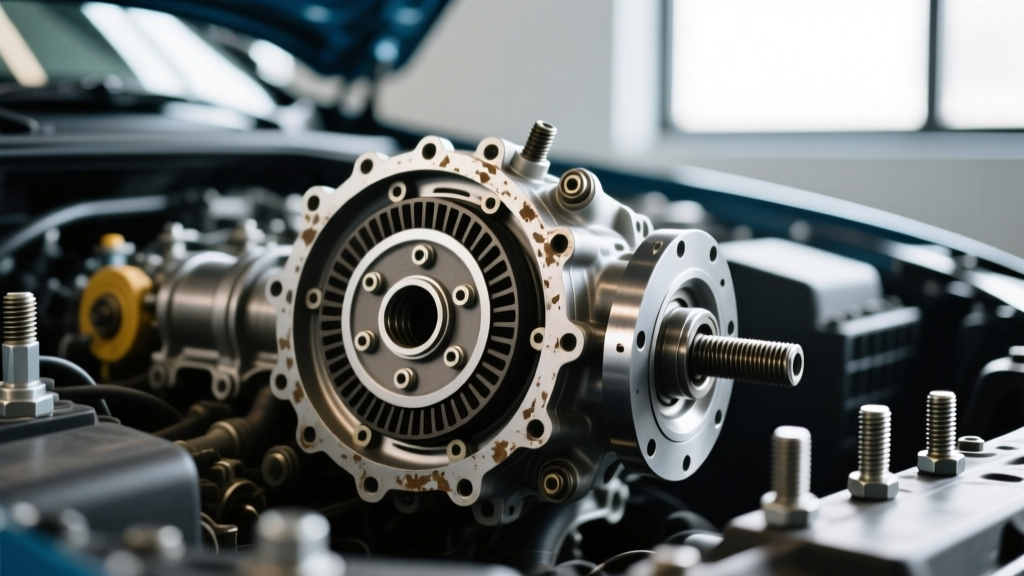
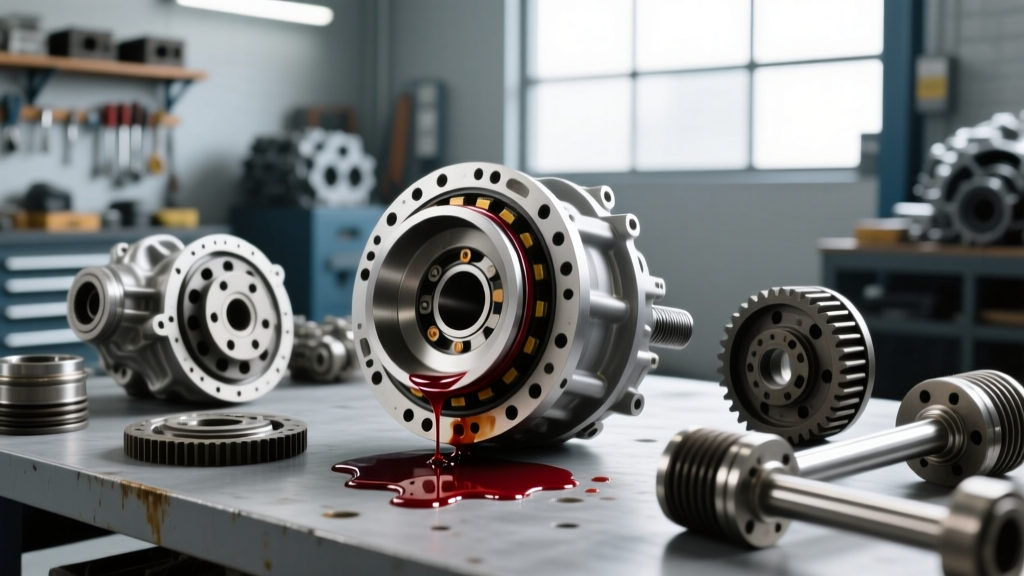
When diagnosing automatic transmission leaks, few issues are as deceptive or potentially catastrophic as a leaking torque converter seal. Often referred to as the front pump seal, this critical component sits at the intersection of the engine bell housing and the transmission case, sealing the rotating torque converter hub to the stationary oil pump stator support. A compromised seal does far more than leave a puddle of automatic transmission fluid (ATF) on the ground; it initiates a cascade of severe torque converter fluid issues that can destroy internal clutches, the valve body, and the oil pump itself.
As an automotive transmission specialist, I frequently see vehicles towed into the shop with burnt clutches and shattered pump gears, all stemming from a seemingly minor $20 front seal leak that was ignored or misdiagnosed. In this expert guide, we will break down the exact failure modes of front pump seals, the resulting fluid dynamics issues, and the precise best practices for replacement on modern units like the GM 6L80, Ford 6R80, and ZF 8HP.
Misdiagnosis: Cooler Lines vs. Front Pump Seal
Before committing to a transmission removal (R&R) to address a leaking torque converter seal, you must rule out cooler line and fitting leaks. On the GM 8L90 and 6L80 platforms, the plastic quick-connect fittings at the transmission case are notorious for developing micro-fractures. Because these lines sit just above or adjacent to the bell housing, a dripping cooler line will coat the bottom of the bell housing and the inspection cover, perfectly mimicking a front seal leak.
Expert Diagnostic Tip: Clean the entire back of the engine block, the flexplate, and the lower bell housing with brake cleaner. Run the vehicle on a lift until the transmission reaches operating temperature (180°F to 200°F). Use a UV light with ATF dye, or simply monitor the very top of the bell housing inspection cover. A true front seal leak will originate from the exact center weep hole of the bell housing, while cooler line leaks will track down from the upper passenger or driver side case fittings.
Root Causes of Front Seal Failure
Converter Hub Scoring and Bushing Wobble
The torque converter hub rides on the stator support tube bushing. If this bushing wears beyond the manufacturer's clearance specification (typically 0.0015 to 0.003 inches), the converter will wobble during engine RPM fluctuations. This eccentric movement physically tears the lip of the front seal. Furthermore, if the converter hub itself has a groove worn into it from years of friction, a new seal will immediately leak because the PTFE or Viton lip cannot seal against a scored surface. Always run your fingernail across the converter hub; if it catches in a groove, the converter must be replaced or the hub resurfaced with a Speedi-Sleeve.
Thermal Degradation and Fluid Incompatibility
Modern front seals are manufactured from advanced polymers like PTFE (Teflon) or high-durometer Viton to withstand extreme heat. However, chronic transmission overheating (frequently seen in heavy-duty trucks towing without auxiliary coolers) will bake the seal lip, causing it to lose its elasticity and crack. Additionally, mixing incompatible fluids—such as topping off a ZF 8HP transmission with generic Dexron instead of the required ZF LifeguardFluid 8—causes a chemical reaction that swells and destroys the seal material from the inside out.
The Domino Effect: Torque Converter Fluid Issues Caused by Leaks
A leaking torque converter seal fundamentally alters the hydraulic dynamics of the transmission. Understanding these torque converter fluid issues is vital for accurate diagnosis and preventing comeback repairs.
Cavitation and Pump Starvation
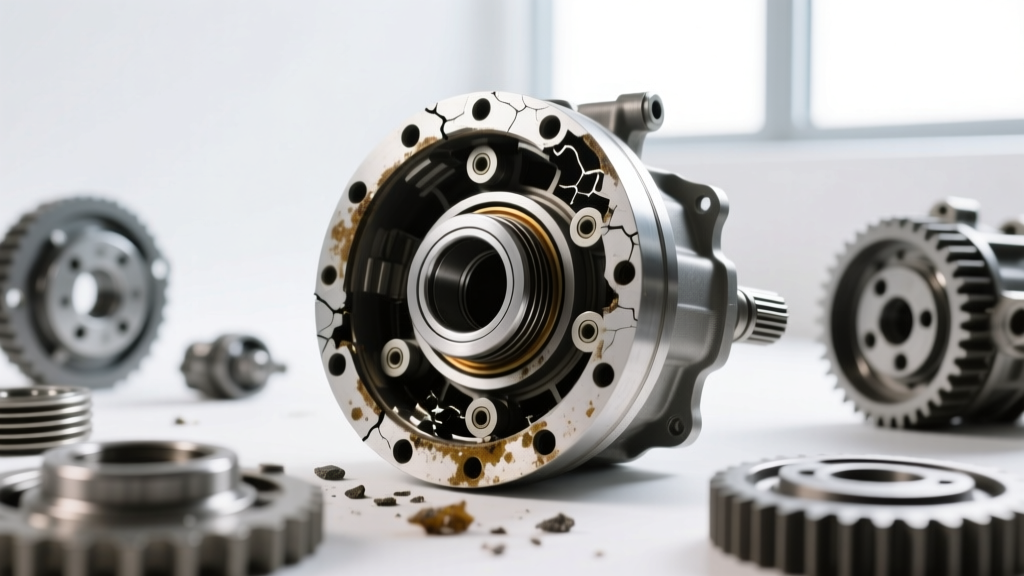
The transmission oil pump operates on the suction side of the hydraulic system. When the fluid level drops below the pickup filter due to a leak, the pump begins to draw air past the compromised seal lip. This introduces aeration into the hydraulic circuit. Aerated ATF is compressible, leading to delayed forward and reverse engagements, harsh shifts, and a whining noise from the pump. According to Sonnax technical resources, prolonged cavitation will literally carve away the aluminum gears and pockets inside the oil pump, necessitating a complete pump replacement.
TCC Slip and Friction Contamination
The Torque Converter Clutch (TCC) requires precise, high-volume hydraulic pressure to apply fully and lock the engine to the transmission. When a front seal leak causes aeration and pressure drops, the TCC will slip. This slip generates immense heat and sheds microscopic friction material into the fluid. This contaminated fluid then circulates through the valve body and the TEHCM (Transmission Electro-Hydraulic Control Module) on units like the 6L80, clogging the tiny solenoid screens and causing erratic shift solenoid codes (e.g., P0741 or P0742).
Expert Installation Best Practices
Replacing a front pump seal requires dropping the transmission. Doing the job correctly the first time is non-negotiable. Follow these strict installation protocols:
- Never Install Dry: Always lubricate the outer metal casing of the seal with a thin film of ATF or specialized assembly lube to prevent it from binding or rolling during installation into the pump bore.
- Use a Seal Protector: PTFE seals have a very rigid lip. If you slide the transmission directly onto the converter hub, the lip will fold over, resulting in an instant leak. Always use the OEM-mandated seal installation sleeve (e.g., Kent Moore tool J-41816 for GM applications) to guide the seal lip safely over the hub.
- Verify Hub Runout: Mount a dial indicator to the engine block and measure the torque converter hub runout while rotating the engine. Runout exceeding 0.010 inches indicates a bent flexplate, a warped converter, or crankshaft endplay issues that will destroy your new seal within 500 miles.
Seal Specifications and Fluid Requirements by Transmission
| Transmission Model | Aftermarket Seal Ref. | Hub / Bushing Spec | Required OEM Fluid |
|---|---|---|---|
| GM 4L60E / 4L65E | National 710990 | Max 0.004 in. Bushing Clearance | ACDelco Dexron VI |
| GM 6L80 / 6L90 | National 711044 | Max 0.010 in. Hub Runout | ACDelco Dexron VI |
| Ford 6R80 | Motorcraft W718124 | Max 0.005 in. Hub Scoring | Motorcraft MERCON LV |
| ZF 8HP45 / 8HP70 | Corteco 19033985B | PTFE Seal Ring / No Lube on Lip | ZF LifeguardFluid 8 |
Note: Always consult the ZF official lubricant specifications or OEM service manuals for the exact fluid capacity and part numbers for your specific application year.
Addressing Secondary Fluid Contamination
If the leaking torque converter seal was driven on for an extended period, simply replacing the seal and topping off the fluid is malpractice. The torque converter fluid issues caused by TCC slip mean the fluid is likely saturated with clutch friction material and metallic debris.
You must drop the transmission pan, inspect the filter for heavy metallic glitter (indicative of pump gear destruction), and clean the valve body separator plate screens. On GM 6L80 and 9L90 units, the filter is integrated into the TEHCM; if the internal screens are clogged with friction material from a slipping TCC, the entire TEHCM assembly must be replaced, adding significant cost to the repair. A machine flush is strictly prohibited if the fluid is heavily contaminated, as it will push debris into the narrow cooler lines and radiator circuits.
2026 Cost Breakdown: Repair and Fluid Services
Because accessing a leaking torque converter seal requires removing the transmission, the labor dictates the bulk of the invoice. Here is what consumers and shop owners should expect regarding current market pricing:
- Parts (Seal & Fluid): $150 - $350. The seal itself is inexpensive ($15-$45), but the required 10 to 14 quarts of premium synthetic ATF (especially ZF Lifeguard or Dexron ULV) drives up the parts cost.
- Independent Shop Labor: $800 - $1,400. This covers 6 to 9 hours of R&R labor, pan cleaning, and fluid refill.
- Dealership Labor: $1,500 - $2,500+. Dealerships often mandate a complete transmission fluid flush and TEHCM reprogramming upon reassembly.
- Hidden Costs: If the torque converter hub is scored, a remanufactured torque converter will add $400 to $900 to the bill. If the stator support bushing is wiped out, the oil pump must be disassembled or replaced, adding another $300 to $600.
Final Expert Takeaway
A leaking torque converter seal is a critical hydraulic failure point, not just a cosmetic nuisance. By accurately diagnosing the leak source, measuring converter hub runout, utilizing proper PTFE seal installation sleeves, and aggressively addressing the resulting torque converter fluid issues like aeration and friction contamination, you can ensure a permanent repair. For further diagnostic protocols and valve body troubleshooting, reference the Automatic Transmission Rebuilders Association (ATRA) technical bulletins to stay ahead of the latest transmission failure patterns.