The Intersection of Mechanical Wobble and Electronic Diagnostics
When beginner mechanics and DIY enthusiasts research loose torque converter bolts symptoms, they typically expect to find descriptions of heavy clunking noises, severe vibrations, or catastrophic transmission failure. While those mechanical signs are accurate, they only tell half the story. In modern vehicles, a loose flexplate-to-converter bolt rarely stays a purely mechanical issue for long. Instead, it quickly cascades into a complex web of electronic Diagnostic Trouble Codes (DTCs).
As of 2026, modern 8-speed and 10-speed transmissions—such as the ZF 8HP, Ford 10R80, and GM 10L90—rely on hyper-sensitive Powertrain Control Module (PCM) algorithms. These computers monitor the rotational relationship between the engine and the transmission down to the single RPM. When the torque converter is not securely fastened to the flexplate, it wobbles. This wobble alters sensor air gaps and creates erratic rotational data, tricking the PCM into logging transmission and engine codes that often lead misinformed technicians down a very expensive, incorrect diagnostic path.
Common Loose Torque Converter Bolts Symptoms
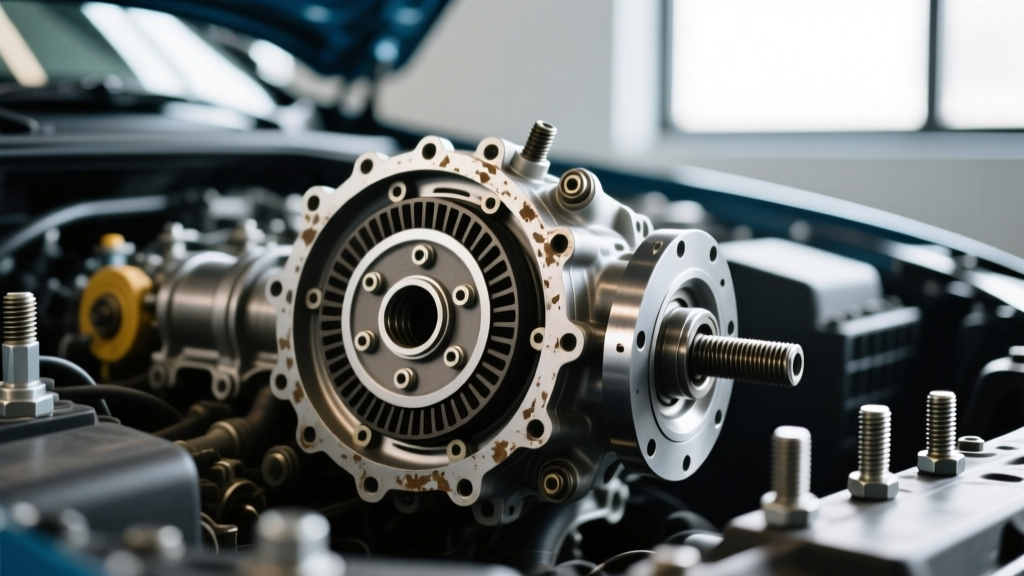
Before pulling out an OBD2 scanner, it is crucial to recognize the physical manifestations of this issue. The torque converter is bolted directly to the engine's flexplate. If these 3 to 6 bolts (depending on the application) back out or stretch, the converter loses its rigid alignment.
- Idle Vibrations and 'Phantom' Misfires: A wobbly converter causes the flexplate to oscillate. Because the Crankshaft Position Sensor (CKP) reads the teeth on the flexplate or harmonic balancer, this oscillation mimics an engine misfire, causing a rough idle and hesitation.
- TCC Shudder at Highway Speeds: When the Torque Converter Clutch (TCC) attempts to lock up between 40–60 mph, the mechanical wobble prevents smooth friction engagement, resulting in a violent shudder that feels like driving over rumble strips.
- Metallic Clunking on Engagement: Shifting from Park to Reverse or Drive may produce a sharp, metallic 'clack' as the loose converter slams against the flexplate before catching the rotational load.
- Elongated Bolt Holes: If left unchecked, the wobble will physically egg-shape (elongate) the mounting holes on the torque converter hub or the flexplate itself, requiring complete component replacement.
Diagnostic Trouble Codes (DTCs) Triggered by Loose Bolts
The most deceptive aspect of this failure is the scanner output. You might assume a transmission code means a bad solenoid or a failing valve body. However, understanding the PCM's logic reveals why loose bolts trigger these specific codes. The PCM constantly compares the Crankshaft Position Sensor (CKP) to the Transmission Input Speed Sensor (ISS). When the TCC is commanded to lock, the PCM expects a near 1:1 RPM ratio (usually allowing less than 20 RPM of slip).
| DTC Code | Description | Why Loose Bolts Trigger This Code |
|---|---|---|
| P0741 | TCC Stuck Off or Slipping | Wobble causes actual TCC friction slip or erratic ISS readings, making the PCM calculate excessive slip RPM. |
| P0717 | Input/Turbine Speed Sensor 'No Signal' | The converter wobbles away from the ISS sensor, temporarily breaking the magnetic air gap and dropping the signal. |
| P0300 | Random/Multiple Cylinder Misfire | Flexplate wobble confuses the CKP sensor, making the PCM think the engine is misfiring when it is actually running smoothly. |
| P0743 | TCC Solenoid Circuit Electrical | In some GM applications, severe wobble damages the internal TCC wiring harness or connector inside the converter hub. |
For a deeper understanding of how the PCM calculates torque converter clutch slip and why it triggers the P0741 code, it is essential to look at the relationship between engine load and transmission input speed. Furthermore, the P0300 misfire code is frequently misdiagnosed as bad spark plugs or ignition coils when the true culprit is mechanical flexplate runout.
How to Diagnose: Mechanical vs. Electronic Failure
If your scanner shows P0741 or P0717, but your transmission fluid is clean, full, and smells normal (not burnt), you must rule out mechanical wobble before replacing internal transmission components.
Step 1: Checking the Flexplate-to-Converter Gap
On most rear-wheel-drive and longitudinal applications (like the GM 6L80 or Ford 6R80), you can access the torque converter bolts by removing the lower inspection cover on the transmission bellhousing. Using a pry bar gently placed between the converter and the flexplate, check for lateral movement. There should be zero independent movement between the two components. If the converter moves independently of the flexplate, the bolts are loose or broken.
Step 2: Measuring Flexplate Runout
Mount a dial indicator to the engine block and rest the needle on the outer edge of the flexplate. Rotate the engine by hand (using a socket on the crankshaft pulley bolt). Total Indicated Runout (TIR) should generally not exceed 0.020 inches (0.50 mm). If runout exceeds this spec, the flexplate is likely bent due to the uneven stress of loose bolts, and it must be replaced.
Manufacturer Torque Specifications & Best Practices
One of the most common reasons these bolts come loose is improper installation during a previous transmission swap or engine rebuild. These bolts are subjected to immense torsional stress and require exact torque specs and chemical threadlockers. Below are the standard specifications for popular modern transmissions:
- GM 6L80 / 6L90 / 10L90: The M10x1.5 flexplate-to-converter bolts must be torqued to 46 N·m (34 lb-ft). GM strictly mandates the use of a medium-strength threadlocker (like Loctite 243) on these threads.
- Ford 6R80 / 10R80: Torque converter mounting bolts are typically torqued to 47 N·m (35 lb-ft). Always inspect the flexplate for hairline cracks around the bolt circle before reusing.
- ZF 8HP (45/55/70/90): ZF applications often use specialized flexplate-to-converter bolts. The standard torque is 50 N·m (37 lb-ft). Note that the flexplate-to-crankshaft bolts on ZF applications are often torque-to-yield (TTY) and require a specific angle turn (e.g., 85 Nm + 90 degrees) and must be replaced if removed.
Expert Transmission Tip: Never use an impact wrench to tighten torque converter bolts. The sudden shock loading can stretch the bolt shank or crack the delicate aluminum hub of the torque converter. Always use a calibrated torque wrench, and hold the flexplate stationary with a strap wrench or flywheel holder to prevent the engine from turning over and damaging the starter ring gear.
Repair Costs and Prevention
The financial impact of this issue depends entirely on how early you catch it. If you identify loose torque converter bolts symptoms before the flexplate holes elongate, the repair is relatively inexpensive. A shop will typically charge between $150 and $250 to drop the transmission fluid pan (or remove the inspection cover), access the bellhousing, clean the threads, apply threadlocker, and torque the bolts to spec.
However, if the wobble is ignored, the resulting damage is severe. A cracked flexplate, a destroyed torque converter hub, or a damaged Input Speed Sensor reluctor wheel will require transmission removal. At that point, you are looking at a $1,800 to $3,200 repair bill for a new flexplate, torque converter, and the labor to pull the transmission.
To prevent this, always insist on new, OEM-grade flexplate bolts whenever a transmission is removed or installed. Reusing old, stretched bolts is a primary cause of premature failure. By understanding how mechanical wobble translates into electronic DTCs, you can save yourself from throwing expensive sensors and solenoids at a problem that only requires a $5 bolt and a torque wrench.