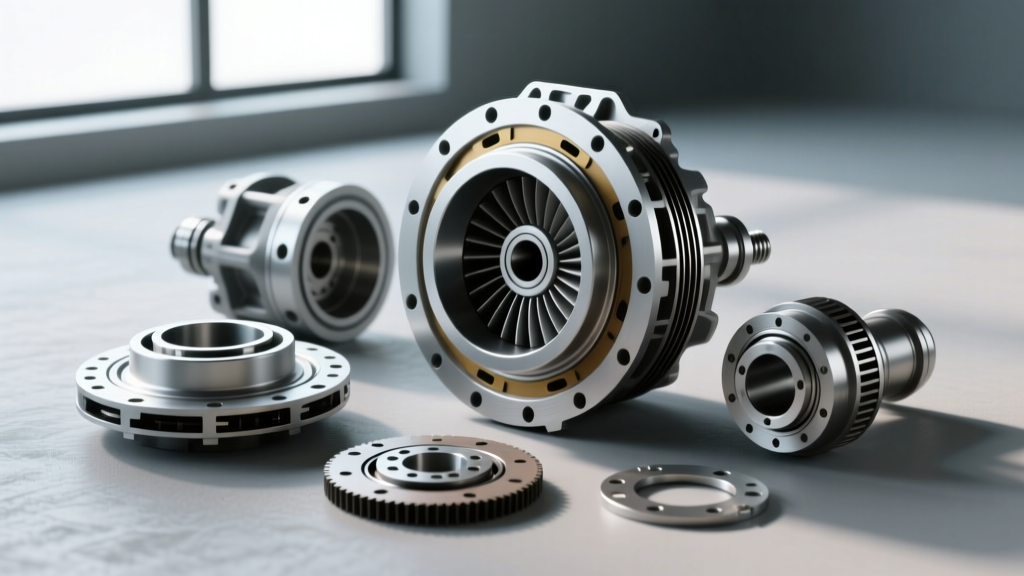
When diagnosing drivetrain slip or shudder, technicians and enthusiasts frequently draw parallels between automatic and manual transmissions. However, conflating torque converter failure symptoms with traditional manual clutch wear can lead to severe misdiagnoses, unnecessary teardowns, and inflated repair bills. While both systems serve the fundamental purpose of coupling the engine to the transmission and allowing for vehicle stops without stalling, their operating principles, failure modes, and diagnostic signatures are radically different.
As we navigate the 2026 service landscape—dominated by ultra-low viscosity (ULV) fluids, 8-to-10-speed automatics, and complex dual-clutch systems—understanding the hydrodynamic divide is critical. This technical deep-dive dissects the mechanical realities of fluid coupling versus mechanical friction, providing actionable diagnostic frameworks for modern drivetrains.
The Fundamental Divide: Hydrodynamic Coupling vs. Mechanical Friction
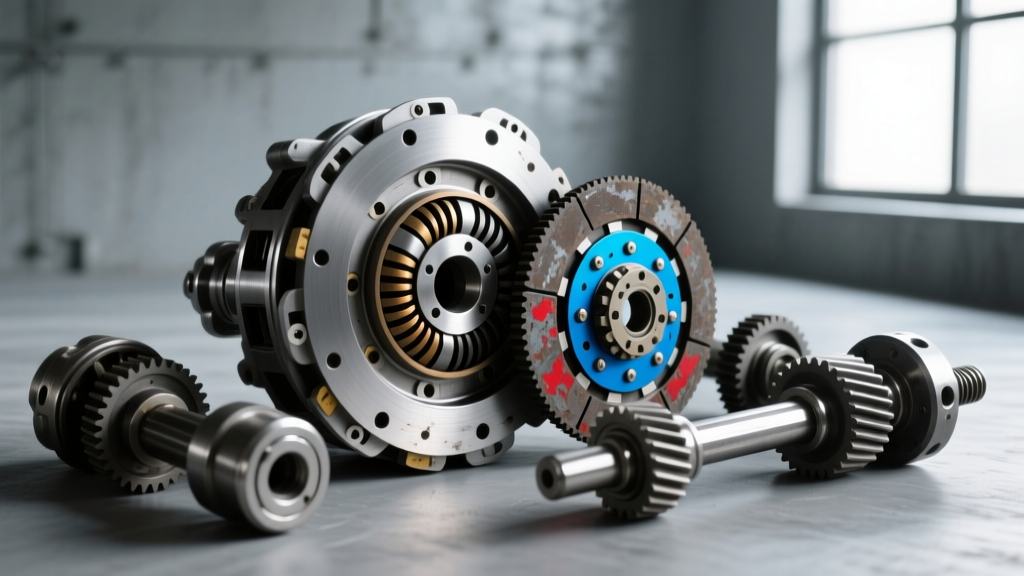
To accurately identify torque converter failure symptoms, one must first understand how torque is transferred. A manual clutch relies on mechanical friction. A flywheel, friction disc, and pressure plate are physically clamped together. When the friction material wears past its service limit, the coefficient of friction drops, resulting in immediate, load-dependent RPM flare (slip).
Conversely, a traditional torque converter operates via hydrodynamic coupling. The impeller (driven by the engine) shears automatic transmission fluid (ATF) against the turbine (connected to the transmission input shaft). Because there is no physical contact between the impeller and turbine during the fluid-coupling phase, 'slip' is not a failure symptom—it is a designed operational characteristic. True torque converter failure symptoms in the fluid coupling phase manifest as stator one-way clutch failures, resulting in poor low-speed torque multiplication and abnormally high or low stall speeds, rather than the high-gear RPM flare seen in manual clutches.
Diagnostic Matrix: Torque Converter vs. Manual Clutch
The following matrix contrasts the physical parameters and failure signatures of these distinct coupling mechanisms.
| Parameter | Torque Converter (Fluid Phase) | TCC Lockup Mechanism | Manual Friction Clutch |
|---|---|---|---|
| Engagement Medium | Kinematic fluid shear (ATF) | Friction material on TCC piston | Organic/Ceramic friction disc |
| Normal Slip | 100% (Designed for multiplication) | Controlled slip (PWM regulated) | 0% (Fully locked when engaged) |
| Primary Slip Failure | Stator one-way clutch seizure/slip | TCC lining degradation / Solenoid failure | Friction disc wear / Oil contamination |
| Vibration Symptom | Imbalance (bearing/hub failure) | TCC Shudder (40-60 Hz resonance) | Clutch Chatter (flywheel runout/hot spots) |
| Thermal Limit | ATF breakdown (>250°F / 121°C) | Glazed TCC lining (>350°F / 176°C) | Facing glazing/warping (>500°F / 260°C) |
TCC Lockup Shudder vs. Clutch Chatter: The Diagnostic Bridge
The most common area of confusion arises with the Torque Converter Clutch (TCC). Modern automatics utilize a TCC to mechanically lock the impeller to the turbine at cruising speeds, eliminating fluid slip and improving fuel economy. When drivers experience torque converter failure symptoms like shudder, they are actually experiencing a failure of this internal mechanical clutch, which closely mimics manual clutch chatter.
Real-World Diagnostics: GM 6L80 TCC Shudder
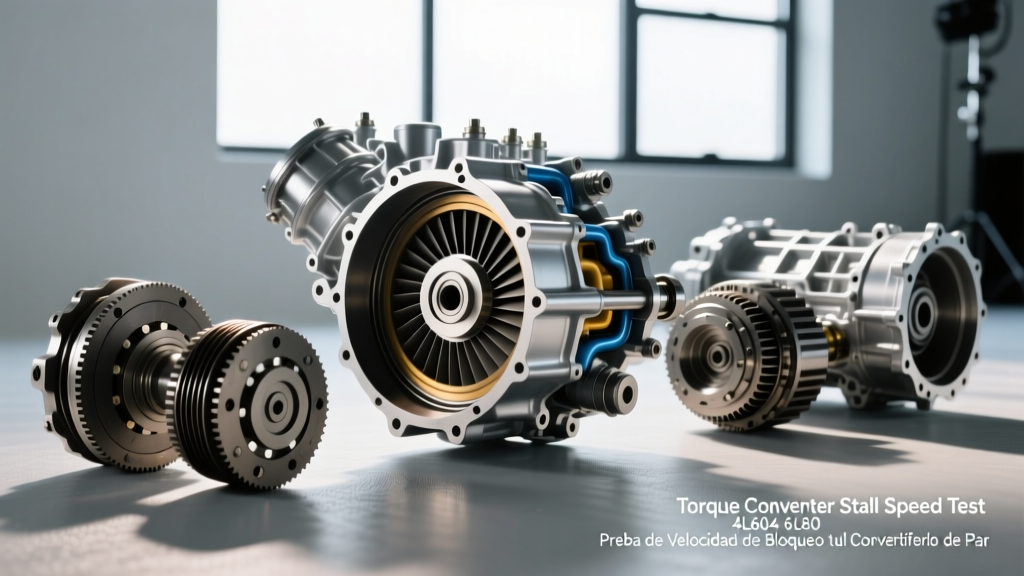
The GM 6L80 transmission is notorious for TCC shudder, a symptom often misdiagnosed as engine misfire or driveline backlash. The 6L80 utilizes a Pulse-Width Modulated (PWM) solenoid to apply the TCC piston. Over time, the friction material on the TCC piston degrades, and the ATF loses its shear stability. When the TCC attempts to engage in a controlled-slip mode (typically between 35-55 mph in 4th or 5th gear), the degraded friction coefficient causes the piston to rapidly grab and release, generating a 40-60 Hz longitudinal vibration.
Actionable Fix: Before condemning the torque converter, technicians should perform a TCC slip test via a bi-directional scan tool. Command the TCC to lock and monitor the TCC slip RPM. If slip fluctuates wildly or exceeds 50 RPM under steady throttle, inspect the fluid for metallic or friction debris. A known fix involves updating the valve body with a Sonnax TCC regulator valve kit (e.g., part number 104740-06K) to stabilize apply pressure, followed by a fluid exchange using a high-quality DEXRON VI synthetic ATF. For deeper technical specifications on valve body wear patterns, refer to Sonnax technical resources.
Manual Clutch Chatter: Flywheel and Friction Dynamics
In a manual transmission, clutch chatter usually occurs during initial engagement from a stop, not at cruising speed. It is caused by uneven friction, often stemming from a warped flywheel, oil contamination from a leaking rear main seal, or a failed dual-mass flywheel (DMF) damper. According to ATRA diagnostic guidelines and general SAE powertrain standards, flywheel runout must be measured with a dial indicator; any runout exceeding 0.005 inches (0.127 mm) will induce severe chatter that a new clutch kit cannot cure.
Stall Speed Anomalies vs. High-Gear RPM Flare
Another distinct divergence in failure symptoms is how the vehicle behaves under heavy load.
- Manual Clutch Slip: When accelerating in a high gear (e.g., 5th or 6th) under wide-open throttle (WOT), a worn manual clutch will exhibit RPM flare. The engine RPM climbs rapidly, but vehicle speed does not increase proportionally. This is a definitive sign of friction disc failure.
- Torque Converter Stator Failure: A torque converter does not 'slip' in high gear in the same manner, because the TCC is locked. However, if the internal stator one-way clutch fails and freewheels in both directions, the converter loses its torque multiplication ability. The symptom is severe sluggishness off the line, and a stall speed test (brake torquing the vehicle in Drive) will yield an abnormally low RPM (e.g., 1,200 RPM instead of the specified 2,000 RPM). Conversely, if the stator seizes, the stall speed may be normal, but the vehicle will feel as though it is dragging the brakes at highway speeds due to extreme fluid turbulence.
Thermal Degradation: Fluid Burn vs. Glazed Friction Discs
Heat is the ultimate enemy of both systems, but the failure cascades differ. In an automatic, excessive slip in the TCC or a failing internal bearing generates immense heat, rapidly oxidizing the ATF. Once ATF exceeds 250°F (121°C), its additive package depletes, leading to varnish buildup in the valve body and accelerated TCC lining wear. In 2026, with the industry's shift toward ultra-low viscosity fluids (like DEXRON ULV in GM's 8L90 and 10L90 platforms), thermal management is even more critical, as thinner fluids are highly susceptible to shear breakdown under extreme thermal loads.
In a manual clutch, extreme heat (often from 'riding' the clutch pedal or aggressive track use) bakes the organic resins in the friction disc. This creates a hardened, glassy surface known as glazing. Unlike ATF, which can be flushed, a glazed manual clutch disc is permanently compromised and requires physical replacement.
Cost and Replacement Realities in 2026
The financial implications of misdiagnosing these symptoms are substantial. Replacing a manual clutch on a standard rear-wheel-drive platform typically requires 4 to 6 hours of labor, with parts (Exedy or Sachs kits, including DMF) ranging from $400 to $900.
Addressing internal torque converter failure symptoms requires transmission removal and, in the case of the ZF 8HP or GM 10L90, dropping the entire subframe or exhaust system. Labor times frequently exceed 8 to 12 hours. Furthermore, modern torque converters featuring Centrifugal Pendulum Absorbers (CPAs)—designed to dampen torsional vibrations for early TCC lockup—cannot be rebuilt by standard local shops. A replacement CPA-equipped torque converter for a ZF 8HP can easily exceed $1,200 for the part alone, pushing total repair costs well past $2,500.
Expert Insight: Never assume a cruising-speed shudder is an engine misfire or a manual-style clutch failure without first analyzing TCC slip data and PWM solenoid duty cycles. The intersection of fluid dynamics and electronic clutch control demands a scan-tool-first diagnostic approach.
By respecting the mechanical boundaries between hydrodynamic fluid coupling and mechanical friction, technicians can accurately isolate torque converter failure symptoms, avoid unnecessary transmission teardowns, and restore drivetrain integrity with precision.