The Hidden Thermodynamics of Fastener Failure
When mechanics and transmission specialists diagnose torque converter overheating problems, the immediate suspects are almost always a slipping Torque Converter Clutch (TCC), a clogged transmission cooler, or degraded Automatic Transmission Fluid (ATF). However, one of the most destructive and frequently overlooked culprits is the humble torque converter bolt. In high-stress applications—ranging from heavy-duty towing with a GM 6L80 to track use with a built 4L80E—the fasteners securing the converter to the flexplate endure immense cyclic loading.
When these bolts stretch, yield, or fail to maintain proper clamping load, the torque converter develops axial and radial runout. This wobble might seem negligible to the naked eye, but at 2,500 RPM, a mere 0.015-inch of runout forces the impeller and turbine out of their engineered hydrodynamic alignment. The resulting asymmetric fluid shear creates massive parasitic drag. Instead of smoothly transferring kinetic energy, the misaligned internal components violently churn the ATF, generating localized cavitation and spiking fluid temperatures well past the 240°F threshold where synthetic fluids begin to rapidly oxidize and break down.
Diagnosing Bolt-Induced Torque Converter Overheating Problems
Before tearing down the transmission or purchasing an upgraded bolt kit, it is critical to confirm that your overheating issues stem from mechanical runout rather than internal hydraulic failure. According to Sonnax Technical Resources, mechanical vibration and hydraulic slip often mimic one another on a scan tool, but they present different physical symptoms.
The Diagnostic Checklist
- Temperature Spike Profile: TCC slip usually causes a gradual rise in ATF temps during highway cruising (lockup phase). Bolt-induced runout causes rapid temperature spikes during load transitions, such as pulling a heavy trailer up a grade or launching from a stop, because the fluid shear is highest when the converter is multiplying torque.
- Vibration Harmonics: A loose torque converter bolt will typically manifest as a low-frequency vibration or 'buzz' between 1,200 and 1,800 RPM. This is often misdiagnosed as a failing stator clutch or exhaust drone.
- Flexplate Inspection: Drop the inspection cover. If you see rust dust (fretting corrosion) around the bolt pads on the flexplate, the bolts have lost clamping force. Micro-slip between the converter and flexplate generates intense friction heat that conducts directly into the converter shell and the ATF.
- Absence of Slip Codes: If your OBD-II scanner shows no P0741 or P0742 codes, but your transmission fluid temperature (TFT) sensor reads 230°F+ under load, mechanical misalignment is highly probable.
Expert Insight: Never ignore flexplate fretting. If a torque converter bolt has been loose for more than a few hundred miles, the elongated holes in the flexplate will permanently destroy the clamping surface. Re-torqueing the bolts will not fix the overheating; the flexplate must be replaced alongside upgraded fasteners.
2026 Buyer's Guide: Comparing Torque Converter Bolt Kits
If you have confirmed that fastener stretch or failure is contributing to your thermal management issues, upgrading your hardware is mandatory. Below is a comparison of the most reliable torque converter bolt solutions available on the market today, categorized by application and metallurgy.
| Kit / Part Type | Tensile Strength | Material / Finish | Est. Price | Best Application |
|---|---|---|---|---|
| OEM GM (11561513) | 10.9 Grade | Medium Carbon Steel, Zinc | $4 - $6 (each) | Daily Driver 6L80 / 8L90 |
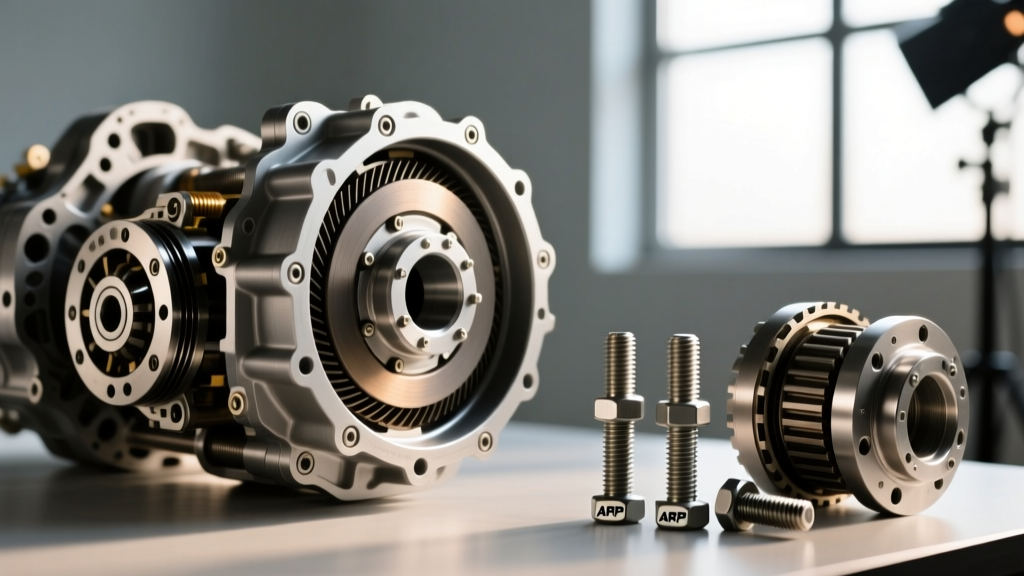
| ARP Custom Age 625+ (200-7304) | 260,000 psi | Nickel-Chrome-Moly Alloy | $35 - $45 (set) | Drag/Track 4L80E / TH400 |
| Ford Performance (M-6397-A) | 12.9 Grade | Alloy Steel, Black Oxide | $18 - $22 (set) | Coyote 6R80 / 10R80 Swaps |
| TCI Automotive (371000) | Grade 8 Equiv. | Heat-Treated Steel | $12 - $16 (set) | Street/Strip GM Applications |
Premium High-Stress Kits: ARP Fasteners
For vehicles seeing over 600 lb-ft of torque at the crank, standard OEM bolts are a liability. ARP (Automotive Racing Products) utilizes a proprietary nickel-chrome-molybdenum alloy that resists stretch even under extreme thermal cycling. As detailed in ARP's Fastener Tech Guides, maintaining bolt stretch is the only way to ensure the joint remains clamped when the flexplate deflects under high-torque loads. By preventing micro-slip, ARP bolts eliminate the friction heat that exacerbates torque converter overheating problems in high-horsepower builds.
OEM Replacements: When Factory Specs Suffice
If you are rebuilding a stock GM 6L80 or Ford 10R80 for a daily driver or light tow rig, OEM replacements are perfectly adequate—provided they are brand new. Never reuse factory torque converter bolts. They are designed as Torque-To-Yield (TTY) or high-stretch fasteners. Once torqued to their specified limit, the metal grain structure permanently deforms. Reusing them guarantees a loss of clamping force within the first 1,000 miles of thermal cycling.
Precision Installation: Torque Sequences and Runout Limits
Buying the right bolt is only half the battle. The installation procedure dictates whether your new hardware will actually solve your thermal issues. Improper torquing can warp the flexplate, instantly inducing the runout that causes fluid shear and overheating.
Step-by-Step Installation Protocol
- Surface Preparation: Clean the mating surface of the flexplate and the converter pads with brake cleaner. Any oil or debris will alter the friction coefficient, leading to inaccurate torque readings.
- Thread Engagement: Verify thread depth. Many aftermarket converters have deeper pads. If the bolt bottoms out before clamping the flexplate, it will read 'torqued' on your wrench while providing zero clamping force. Use a depth gauge and add hardened washers if necessary.
- Chemical Locking: Apply a medium-strength threadlocker (such as Loctite 243) to the threads. This prevents vibrational loosening and seals the threads against ATF contamination.
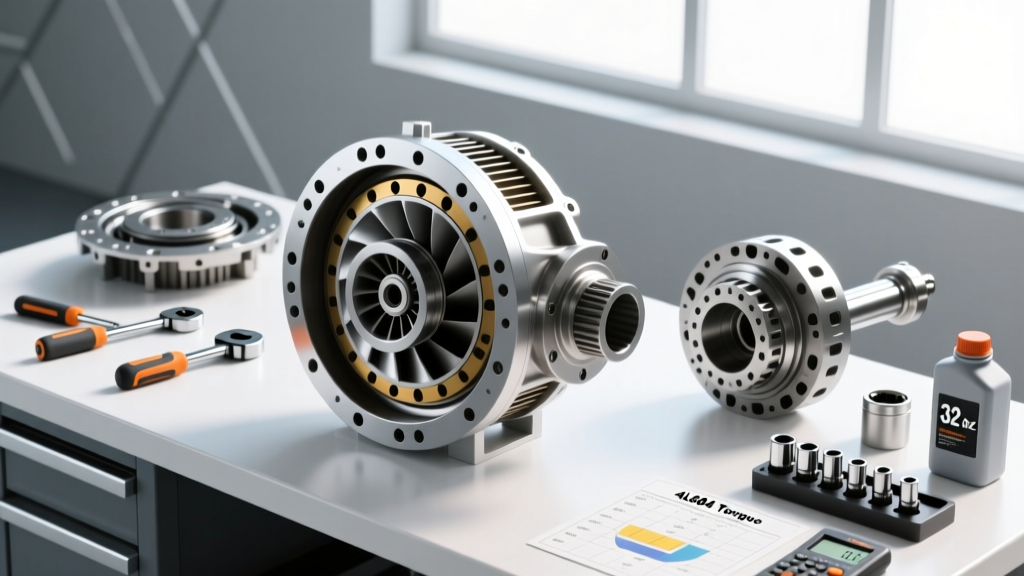
- The Star Pattern Sequence: Tighten the bolts in a crisscross star pattern. Do not torque to the final spec in one pass. Use a three-step progression: 15 lb-ft, 25 lb-ft, and finally the target spec.
- Final Torque Specs: For most GM applications (like the 4L60E and 6L80), the final torque spec for the torque converter to flexplate bolt is 37 lb-ft (50 Nm). For Ford applications, refer to the specific service manual, but it generally ranges between 35 and 45 lb-ft. Always use ARP's proprietary ultra-torque lube if using their hardware, as this alters the required torque value to achieve the correct bolt stretch.
Measuring Runout
After installation, mount a magnetic dial indicator to the engine block or bellhousing and rest the probe on the torque converter's pilot hub or rear pad. Rotate the crankshaft by hand. According to industry standards cited by Transmission Digest, maximum allowable runout for a stock passenger vehicle is 0.010 inches. For high-performance or heavy-towing applications where thermal management is critical, you must achieve a runout of 0.005 inches or less. If runout exceeds these limits, the converter will wobble, shearing the fluid and causing the exact overheating problems you are trying to prevent.
When to Abandon the Bolts and Replace the Converter
Upgrading your torque converter bolt hardware is a highly effective, low-cost intervention for runout-induced overheating. However, it is not a cure-all. If your dial indicator shows that the runout originates from the converter's internal hub (meaning the impeller is welded out of square to the hub), no amount of bolt clamping force will fix the issue. Furthermore, if the internal stator support has galled and is creating mechanical drag, the resulting heat will quickly overwhelm the cooling system regardless of fastener integrity.
By understanding the critical role that fastener metallurgy, clamping force, and precision installation play in hydrodynamic alignment, you can eliminate a major hidden variable in your transmission's thermal management. Whether you choose OEM 10.9 replacements for a daily driver or ARP 625+ hardware for a track build, respecting the torque converter bolt is essential for long-term transmission survival.