Understanding Stall Speed and Bilingual Shop Terminology
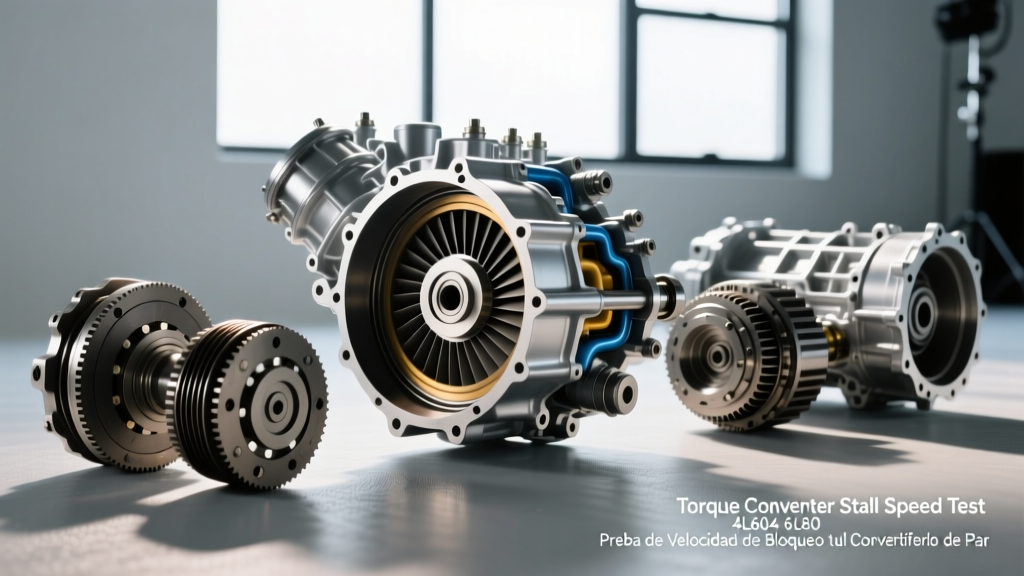
In the modern automotive repair industry, technical knowledge must cross language barriers. With a growing bilingual workforce in US repair facilities, understanding the torque converter en español terminology is just as critical as knowing the mechanical diagnostics. This step-by-step guide covers the exact procedures for testing torque converter stall speed on popular platforms like the GM 4L60E, GM 6L80, and ZF 8HP70, while providing a comprehensive bilingual glossary for shop communication.
The Physics of the Stall: Impeller, Turbine, and Stator
Stall speed is defined as the maximum RPM an engine can achieve with the transmission in gear and the output shaft held completely stationary. During this test, the torque converter's impeller (driven by the engine) spins at maximum velocity, while the turbine (connected to the transmission input shaft) remains at 0 RPM. The stator, located between the two, redirects fluid flow to multiply torque—often up to a 2.5:1 ratio. The stator's internal sprag clutch locks the stator to the transmission stator shaft during this phase. If the sprag fails, torque multiplication drops drastically, severely impacting your stall speed test results.
Pre-Test Diagnostics: Fluid & Line Pressure Verification
Never perform a stall test on a transmission with low fluid, incorrect fluid, or known internal pressure leaks. The extreme heat generated can flash-boil degraded ATF in seconds.
- GM 4L60E / 6L80: Requires Dexron VI (GM Part #19355656). Verify fluid level at 180°F-200°F (82°C-93°C) using the dipstick or scan tool temperature PID.
- ZF 8HP70: Requires ZF LifeguardFluid 8 (S671 090 255). Level must be checked with the vehicle perfectly level and fluid between 86°F-122°F.
- Line Pressure Check: Connect a mechanical gauge. The 4L60E should show 190-200 PSI in Reverse. For the 6L80, use a bi-directional scan tool to command maximum line pressure and verify the internal pressure switch readings match.
Step-by-Step Stall Speed Testing Procedure
Safety is paramount. The vehicle will attempt to move with immense force. Ensure the brake system is in perfect condition and wheels are heavily chocked.
- Secure the Vehicle: Chock all four wheels. Engage the parking brake fully. Have an assistant stand outside the vehicle with a secondary plan to kill the ignition if the brakes fail.
- Warm Up the Drivetrain: Drive the vehicle for 15 minutes to bring the ATF, engine coolant, and differential fluids to full operating temperature.
- Position the Shifter: Place the transmission in Drive (D). For 4L60E testing, some technicians prefer Low (1) to prevent accidental overdrive band application, though Drive is standard for turbine testing.
- Brake and Throttle Application: Press the brake pedal to the floor with your left foot, applying maximum force. With your right foot, quickly apply Wide Open Throttle (WOT).
- Read and Record: Watch the tachometer. The RPM will climb and peak. This peak is your stall speed. CRITICAL: Do not hold WOT for more than 3 to 5 seconds. Prolonged testing will overheat the ATF, glaze the clutches, and destroy the converter internals.
- Cool Down: Release the throttle, shift to Neutral, and allow the engine to idle for 60 seconds. Then, drive the vehicle at 45 MPH for two minutes to force coolant through the transmission heat exchanger.
- Repeat: Perform the test in Reverse to check for specific band/clutch holding capacity differences.
Diagnostic Matrix: Interpreting Your Stall Speed RPM
| Transmission Model | Stock Stall RPM Range | RPM Too Low (Symptoms) | RPM Too High (Symptoms) |
|---|---|---|---|
| GM 4L60E | 1800 - 2200 RPM | Engine restricted (catalytic converter), broken stator sprag (freewheeling) | Forward clutch slipping, 3-4 clutch pack failure, low line pressure |
| GM 6L80 | 2000 - 2400 RPM | Exhaust restriction, torque management limiting engine output via ECM | Input clutch slipping, TCC stuck partially applied, worn turbine fins |
| ZF 8HP70 | 1800 - 2100 RPM | Mechatronic unit limiting pressure, engine misfire under load | Clutch 'A' or 'B' slipping, mechatronic seal sleeve leak |
Common Symptoms of a Failing Torque Converter
Before you even perform a stall test, the vehicle will usually exhibit specific drivability complaints. According to Sonnax Tech Resources, the most common torque converter failures include:
- TCC Shudder: A rhythmic vibration felt at 40-55 MPH when the Torque Converter Clutch applies. Often caused by degraded friction material or contaminated ATF.
- Cavitation Whine: A high-pitched noise that increases with engine RPM, indicating the converter is starved of fluid due to a clogged filter or failing front pump.
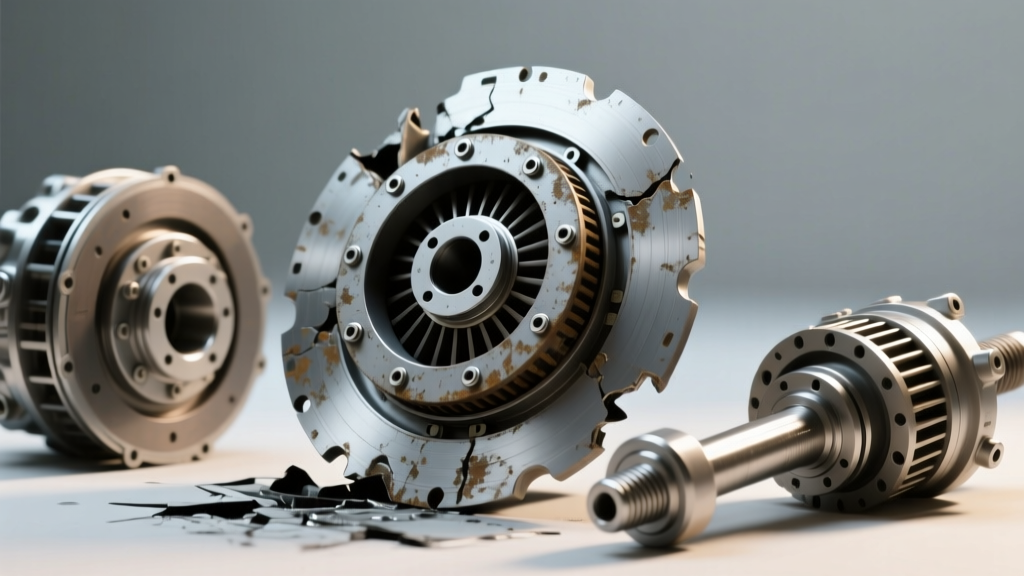
- Debris in the Pan: If you drop the transmission pan and find glitter-like metallic particles or heavy clutch material, the converter is likely contaminated and must be replaced or professionally flushed on a machine like the Cooler Flusher.
Torque Converter en Español: Essential Bilingual Glossary
Effective communication in a diverse shop environment prevents costly diagnostic errors. Use this torque converter en español translation guide when discussing repairs with bilingual technicians or ordering parts from international suppliers.
| English Term | Spanish Translation | Shop Context / Usage |
|---|---|---|
| Torque Converter | Convertidor de Par | The primary fluid coupling component. |
| Stall Speed | Velocidad de Calado | Max RPM at zero output shaft speed. |
| Stator | Estator | The finned ring that redirects fluid flow. |
| Impeller (Pump) | Impulsor / Bomba | The outer shell driven by the flexplate. |
| Turbine | Turbina | The inner component splined to the input shaft. |
| Sprag Clutch | Embrague de Rodillos | One-way clutch inside the stator. |
| TCC (Lockup Clutch) | Embrague de Bloqueo | Friction disc that locks engine to trans. |
| Flexplate | Placa Flexible | Connects crankshaft to converter hub. |
2026 Replacement Costs & Part Number Guide
If your stall test confirms internal converter failure, replacement is mandatory. Attempting to flush a converter with failed needle bearings or shattered sprags will destroy the new transmission. Based on current ATRA (Automatic Transmission Rebuilders Association) market data, here is what you can expect to pay in 2026:
- GM 4L60E Stock Replacement: Circle D or Precision Industries stock stall converters range from $350 to $450. Part Example: Circle D 4L60E Stock (Part #4LS).
- GM 6L80 Performance Upgrade: Yank PowerTrek or Stallion converters for towing/modified applications range from $750 to $950. Part Example: Yank 6L80 2800 RPM.
- ZF 8HP OEM Replacement: Factory BMW/FCA ZF converters are expensive, ranging from $1,100 to $1,500. Always replace the mechatronic sealing sleeve (ZF Part #2434 7 588 725) and the flexplate bolts (torqued to 85 Nm) during installation.
- Labor Costs: R&R (Remove and Replace) labor typically runs $800 to $1,200, depending on 4WD vs 2WD configurations and exhaust removal requirements.
Pro-Tip: Always Replace the Rear Main Seal
While the transmission and torque converter are out of the vehicle, always replace the engine rear main seal. For GM LS/LT engines, use the updated GM Part #12689995. A $30 seal failure later will require paying the $1,000 labor rate all over again. Clean the converter hub mating surface with fine emery cloth to prevent front transmission pump seal leaks.