The Fundamental Divide: Fluid Coupling vs. Friction Coupling
When engineering a high-horsepower drivetrain, the debate between a traditional manual clutch and an automatic torque converter often centers on power delivery, parasitic loss, and shift characteristics. However, from a mechanical engineering and metallurgical standpoint, the most critical divergence lies in how these components mount to the engine’s crankshaft and manage torsional vibration. As of 2026, with the proliferation of high-output LS, LT, and modular V8 swaps, understanding the structural differences between these coupling methods is paramount for drivetrain longevity.
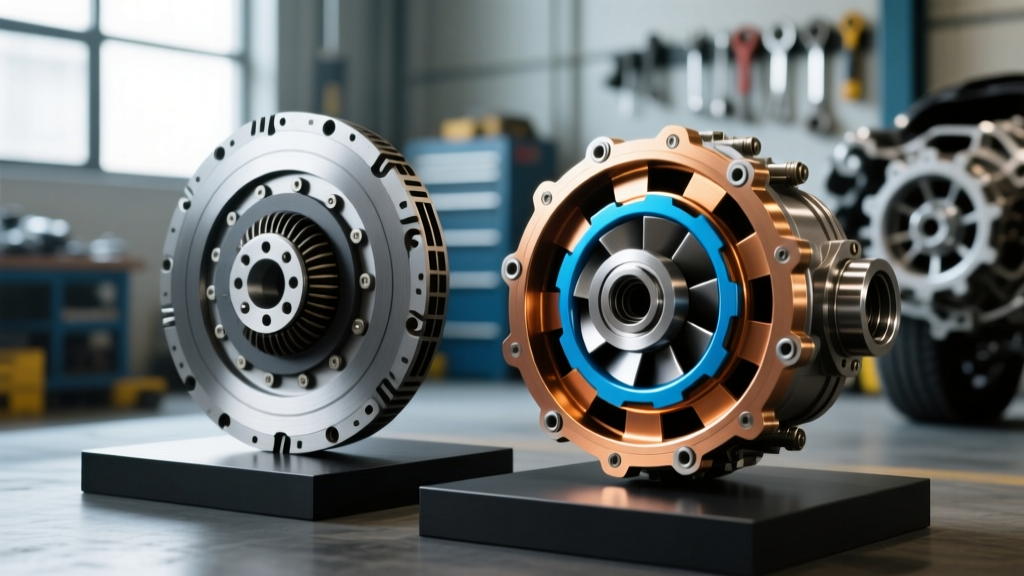
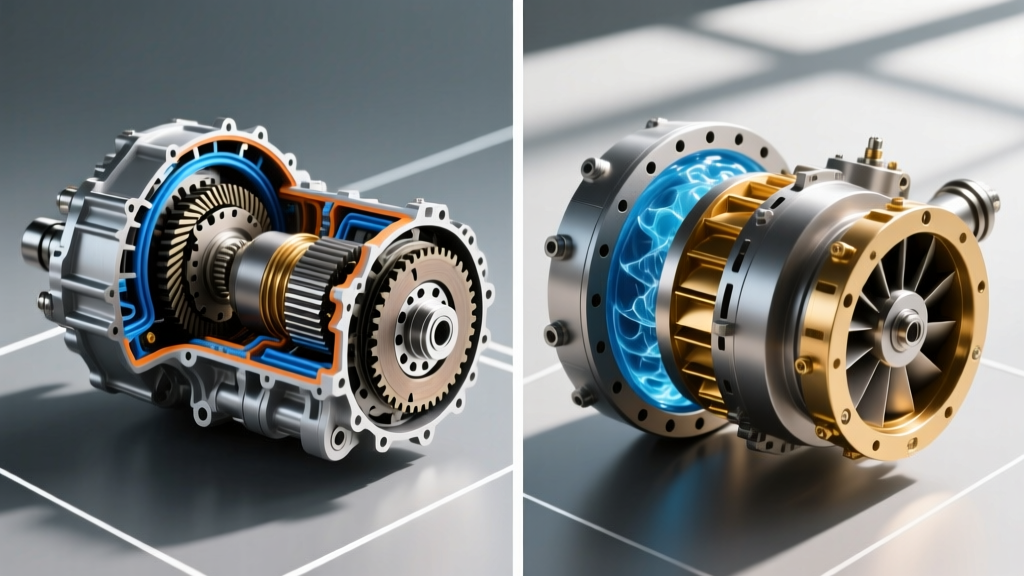
A manual clutch relies on a rigid friction interface. The flywheel stores kinetic energy, smoothing out engine pulses, while the clutch disc’s sprung hub absorbs the initial mechanical shock of engagement. Conversely, an automatic transmission utilizes a hydrodynamic torque converter. The converter’s impeller, turbine, and stator manage power transfer via transmission fluid, acting as a fluidic damper. Because the torque converter itself handles the dampening, the mechanical mounting interface—the flexplate—is subjected to entirely different stress vectors than a manual flywheel. This distinction dictates the necessity for specialized, high-yield fasteners like the ARP 2307302 torque converter bolt in performance applications.
Mounting Architecture: Flexplate vs. Flywheel Dynamics
To understand why hardware selection is so critical, we must compare the mounting surfaces. A manual flywheel is typically a massive, rigid disc of cast iron or billet steel, weighing anywhere from 15 to 35 pounds. It bolts directly to the crankshaft flange using high-tensile flywheel bolts (often 3/8-24 or 12mm x 1.5 in modern GM applications). The primary stress on these bolts is axial clamping load and centrifugal force.
A torque converter, however, mounts to a flexplate. The flexplate is a relatively thin, flexible ring of stamped steel or billet aluminum designed to bridge the gap between the crankshaft and the converter’s mounting pads. It must be flexible enough to allow the torque converter to expand slightly under high hydraulic pressure (a phenomenon known as 'converter ballooning') while transmitting immense rotational torque. Because the flexplate lacks the mass to absorb torsional resonance, the fasteners securing the converter to the flexplate endure severe shear forces and cyclic fatigue. Standard OEM bolts frequently stretch and yield under these conditions, leading to catastrophic flexplate failure.
Torsional Shock and Hardware Fatigue
When a torque converter locks up via the Torque Converter Clutch (TCC), or when a trans-brake is released in a drag racing application, the shockwave travels directly through the converter pads into the flexplate bolts. According to Sonnax Technical Resources, improper fastener clamping force can lead to micro-movements between the converter pad and the flexplate. This fretting corrosion elongates the bolt holes, ultimately causing the flexplate to crack radially from the center hub outward.
Deep Dive: ARP 2307302 Torque Converter Bolt Specifications
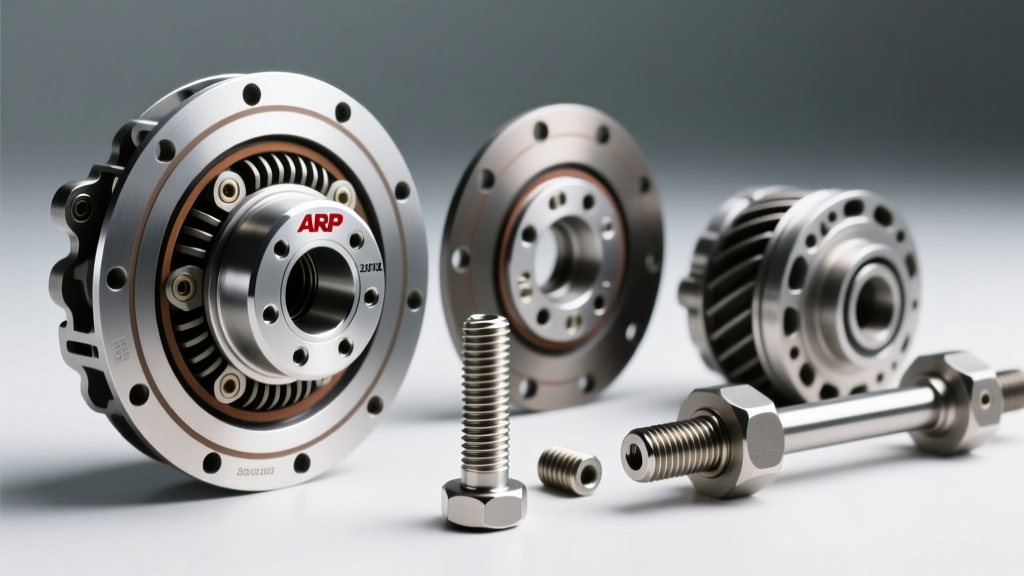
To combat flexplate fatigue and converter separation, performance builders universally turn to upgraded hardware. The ARP 2307302 torque converter bolt kit is the industry standard for General Motors TH350, TH400, 4L60E, and 4L80E applications. Manufactured by ARP (Automotive Racing Products), these fasteners are engineered to exceed the yield limits of standard Grade 8 hardware.
Metallurgy and Tensile Strength
The ARP 2307302 kit features bolts machined from premium 8740 chromoly steel. This specific alloy provides a tensile strength of 180,000 psi, significantly higher than the 120,000 to 130,000 psi typical of OEM torque converter bolts. The kit includes 7/16-20 UNF threaded bolts with a compact 12-point head design, allowing for easier socket access in the tight confines of a bellhousing. The 12-point flange head also distributes the clamping load more evenly across the converter pad, reducing the risk of localized pad deformation.
- Part Number: ARP 230-7302
- Material: 8740 Chromoly Steel
- Tensile Strength: 180,000 PSI
- Thread Size: 7/16-20 UNF
- Head Style: 12-Point Flange
- Undercut: Reduced underhead radius to prevent stress risers on the flexplate
Torque Converter vs Clutch: Hardware & Stress Comparison
The following table illustrates the fundamental mechanical differences between manual clutch mounting hardware and automatic torque converter fasteners.
| Feature | Manual Clutch Flywheel Assembly | Automatic Torque Converter Assembly |
|---|---|---|
| Mounting Surface | Rigid Cast Iron / Billet Steel Flywheel | Stamped Steel / Billet Aluminum Flexplate |
| Torsional Dampening | Sprung Hub Friction Disc / Dual-Mass Flywheel | Hydrodynamic Fluid / Internal Damper Springs |
| Typical Fastener | Grade 8 / ARP 3/8-24 or 12mm Flywheel Bolt | ARP 2307302 Torque Converter Bolt (7/16-20) |
| Primary Stress Vector | Axial Clamping Load & Centrifugal Force | Shear, Torsional Shock, & Converter Ballooning |
| Failure Mode | Friction Disc Wear, Flywheel Warping | Flexplate Cracking, Bolt Stretch, Pad Elongation |
Installation Protocols and Torque Sequences
Installing the ARP 2307302 torque converter bolt kit requires strict adherence to metallurgical best practices. A common mistake among novice mechanics is lubricating chromoly bolts with standard 30-weight motor oil or assembly lube, which alters the friction coefficient and leads to severe over-torquing.
ARP explicitly mandates the use of their Ultra-Torque fastener assembly lubricant. When using Ultra-Torque, the target torque specification for the 7/16-20 chromoly bolts is 55 ft-lbs. This must be applied in a crisscross or star pattern to ensure the torque converter is drawn perfectly flush against the flexplate without inducing parasitic bending stresses. As highlighted in Summit Racing Technical Advice, failing to achieve uniform clamping force can result in harmonic vibrations that mimic internal transmission bearing failure.
Expert Note: Never use an impact wrench to seat torque converter bolts. The rapid hammering action can gall the threads and yield the bolt before the torque wrench ever clicks. Always thread the bolts by hand to ensure the 7/16-20 threads engage cleanly through the flexplate and into the converter pad.
Diagnostic Symptoms of Mounting Hardware Failure
Because the torque converter and flexplate are enclosed within the bellhousing, diagnosing hardware failure requires a keen understanding of drivetrain acoustics and telemetry. If OEM bolts have stretched or if aftermarket bolts were improperly torqued, the following symptoms will manifest:
1. Torque Converter Shudder and TCC Slip Codes
When the fasteners fail to maintain rigid coupling, the flexplate can oscillate microscopically. This oscillation is transmitted through the transmission fluid, resulting in a violent shudder during TCC lockup (typically between 40-55 MPH). The transmission control module (TCM) will often misinterpret this mechanical vibration as hydraulic slip, triggering diagnostic trouble codes such as P0741 (Torque Converter Clutch Circuit Performance) or P1870 (Component Slipping).
2. Metallic Knocking at Idle
A distinct, rhythmic metallic knocking sound emanating from the rear of the engine block at idle is a primary indicator of flexplate fatigue. As the bolt holes elongate due to improper clamping force from inferior bolts, the heavy torque converter shifts slightly on the flexplate with every engine combustion pulse. This sound is often misdiagnosed as rod knock or piston slap until the bellhousing is dropped.
3. Starter Engagement Grinding
The flexplate also serves as the ring gear for the starter motor. If the ARP 2307302 bolts are not torqued correctly, or if the flexplate has begun to crack around the mounting pads, the entire assembly can wobble axially. This wobble causes the starter Bendix gear to clash against the ring gear, resulting in severe grinding noises and eventual starter motor failure.
Conclusion: The Importance of Precision Hardware
The torque converter vs clutch comparison ultimately reveals that while manual transmissions rely on mass and friction to manage drivetrain shock, automatic systems depend on fluid dynamics and the structural integrity of the flexplate interface. Upgrading to the ARP 2307302 torque converter bolt kit is not merely a preventative measure; it is a fundamental requirement for any high-horsepower GM automatic build. By securing the converter with 180,000 PSI chromoly fasteners and adhering to strict torque sequences, builders can eliminate flexplate fatigue, prevent catastrophic bellhousing failures, and ensure seamless power delivery from the crankshaft to the planetary gearsets.