Fluid Dynamics vs. Friction: Understanding the Coupling Divide
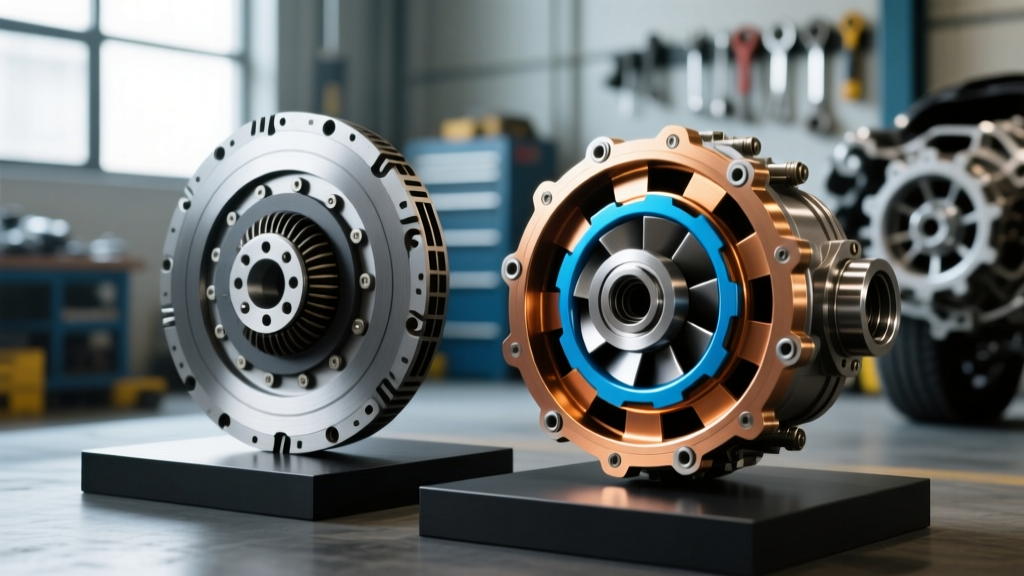
When evaluating drivetrain longevity and repair economics, enthusiasts and technicians frequently debate the merits of automatic versus manual transmissions. At the heart of this debate is the coupling mechanism that connects the engine’s rotational mass to the transmission’s input shaft. On one side, we have the hydrodynamic torque converter; on the other, the traditional dry-friction manual clutch. While both serve the identical purpose of interrupting and transferring torque, their operational mechanics, failure modes, and ultimate repair costs diverge wildly.
As we navigate the automotive landscape in 2026, modern automatics like the ZF 8HP and GM 10L90 have blurred the lines by integrating sophisticated multi-plate torque converter clutches (TCC). However, comparing a traditional automatic torque converter to a manual clutch kit (such as those found in a Tremec T56 Magnum) reveals fundamental engineering differences. This technical deep-dive explores these systems, their distinct failure symptoms, and the real-world torque converter cost to replace versus a standard manual clutch job.
Operational Mechanics: Hydrodynamic Multiplication vs. Direct Friction
The Torque Converter: Impeller, Turbine, and Stator
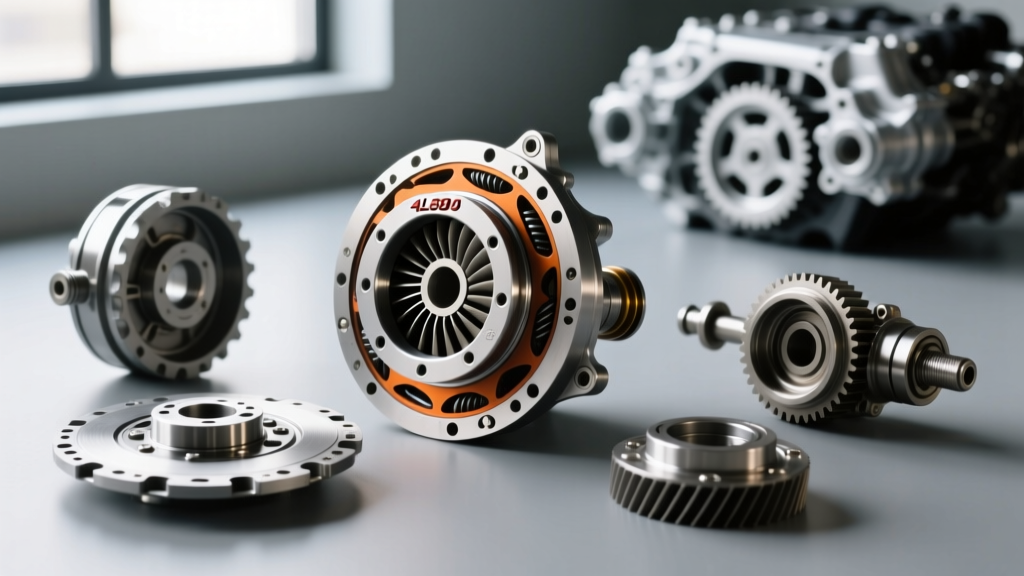
A torque converter is a fluid coupling filled with automatic transmission fluid (ATF). It relies on three primary internal components:
- Impeller (Pump): Bolted directly to the engine’s flexplate, it spins at engine RPM, using centrifugal force to drive ATF outward.
- Turbine: Connected to the transmission input shaft, it catches the fluid thrown by the impeller, transferring rotational energy to the gearbox.
- Stator: Positioned between the impeller and turbine, the stator redirects fluid flow via a one-way roller clutch. This redirection is what allows the torque converter to multiply engine torque (often by a factor of 2.0:1 to 2.5:1) during initial acceleration, a feat impossible for a standard manual clutch.
According to Sonnax Technical Resources, the stator's one-way clutch is a critical wear item. If it fails to lock, the converter loses torque multiplication, resulting in severe off-the-line sluggishness. If it fails to freewheel, the converter creates massive parasitic drag and overheats the ATF at highway speeds.
The Manual Clutch: Flywheel, Friction Disc, and Pressure Plate
A manual clutch relies on raw mechanical friction. The flywheel is bolted to the crankshaft, providing a massive, flat friction surface and rotational inertia. The clutch disc, lined with organic, ceramic, or Kevlar friction material, is splined to the transmission input shaft. The pressure plate uses a heavy diaphragm spring to clamp the disc against the flywheel.
Unlike a torque converter, a manual clutch provides zero torque multiplication. It is strictly a 1:1 coupling device (outside of the gearbox's gear ratios). Its engagement relies entirely on the driver's modulation of the clutch pedal, which actuates a hydraulic throw-out bearing to release the pressure plate's clamping force.
Failure Modes and Diagnostic Symptoms
Diagnosing a failing coupling mechanism requires understanding the distinct symptoms of fluid-based versus friction-based failures.
Torque Converter Failure Symptoms
- TCC Shudder: A vibration felt at highway speeds (typically 45-55 mph) during light throttle. This occurs when the Torque Converter Clutch (TCC) attempts to lock but slips due to degraded friction material or contaminated ATF.
- Stator Failure: Characterized by poor initial acceleration but normal highway cruising. The engine feels "gutless" off the line because the stator is freewheeling in both directions.
- Needle Bearing Disintegration: Internal needle bearings separate the rotating components. When these fail, they generate a distinct whining noise that changes pitch with engine RPM, regardless of vehicle speed, and contaminate the transmission cooler.
Manual Clutch Failure Symptoms
- Friction Material Wear (Slipping): RPMs flare under heavy load or in higher gears without a corresponding increase in vehicle speed. The clutch disc has worn too thin for the pressure plate to maintain adequate clamping force.
- Throw-Out Bearing Failure: A harsh grinding or chirping noise that occurs only when the clutch pedal is depressed, indicating the bearing is failing under load against the pressure plate fingers.
- Pressure Plate Fatigue: The diaphragm spring loses tension over time, leading to a heavy pedal feel and incomplete disengagement, causing gear grinding during shifts.
Financial Breakdown: Torque Converter Cost to Replace vs. Clutch Job
When the coupling mechanism fails, the financial impact is a primary concern for vehicle owners. The torque converter cost to replace is often misunderstood because it is inextricably linked to transmission removal and fluid system decontamination. Below is a comparative analysis based on common RWD platforms: the GM 6L80 automatic and the Tremec T56 Magnum manual.
| Cost & Labor Factor | GM 6L80 Torque Converter (Automatic) | Tremec T56 Magnum Clutch (Manual) |
|---|---|---|
| Primary Component Cost | $400 - $750 (OEM/Remanufactured) | $450 - $850 (LuK/McLeod Kit) |
| Ancillary Parts | $150 (ATF, Filter, Cooler Flush Kit) | $80 (Pilot Bearing, Rear Main Seal) |
| Flywheel/Flexplate | Rarely replaced unless cracked ($150) | Resurfacing ($75) or Replacement ($250) |
| Labor Time (RWD) | 6.5 - 8.5 Hours | 5.0 - 7.0 Hours |
| Estimated Total Cost | $1,400 - $2,300 | $1,100 - $1,900 |
Expert Insight: The true hidden cost in the torque converter cost to replace equation is the mandatory transmission cooler flush. If a torque converter's internal needle bearings or TCC friction material disintegrates, metallic debris and clutch lining particles will pack into the radiator's transmission cooler. Failing to flush or replace the cooler lines will immediately destroy the newly installed torque converter and the transmission's valve body. A manual clutch job requires no such fluid system decontamination.
Teardown Realities and Torque Specifications
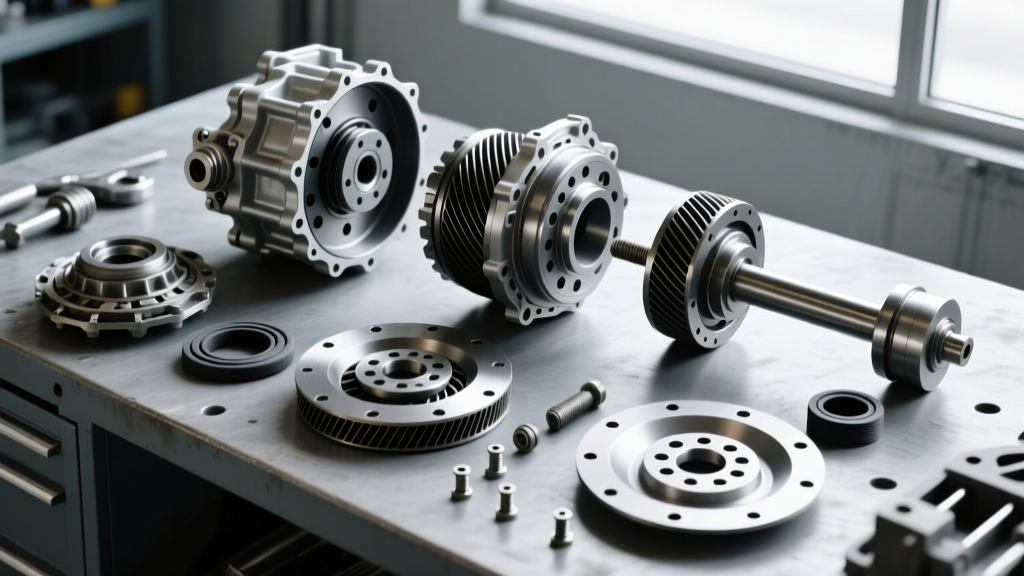
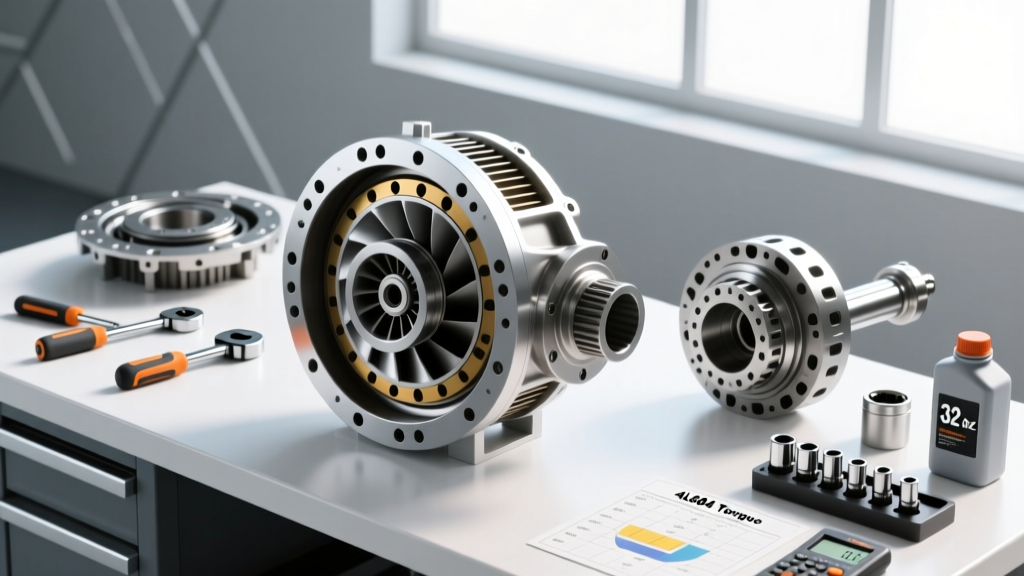
The physical installation of these components highlights the precision required in modern drivetrain assembly. While Tremec Driveline Solutions designs their manual transmissions for robust, high-torque applications, the mating surfaces require exact torque sequences to prevent harmonic vibrations and premature wear.
Critical Torque Specs (GM LS V8 Platform Examples)
- Flexplate to Crankshaft (Automatic): 74 lb-ft (M10 bolts). Must use threadlocker and follow a star pattern to prevent flexplate warping, which causes torque converter pump bushing failure.
- Flywheel to Crankshaft (Manual): 74 lb-ft (M10 bolts). Proper seating is vital to prevent flywheel runout, which leads to clutch chatter.
- Torque Converter to Flexplate: 18 lb-ft (M8 nuts). Crucial: The converter must be fully seated into the transmission oil pump before tightening. If the converter is pulled forward to meet the flexplate, the oil pump will shatter upon engine startup.
- Pressure Plate to Flywheel: 35 lb-ft (M8 bolts). Must be tightened in a strict star pattern, one turn at a time, to ensure even clamping load on the diaphragm spring.
Modern Convergence: The TCC and Dual-Clutch Systems
It is impossible to discuss this topic in 2026 without acknowledging how modern engineering has merged these two concepts. The Torque Converter Clutch (TCC) inside a modern ZF 8HP or GM 10L90 is, essentially, a wet multi-plate manual clutch housed inside the fluid coupling. To eliminate the inherent efficiency loss of fluid slip, modern transmissions apply the TCC as early as 1st or 2nd gear, using Pulse Width Modulated (PWM) solenoids to create a "controlled slip" of 20-40 RPM. This reduces emissions and improves fuel economy but places immense thermal stress on the TCC friction material.
Furthermore, Dual-Clutch Transmissions (DCTs) like the Porsche PDK or the Ford 10-speed DCT abandon the torque converter entirely, relying on computer-modulated wet clutches to manage torque transfer. While highly efficient, when a DCT clutch pack fails, the repair cost often dwarfs both a traditional torque converter and a manual clutch, frequently exceeding $4,000 due to the need for specialized mechatronic recalibration.
Summary: Which is the Better Investment?
When comparing the torque converter cost to replace against a manual clutch replacement, the manual clutch generally wins on pure parts and labor simplicity. A clutch kit is a mechanical wear item designed to be replaced, and the flywheel can often be resurfaced locally. Conversely, a torque converter is a sealed, welded unit; when it fails, it must be cut open, remanufactured, or replaced entirely, and the collateral damage to the transmission fluid system adds significant labor and material costs.
However, a well-maintained torque converter in a modern automatic transmission can easily outlast the vehicle itself, often surviving past 200,000 miles with regular ATF changes. Manual clutches, heavily dependent on driver behavior, may require replacement every 60,000 to 100,000 miles in aggressive driving conditions. Ultimately, understanding the mechanical realities of fluid coupling versus friction coupling allows technicians and owners to make informed, cost-effective decisions regarding drivetrain maintenance and repair.
For further reading on automatic transmission valve body diagnostics and torque converter lockup strategies, consult the technical archives at Transmission Digest.