The Hidden Culprit: Fluid Degradation in the Torque Converter
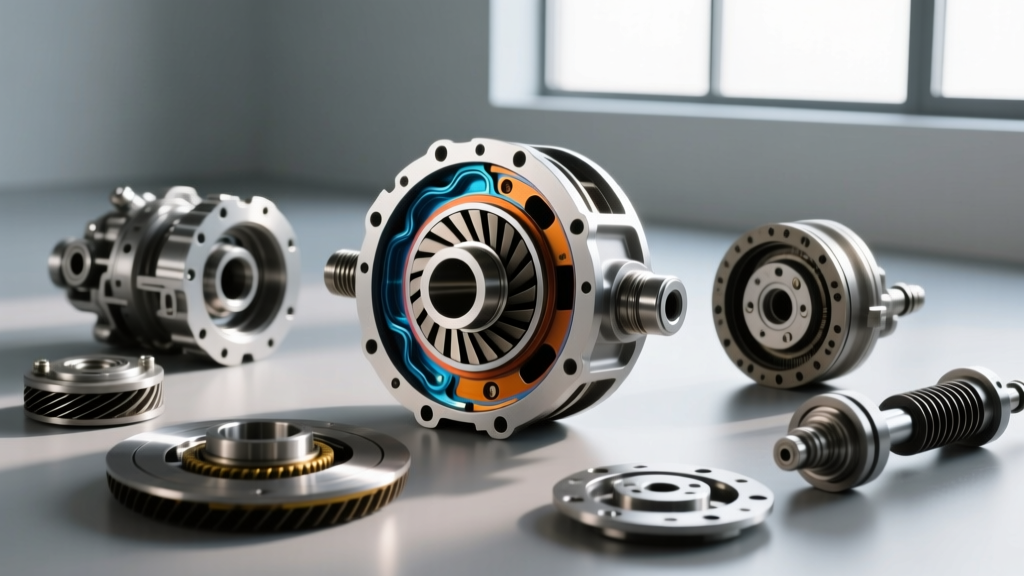
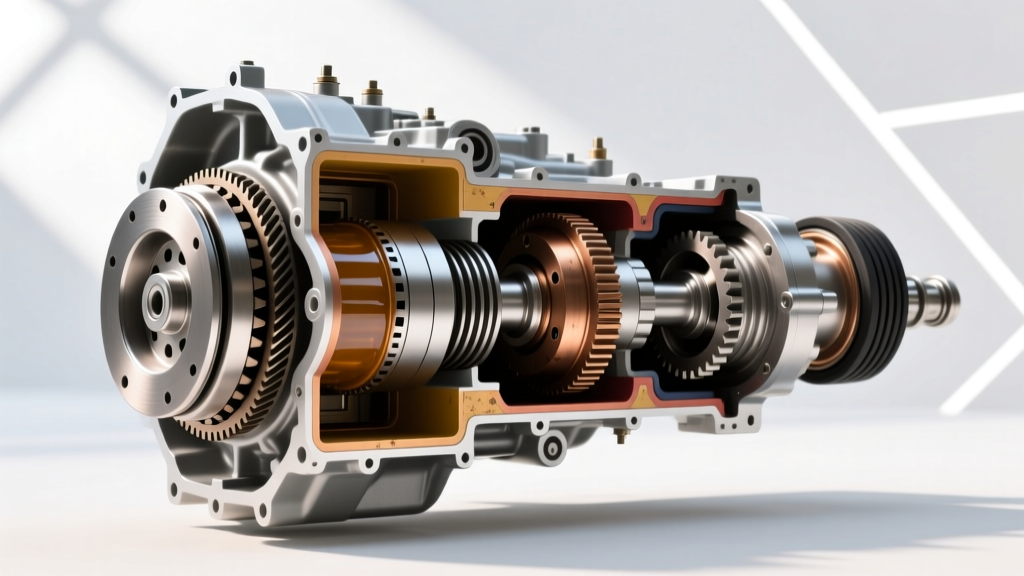
When diagnosing a failing torque converter automatic transmission system, technicians often jump straight to mechanical wear, assuming the stator clutch or the turbine fins are at fault. However, the most common root cause of torque converter shudder, micro-slippage, and hydrodynamic inefficiency is entirely chemical: automatic transmission fluid (ATF) degradation. The torque converter is a sealed hydrodynamic coupling that relies on ATF not just for power transfer, but for thermal dissipation and precise friction modulation during Torque Converter Clutch (TCC) lockup.
In modern transmissions, the TCC is rarely fully locked or fully open. Instead, it operates in a controlled micro-slip state—often slipping at a precise 20 to 40 RPM differential—to cancel out engine torsional vibrations. When the friction modifiers in the ATF shear and deplete, the TCC can no longer maintain this micro-slip, resulting in a violent 30-50 Hz shudder that mimics driving over rumble strips. Understanding the chemistry and hydraulics of ATF is mandatory for accurate diagnosis in 2026.
Hydrodynamic Coupling and Friction Modifier Shear
ATF is a complex suspension of base oils, detergents, anti-wear agents, and friction modifiers. Inside the torque converter, the fluid is subjected to extreme shearing forces as the impeller throws it against the turbine at thousands of RPMs. Over time, the long-chain polymers that provide the fluid's viscosity index are physically torn apart.
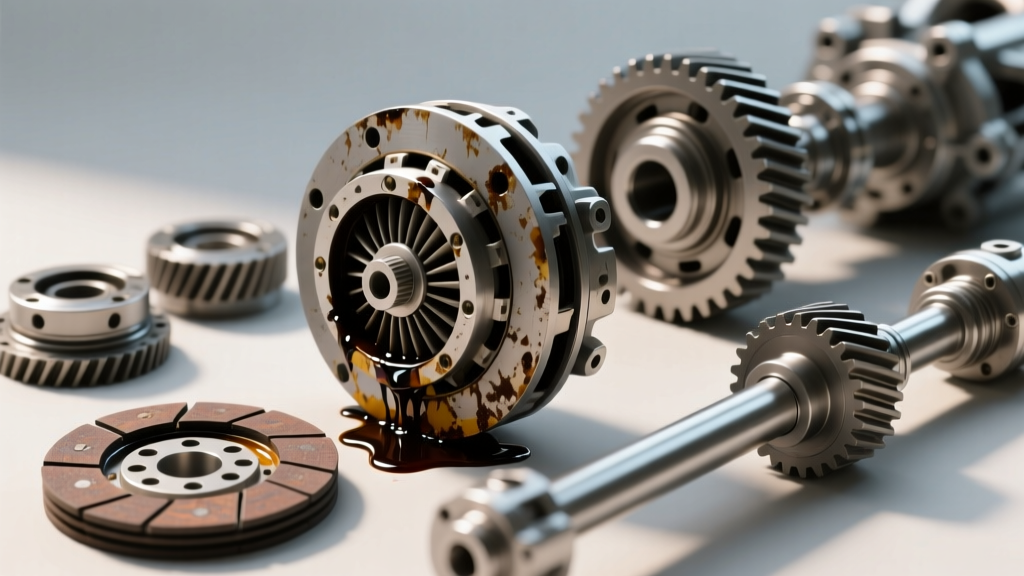
More critically, the organic and molybdenum-based friction modifiers that coat the TCC friction material begin to deplete. According to research published by SAE International, once the friction modifiers drop below their critical threshold, the coefficient of friction between the TCC piston and the converter cover becomes non-linear. This causes the clutch to rapidly grab and release, generating the harmonic shudder that ultimately destroys the torsional damper springs inside the converter.
Top Fluid-Related Torque Converter Symptoms
- TCC Shudder Under Light Throttle: Typically felt between 40-55 mph in higher gears. The vehicle vibrates rhythmically, which is instantly relieved by tapping the brake pedal (which commands the TCM to release the TCC).
- High-Pitched Whine at Stall: A sign of fluid cavitation. If the fluid level is low or the fluid is heavily aerated due to a degraded anti-foaming agent package, the impeller draws in air bubbles, causing a distinct whining noise and a severe lack of torque multiplication.
- Delayed Engagement with 'Flare': When shifting from Park to Drive, the engine RPMs flare before the gear catches. This indicates that degraded fluid is failing to transmit adequate hydraulic pressure to the forward clutch pack and the torque converter stator clutch.
- Erratic Lockup Behavior: The TCC hunts for lockup, rapidly cycling on and off. This is often caused by clutch material delaminating from the torque converter cover and migrating into the TCC PWM (Pulse Width Modulation) solenoid screen.
Diagnostic Matrix: Fluid Condition vs. Torque Converter Failure
Pulling the transmission dipstick (or cracking the pan plug on sealed units) provides immediate insight into the internal state of the torque converter. Use this diagnostic matrix to guide your teardown or service strategy.
| Fluid Visual/Olfactory State | Primary Torque Converter Symptom | Underlying Mechanical Reality |
|---|---|---|
| Dark brown, severe burnt odor | Severe TCC slip, high RPM stall speeds, overheating | Friction material has delaminated from the TC cover; stator clutch is likely burned. |
| Cherry red, but low level | TC whine, delayed engagement, poor low-speed multiplication | Pump cavitation due to inadequate fluid volume; hydrodynamic coupling is compromised. |
| Normal color, high mileage (60k+) | 40Hz TCC shudder under light throttle, micro-slip codes | Depleted friction modifiers; fluid cannot manage the controlled slip of the TCC apply curve. |
| Glitter/Metallic sheen in fluid | Harsh engagements, TCC solenoid codes (e.g., P0741) | Bearing failure inside the TC or stator wear; metallic debris is choking the TCC orifice. |
Model-Specific Fluid Best Practices and Vulnerabilities
GM 6L80 / 6L90 and Dexron VI Degradation
The GM 6L80 is notorious for TCC shudder, often manifesting between 80,000 and 120,000 miles. The aggressive friction material used on the 6L80 torque converter piston requires the precise friction profile of genuine Dexron VI. When generic 'multi-vehicle' ATFs are used, shudder is almost guaranteed. Furthermore, as the TCC lining wears, debris bypasses the converter and enters the valve body. It specifically targets the TCC regulator valve. If you are replacing a 6L80 torque converter due to shudder, it is an industry best practice to install the Sonnax 104740-03K TCC Regulator Valve kit to restore proper hydraulic apply pressure. Total fluid capacity is roughly 11.2 quarts, but a pan drop only yields about 5 quarts, meaning a machine exchange or multiple drain-and-fills is required to properly service the torque converter.
ZF 8HP45 / 8HP70 and the 'Lifetime' Fluid Myth
The ZF 8-speed automatic is an engineering marvel, utilizing a highly sophisticated torque converter with an integrated twin-damper system to allow for early TCC lockup—sometimes as early as 1st gear. This places immense thermal load on the fluid. ZF specifies LifeguardFluid 8 (Part # S671 090 312). While some OEMs label this fluid as 'lifetime,' ZF Aftermarket officially recommends a fluid and filter change at 60,000 miles (or 8 years) for vehicles subjected to severe driving conditions, which includes most daily commuting and towing. Using incorrect fluid in the ZF 8HP alters the lockup apply curve programmed into the TCM, leading to harsh garage shifts and converter damper rattle.
Ford 6R80 and Mercon LV Thermal Breakdown
The Ford 6R80 (based on the ZF 6HP26 architecture) relies on Mercon LV. A common failure point is the torque converter clutch lining wearing prematurely if the vehicle is frequently used for towing without an auxiliary transmission cooler. The fluid degrades thermally, losing its shear stability. If a 6R80 presents with P0741 (Torque Converter Clutch System Stuck Off), always check the fluid for clutch debris before condemning the TCC solenoid.
Expert Flushing vs. Drain-and-Fill Protocols
There is a persistent debate in the transmission industry regarding how to service the fluid inside a torque converter. Because the torque converter lacks a drain plug on 99% of modern passenger vehicles, a simple pan drop leaves roughly 50% to 60% of the degraded fluid trapped inside the converter and the cooler lines.
According to the Automatic Transmission Rebuilders Association (ATRA), machine flushing is highly effective for fluid exchange, but must never be performed using high-pressure 'power flush' equipment on a high-mileage transmission. High pressure can dislodge varnish and clutch material, lodging it directly into the TCC apply orifice or the stator support tubes.
The Expert Protocol: For a torque converter exhibiting early-stage shudder (no burnt smell, no metallic debris), perform a 3x Drain-and-Fill procedure. Drive the vehicle for 100 miles between each service to allow the transmission's internal thermostat to open, ensuring the torque converter fluid mixes thoroughly with the pan fluid. This achieves a 90%+ fluid replacement rate without the risks associated with pressurized flushing machines.
Cost Breakdown and Preventative Maintenance (2026 Estimates)
Addressing torque converter fluid issues early saves thousands in hard-part replacements. Here is what consumers and shops should expect regarding service and repair costs:
- 3x Drain and Fill Service: $250 - $400 (Includes 15-18 quarts of OEM-spec fluid and labor).
- Machine Fluid Exchange (with cooler line flush): $200 - $350 (Requires specialized low-pressure dialysis equipment).
- Pan Drop, Filter, and TCC Solenoid Replacement: $450 - $700 (Addresses debris-clogged solenoids before they destroy the converter).
- Complete Torque Converter Replacement + Fluid: $1,400 - $2,800 (Required if the friction material has completely delaminated or the stator clutch has failed).
Ultimately, the torque converter in an automatic transmission is only as durable as the fluid that fills it. By adhering to strict OEM fluid specifications, recognizing the early harmonic warnings of friction modifier depletion, and utilizing safe exchange protocols, technicians and owners can easily extend the life of the hydrodynamic coupling well past the 150,000-mile mark.