Decoding the Symptoms of Failed Torque Converter Assemblies
Modern automatic transmissions rely heavily on the torque converter to multiply engine torque and manage lockup efficiency. When drivers begin experiencing the classic symptoms of failed torque converter assemblies, the immediate dilemma is whether a transmission flush can salvage the unit or if a full mechanical replacement is required. In 2026, with the rising cost of remanufactured units and advanced mechatronic assemblies, making the wrong maintenance choice can cost thousands. This buyer's guide and maintenance comparison breaks down the exact thresholds between reversible fluid degradation and catastrophic mechanical failure for ubiquitous platforms like the GM 6L80 and the ZF 8HP.
Unlike older transmissions that only locked the torque converter clutch (TCC) at highway speeds, modern units utilize Electronically Controlled Capacity Clutches (ECCC). This means the TCC slips continuously at low speeds to improve fuel economy and reduce NVH (Noise, Vibration, and Harshness). While brilliant for efficiency, this constant micro-slipping generates immense heat and accelerates friction material wear, making precise maintenance critical.
The GM 6L80 TCC Shudder Phenomenon
The General Motors 6L80 (and 6L90) transmission is notorious for TCC shudder, typically felt as a rhythmic vibration between 1200 and 1500 RPM under light throttle. This is often the first of the symptoms of failed torque converter friction linings. The shudder occurs when the degraded transmission fluid loses its frictional modifiers, causing the TCC to rapidly grab and release. If caught early (under 80,000 miles), a specialized fluid exchange and the addition of a friction modifier can sometimes resolve the issue. However, if the shudder has been ignored, the friction material has likely glazed or delaminated, necessitating a converter replacement.
ZF 8HP Damper and Contamination Issues
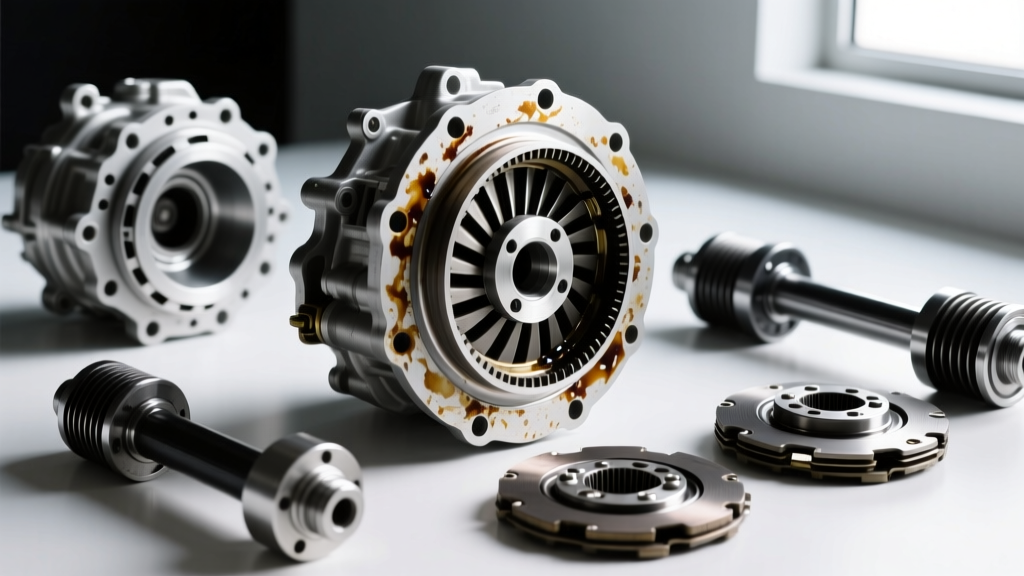
The ZF 8HP series (found in BMW, Audi, Chrysler, and Jaguar vehicles) features an integrated torsional damper within the torque converter. A common failure point is the degradation of this damper or the TCC lining itself. When the lining fails, it sheds microscopic friction material into the transmission pan. This debris migrates to the mechatronic unit's solenoid screens, causing erratic shifting and pressure drops. Flushing a ZF 8HP that is already shedding heavy friction material will often push debris deeper into the valve body, accelerating failure.
Maintenance Showdown: Machine Flush vs. Gravity Drain-and-Fill
When addressing early drivability concerns, choosing the right fluid exchange method is paramount. The debate between power flushing and gravity draining is heavily dependent on the transmission's current health and mileage.
| Method | Process Overview | Best Application | Risks & Warnings |
|---|---|---|---|
| Machine Power Flush | Uses line pressure to push 100% of old fluid out while simultaneously pumping new fluid in. | Preventative maintenance on units under 60k miles with no existing shudder or slip. | Can dislodge large clutch debris in high-mileage units, clogging the mechatronic valve body. |
| Gravity Drain & Fill | Drops the pan, replaces the filter, and refills the sump. Exchanges roughly 50-60% of total fluid. | High-mileage vehicles (80k+), units with mild shudder, or ZF 8HP 'lifetime' fluid services. | Requires multiple services over 15k-mile intervals to fully dilute degraded fluid. |
Expert Pro-Tip: Never perform a pressurized power flush on a GM 6L80 or ZF 8HP that is already exhibiting severe slip or metallic debris in the pan. Always drop the pan first to inspect the magnet and friction material. If you find 'glitter' (fine metallic paste), a drain-and-fill is safe. If you find 'chunks' or heavy clutch paper, the torque converter is mechanically failed.
Buyer’s Guide: Selecting OEM Fluids and Filter Kits
If you are attempting to cure early-stage shudder or perform scheduled maintenance, fluid selection is non-negotiable. Using generic 'multi-vehicle' ATFs in modern ECCC systems is a primary cause of premature torque converter failure. Below is a comparison of the exact OEM specifications required for 2026 maintenance.
Fluid Specifications & Capacities
- GM 6L80 / 6L90: Requires Dexron ULV (Ultra Low Viscosity). Total capacity is approximately 11.2 quarts, but a standard pan drop yields about 5.5 to 6.0 quarts. Recommended Part: ACDelco 10-9394.
- ZF 8HP (45/70/90): Requires ZF LifeguardFluid 8. Total capacity ranges from 8.5 to 10.5 liters depending on the specific pan and cooler lines. A pan drop yields roughly 5.0 liters. Recommended Part: ZF S671 090 255.
Filter Kits and Torque Specifications
When replacing the filter to trap TCC debris, adhering to factory torque specifications is critical to prevent pan leaks or cracked housings.
- ZF 8HP Plastic Pan/Filter Kit: The filter is integrated into the plastic pan. Use ZF Part # 0501216243. The pan bolts are torque-to-yield and must be tightened to exactly 10 Nm (88 lb-in). Over-torquing will crack the plastic mounting bosses on the mechatronic unit.
- GM 6L80 Stamped Steel Pan: The filter is a separate drop-in unit. Use ACDelco Part # 24236933. The M6 pan bolts require a torque spec of 9 Nm (80 lb-in). Always use a new gasket or RTV sealant if the pan is not equipped with a reusable rubber gasket.
2026 Cost Matrix: Maintenance vs. Replacement
Understanding the financial threshold between maintenance and replacement helps consumers and shop owners make data-driven decisions. The following matrix outlines average North American pricing for 2026, accounting for recent supply chain adjustments in remanufactured drivetrain components.
| Service Type | Target Scenario | Parts Cost | Labor Cost | Total Estimate |
|---|---|---|---|---|
| Pan Drop & Fluid Service | Mild shudder, preventative maintenance, 60k-80k miles. | $150 - $280 | $150 - $250 | $300 - $530 |
| TCC Solenoid Replacement | Code P0741/P0742, no physical converter damage, valve body accessible. | $80 - $220 | $300 - $500 | $380 - $720 |
| Full TC Replacement (GM 6L80) | Severe shudder, delaminated friction material, contaminated cooler. | $450 - $750 | $900 - $1,400 | $1,350 - $2,150 |
| Full TC Replacement (ZF 8HP) | Damper failure, heavy debris, requires mechatronic flushing. | $800 - $1,400 | $1,500 - $2,200 | $2,300 - $3,600 |
Sourcing and Authoritative References
When procuring parts for torque converter maintenance, avoiding counterfeit fluids and substandard filters is essential for ECCC longevity. We recommend sourcing directly from authorized distributors or OEM portals. For ZF specifications and LifeguardFluid documentation, consult the ZF Aftermarket Portal. For GM drivetrain components, including Dexron ULV and ACDelco filter kits, verify part numbers via GM Parts Direct to ensure you are receiving the latest revision of the 6L80 internal components.
Expert Verdict: When to Walk Away
If your vehicle is exhibiting the symptoms of failed torque converter assemblies—specifically harsh TCC shudder, delayed engagement, or contaminated fluid with visible friction paper—a flush is no longer a viable repair. Flushing a mechanically compromised converter will only redistribute abrasive debris throughout the transmission cooler and mechatronic valve body, guaranteeing a secondary failure. In these scenarios, invest in a high-quality remanufactured torque converter, perform a thorough cooler line flush, and adhere strictly to OEM fluid and torque specifications during reassembly. Preventative drain-and-fill services every 50,000 to 60,000 miles remain the only proven method to extend the life of modern ECCC torque converters.