The Fluid Coupling: How Torque Converters Work Explained
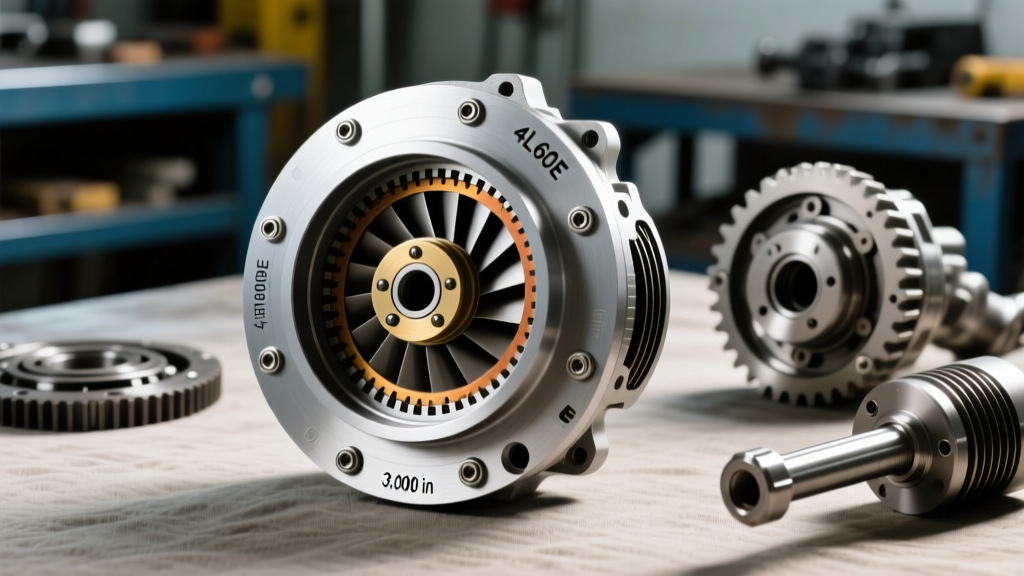
If you are diving into the world of automatic transmissions, whether you are rebuilding a classic GM 4L60E or tuning a modern ZF 8HP, understanding the fluid coupling is mandatory. At its core, a torque converter is a hydrodynamic device that transfers rotating power from the engine to the transmission input shaft. Unlike a manual transmission's solid mechanical clutch, the torque converter uses transmission fluid to multiply torque and allow the vehicle to come to a complete stop without stalling the engine.
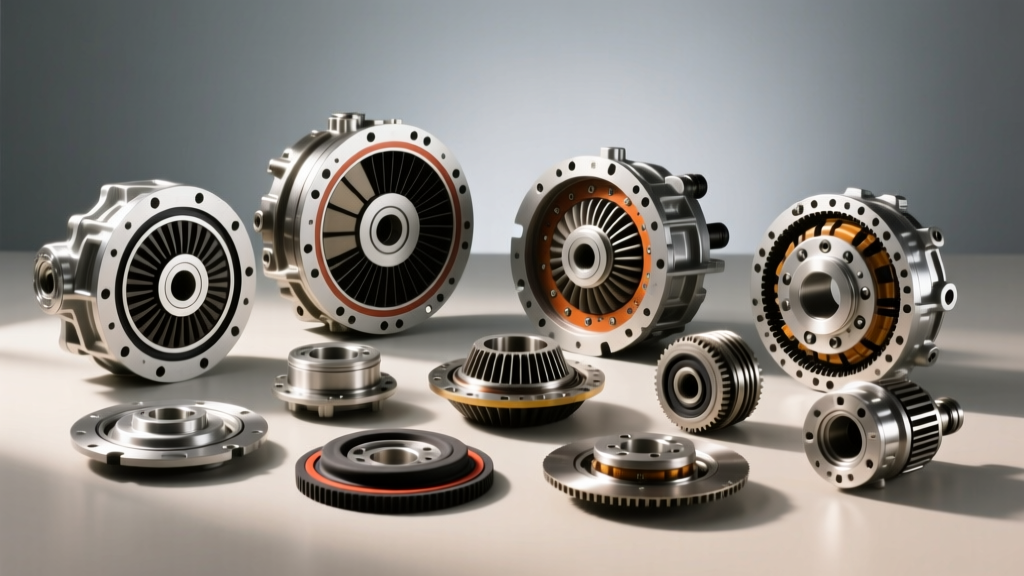
To truly grasp Sonnax's technical overview of torque converter basics, you must understand its three primary internal components:
- The Impeller (Pump): Bolted directly to the converter housing, which is welded to the flexplate. As the engine spins, the impeller spins, using centrifugal force to fling transmission fluid outward and toward the turbine.
- The Turbine: Connected to the transmission input shaft via splines. The fluid striking the turbine's curved blades forces it to rotate, thereby driving the transmission and moving the vehicle.
- The Stator: The unsung hero of torque multiplication. Sitting in the center between the impeller and turbine, the stator is mounted on a one-way roller clutch. It redirects the returning fluid back into the impeller in the direction of rotation, effectively multiplying engine torque by up to 2.5 times during initial acceleration.
Understanding Stall Speed and Torque Multiplication
One of the most misunderstood concepts in drivetrain building is 'stall speed.' Many beginners confuse flash stall with true stall. True stall is the maximum RPM the engine can reach when the transmission output shaft is locked (e.g., holding the brakes while applying full throttle). Flash stall is the RPM at which the converter 'flashes' or briefly slips during a hard launch from a dead stop.
According to MotorTrend's comprehensive guide on stall speed, matching the converter's stall speed to your engine's torque curve is critical. If your engine makes peak torque at 4,500 RPM, a 2,000 RPM stall converter will result in sluggish, off-boost acceleration. Conversely, a 4,000 RPM stall converter on a stock daily driver will generate excessive heat and poor fuel economy.
| Application Type | Typical Stall Range | Best Suited For |
|---|---|---|
| OEM / Daily Driver | 1,600 - 2,000 RPM | Stock engines, highway cruising, maximum fuel efficiency |
| Street / Mild Performance | 2,200 - 2,800 RPM | Mild camshafts, supercharged setups, 3.42 to 3.73 rear gears |
| Street / Strip | 3,000 - 3,800 RPM | Aggressive cams, turbo lag management, 3.90 to 4.10 rear gears |
| Pure Race / Brake | 4,000 - 6,000+ RPM | Trans-brake equipped drag cars, high-RPM naturally aspirated builds |
The Role of the Torque Converter Clutch (TCC) and Lockup
In older three-speed automatics, the converter was always slipping slightly, generating massive amounts of heat and robbing fuel economy. Modern transmissions utilize a Torque Converter Clutch (TCC). When engaged, the TCC mechanically locks the turbine to the impeller, creating a 1:1 solid coupling and eliminating slippage.
In advanced units like the GM 6L80 or the ZF 8HP70, the TCC is not just 'on' or 'off'. The transmission control module (TCM) uses Pulse Width Modulation (PWM) via variable force solenoids to apply the TCC gradually. This controlled micro-slip allows the lockup clutch to remain engaged even at low RPMs and during gear shifts, drastically reducing fuel consumption. The ZF 8HP utilizes a multi-plate wet lockup clutch that can engage in almost all forward gears, a massive leap from the single-plate clutches of the 4L60E era.
Diagnosing TCC Shudder: A Common Symptom
Because the TCC relies on precise hydraulic pressure and specific friction modifiers in the fluid, degradation leads to a classic symptom: TCC shudder. This is typically felt as a 40-50 Hz vibration through the chassis, often mistaken for a bad U-joint or unbalanced tires. It occurs most frequently at 40-55 MPH under light throttle when the TCC is attempting to apply. If you experience this in a GM 6L80 or 8L90, the fix often involves a specialized fluid flush utilizing a friction modifier additive (like Dr. Tranny Shudder Fixx) or installing a Sonnax ZIP Kit to restore proper hydraulic pressure to the TCC apply circuit.
Sizing and Selection: How to Choose a Torque Converter
So, how to choose a torque converter that perfectly bridges your engine's powerband with your chassis dynamics? You must evaluate three main variables: engine vacuum, vehicle weight, and rear axle ratio.
- Engine Vacuum & Camshaft Duration: Engines with large camshafts (230+ degrees at 0.050) produce low manifold vacuum at idle and make their torque higher in the RPM range. These engines require a higher stall converter to 'flash' past the inefficient lower RPM range and land directly in the meat of the powerband.
- Vehicle Weight: Heavier vehicles (like a 4,500 lb truck or a loaded B-body wagon) require more torque multiplication to get moving. A smaller diameter converter (e.g., 245mm instead of 300mm) naturally yields a higher stall speed and greater multiplication ratio, helping heavy vehicles accelerate.
- Rear Gear Ratio: If you have a steep 4.10 rear gear, the mechanical advantage is already high, and you can run a slightly tighter (lower stall) converter. If you are running a highway-friendly 2.73 gear, a looser converter is mandatory to prevent the engine from bogging down off the line.
Real-World Selection Examples
For a classic GM 4L60E swap featuring a mild 383 stroker making 420 lb-ft of torque, a 298mm converter with a 2,400 RPM stall (such as the Vigilante 2400 series) is the gold standard. It provides enough slip to launch hard but locks up efficiently on the highway. For a modern GM 6L80 application behind an LT1 or LS3, you must select a converter specifically designed for the 6L80's unique 258mm or 278mm TCC piston and PWM lockup strategy. Using a legacy 4L60E style lockup clutch in a 6L80 will result in immediate TCC slip codes (P0741) and severe shudder.
Installation Clearances and Torque Specifications
Selecting the right unit is only half the battle; improper installation will destroy your transmission oil pump before you even leave the driveway. When mating the converter to the flexplate, you must measure the 'pull-forward' clearance.
- Proper Clearance: The flexplate should have between 1/8' (0.125') and 3/16' (0.187') of clearance to the converter mounting pads. If the converter is bottomed out against the flexplate with zero clearance, it will push backward into the transmission, crushing the oil pump gear and stator support.
- Seating the Converter: Before bolting the transmission to the engine block, ensure the converter is fully seated. You should feel three distinct 'drops' as the converter slides over the input shaft, the stator support, and finally into the oil pump drive gear. If the converter is not fully seated when you tighten the bellhousing bolts, you will crack the aluminum transmission case or shatter the oil pump.
Crucial Torque Specs
Always use new, high-strength flexplate-to-converter bolts. Standard hardware store bolts will stretch and snap under the shear load of a high-stall launch.
- GM 4L60E / 4L80E (M10 x 1.5 bolts): Torque to 35 lb-ft (47 Nm) with a medium-strength threadlocker.
- Ford 4R70W / AOD (3/8'-24 bolts): Torque to 20-23 lb-ft (27-31 Nm).
- Chrysler TorqueFlite 8HP / ZF 8HP (M8 x 1.25 bolts): Torque to 18 lb-ft (24 Nm) in a star pattern.
Final Thoughts on Drivetrain Synergy
Understanding how torque converters work explained in practical terms reveals that the converter is not just a passive coupler; it is an active, tunable component of your drivetrain. By matching the stall speed to your camshaft, ensuring proper TCC lockup functionality, and adhering to strict installation clearances, you guarantee a transmission that is both brutally effective on the street and reliable for the long haul. Whether you are diagnosing a shudder in a daily driver or selecting a 4,000 RPM race converter, the physics of the fluid coupling remain the ultimate arbiter of your vehicle's performance.