The Thermodynamics of Diesel Truck Transmission Cooling
When evaluating a transmission cooler for diesel trucks, you are fundamentally battling thermodynamics. Heavy-duty diesel powertrains generate massive low-end torque, which places extreme shear stress on automatic transmission fluid (ATF). In applications like towing 10,000+ pound payloads, the torque converter generates immense parasitic heat. If this thermal energy is not efficiently rejected, the ATF degrades, clutch packs glaze, and the transmission enters thermal limp mode. While light-duty gas trucks can often rely on basic tube-and-fin radiator-integrated coolers, diesel trucks require highly efficient, dedicated cooling circuits to maintain optimal fluid viscosity and friction coefficients.
The 2016-2019 Nissan Titan XD, equipped with the legendary 5.0L ISV Cummins V8 diesel, presents a unique masterclass in heavy-duty thermal management. Mated to the Aisin AS69RC 6-speed automatic transmission, this powertrain requires precise fluid routing to balance cold-start wear protection with heavy-load heat rejection. At the heart of this routing is a critical, often misunderstood component: the thermal bypass valve.
Case Study: The Aisin AS69RC and the Nissan Titan Transmission Cooler Bypass
The Aisin AS69RC is a commercial-grade transmission shared across various heavy-duty platforms. It holds approximately 10.1 quarts of Aisin WS (World Standard) low-viscosity fluid. Because WS fluid is engineered for tight clearances and rapid lockup, it operates best within a narrow thermal window of 160°F to 190°F. To maintain this window, the factory cooling system utilizes a thermal bypass valve integrated into the transmission cooler line circuit or the transmission case itself.
How the Thermal Bypass Valve Operates
The primary function of the nissan titan transmission cooler bypass is to restrict fluid flow to the auxiliary cooler during cold starts. When ATF is below operating temperature (typically under 160°F), its viscosity is high, and forcing it through the restrictive fins of a stacked-plate or plate-and-fin cooler can cause severe pressure drops, cavitation, and delayed lubrication to the valve body and clutch packs.
Inside the bypass valve, a thermal wax pellet or bimetallic spring dictates fluid routing:
- Cold State (Below 160°F): The valve remains closed, routing 100% of the ATF directly back to the transmission sump or through a low-restriction bypass loop, allowing the fluid to warm up rapidly.
- Transition State (160°F - 180°F): The thermal element begins to expand, gradually feathering the valve open to introduce partial flow to the external cooler.
- Hot State (Above 180°F): The valve is fully open, routing maximum fluid volume to the transmission cooler to reject heat before the fluid returns to the lube circuit.
Expert Insight: Many diesel truck owners mistakenly 'delete' the thermal bypass valve under the assumption that 100% cooler flow at all times is superior. In reality, bypass deletions on the AS69RC can lead to sluggish shifts in cold weather, accelerated clutch wear due to high fluid viscosity during engagement, and extended time-to-temperature, which increases condensation buildup in the sump.
Comparative Analysis: Diesel Truck Transmission Cooling Systems
To understand where the Titan XD sits in the heavy-duty landscape, we must compare its cooling architecture to its primary domestic competitors. The table below outlines the critical thermal specifications for the top diesel truck transmissions.
| Truck / Transmission | Fluid Type & Capacity | Target Temp Range | Factory Cooler Type | Bypass Location |
|---|---|---|---|---|
| Nissan Titan XD / Aisin AS69RC | Aisin WS (10.1 qts) | 160°F - 190°F | Plate-and-Fin (Auxiliary) | Inline Thermal Valve |
| Ram 2500 / Aisin AS66RC (6.7L) | Aisin WS (10.1 qts) | 160°F - 195°F | Stacked-Plate (Auxiliary) | Case-Integrated Valve |
| Ford F-250 / 6R140 (6.7L PSD) | Mercon LV (17.4 qts) | 170°F - 200°F | Tube-and-Fin (Radiator + Aux) | Inline Thermal Valve |
| GM 2500HD / Allison 1000 (6.6L) | Tesora/Dexron VI (12.7 qts) | 160°F - 185°F | Stacked-Plate (Auxiliary) | Inline Thermal Valve |
Failure Modes: When the Bypass Valve Sticks
The nissan titan transmission cooler bypass is a wear item. Over 80,000 to 120,000 miles, the internal thermal element can degrade, or microscopic clutch material and varnish can cause the spool valve to stick. This results in two distinct failure modes:
1. Stuck Closed (Overheating)
If the bypass fails in the closed position, fluid never reaches the auxiliary cooler under load. When towing a 5th-wheel or navigating steep grades, ATF temperatures will rapidly climb past 220°F. The AS69RC will trigger a P0218 (Transmission Fluid Over Temperature) code and command a thermal limp mode, locking the torque converter and restricting the transmission to 3rd gear to prevent catastrophic clutch pack burnout.
2. Stuck Open (Cold Start Wear)
If the valve fails open, the transmission will constantly route fluid through the cooler. In sub-freezing climates, the ATF may never reach the 160°F threshold required for optimal hydraulic pressure and clutch friction. This manifests as harsh 1-2 shifts, delayed reverse engagement, and premature wear to the line pressure regulator valve.
Diagnostic Tip: Use an infrared thermometer or a bi-directional scan tool monitoring the TFT (Transmission Fluid Temperature) sensor. If the TFT reads 210°F+ under load, but the physical cooler lines remain cold to the touch, the bypass valve is stuck closed. Replacement OEM bypass valves typically cost between $85 and $140, plus the cost of a partial fluid drain.
Upgrading Your Diesel Truck Transmission Cooler
For Titan XD owners who tow heavy, or those who have deleted the EGR/DPF systems and are running higher boost pressures, the factory plate-and-fin cooler may reach its thermal saturation point. Upgrading to a high-capacity stacked-plate cooler is the most effective modification you can make for transmission longevity.
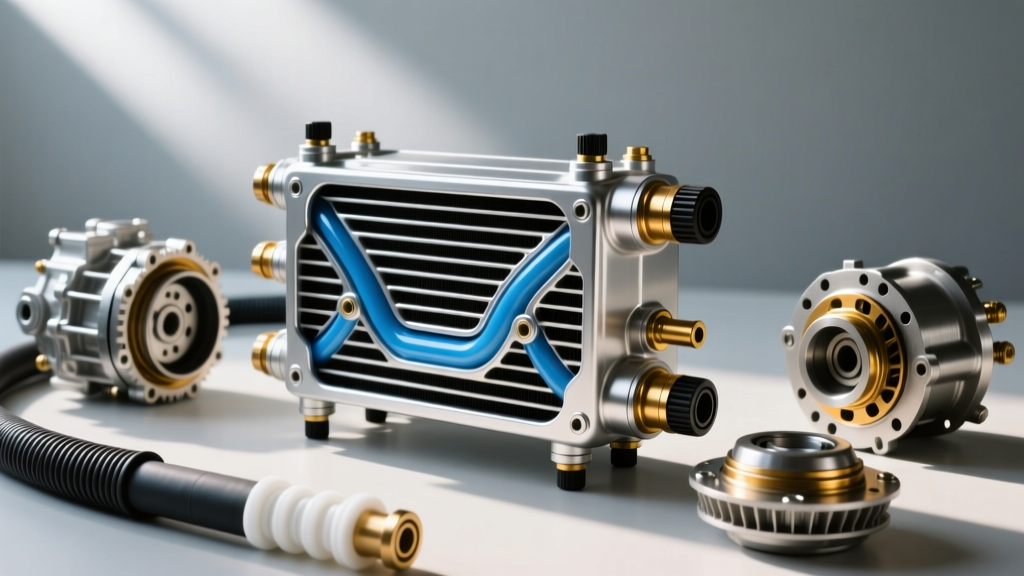
Unlike tube-and-fin designs, which rely on turbulent flow inside a round tube, stacked-plate coolers (like the Derale Hyper-Cool series) utilize flat, dimpled plates that maximize surface area exposure to ambient air while minimizing fluid pressure drop. A premium stacked-plate cooler can drop peak ATF temperatures by 20°F to 35°F compared to factory setups.
Integration and Installation Specs
When installing an auxiliary cooler on the AS69RC, you must decide whether to retain the factory thermal bypass or install a manual bypass delete kit with a thermostatic sandwich plate. If retaining the OEM bypass, the new cooler must be plumbed in series after the factory radiator loop but before the return line to the transmission.
Critical Installation Specifications:
- Line Sizing: The AS69RC utilizes 1/2-inch ID cooler lines. Ensure your aftermarket cooler utilizes minimum AN-8 fittings to prevent flow restriction.
- Adapter Torque: When threading brass or steel AN adapter fittings into the aluminum transmission case or cooler block, the maximum torque specification is 18 ft-lbs (24 Nm). Over-torquing will crack the aluminum case or strip the threads, resulting in a catastrophic fluid leak.
- Hose Clamps: Do not use standard worm-gear clamps on high-pressure transmission lines. Use constant-tension T-bolt clamps rated for a minimum of 150 PSI, as transmission line pressure can spike to 250 PSI during heavy-throttle downshifts.
- Fluid Top-Off: Adding an auxiliary cooler and 6 feet of extra hose will increase system capacity by roughly 1.5 to 2.0 quarts. Always measure the dipstick at operating temperature with the engine idling in Park.
Long-Term Maintenance for Diesel Cooling Systems
A transmission cooler for diesel trucks is only as effective as the fluid flowing through it. Aisin WS fluid is highly susceptible to oxidative shear when subjected to sustained temperatures above 210°F. For heavy-duty towing applications, we recommend dropping the transmission pan, replacing the internal spin-on filter (Part # 299001 for the AS69RC), and performing a fluid exchange every 40,000 miles.
Furthermore, inspect the physical fins of your auxiliary cooler every six months. Diesel trucks operating in agricultural or construction environments frequently pack the cooler fins with chaff, dirt, and debris. A clogged stacked-plate cooler will mimic a stuck bypass valve, leading to identical overheating symptoms. Using a low-pressure air compressor or a dedicated coil cleaner will restore the cooler's thermal transfer efficiency.
Conclusion
Understanding the intricacies of the nissan titan transmission cooler bypass is essential for any Titan XD Cummins owner looking to maximize the lifespan of their Aisin AS69RC. The bypass valve is not a restriction to be blindly removed, but a calibrated thermal management tool designed to protect the transmission during its most vulnerable cold-start phases. By respecting the factory thermodynamics, monitoring TFT data, and upgrading to high-efficiency stacked-plate coolers when necessary, you can ensure your diesel truck remains reliable under the most extreme towing conditions.
For further technical documentation on heavy-duty transmission cooling architectures, refer to the engineering resources available at Aisin Corporation.