The Anatomy of Throw-Out Bearing Failure in Tremec Transmissions
When evaluating the operational lifespan of clutches in automobile applications, few components are as frequently misdiagnosed as the throw-out bearing (TOB). In high-torque, rear-wheel-drive platforms like the Chevrolet Camaro SS and Corvette—specifically those equipped with the Tremec TR-6060 or the legacy T56 Magnum manual transmissions—the throw-out bearing operates under immense thermal and mechanical stress. A failing TOB does not just produce annoying cabin noise; it is often the precursor to catastrophic input shaft damage, clutch fork failure, or complete hydraulic actuation loss.
As of 2026, the aftermarket support for GM F-Body and Alpha-platform manual transmissions has matured significantly, yet the fundamental physics of TOB failure remain unchanged. Whether you are dealing with a traditional mechanical clutch fork setup or a modern Concentric Slave Cylinder (CSC), understanding the exact acoustic signatures and mechanical tolerances is critical for an accurate diagnosis and a lasting repair.
Auditory Diagnostics: Decoding Bellhousing Noises
Drivetrain NVH (Noise, Vibration, and Harshness) can easily mask the early stages of bearing degradation. To accurately isolate throw-out bearing noise from pilot bearing failure, input shaft bearing wear, or clutch disc chatter, you must correlate the acoustic signature with the exact position of the clutch pedal.
| Acoustic Signature | Pedal State | Probable Failure Point | Tremec Model Specifics |
|---|---|---|---|
| High-pitched squealing or screeching | Depressed (Clutch disengaged) | Throw-out bearing dry/failing, or binding on input shaft sleeve | Common in TR-6060 CSC setups when internal seals weep fluid onto the bearing race. |
| Metallic rattle or clatter | Released (Clutch engaged) | Clutch fork pivot ball wear, loose TOB retainer, or weak return spring | Classic T56 issue; the aluminum pivot ball wears a groove, causing fork chatter. |
| Deep grinding or rumbling | Depressed (Clutch disengaged) | Pilot bearing failure or input shaft front bearing | Often misdiagnosed as TOB; requires transmission removal to verify crankshaft bore wear. |
| Chatter upon engagement | Friction zone (Partial release) | Uneven TOB travel, bent clutch fork, or warped pressure plate fingers | Frequent in high-mileage Camaro SS models with worn hydraulic CSC internal pistons. |
The TR-6060 Concentric Slave Cylinder (CSC) Paradigm
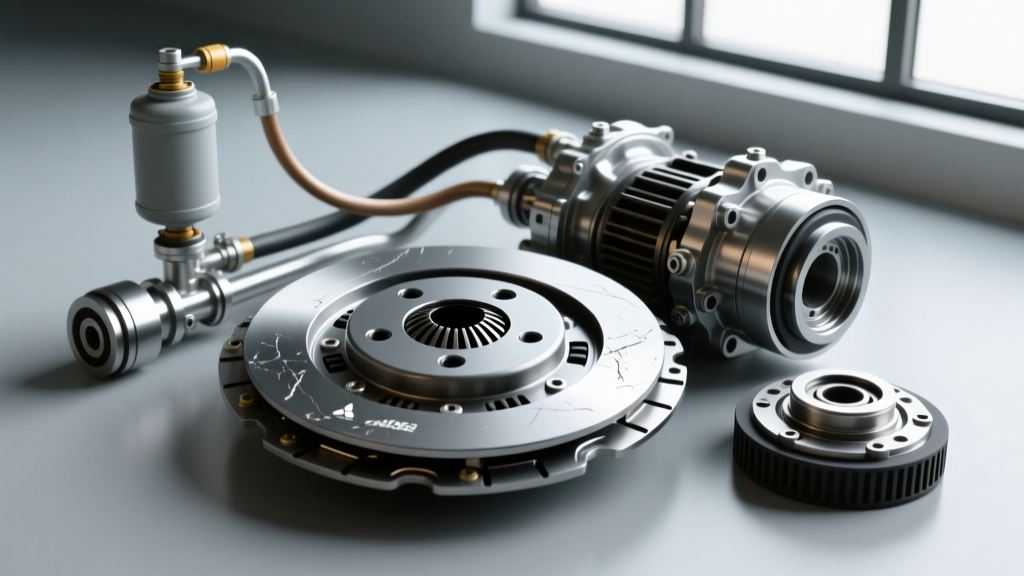
In the Tremec TR-6060 (found in the 2010–2015 Camaro SS and C6 Corvette), GM eliminated the traditional mechanical fork in favor of a hydraulic Concentric Slave Cylinder. The CSC acts as both the hydraulic actuator and the throw-out bearing. When the internal PTFE seals of the CSC degrade, DOT 3/4 brake fluid leaks directly onto the carbon-steel bearing race and the clutch friction disc. This results in a distinct 'squishing' or squealing noise upon pedal depression, followed by clutch slip. According to Schaeffler LuK, the OEM supplier for many of these systems, a CSC that has leaked internally cannot be rebuilt; complete assembly replacement is mandatory.
Legacy T56 Mechanical Fork and Pivot Ball Wear
For older platforms utilizing the T56 with a mechanical fork, the noise profile is slightly different. The cast-iron or stamped-steel fork rides on a hardened steel pivot ball screwed into the bellhousing. Over 80,000+ miles, the pivot ball develops a distinct wear groove. When the pedal is released, the fork rattles against this uneven surface. If you are performing a clutch job on a T56, measuring the pivot ball with a micrometer is a mandatory step. If the diameter varies by more than 0.005 inches across its surface, the pivot ball must be replaced to prevent premature wear on the new TOB collar.
Model-Specific Repair Protocol: Camaro SS (TR-6060)
Replacing the throw-out bearing or CSC requires dropping the transmission. Below is the expert-level repair protocol, including critical torque specifications that deviate from standard generic manual repair guides.
Step 1: Drivetrain Extraction and Line Disconnection
The TR-6060 utilizes a remote-mounted master cylinder with a hydraulic line that routes down to the bellhousing, connecting to the CSC via a quick-connect fitting. Do not pry this fitting off with a screwdriver. Use a dedicated 5/16-inch fuel line disconnect tool to release the retaining tabs. Forcing the fitting will crack the CSC's plastic inlet port, ruining a brand-new $250 part before it is even installed.
Step 2: Flywheel and Clutch Assembly Torque Sequence
Once the TR-6060 is on the bench, the dual-mass or single-mass flywheel must be inspected. If upgrading to an aftermarket single-mass flywheel (such as a Fidanza or McLeod unit), the crankshaft flange must be cleaned with a brass brush. The torque sequence is critical to prevent crankshaft flange warping:
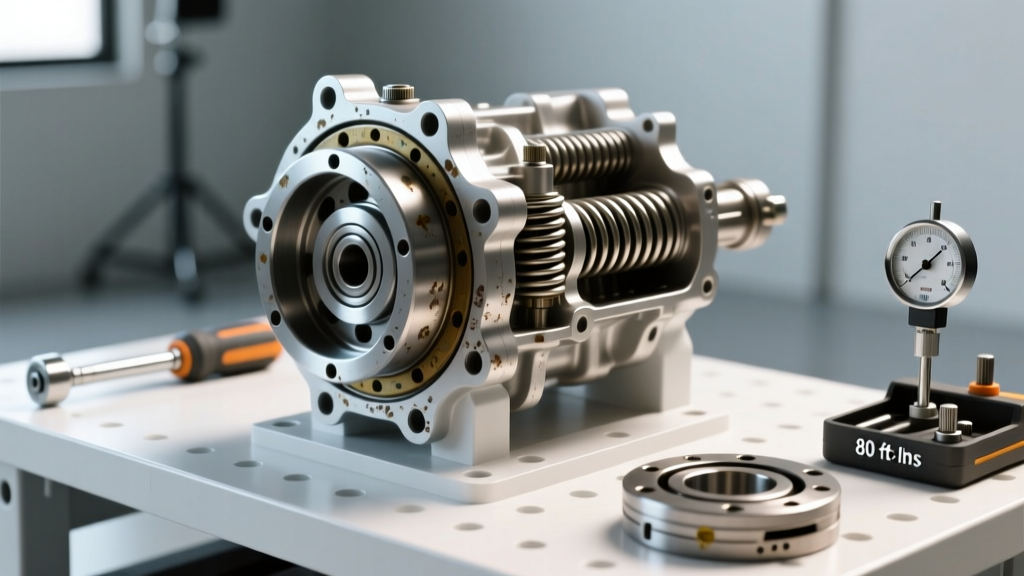
- Bellhousing to Engine Block (M12 x 1.75): 37 lb-ft (50 Nm)
- Flywheel to Crankshaft (M12 x 1.25): 74 lb-ft (100 Nm) in a star pattern
- Pressure Plate to Flywheel (M8 x 1.25): 26 lb-ft (35 Nm) in a crisscross sequence
- Driveshaft Flex Plate to Transmission Flange: 59 lb-ft (80 Nm)
Expert Insight: Never pack the input shaft splines with heavy wheel bearing grease. The centrifugal force of the spinning input shaft will fling the grease onto the clutch disc friction material, causing severe slipping. Apply a microscopic film of high-temperature Molykote spline grease, slide the disc on and off once to distribute it, and wipe away any excess.
Step 3: CSC Installation and Pre-load Measurement
Unlike a mechanical TOB that requires manual free-play adjustment at the pedal pushrod, the TR-6060 CSC is self-adjusting but requires a specific pre-load check. Before bolting the transmission to the block, measure the distance from the engine block mating surface to the clutch pressure plate fingers. Then, measure the distance from the transmission bellhousing mating surface to the CSC bearing face. The CSC must compress the pressure plate fingers by exactly 0.100 to 0.150 inches when the bellhousing is fully seated. If the gap is incorrect, you must install the appropriate thickness of shims behind the CSC mounting flange to prevent bearing over-extension or clutch drag.
Hydraulic Bleeding Protocols for the TR-6060
The most common reason for a 'failed' CSC replacement is improper bleeding. The TR-6060 hydraulic line features a notorious upward loop near the tunnel, which acts as a trap for air bubbles. Standard gravity bleeding or simple pedal-pumping will leave air in the system, resulting in a spongy pedal and incomplete clutch disengagement (which sounds exactly like a dragging, noisy TOB).
To properly bleed the system, you must use a reverse-bleed pressure tank. By forcing clean DOT 4 fluid upward from the CSC bleeder valve toward the master cylinder reservoir, you push the air out in the natural direction of its buoyancy. Pump the fluid until no micro-bubbles are visible in the master cylinder reservoir, then cap it immediately to prevent moisture ingress.
Cost Analysis: OEM vs. Aftermarket (2026 Pricing)
When sourcing replacement parts for clutches in automobile manuals, the price delta between OEM dealership parts and premium aftermarket kits has widened. Below is a realistic cost breakdown for a TR-6060 CSC and clutch replacement:
- GM Genuine OEM CSC Assembly (Part # 24282166): $280 - $340. Reliable, but carries a dealership markup.
- Sachs / LuK RepSet (Includes CSC, Disc, Pressure Plate): $450 - $600. LuK is the OEM manufacturer for GM; buying their branded aftermarket kit saves money while retaining factory quality. Verify parts via Tremec's authorized distributor network.
- McLeod Hydraulic Throwout Bearing (Part # 169102): $350 - $400. Ideal for high-horsepower builds utilizing aftermarket multi-disc clutches that require adjustable piston travel.
- Labor (8-10 Hours): $1,100 - $1,600 at an independent manual-transmission specialty shop.
Preventative Maintenance and Final Thoughts
While the throw-out bearing is considered a wear item, its lifespan is heavily dictated by driver habits. 'Riding' the clutch at stoplights keeps the TOB under constant rotational load and axial pressure, generating immense heat that breaks down the bearing's internal synthetic grease. Furthermore, failing to flush the hydraulic clutch fluid every 30,000 miles allows moisture to corrode the master cylinder bore, sending metallic particulates down the line to score the delicate internal seals of the CSC.
By accurately diagnosing the specific frequency and pedal-state of the bellhousing noise, utilizing precise torque specifications, and adhering to reverse-bleeding protocols, you can ensure that your Tremec T56 or TR-6060 transmission operates silently and flawlessly for another 100,000 miles.