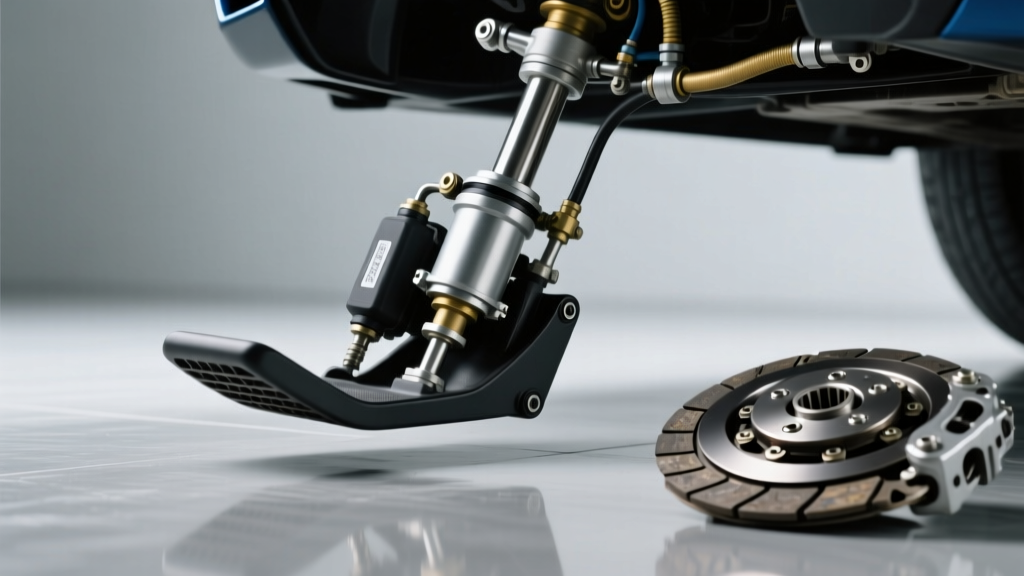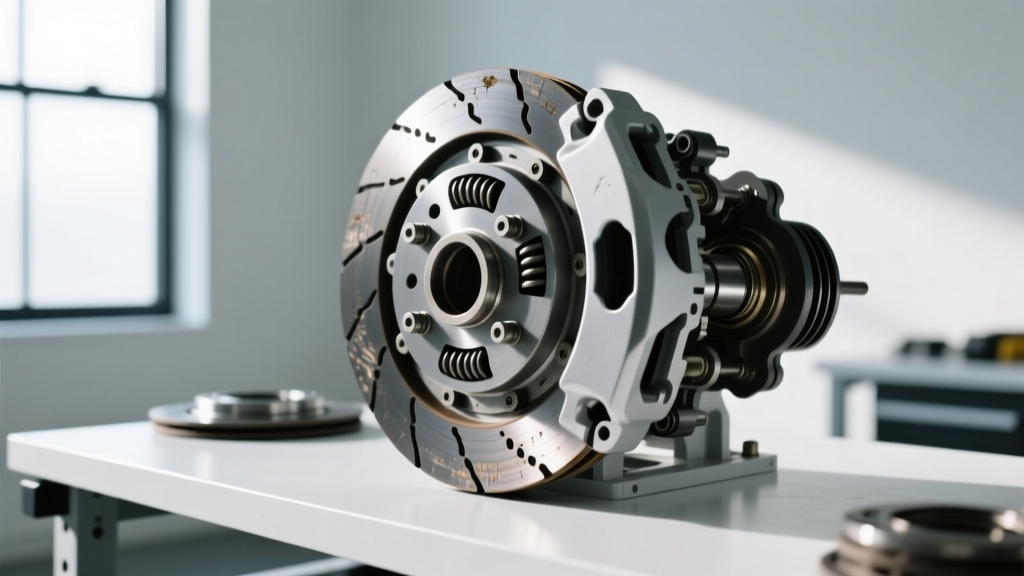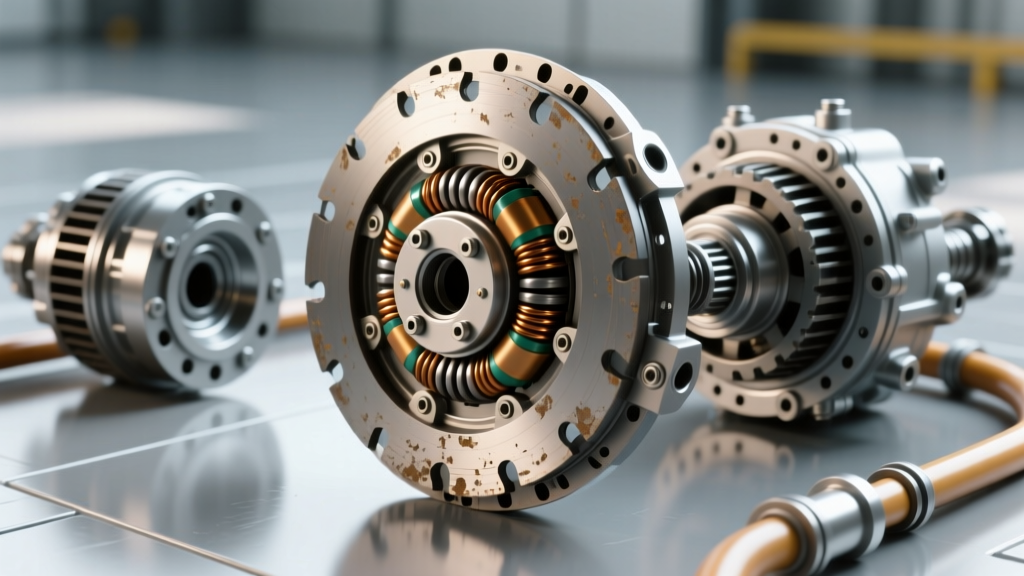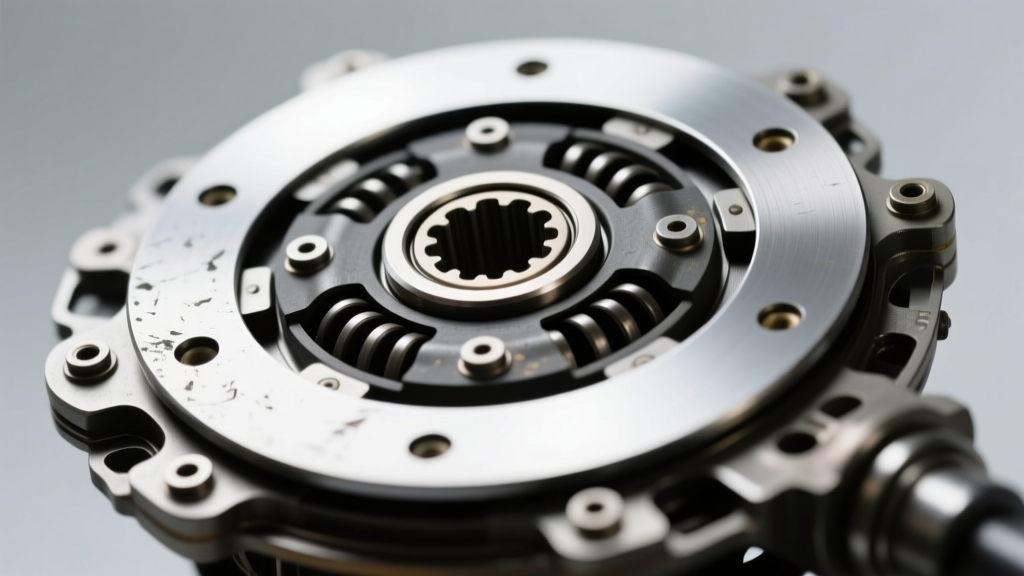
The Core Question: What Is Clutch in Automobile Actuation Systems?
When novice mechanics and automotive students first ask what is clutch in automobile drivetrains, they are typically shown the friction disc, pressure plate, and flywheel. While these components handle torque transfer, the true mechanical heartbeat of manual engagement lies in the actuation kinematics—specifically, the throw-out bearing (TOB). Also known as the release bearing, the TOB is the critical rotational interface between the stationary hydraulic or mechanical linkage and the spinning diaphragm spring of the pressure plate. In 2026, with manual transmissions largely relegated to performance and enthusiast platforms like the Tremec T-56 Magnum, Ford MT-82, and Honda K-Series applications, understanding TOB failure is paramount for high-level drivetrain diagnostics.
Auditory Diagnostics: Decoding Throw-Out Bearing Noise
Throw-out bearing noise is rarely ambiguous if you understand the pedal-position correlation. The bearing only experiences significant thrust load and high-speed rotation when the clutch pedal is depressed (or lightly riding the engagement point). Here is the definitive diagnostic matrix for TOB auditory symptoms:
- High-Pitch Squeal (Pedal Depressed): Indicates dried-out or contaminated needle bearings inside the TOB. The grease has degraded due to bellhousing heat cycles (often exceeding 250°F/121°C near the exhaust downpipes).
- Low-Frequency Growl (Pedal Depressed): Suggests pitted bearing races or spalling. This is often misdiagnosed as an input shaft bearing failure. To isolate, put the vehicle in neutral, release the pedal (growl stops), and depress it (growl returns). If the noise persists with the pedal released and the transmission in gear, suspect the input shaft bearing instead.
- Metallic Clatter (Pedal Released): The TOB is loose on the transmission bearing retainer collar, or the actuation fork has excessive clearance at the pivot ball. This is common in high-vibration environments or when anti-rattle springs have fatigued.
Expert Diagnostic Tip: Never 'ride' the clutch pedal to listen for bearing noise during a road test. Applying even 5 lbs of foot pressure removes the free-play, forcing the TOB against the diaphragm spring and generating false-positive friction noise.
Model-Specific Failure Profiles: A 2026 Repair Guide
Repair protocols and failure modes vary drastically depending on whether the vehicle utilizes a Concentric Slave Cylinder (CSC) or an external fork-actuated system. Let us examine dominant architectures found on the road today.
Profile A: Honda K-Series (CSC Architecture)
In Honda K-Series transmissions (found in the Civic Si, RSX, and Accord Euro R), the throw-out bearing is integrated directly into a hydraulic Concentric Slave Cylinder. The CSC wraps around the transmission input shaft inside the bellhousing.
The Failure Mode: The most common failure is not mechanical bearing seizure, but internal hydraulic seal blowout. When the internal cup seal fails, DOT 3/4 brake fluid sprays directly onto the friction disc and flywheel. Because brake fluid is glycol-based, it cannot be cleaned off the porous sintered material of the friction disc; total clutch assembly replacement is mandatory.
Repair Specifics:
• OEM Part: Honda 46920-PRP-A05 (or equivalent Exedy HSC008).
• Fastener Torque: The two CSC mounting bolts (M8x1.25) must be torqued to exactly 12 Nm (9 lb-ft). Over-torquing distorts the plastic/aluminum composite housing, leading to immediate fluid weeping.
• Bleeding Protocol: Gravity bleeding is insufficient for the K-Series. A pressure bleeder set to 15 PSI is required to force fluid through the upward-routed hard line to the master cylinder, ensuring no air pockets remain to cause a spongy pedal and TOB chatter.
Profile B: Tremec T-56 Magnum & Ford MT-82 (External Fork)
The Tremec T-56 Magnum (used in modern Camaros, Mustangs, and aftermarket swaps) and the Ford MT-82 utilize an external hydraulic slave cylinder that pushes a mechanical pivot fork inside the bellhousing. The TOB slides along a bearing retainer collar protruding from the front of the transmission case.
The Failure Mode: The primary killer of replacement TOBs in this architecture is retainer collar grooving. The stock aluminum or steel collar wears a microscopic trench from years of TOB friction. If a new TOB (e.g., Tremec 260320 or Ford Performance M-7580-M82) is installed over a grooved collar, the bearing will bind, cock at an angle, and destroy its internal cage within 5,000 miles.
Repair Specifics:
• Inspection: Use a micrometer to measure the retainer collar outer diameter. Factory spec is typically 1.378 to 1.380 inches. If you detect a wear groove deeper than 0.005 inches, the collar must be replaced or sleeved.
• Pivot Ball Check: Inspect the steel pivot ball that the fork rides on. 'Mushrooming' or flat-spotting alters the clutch geometry, preventing the TOB from sitting flush against the diaphragm spring fingers, causing uneven wear and premature noise.
• Lubrication Warning: Apply only a microscopic film of high-temp moly grease (like Ford XG-1-E1) to the retainer collar. Over-greasing will fling onto the clutch disc via centrifugal force once the transmission reaches operating temperature.
Profile C: Pull-Type Architecture (Subaru TY75 / Porsche G50)
Unlike push-type clutches where the TOB presses inward against the diaphragm spring, pull-type clutches (common in Subaru WRX STI TY75 6-speeds and older Porsche transaxles) require the TOB to grab the spring fingers and pull outward toward the transmission. The TOB features a specialized snap-ring or hook mechanism.
The Failure Mode: The retaining hooks or snap-rings fatigue from the immense clamping force (often exceeding 2,500 lbs of static load). When the ring snaps, the clutch instantly locks in the engaged position, and the vehicle becomes undrivable. Additionally, the carbon-steel contact face of the TOB can wear through the hardened tips of the diaphragm spring if the clutch free-play is improperly adjusted via the firewall master cylinder pushrod.
Repair Specifics:
• OEM Part: Sachs 3189600901 (Subaru application).
• Free-Play Spec: Pull-type systems require strict pedal free-play (typically 0.20 to 0.40 inches at the pedal pad). Zero free-play means the TOB is constantly riding the spinning spring fingers, generating massive heat and rapid wear.
Comparative Data: Clutch Actuation Architectures
Understanding the economics and parts availability for these systems is crucial for shop estimators and DIY enthusiasts planning a 2026 drivetrain refresh.
| Architecture | Common Application | OEM/Aftermarket Part Example | Primary Failure Mode | 2026 Est. Parts Cost |
|---|---|---|---|---|
| Concentric Slave (CSC) | Honda K-Series / GM LS | Honda 46920-PRP-A05 | Internal Seal Blowout | $85 - $140 |
| External Fork | Tremec T-56 / Ford MT-82 | Tremec 260320 | Collar Grooving / Dry Needles | $45 - $90 |
| Pull-Type | Subaru TY75 / Porsche G50 | Sachs 3189600901 | Fingers Wear / Snap Ring Fail | $110 - $180 |
Sourcing and Final Assembly Verification
When sourcing replacement components, always verify the bearing's internal contact face. For diaphragm spring pressure plates, the TOB must feature a radiused, hardened steel contact ring. Flat-faced bearings are strictly for older coil-spring pressure plates and will gouge modern diaphragm fingers instantly. For verified OEM and high-quality aftermarket drivetrain components, cross-referencing catalogs via RockAuto's OEM parts database ensures you avoid counterfeit white-box bearings flooding online marketplaces.
Furthermore, referencing Tremec's official service documentation provides the exact preload specifications for their Magnum lineup. Remember, a throw-out bearing is not a maintenance item; it is a precision kinematic component. Treating its replacement with the same rigor as a differential rebuild is the difference between a clutch that lasts 80,000 miles and one that fails on the drive home from the shop.