The TH350C Torque Converter: Lockup Mechanics and 2026 Market Realities
When General Motors introduced the TH350C (Turbo Hydra-Matic 350C) in 1979, the 'C' denoted a revolutionary addition to the classic three-speed automatic: a Computer Controlled Command lockup torque converter. Today, as restomod builders and classic truck enthusiasts navigate the 2026 aftermarket landscape, sourcing a reliable th350c torque converter requires balancing OEM drivability with modern performance expectations. Unlike its non-lockup predecessor, the TH350C utilizes a Torque Converter Clutch (TCC) to mechanically link the engine and transmission at cruising speeds, eliminating hydraulic slip and vastly improving highway fuel economy.
However, the internal friction materials and apply valves in these vintage units are prone to specific failure modes. Whether you are diagnosing a severe highway shudder, planning a stall-speed upgrade for a carbureted V8, or weighing the financial reality of a transmission swap, understanding the exact cost breakdown and model-specific compatibility of the TH350C is critical. This guide provides a deep-dive cost analysis, technical specifications, and diagnostic frameworks for the TH350C platform.
2026 Cost Breakdown: Rebuilding vs. Replacing the TH350C
The decision to replace a failing TH350C torque converter hinges on the condition of the transmission's internal TCC apply circuitry. If the converter's internal clutch is glazed but the transmission's valve body and input shaft splines are intact, a direct drop-in replacement is the most cost-effective route. Below is the current market pricing for parts and labor associated with the TH350C platform.
| Component / Service | Part Number / Spec | Estimated Cost (USD) | Application Notes |
|---|---|---|---|
| Stock OEM Replacement | GM 14003399 / Aftermarket Eq. | $160 - $240 | 12 7/8' diameter, ~1600 RPM stall, mild steel cover. |
| Performance Street (Lockup) | TCI Breakaway (P/N 241200) | $390 - $460 | 2400 RPM stall, upgraded friction materials, furnace-brazed fins. |
| High-Performance (Non-Lockup) | B&M TorkMaster (P/N 70125) | $420 - $490 | Requires locking out TCC circuit, 2000-2400 RPM stall. |
| TCC Solenoid & Wiring Kit | Universal 12V GM TCC Kit | $45 - $85 | Required if original brake-pedal switch circuit is degraded. |
| Professional Labor (R&R) | 5.5 - 7.0 Book Hours | $650 - $1,050 | Based on $120-$150/hr shop rate; includes fluid and filter. |
| Fluid & Filter Kit | ACDelco TF289 + Dexron VI | $65 - $95 | 11-12 quart total system capacity. |
Note: Pricing reflects early 2026 aftermarket averages sourced from major distributors like Summit Racing and TCI Automotive. Core charges typically add $35-$50 to the initial purchase price.
Model-Specific Guide: TH350C vs. 4L60E & 6L80 Converters
A frequent question in the GM restoration community is whether modern torque converters from the 4L60E or 6L80 families can be adapted to the TH350C to gain better lockup efficiency or higher torque capacity. The short answer is no, due to fundamental differences in spline counts, pilot diameters, and bellhousing depths. Understanding these model-specific variances prevents costly purchasing mistakes.
Spline Count and Input Shaft Compatibility
The TH350C utilizes a 27-spline input shaft. In contrast, the later 4L60E (and its predecessor, the 700R4) stepped up to a 30-spline input shaft to handle increased torque loads. The modern 6L80 six-speed uses a massive 32-spline (early Gen 1) or 34-spline (late Gen 2) turbine hub. Attempting to mate a 4L60E converter to a TH350C will result in immediate destruction of the input shaft splines upon startup, as the hub will not seat properly in the transmission pump.
Pilot Diameter and Bellhousing Depth
While the TH350, 700R4, and 4L60E share a common 1.703-inch pilot diameter (the nose of the converter that rides in the crankshaft bushing), the overall length of the converter and the transmission bellhousing depth differ. The TH350C requires a specific overall length to ensure the converter is fully seated into the transmission oil pump gear before the transmission is bolted to the engine block. A 6L80 converter features a completely different pilot architecture and will not engage the TH350C pump drive tangs. For authoritative swap measurements and bellhousing depth charts, resources like Bowtie Overdrives remain the gold standard for GM powertrain geometry.
Hidden Costs: Flexplates, Cooler Lines, and TCC Wiring
When budgeting for a TH350C torque converter replacement, enthusiasts often overlook the peripheral hardware required to complete the job. These hidden costs can easily add $200 to $400 to your final invoice.
- Flexplate Bolt Pattern: The TH350C utilizes a 10.75-inch torque converter bolt pattern (3 pads). If you are swapping from a non-lockup TH350 or adapting an engine from a different era, you may need a new flexplate. A quality SFI-approved flexplate costs between $80 and $140.
- TCC Wiring Harness & Switches: The TH350C lockup is triggered by a 12V solenoid inside the transmission pan, grounded through a brake pedal switch and a vacuum/throttle switch. If the original wiring is brittle, a universal bypass harness with a manual toggle switch or a modern vacuum-actuated switch kit costs around $55.
- Transmission Cooler Flushing: If your TH350C converter failed due to internal clutch delamination, the debris will be trapped in the transmission cooler lines and the radiator cooler. Failing to flush or replace the cooler lines will send metal shavings directly into your new converter's TCC valve. Professional line flushing costs $80-$120, while a replacement auxiliary cooler costs $45-$90.
- Torque Specs & Hardware: Always use new torque converter-to-flexplate bolts. Grade 8 or OEM GM bolts are mandatory. Torque the flexplate to the crankshaft at 74 lb-ft, and the converter to the flexplate at 46 lb-ft using a thread-locking compound.
Diagnostic Symptoms of a Failing TH350C Lockup Clutch
Before spending $800+ on a teardown and replacement, it is vital to accurately diagnose whether the issue lies within the torque converter itself, or in the valve body and solenoid circuitry. The TH350C is notorious for a few specific TCC-related symptoms.
Highway Speed Shudder (40-55 MPH)
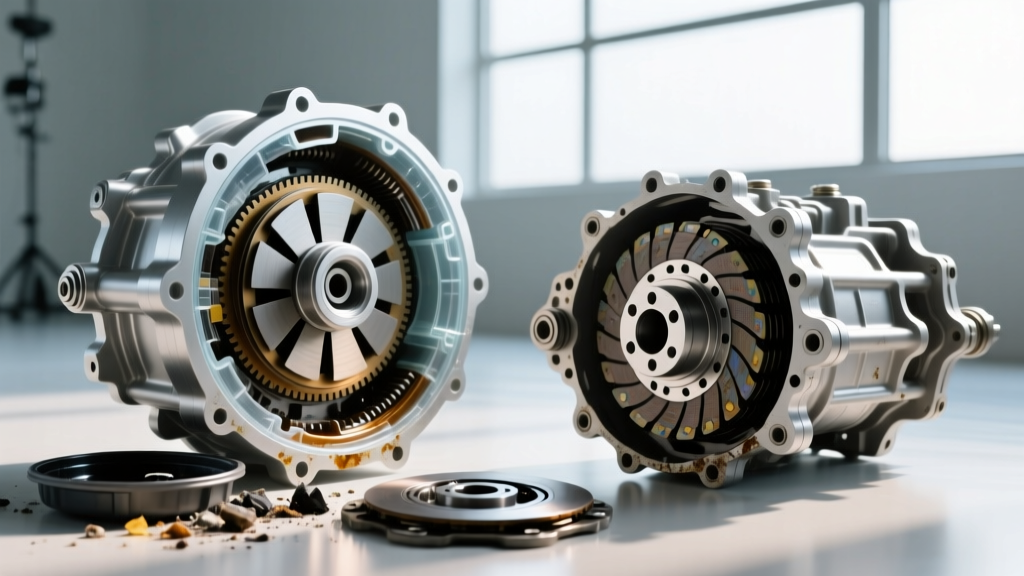
The most common complaint is a rhythmic vibration or 'shudder' that occurs when the TCC applies at light throttle. This is caused by the degradation of the friction material on the lockup clutch piston inside the converter, or by a worn TCC apply valve in the valve body failing to maintain steady hydraulic pressure. If a complete fluid and filter change using Dexron VI does not resolve the shudder, the converter's internal friction lining is likely glazed or delaminated, necessitating a full replacement.
Engine Stalling at Idle (TCC Fails to Unlock)
If your vehicle feels like it is 'braking' when coming to a stop and the engine stalls, the TCC is failing to disengage. In the TH350C, this is rarely a mechanical failure inside the converter. Instead, it is almost always an electrical fault: a misadjusted brake pedal switch, a stuck 12V solenoid in the pan, or a cross-leaking checkball in the valve body keeping apply pressure active. Test the solenoid by checking for 12V at the transmission case connector while driving; if voltage remains present when you tap the brakes, trace the external wiring before dropping the transmission pan.
Delayed or Soft Lockup Engagement
If the converter locks and unlocks erratically on the highway, the transmission fluid may be aerated, or the O-ring on the input shaft (which seals apply pressure to the converter) may be hardened and cracked. This requires pulling the transmission to replace the input shaft seal and inspect the turbine hub for scoring.
Expert Insight: Never use 'shudder fix' friction modifier additives as a permanent cure for a TH350C with heavily degraded lockup material. While these additives may temporarily mask the vibration by softening the remaining friction composite, they will ultimately accelerate the wear of the transmission's internal clutches and bands, turning a $400 torque converter job into a $2,500 complete transmission rebuild.
Final Verdict: Is the TH350C Worth Saving?
From a pure cost-analysis perspective, rebuilding or replacing the th350c torque converter remains one of the most affordable entry points into classic GM automatic performance. While the 4L60E offers overdrive and the 6L80 provides modern efficiency, the TH350C's lightweight parasitic loss, simple 27-spline architecture, and low replacement costs (often under $250 for the part alone) make it a highly viable option for street rods, mud trucks, and budget-conscious restomods. By accurately diagnosing TCC circuitry faults and adhering to strict flexplate and cooler-line protocols, you can extract decades of reliable service from this legendary three-speed lockup platform.