The Hybrid Drivetrain Misconception: Do All Hybrids Have Torque Converters?
When drivers experience drivetrain shudders or slipping in a hybrid vehicle, a common question arises: how to tell if your torque converter is going out in a hybrid? The answer requires a fundamental understanding of hybrid transmission architectures. It is a widespread misconception that all hybrid vehicles lack torque converters. While power-split e-CVT systems (like those found in the Toyota Prius or standard Ford Fusion Hybrid) utilize planetary gearsets and motor-generators without a traditional fluid coupling, many modern parallel and P2-architecture hybrids rely on traditional automatic transmissions augmented with electric motors.
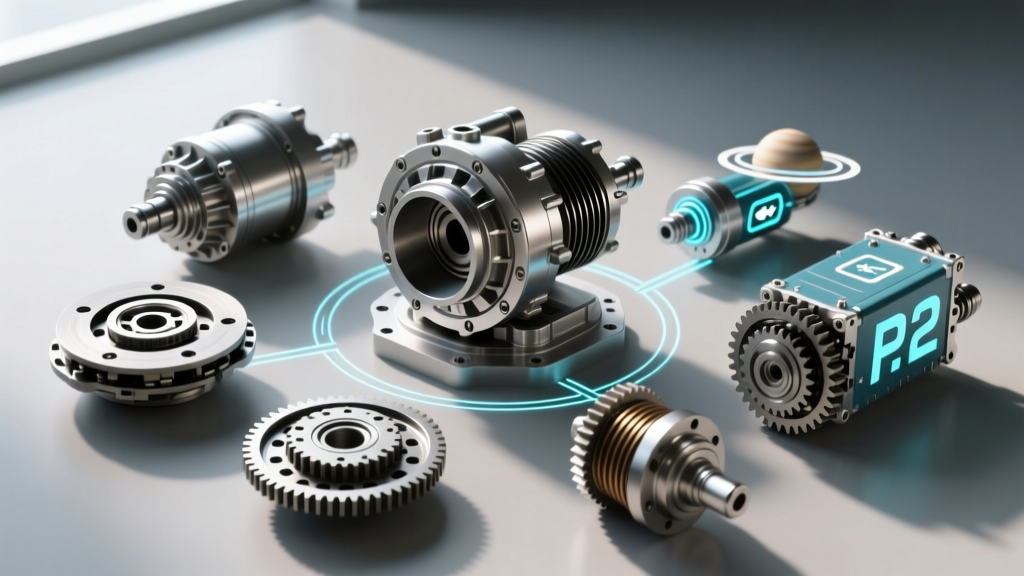
As of 2026, P2 hybrid setups—where the electric motor is sandwiched between the internal combustion engine (ICE) and the transmission—are incredibly common in vehicles like the Hyundai Sonata Hybrid, the BMW X5 xDrive45e, and the Ford Escape Hybrid. In these vehicles, a specialized torque converter is very much present, and it is subjected to unique thermal and mechanical stresses. Diagnosing a failing torque converter in these applications requires separating traditional hydraulic faults from high-voltage inverter issues.
How the Hybrid Torque Converter Differs from ICE Vehicles
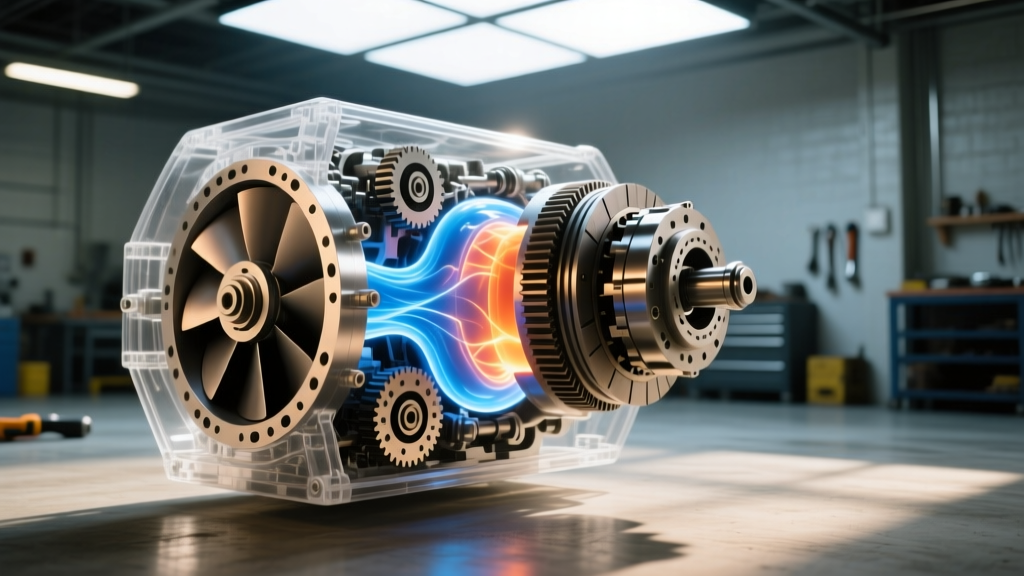
In a conventional vehicle, the torque converter consists of an impeller, a turbine, a stator, and a torque converter clutch (TCC). In a P2 hybrid architecture, such as the ZF 8HP hybridized automatic transmission, the traditional stator is often entirely eliminated. Instead, the rotor of the high-voltage electric motor is integrated directly into the torque converter housing, while the stator of the electric motor is bolted to the transmission case.
This integration means that a mechanical failure inside the torque converter housing can directly impact the electric motor's air gap, cause rotor scoring, or lead to high-voltage insulation faults. Furthermore, the TCC (lockup clutch) in a hybrid must modulate slip with extreme precision to seamlessly blend the torque output of the electric motor and the gas engine during EV-to-ICE handoffs. When this friction material degrades, the symptoms manifest differently than they would in a purely gas-powered car.
Core Symptoms: Identifying Torque Converter Failure in Hybrids
If you are trying to determine how to tell if your torque converter is going out in a hybrid, look for these specific, architecture-dependent symptoms:
1. Erratic EV-to-ICE Handoff Shudders
In a hybrid, the gas engine frequently shuts off at stoplights to save fuel, relying on the electric motor to move the vehicle. When you accelerate hard or deplete the battery, the ICE must restart and engage. The torque converter clutch must slip precisely to absorb the torsional vibrations of the engine starting and meshing with the drivetrain. If the TCC friction lining is glazed or the apply piston seals are leaking, you will feel a distinct 20-to-40 Hz shudder exactly at the moment the gas engine kicks in. This is often misdiagnosed as an engine misfire or a failing engine mount.
2. Regenerative Braking Inconsistencies and Parasitic Drag
During regenerative braking, the electric motor acts as a generator, reversing torque flow through the transmission to charge the battery. A failing torque converter one-way clutch or a warped TCC backing plate can create parasitic mechanical drag. This drag fights the regenerative braking system, leading to a sudden drop in MPGe, reduced braking regeneration feel, and premature wear on the physical friction brakes. The vehicle's battery management system (BMS) may log a P0A0F (Engine Performance) or P0A94 (Drive Motor Inverter Over Temperature) code because the electric motor is working harder than expected to overcome the hydraulic drag.
3. Overheating Exclusively in Stop-and-Go EV Mode
Hybrid torque converters feature specialized cooling circuits. If the TC cooling check-valve fails or the cooler lines become restricted, the fluid inside the converter stagnates. Because hybrids spend a massive amount of time in stop-and-go traffic with the gas engine off, the transmission fluid pump (often driven by an auxiliary electric pump in hybrids) may run at a lower RPM to save energy. This reduced flow, combined with a failing internal bearing or excessive TCC slip, causes rapid localized overheating, degrading the fluid and triggering the transmission's limp-home mode.
Diagnostic Matrix: Torque Converter vs. High-Voltage Motor Faults
Because the electric motor and torque converter share the same physical bell housing in P2 hybrids, separating the root cause requires a structured diagnostic approach. Use this matrix to guide your troubleshooting:
| Symptom Observed | OBD2 Code(s) | Torque Converter Probability | Electric Motor / Inverter Probability |
|---|---|---|---|
| Shudder strictly during engine start/stop events | P0741, P0742 | High (TCC Modulation Failure) | Low |
| Whining noise that changes pitch with vehicle speed, regardless of engine state | None or P0730 | High (Bearing / Fin Damage) | Medium (Rotor Bearing) |
| Sudden loss of regen braking; physical brakes engage abruptly | P0A94, C1A00 | Medium (Parasitic Drag) | High (Inverter Fault) |
| Metal flakes in transmission pan; fluid smells burnt | P0711 (Temp Sensor) | Very High (Clutch / Stator Failure) | Low |
| High-voltage isolation fault when transmission reaches operating temp | P0A90, P0A1F | Medium (Debris piercing motor housing) | High (Coolant Leak into Inverter) |
Advanced Troubleshooting: Oscilloscope and Bi-Directional Testing
To definitively prove the torque converter is failing, mechanics must move beyond basic code readers. According to diagnostic guidelines highlighted by Car and Driver's hybrid transmission analysis, modern hybrids rely on complex Pulse Width Modulation (PWM) to control the TCC solenoid.
- PWM Solenoid Testing: Hook an oscilloscope to the TCC solenoid control wire. A healthy hybrid TC will show a smooth, continuous PWM duty cycle ramp-up during the EV-to-ICE handoff. If the scope shows the Transmission Control Module (TCM) rapidly pulsing the solenoid (hunting for grip) while the commanded RPM slip remains high, the TCC friction material is destroyed.
- Stall Speed Test (Hybrid Modified): Traditional stall tests are dangerous on hybrids. Instead, use a bi-directional scan tool (like an Autel MaxiSys or Snap-on Zeus) to command the TCM to lock the torque converter while holding the vehicle on the brakes in EV mode. Monitor the motor RPM versus wheel speed. A discrepancy indicates severe internal slip.
- Fluid Analysis: Drop the transmission pan. In a BMW X5 xDrive45e (ZF 8HP75H), the presence of copper-colored flakes indicates the electric motor rotor bushing or the TC internal stator bearing is disintegrating. Black, sooty fluid confirms the TCC clutch pack is burning up during engine handoffs.
2026 Replacement Costs and Fluid Specifications
Replacing a torque converter in a hybrid is significantly more expensive than in a standard ICE vehicle due to the integration of the high-voltage electric motor components and the requirement to safely de-power the hybrid battery system. Below are real-world estimates and specifications for common hybrid platforms:
Ford Escape Hybrid (6F35 Transmission)
- Architecture: P2-style with integrated motor.
- Fluid Requirement: Motorcraft MERCON ULV (Ultra Low Viscosity). Capacity: ~9.5 quarts for a full flush.
- Part Cost: $650 - $950 for a remanufactured hybrid-specific torque converter.
- Labor & Total: $1,400 - $1,900. Requires dropping the subframe, safely disconnecting the high-voltage orange cables, and separating the motor stator from the TC housing.
BMW X5 xDrive45e (ZF 8HP75H Transmission)
- Architecture: P2 with electric motor integrated directly into the bell housing/TC area.
- Fluid Requirement: ZF LifeguardFluid 8. Capacity: ~9.0 liters.
- Part Cost: $1,200 - $1,800. The TC must be ordered with the specific rotor alignment for the electric motor.
- Labor & Total: $2,800 - $4,200. Requires specialized ZF software to reset the TCC adaptions and calibrate the electric motor rotor position sensor post-installation.
Hyundai Sonata Hybrid (6-Speed Automatic)
- Architecture: P2 with electric motor replacing the traditional torque converter entirely in some generations, or utilizing a specialized clutch-damper assembly.
- Fluid Requirement: Hyundai SP-IV.
- Labor & Total: $1,800 - $2,500. Note that on certain Hyundai hybrids, the 'torque converter' is actually an Engine Clutch and Motor Assembly; replacing it requires pulling the entire transaxle and realigning the motor resolver.
CRITICAL SAFETY WARNING: Never attempt to remove a hybrid transmission or torque converter without first verifying that the high-voltage battery service disconnect is pulled and the inverter capacitors are fully discharged using a CAT III or CAT IV multimeter. Lethal voltage (often exceeding 400V) remains in the system even when the 12V battery is disconnected.
Final Thoughts on Hybrid TC Diagnostics
Understanding how to tell if your torque converter is going out in a hybrid requires looking past traditional automatic transmission symptoms. By paying close attention to the exact moments the shudder occurs (specifically during EV-to-ICE transitions), monitoring regenerative braking efficiency, and utilizing oscilloscope data to read TCC solenoid PWM signals, you can accurately isolate the torque converter from high-voltage electrical faults. Always consult factory service data for the exact TCC adaptation reset procedures, as failing to recalibrate the hybrid TCM to a new torque converter will result in immediate, violent shuddering upon reassembly.