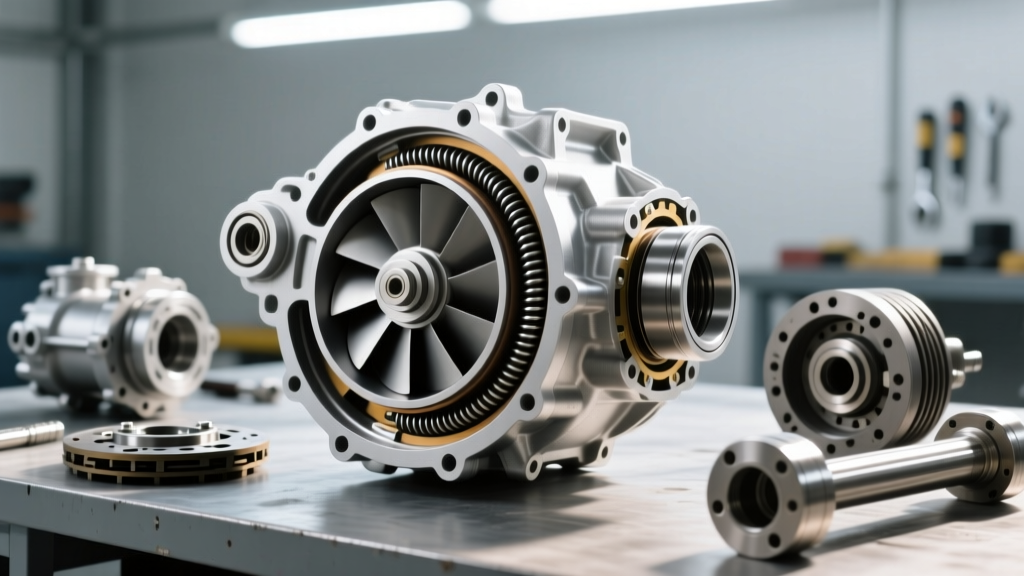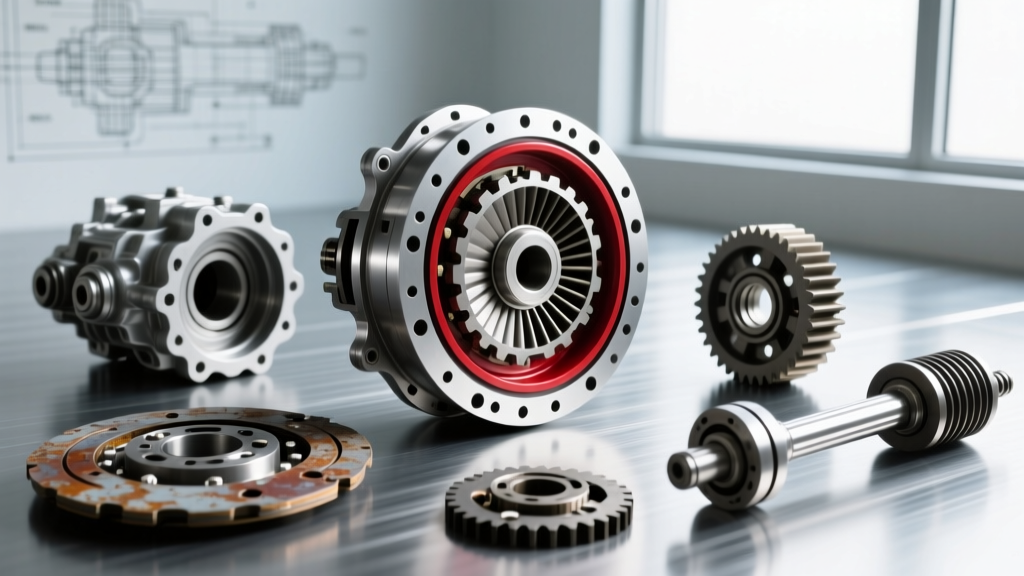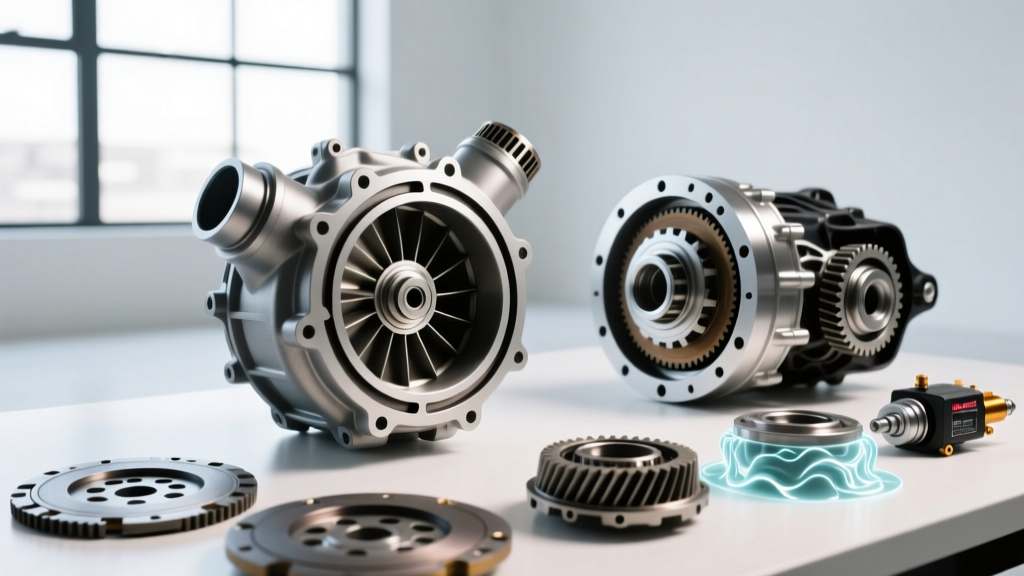
The Evolution of Fluid Coupling: From Classic V8s to Electrified Powertrains
Diagnosing drivetrain shudder requires a fundamental understanding of how torque is transferred from the engine to the transmission. In the classic automotive era, the TH350 torque converter set the benchmark for hydrodynamic fluid coupling. It relied on a simple, robust triad: the impeller, turbine, and stator. However, as we navigate the automotive landscape of 2026, the proliferation of hybrid vehicles has radically altered drivetrain architecture. Modern hybrid systems often replace the traditional torque converter with complex torsional dampers, engine disconnect clutches (K0 clutches), and integrated motor-generators.
For transmission specialists and DIY diagnosticians, conflating the symptoms of a failing classic torque converter with those of a hybrid drivetrain damper is a common and costly mistake. This guide provides a deep-dive technical comparison between diagnosing shudder in a traditional TH350 setup versus troubleshooting the coupling mechanisms in modern P2 and power-split hybrid architectures.
Core Architecture and Failure Modes
The Classic TH350 Torque Converter
The Turbo Hydra-Matic 350 (TH350) utilizes a non-lockup (or early electronic lockup in later variants) fluid coupling system. Shudder in a TH350 torque converter typically manifests between 35 and 55 mph under light throttle. The root causes are generally mechanical or hydraulic:
- Stator One-Way Clutch Failure: If the stator freewheels in both directions, low-speed torque multiplication is lost, resulting in sluggish acceleration. If it locks in both directions, the converter will overheat rapidly, and the fluid will smell burnt due to extreme fluid shear.
- Fin Fatigue and Brazing Failure: High-stall or heavy-duty TH350 converters (often 10-inch or 11-inch diameters) can suffer from internal fin separation, causing erratic fluid flow and harmonic vibrations.
- Transmission Fluid Degradation: Using outdated friction modifiers or neglecting Dexron VI retrofits leads to a loss of anti-shudder properties, particularly in later lockup-equipped TH350 derivatives.
Hybrid Vehicle Coupling Systems
In contrast, modern hybrid vehicles (such as those utilizing ZF's 8HP hybrid architecture or Hyundai/Kia's TMED P2 systems) do not use a traditional hydrodynamic torque converter. Instead, they employ a torsional damper assembly and an engine disconnect clutch to blend internal combustion engine (ICE) torque with electric motor torque.
According to research published by SAE International, hybrid drivetrain shudder is often a result of torsional resonance. When the ICE fires, it creates rotational irregularities. In a classic V8, the fluid mass of the TH350 torque converter absorbs this. In a hybrid, mechanical coil springs and dual-mass damper plates must absorb these harmonics. When these springs fatigue or the K0 clutch friction material degrades, a severe, low-frequency shudder (typically 15-30 Hz) is transmitted directly through the chassis.
'Technicians often misdiagnose hybrid torsional damper shudder as a motor inverter fault or a transmission gear-mesh issue. The absence of a fluid coupling means mechanical vibrations are no longer dampened by ATF shear, making early spring-fatigue diagnosis critical.' — Drivetrain NVH Engineering Guidelines, 2025
Diagnostic Protocols: Isolating the Shudder
Step 1: The TH350 Stall Test and Fluid Analysis
To diagnose a suspected TH350 torque converter, the stall test remains the gold standard. Secure the vehicle, apply the parking brake, and hold the foot brake firmly. Shift into Drive and apply wide-open throttle (WOT) for no more than 5 seconds.
- Normal Stall (1,800 - 2,200 RPM): The converter and stator clutch are functioning correctly. Shudder is likely related to the TCC (Torque Converter Clutch) apply valve or degraded fluid.
- Low Stall (Below 1,500 RPM): The stator one-way clutch is slipping (freewheeling). The converter must be replaced or rebuilt.
- High Stall (Above 2,800 RPM): Indicates internal turbine damage, severe transmission band/clutch slip, or a stator locked in the reverse direction.
Additionally, dropping the TH350 pan will reveal the truth. A fine, glittering copper or aluminum paste indicates bearing or bushing wear inside the converter hub. Black, burnt-smelling fluid confirms internal clutch pack or converter lining failure.
Step 2: Hybrid Scan Tool Data and Adaptation Resets
Diagnosing shudder in a P2 hybrid requires a bi-directional OEM scan tool. You are not looking for fluid pressures; you are looking for clutch adaptation values and motor-generator torque ripple.
- Monitor K0 Clutch Slip: Command the engine disconnect clutch to engage while monitoring the slip RPM PID. If slip exceeds 25 RPM during steady-state cruising, the friction material is glazed or the hydraulic actuator piston seal is leaking.
- Active Dampening PIDs: Many modern hybrids use the electric motor to actively cancel out ICE vibrations (Active NVH cancellation). If the inverter reports high corrective torque outputs at idle or low speeds, the mechanical torsional damper springs have likely collapsed.
- Fluid Conductivity Test: In hybrids where the ATF cools the electric motor stator, fluid degradation can lead to electrical conductivity issues. Use a dielectric tester; if the fluid fails to meet the OEM's megohm/cm threshold, it must be flushed immediately to prevent inverter faults that mimic mechanical shudder.
Diagnostic Matrix: Classic vs. Hybrid Systems
| Diagnostic Parameter | Classic TH350 Torque Converter | Modern P2 Hybrid Damper / K0 Clutch |
|---|---|---|
| Primary Coupling Method | Hydrodynamic Fluid Shear | Mechanical Spring Damper & Friction Clutch |
| Shudder Frequency | 40 - 60 Hz (Fluid Resonance) | 15 - 30 Hz (Torsional / Mechanical Resonance) |
| Primary Diagnostic Test | Stall Test & TCC Apply Pressure | OEM Scan Tool K0 Slip PID & NVH Analysis |
| Fluid Specification | Dexron VI (approx. 11-12 Qt Total) | Low-Viscosity EV ATF (e.g., ZF LifeguardHybrid) |
| Common Failure Point | Stator One-Way Clutch / Fin Brazing | Dual-Mass Spring Fatigue / K0 Piston Seal |
Hydraulic Pressures and Torque Specifications
When removing and replacing these components, precision is non-negotiable. For the TH350, the converter-to-flexplate bolts must be torqued to 35 lb-ft using Grade 8 hardware, and the converter must be fully seated into the transmission oil pump (typically requiring three distinct 'clicks' or drops, measuring exactly 1/4 to 3/8 inch from the bellhousing face). Failure to seat the TH350 converter will result in immediate pump gear destruction upon startup.
Conversely, hybrid torsional dampers often utilize torque-to-yield (TTY) stretch bolts to secure the damper to the engine crankshaft and the motor rotor. For example, in many European P2 hybrid applications, the damper-to-crankshaft bolts are torqued to 45 Nm + 90 degrees. Reusing these bolts will result in catastrophic harmonic separation. Furthermore, hybrid systems require a vacuum fill procedure to ensure no air pockets remain in the K0 clutch hydraulic circuit, which would otherwise cause immediate engagement shudder.
2026 Repair Economics and Part Sourcing
The economic reality of repairing these systems varies wildly. A replacement Sonnax or OEM-equivalent TH350 torque converter costs between $180 and $350. Labor for a standard RWD TH350 removal and replacement averages 4 to 6 hours, bringing the total shop ticket to roughly $800 - $1,200.
Hybrid vehicles present a different financial hurdle. Because the torsional damper and K0 clutch are sandwiched between the ICE and the hybrid transmission (and often require high-voltage safety lockout procedures to remove the motor-generator), labor times frequently exceed 12 hours. The OEM damper assembly alone can range from $1,400 to $3,200. Total repair costs for hybrid shudder resolution often land between $3,500 and $5,500 at specialized dealerships. Independent shops equipped with hybrid-certified techs and OEM scan tools can reduce this by 20-30%, but the barrier to entry for proper diagnosis remains high.
Final Diagnostic Takeaway
While the TH350 torque converter relies on fluid dynamics and simple mechanical clutches to manage power delivery, hybrid vehicles have shifted the burden of NVH management to complex mechanical springs and electronically modulated friction clutches. Recognizing the difference between hydrodynamic shudder and torsional resonance is the hallmark of a master transmission diagnostician in the modern era.