The Misconception of Stall Speed in CVTs
When enthusiasts and old-school mechanics hear the term 'stall speed,' they immediately picture a traditional brake-torque test: holding the brakes, mashing the throttle to the floor, and watching the tachometer climb to 2,500 RPM to see where the torque converter stops multiplying torque. However, if you are diagnosing a 2015 Nissan Sentra torque converter, you must throw that traditional playbook out the window.
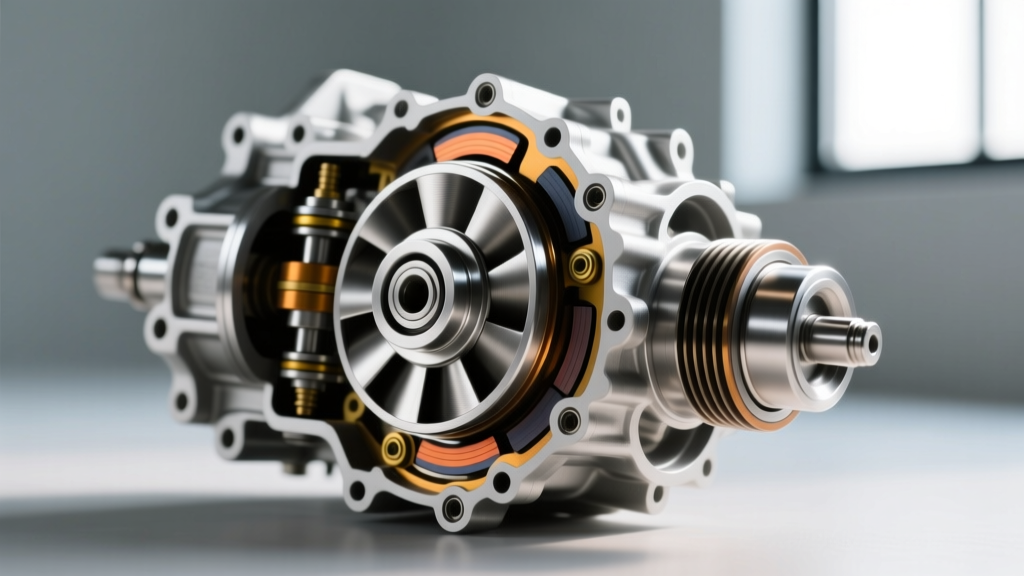
The 2015 Nissan Sentra (equipped with the 1.8L QR18DE engine) utilizes the Jatco JF015E (RE0F11A) Continuously Variable Transmission. Unlike older CVTs that relied solely on a start-clutch, the JF015E features a traditional fluid-coupling torque converter with a Torque Converter Clutch (TCC) lockup mechanism. This TC is designed to prevent the CVT's steel push-belt from slipping under high-torque launch conditions. Performing a traditional wide-open-throttle (WOT) stall test on this transmission will generate immense heat and hydraulic shock, instantly exceeding the variator pulley clamping pressure and causing catastrophic belt slip.
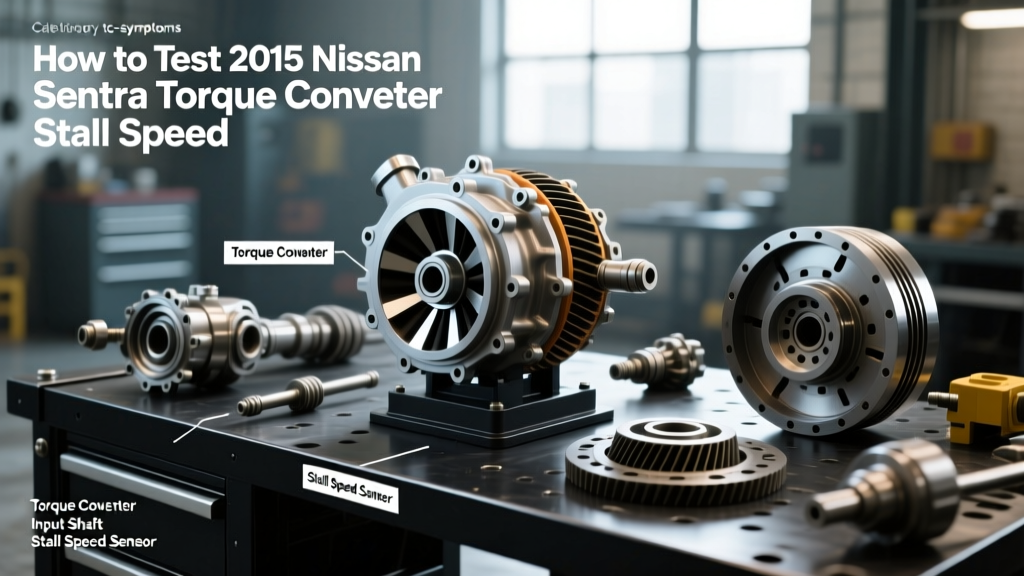
To properly evaluate the stall characteristics and lockup integrity of the 2015 Sentra's torque converter, we must use a modern, data-driven approach. Below is your step-by-step how-to guide for safely testing the TC stall behavior and TCC lockup function without destroying the CVT.
Step-by-Step: Evaluating TC Stall and Lockup via OBD2
Instead of relying on a mechanical brake-torque test, modern transmission diagnostics require a bi-directional scan tool to monitor the slip RPM between the engine and the transmission input shaft.
Step 1: Verify CVT Fluid Condition and Temperature
Hydraulic pressure is entirely dependent on fluid temperature and viscosity. The JF015E requires Nissan NS-3 fluid. Using the older NS-2 fluid will alter the TCC apply rates and cause severe shudder.
- Check the Dipstick: Ensure the fluid is at the correct level and smells like clean oil, not burnt friction material.
- Monitor Temperature: Connect your scan tool and view the CVT Fluid Temperature PID. The fluid must be between 122°F and 176°F (50°C - 80°C) for the TCC lockup solenoid to operate within factory specifications.
Step 2: Configure Your Scan Tool PIDs
Set up your custom data graph to monitor the following Parameter IDs (PIDs) simultaneously:
- Engine RPM: The speed of the flexplate and torque converter impeller.
- Turbine Speed (Input Shaft RPM): The speed of the transmission input shaft.
- TCC Slip RPM: The calculated difference between Engine RPM and Turbine Speed.
- TCC Solenoid Duty Cycle: The percentage of lockup being commanded by the TCM.
- Primary & Secondary Pulley Pressures: To ensure the variators are clamping the belt during load.
Step 3: Execute the Dynamic Slip Test
The safest way to evaluate the 'stall' and coupling efficiency of the 2015 Nissan Sentra torque converter is under light-to-moderate load while driving.
- Accelerate the vehicle from a stop at exactly 25% throttle position.
- Observe the TCC Slip RPM. During initial launch, you should see 300 to 500 RPM of slip as the fluid coupling multiplies torque.
- As you reach 15–20 MPH, the TCM should begin pulsing the TCC solenoid. The Slip RPM should smoothly drop to near zero (typically under 50 RPM) as the lockup clutch engages.
- Diagnostic Red Flag: If the TCC Slip RPM remains above 150 RPM while cruising at a steady 35 MPH with the TCC Duty Cycle commanding 100%, your torque converter clutch friction material is worn, or the TCC apply valve in the valve body is stuck.
Step-by-Step: The Modified (Safe) Brake-Torque Test
If you absolutely must perform a stationary brake-torque test to diagnose a suspected stator one-way clutch failure (which results in poor off-the-line multiplication), you must adhere to strict Nissan factory limits.
Expert Warning: Never perform a traditional 5-second, wide-open-throttle stall test on a Jatco CVT. You will instantly exceed the hydraulic clamping pressure of the variator pulleys, causing the steel push-belt to slip and permanently score the pulleys, resulting in a $4,000+ replacement bill.
- Ensure the parking brake is fully engaged and your foot is firmly on the service brake pedal.
- Shift into Drive and wait 3 seconds for the forward clutch to fully engage.
- Apply throttle smoothly to exactly 1,500 RPM (Do NOT exceed this).
- Hold for a maximum of 3 seconds while monitoring Turbine Speed and Primary Pulley Pressure.
- Immediately release the throttle and shift to Neutral to allow the fluid to cool.
Analysis: If the engine easily pushes past 1,500 RPM with minimal resistance and the vehicle barely tries to creep forward, the torque converter stator is likely freewheeling in both directions (internal mechanical failure). If the engine bogs down heavily and the car violently pulls, the TC is functioning, but you must immediately check for CVT belt slip codes (P17F0 / P17F1).
JF015E Torque Converter Specifications & Limits
Refer to this data table when diagnosing the 2015 Sentra's drivetrain. These specifications are critical for separating torque converter faults from internal CVT variator faults.
| Parameter | Specification / Limit | Diagnostic Note |
|---|---|---|
| Fluid Type | Nissan NS-3 | NS-2 will cause TCC shudder and incorrect line pressure. |
| Fluid Capacity (Dry Fill) | 7.4 Quarts (7.0 Liters) | TC holds roughly 1.5 quarts; requires fluid exchange machine for full replacement. |
| Max Safe Brake-Torque RPM | 1,500 RPM | Exceeding this risks CVT push-belt slip and pulley scoring. |
| Max Brake-Torque Duration | 3 Seconds | Prolonged heat degrades NS-3 fluid friction modifiers rapidly. |
| Normal TCC Lockup Speed | 10 - 15 MPH | JF015E locks up extremely early to reduce heat and protect the belt. |
| Acceptable TCC Slip (Cruising) | < 50 RPM | Higher slip indicates worn TC clutch or failing lockup solenoid. |
Diagnosing Torque Converter Shudder and TCC Codes
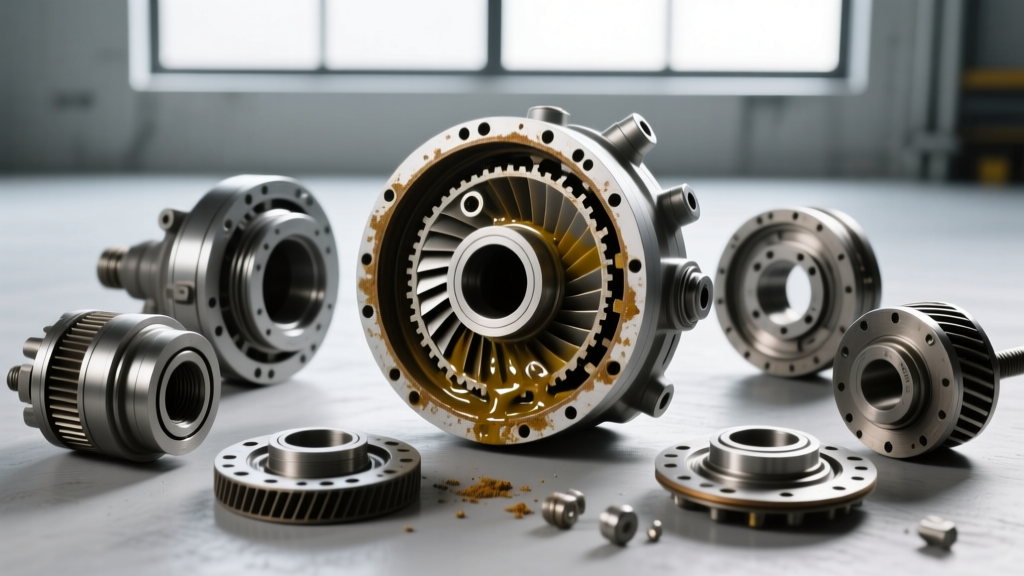
A failing torque converter in the 2015 Sentra rarely fails catastrophically; instead, it fails through friction material degradation. The most common symptom is a rhythmic shudder between 20 and 40 MPH, often accompanied by the following OBD2 codes:
- P0744 (Torque Converter Clutch Circuit Intermittent): The TCM detects erratic slip RPM when the TCC is commanded to lock. This is usually caused by degraded friction material inside the TC or a failing TCC PWM solenoid.
- P0746 (Pressure Control Solenoid A Performance): While technically a valve body code, a failing lockup control valve can starve the TC of apply pressure, mimicking a bad converter.
Pro-Tip: Before condemning the torque converter for a shudder, perform a fluid exchange using genuine Nissan NS-3. The Automatic Transmission Rebuilders Association (ATRA) notes that up to 40% of early-stage JF015E shudder complaints are resolved simply by restoring the chemical friction modifiers in the fluid. If the shudder persists after 500 miles of driving on fresh fluid, the TC lockup clutch is mechanically compromised.
Replacement Costs and Part Numbers for 2026
If your diagnostic steps confirm internal torque converter failure, replacement requires removing the transaxle. As of early 2026, the aftermarket and OEM landscape for the JF015E torque converter is as follows:
- OEM Nissan Part Number: 31000-1XF0D (Supersedes older 1XF0A/B variants).
- OEM Dealer Price: $850 - $1,100.
- Remanufactured Aftermarket Price: $450 - $650 (Ensure the rebuilder has replaced the TCC friction lining and balanced the impeller).
- Labor Time: 6.5 to 8.0 hours (Transaxle removal, subframe drop, and axle extraction).
- Total Shop Estimate: $1,200 to $1,900, including NS-3 fluid and rear main seal replacement.
When replacing the torque converter, it is mandatory to flush the transmission cooler lines and replace the CVT fluid filter (located inside the pan) to prevent dislodged friction material from jamming the new TCC solenoid. Always align the torque converter hub fully into the transmission oil pump gears before tightening the bellhousing bolts; failing to do so will instantly destroy the oil pump upon engine start.