The Gray Area: Tesla Drivetrain Warranty vs. CV Axles
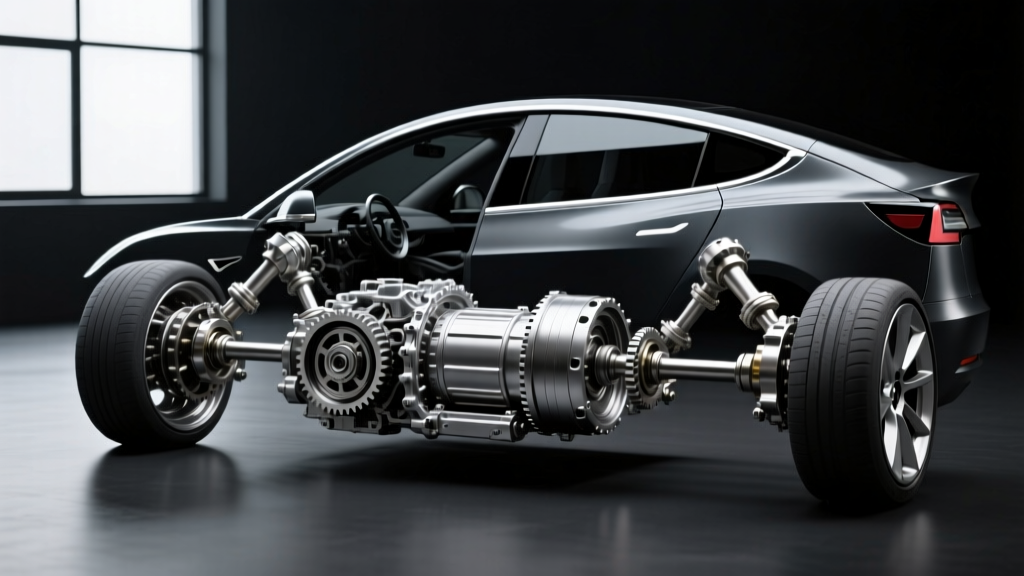
When evaluating the total cost of ownership for electric vehicles, owners often assume that the massive battery pack and the electric drive unit are the only expensive components to worry about. However, the physical connection between the electric motor's reduction gearbox and the wheels—the CV (Constant Velocity) axle—endures tremendous stress. For Tesla owners, understanding the intersection of mechanical wear and the tesla drivetrain warranty is critical for avoiding unexpected four-figure repair bills.
The 8-year/100,000-mile (or 120k/150k depending on the specific model and trim) Drive Unit warranty is a major selling point for EVs. According to the Tesla Official Warranty Guide, this coverage specifically protects the 'Drive Unit' (the electric motor, inverter, and single-speed reduction gearbox). But what about the halfshafts? Legally and technically, CV axles are driveline components. Yet, under Tesla’s warranty definitions, halfshafts, CV joints, and CV boots are frequently classified as 'wear-and-tear' or suspension/driveline accessories. Consequently, they fall under the standard 4-year/50,000-mile Basic Vehicle Warranty. If your Model 3 or Model Y develops a clicking CV joint at 65,000 miles, you are entirely responsible for the out-of-pocket replacement costs, despite the vehicle's primary drivetrain supposedly being covered for eight years.
Why Electric Vehicles Prematurely Wear CV Joints
Internal combustion engine (ICE) vehicles gradually build torque through the RPM band, allowing CV joints to absorb rotational forces smoothly. Electric vehicles, conversely, deliver maximum torque at 0 RPM. When a Model Y Performance launches, the instant 493 lb-ft of torque is immediately transferred through the halfshafts. Furthermore, EVs are exceptionally heavy; a Model Y Long Range tips the scales at over 4,400 lbs. This combination of high instant torque and massive curb weight places extreme lateral and rotational stress on the CV joint cages, bearings, and tripod rollers.
Regenerative braking exacerbates the issue. During aggressive one-pedal driving, the kinetic energy recovery system reverses the torque load on the driveline, effectively 'back-driving' the CV joints hundreds of times per trip. This constant load-reversal accelerates grease degradation and wear on the inner tripod joint bearings.
Inner Tripod vs. Outer Rzeppa Failures
- Outer Rzeppa Joints: Located at the wheel hub, these joints handle extreme steering angles. Failure is usually preceded by a torn rubber CV boot, leading to grease slinging and contamination. Symptoms include a rhythmic 'clicking' or 'popping' noise during tight, low-speed turns.
- Inner Tripod Joints: Located at the transmission flange, these handle plunge (in-and-out movement) as the suspension cycles. EV inner joints often fail due to pitting on the roller bearings, causing a pronounced shudder or vibration under heavy acceleration or hard regenerative braking, even if the boot remains perfectly intact.
Cost Analysis: OEM vs. Aftermarket CV Axle Replacement
Because the tesla drivetrain warranty rarely covers halfshafts past 50,000 miles, owners must navigate the repair market independently. Tesla Service Centers exclusively use OEM parts, while independent EV specialists can source high-quality aftermarket alternatives. Below is a detailed cost breakdown for a single front CV axle replacement on a Model 3 / Model Y platform.
| Component / Service | OEM (Tesla Service) | Aftermarket (Independent Shop) |
|---|---|---|
| Front Halfshaft Assembly (Part # 1344272-00-A equiv.) | $550 - $750 | $140 - $220 (e.g., GSP, TrakMotive) |
| Front Axle Nut (Torque-to-Yield) | $15 | $10 |
| Labor (1.5 - 2.5 Hours) | $350 - $450 (Est. $175/hr) | $200 - $300 (Est. $130/hr) |
| Wheel Alignment (Post-Repair) | $150 | $100 |
| Total Estimated Cost (Per Axle) | $1,065 - $1,365 | $450 - $630 |
According to pricing data aggregated from EV repair forums and the RockAuto EV Parts Catalog, aftermarket manufacturers like GSP have heavily reinforced their EV-specific CV axles to handle the torque loads of electric motors, making them a viable, cost-effective alternative to OEM units for out-of-warranty vehicles.
Diagnostic Symptoms and Edge Cases
Before authorizing a full halfshaft replacement, a proper diagnosis is required to ensure the issue isn't misattributed to the drive unit or wheel bearings. Common diagnostic checkpoints include:
- The Sling Test: Inspect the inner wheel well and lower control arm for thick, dark grease. A torn inner boot will sling grease radially, while a torn outer boot will sling it outward toward the brake rotor.
- Load Reversal Shudder: If the vehicle shudders only when lifting off the accelerator (regen braking) but is smooth under acceleration, the inner tripod joint is likely pitted and requires replacement.
- Edge Case - Gearbox Seal Leaks: Sometimes, a leaking output shaft seal on the Tesla reduction gearbox will drip fluid onto the inner CV joint. While not a CV joint failure, it requires dropping the axle to replace the seal, prompting many owners to replace the axle simultaneously if it has high mileage.
Critical Torque Specifications for Model 3 and Model Y
Improper torque on EV driveline components can lead to catastrophic failure, hub bearing damage, or the axle nut backing off under high-torque loads. Independent shops must adhere strictly to Tesla's service manual specifications. Below are the critical torque specs for the front CV axle assembly:
- Inner CV Joint to Gearbox Flange Bolts (M8): 40 Nm (30 lb-ft). These bolts must be cleaned and a thread-locking compound applied if specified by the revision.
- Outer Stub Axle Nut (Hub Nut): Tesla specifies a torque-to-yield procedure. The initial torque is 120 Nm (89 lb-ft), followed by an additional 90-degree turn. Note: Many independent shops use heavy-duty aftermarket non-yield nuts and torque them to a static 245 Nm (181 lb-ft) for safety and ease of future removal.
- Wheel Lug Nuts (M14 x 1.5): 175 Nm (129 lb-ft).
Shop Tip: Never use an impact wrench to tighten the outer CV axle nut on an EV. The extreme torque of an electric motor can snap an improperly seated or over-torqued stub axle spline, turning a $500 repair into a $3,000 hub and bearing replacement.
Navigating Warranty Claims and Goodwill Repairs
If your CV axle fails at 55,000 miles—just outside the Basic Vehicle Warranty but well within the timeframe you assumed the 'drivetrain' was covered—all hope is not lost. The National Highway Traffic Safety Administration (NHTSA) maintains databases of consumer complaints regarding premature driveline wear. If a specific halfshaft part number has a high failure rate, Tesla Service Centers may authorize a 'Goodwill Repair' or a Technical Service Bulletin (TSB) extension.
To maximize your chances of a covered repair:
- Document the Failure Early: Do not wait for the joint to completely destroy itself. A torn boot with no joint damage is a much cheaper and easier warranty claim to push through as a 'defect in materials' rather than 'wear and tear'.
- Escalate to Tesla Support: If the local service center denies the claim based on the 50k mile basic warranty limit, open a case via the Tesla app or call Tesla Guest Support. Emphasize that a driveline component failing at low mileage indicates a manufacturing defect, not normal wear.
- Check for TSBs: Independent EV shops often have access to Tesla's internal service bulletins. Some early Model 3 halfshafts were known for inadequate grease packing from the factory, leading to early Rzeppa cage failure. If your VIN falls under an affected batch, Tesla may cover it regardless of mileage.
Final Verdict: Budgeting for EV Driveline Maintenance
The tesla drivetrain warranty is an exceptional safety net for the multi-thousand-dollar electric motor and inverter, but it is not a blanket shield for every component that transfers power to the wheels. CV axles are high-stress, high-wear items on heavy, high-torque electric vehicles. Owners approaching the 50,000-mile mark should proactively inspect their CV boots during tire rotations and budget $500 to $1,200 per axle for potential out-of-warranty replacements. By understanding the mechanical realities of EV drivelines and leveraging the aftermarket parts ecosystem, you can keep your vehicle on the road without relying on a warranty loophole.