The Electronic Shift: From Bicycles to Battery Electric Vehicles
When cycling enthusiasts upgrade to shimano xt deore di2 wireless drivetrains, they experience a revelation in micro-electronic precision. The seamless, cable-free shifting and automated derailleur adjustments represent the pinnacle of lightweight mechanical optimization. However, as we transition from the micro-engineering of bicycles to the macro-mechanical reality of automotive engineering, the concept of a "drivetrain" takes on an entirely different meaning. In the automotive sector, particularly for the 2026 model year, electric vehicle (EV) drivetrains have abandoned the complex, multi-gear shifting paradigms of internal combustion engines (ICE) in favor of high-RPM reduction gearboxes and advanced torque-vectoring layouts.
For automotive buyers and transmission enthusiasts, understanding how EV powertrains manage power delivery is critical. While an ICE vehicle relies on an 8-speed ZF 8HP or a 10-speed Ford 10R80 transmission to keep a narrow powerband within its optimal RPM range, electric motors generate peak torque at 0 RPM and can safely spin past 20,000 RPM. This fundamental difference dictates the unique drivetrain configurations we see on the road today.
Why Most EVs Abandon Multi-Speed Gearing
According to the U.S. Department of Energy, the vast majority of modern electric vehicles utilize a single-speed transmission. The electric motor's wide operational band eliminates the need for a traditional gearbox. Instead, EVs use a single-speed reduction gear to multiply torque and reduce the motor's extreme rotational speed down to a usable wheel speed.
A typical EV reduction gearbox operates with a final drive ratio between 9.0:1 and 10.5:1. For example, the Tesla Model 3 Rear-Wheel Drive utilizes a 9.04:1 reduction ratio. This allows the motor to spin at roughly 18,000 RPM while the vehicle cruises at 70 mph (112 km/h), keeping the motor in its most thermally efficient zone without the mechanical complexity, weight, and parasitic loss of multiple gear sets, synchronizers, and clutch packs.
2026 EV Drivetrain Configurations: A Buyer’s Breakdown
When shopping for an EV in 2026, you are no longer choosing between a manual or an automatic. You are choosing between motor placements, reduction architectures, and cooling methodologies. Here is the definitive buyer's guide to modern EV drivetrain layouts.
1. The Standard Single-Motor / Single-Speed Layout
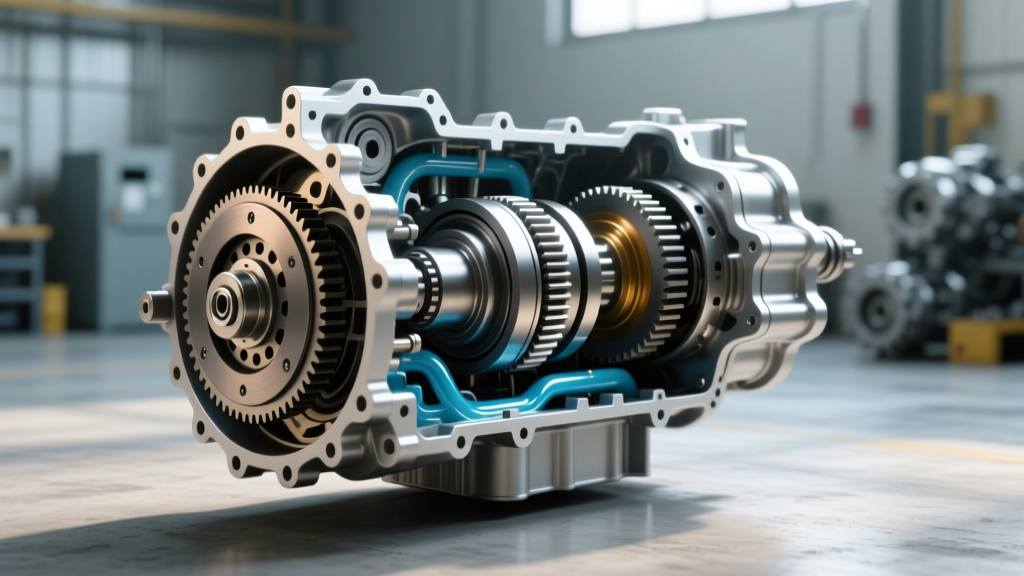
Found in vehicles like the Hyundai Ioniq 5 and Tesla Model 3 RWD, this layout houses the electric motor, inverter, and reduction gear in a single, integrated aluminum casing.
- Gearing: Single helical-cut reduction gear (typically 9.0:1 to 10.5:1). Helical cutting is mandatory to reduce NVH (Noise, Vibration, and Harshness), as straight-cut gears would produce an unbearable whine at 18,000 RPM.
- Lubrication: Integrated oil bath. The same dielectric fluid cools the motor windings and lubricates the reduction gear bearings.
- Buyer Note: Highly reliable due to minimal moving parts. The primary failure point is not the gears, but the oil pump or cooling jacket degradation over high-mileage use.
2. Dual-Motor AWD with Disconnect Clutches
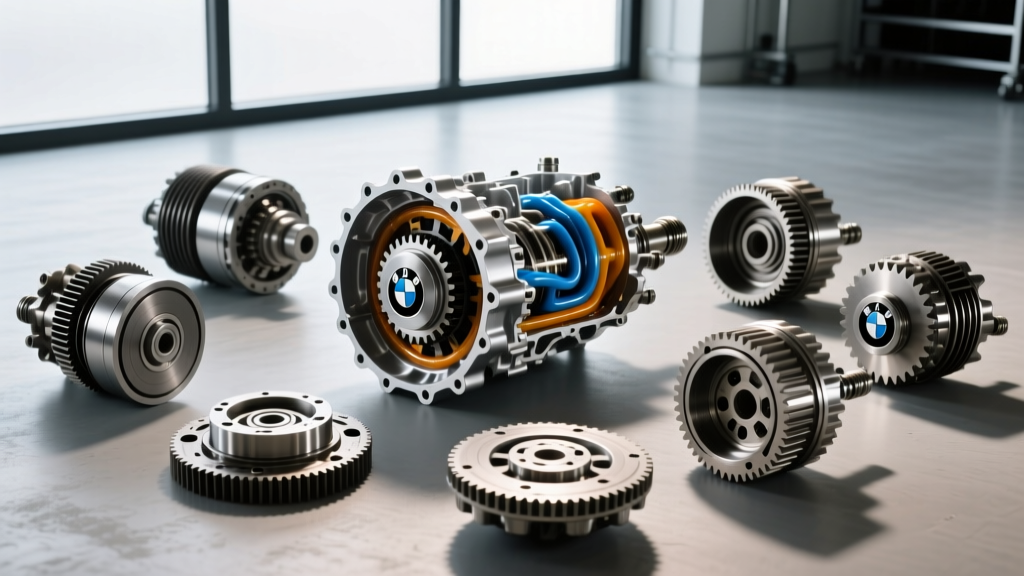
To maximize range, modern AWD EVs (such as the Ford Mustang Mach-E and BMW iX) utilize a secondary motor that can be completely decoupled from the drivetrain when cruising.
Engineering Insight: The BMW iX xDrive50 uses an Asynchronous Motor (ASM) on the front axle and a Permanent Magnet Synchronous Motor (PSM) on the rear. The front ASM can be electronically deactivated, allowing it to freewheel with zero magnetic drag, effectively turning the car into a RWD vehicle to save energy on the highway.
Buyers should look for AWD systems with mechanical disconnect clutches rather than simple electronic zero-torque states, as mechanical disconnection eliminates parasitic drag from the unused motor's internal seals and bearings.
3. The Multi-Speed EV Exception (2-Speed Axles)
While single-speed is the norm, high-performance EVs require a different approach. As documented by ZF Friedrichshafen AG, a 2-speed transmission on the rear axle solves the compromise between blistering launch acceleration and high-speed top-end efficiency.
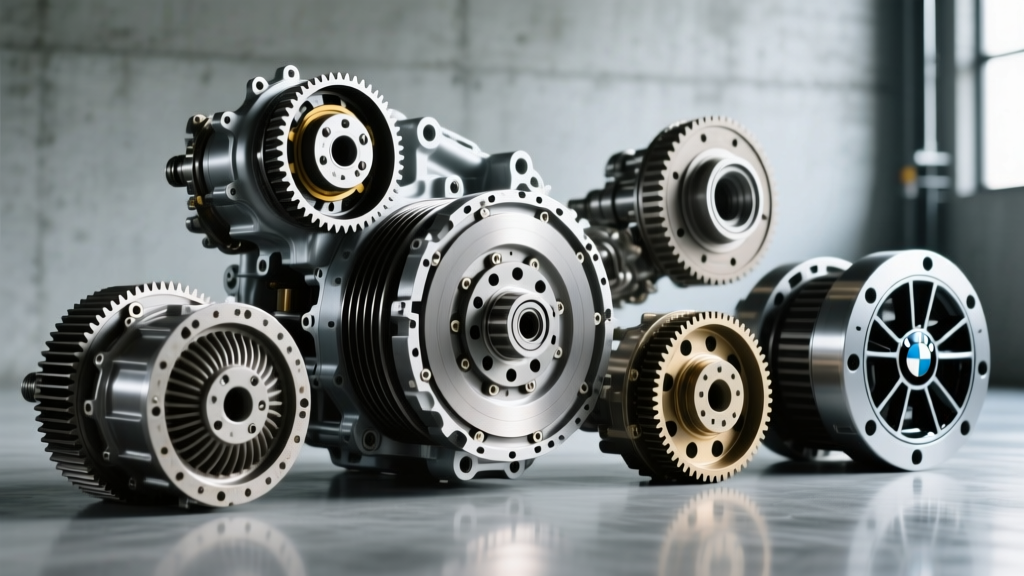
The Porsche Taycan and Audi e-tron GT utilize a rear 2-speed automatic. First gear features a massive 16.0:1 ratio for brutal off-the-line acceleration (up to roughly 62 mph / 100 km/h). Second gear shifts to an 8.04:1 ratio, allowing the motor to spin slower at highway speeds, reducing heat generation and increasing top speed to 160+ mph.
Technical Specifications & Fluid Requirements
Servicing an EV drivetrain requires specialized knowledge. Standard Automatic Transmission Fluid (ATF) will destroy an EV drive unit. EV fluids must possess high dielectric strength to prevent electrical arcing if the fluid contacts the exposed copper windings in a "wet" motor design. Furthermore, they must resist copper leaching and thermal breakdown at extreme RPMs.
| Vehicle Platform | Drivetrain Layout | Gear Ratio(s) | Motor Type | Fluid Spec / Capacity |
|---|---|---|---|---|
| Tesla Model 3 (RWD) | Single-Speed Reducer | 9.04:1 | Interior PSM | Pentosin ATF 9 / ~1.6L |
| Porsche Taycan (Rear) | ZF 2-Speed Auto | 16.0:1 / 8.04:1 | PSM | Castrol ON / ~3.2L |
| BMW iX xDrive50 | Dual-Motor AWD | 9.37:1 (F) / 11.1:1 (R) | ASM (F) / PSM (R) | Mobilfluid EV / ~2.0L per unit |
| Hyundai Ioniq 5 (AWD) | Dual Single-Speed | 4.706:1 (Final) | PSM | Shell Spirax S6 EV / ~3.5L total |
Maintenance Realities for the EV Drivetrain
A common myth, often debunked by the U.S. Environmental Protection Agency, is that EVs require zero drivetrain maintenance. While you will never replace a clutch disc or rebuild a torque converter, the reduction gearbox is subject to intense mechanical stress.
The "Lifetime" Fluid Myth
Many manufacturers label EV reduction gear fluids as "lifetime." From an engineering perspective, "lifetime" usually means the warranty period (8 years/100,000 miles). However, the shearing forces of helical gears operating at 18,000 RPM will eventually degrade the fluid's viscosity modifiers. Furthermore, microscopic copper particles from the motor windings can contaminate the fluid, lowering its dielectric barrier and risking internal short circuits.
Expert Recommendation: Perform a drain-and-fill on your EV's reduction gear fluid every 60,000 miles (96,000 km). When servicing, ensure the fill and drain plugs are torqued to exact specifications (typically 25-35 Nm for M12 magnetic drain plugs) to prevent casing cracks and fluid ingress into the inverter housing.
Thermal Management and Cooling Jackets
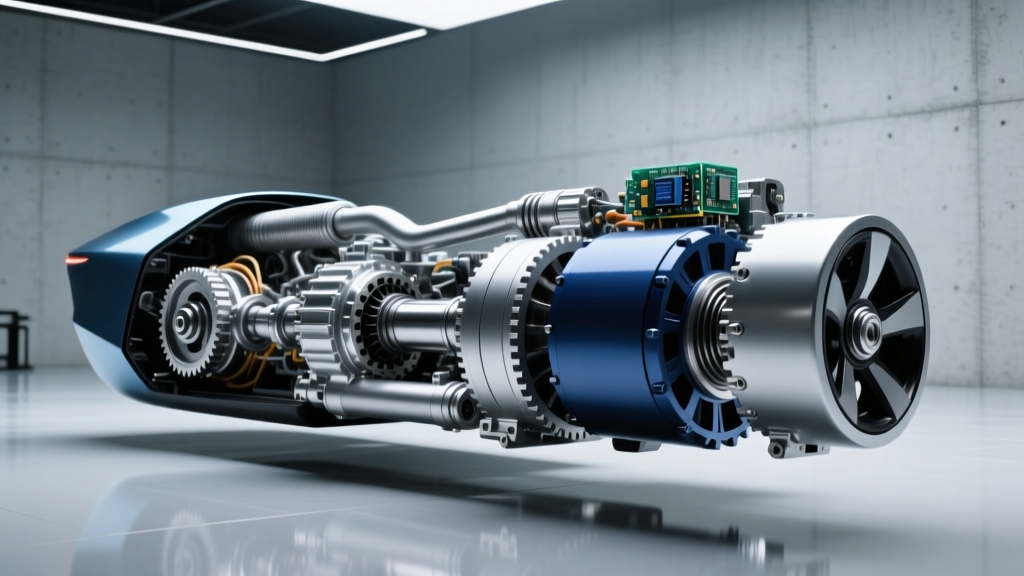
The drivetrain in an electric vehicle is inextricably linked to the vehicle's thermal management system. The reduction gear and motor share a liquid cooling circuit. If the vehicle's main coolant loop suffers from airlocks or degraded glycol, the drive unit will thermally throttle, severely limiting torque output. Buyers of used EVs should always inspect the coolant reservoir for the proper OEM-specific dielectric coolant (e.g., Tesla's specific blue/pink formulations or BMW's specialized EV coolants) to ensure the drivetrain's thermal integrity.
Final Verdict: What to Look for in Your Next EV
While the wireless precision of bicycle components like the Shimano XT Di2 represents a triumph of consumer electronics, the automotive EV drivetrain is a masterpiece of thermodynamic and magnetic engineering. When evaluating an EV in 2026, look beyond the battery capacity and infotainment screen. Scrutinize the drivetrain layout: opt for dual-motor systems with mechanical disconnects if you prioritize highway range, or seek out 2-speed rear axles if you demand sustained high-speed performance. Most importantly, treat the reduction gearbox with the same respect you would a traditional transmission—adhere to strict dielectric fluid service intervals, and your EV's drivetrain will easily outlast the battery pack itself.