The Anatomy of Torque Converter Shudder
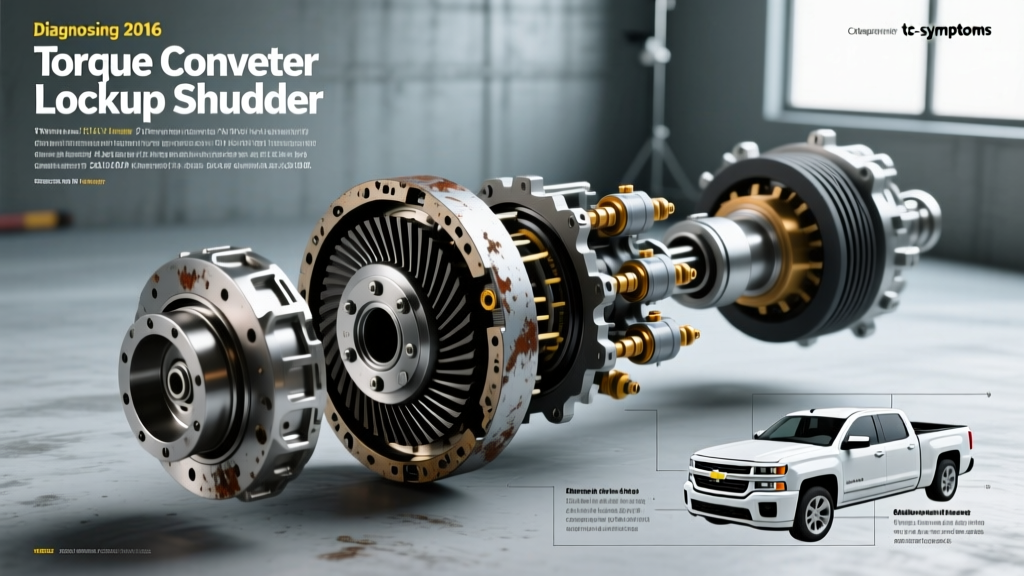
Torque converter shudder is one of the most misunderstood symptoms in modern automatic transmissions. Often misdiagnosed as an engine misfire, a failing dual-mass flywheel, or a worn suspension component, shudder is actually a high-frequency oscillation occurring within the torque converter clutch (TCC) during its apply or release phase. As an automotive transmission specialist, I see countless vehicles arrive at the shop with severe driveline vibrations that could have been entirely avoided with a proactive preventive maintenance strategy.
Modern transmissions, such as the GM 6L80/6L90, Ford 6R80, and the ubiquitous ZF 8HP series, rely on Pulse Width Modulation (PWM) or Variable Force Solenoids (VFS) to control the TCC. Instead of a harsh, binary lockup, the Transmission Control Module (TCM) commands a controlled slip—typically between 20 and 40 RPM—to dampen engine harmonics and improve fuel economy. When the friction coefficient of the automatic transmission fluid (ATF) degrades, or the TCC lining becomes glazed, the solenoid struggles to maintain this precise slip. The TCM rapidly adjusts the PWM duty cycle to compensate, resulting in a 30 to 50 Hz vibration felt in the vehicle cabin. Catching this early is the difference between a simple fluid service and facing a steep replacement bill.
Diagnostic Protocol: Isolating the Shudder
Before considering a teardown, you must definitively isolate the shudder to the torque converter. Relying on 'feel' is not enough; you need empirical data. Follow this diagnostic sequence to confirm TCC slip oscillation:
- Step 1: Scan Tool Data Logging. Connect a bi-directional scan tool (e.g., GM GDS2, Ford FORScan, or a high-end aftermarket tablet). Navigate to the transmission PID list and graph 'TCC Slip Speed (Desired)' versus 'TCC Slip Speed (Actual)'.
- Step 2: The Road Test. Drive the vehicle at a steady 45-55 MPH in top gear with the TCC engaged (usually 30-50% throttle). If the 'Actual' slip RPM wildly oscillates above and below the 'Desired' slip RPM by more than 10-15 RPM while the shudder occurs, the torque converter clutch or its control circuit is the culprit.
- Step 3: Brake Tap Test. While maintaining speed and feeling the shudder, lightly tap the brake pedal. This signals the TCM to instantly disengage the TCC. If the shudder immediately vanishes, you have confirmed a TCC apply issue.
- Step 4: Fluid Analysis. Pull the dipstick or crack the drain plug. Fluid that smells burnt, appears dark brown/black, or contains fine metallic/clutch particulate indicates severe friction material degradation. According to the Automatic Transmission Rebuilders Association (ATRA), fluid oxidation is the leading catalyst for TCC shudder in neglected units.
Preventive Maintenance Matrix: Stopping Shudder Early
Preventive maintenance is the only reliable way to avoid catastrophic TCC failure. The friction modifiers in ATF have a finite lifespan. Once they shear and oxidize, the TCC lining begins to chatter and glaze. Below is a preventive maintenance matrix for the most common shudder-prone transmissions on the road today.
| Transmission Model | OEM Fluid Specification | Drain & Fill Capacity | TCC Solenoid Part # (OEM) | Preventive Service Interval |
|---|---|---|---|---|
| GM 6L80 / 6L90 | ACDelco Dexron VI | 6.0 - 7.5 Quarts | ACDelco 24257982 (VFS) | Every 45,000 Miles |
| ZF 8HP45 / 55 / 70 | ZF LifeguardFluid 8 | 5.5 - 6.5 Quarts | ZF 0501 216 243 (Mechatronic) | Every 50,000 Miles (Severe) |
| Ford 6R80 | Motorcraft MERCON LV | 6.5 - 7.0 Quarts | Ford 7L1Z-7G391-A | Every 60,000 Miles |
Note: Always perform a 'Drain and Fill' rather than a high-pressure machine flush on high-mileage vehicles exhibiting early shudder symptoms. Machine flushing can dislodge debris from the valve body and lodge it in the delicate TCC PWM solenoid screens, instantly worsening the condition.
The Financial Tipping Point: Repair vs. Replace
When a customer sits in my service advisor's chair, the conversation inevitably turns to cost. This is where understanding the true torque converter price versus the cost of preventive intervention becomes critical. If shudder is caught in its infancy (fluid degradation without severe lining loss), a series of three drain-and-fill services spaced 1,000 miles apart, combined with a high-quality friction modifier additive, can resolve the issue for under $400.
However, if the shudder has been ignored for 20,000 miles, the TCC lining is likely worn through to the bare steel, and the converter is effectively scrap metal. At this stage, you are looking at a full transmission removal. The aftermarket remanufactured torque converter price typically ranges from $250 to $450 for older 4-speeds, but for modern 8-speed and 10-speed units (like the Ford 10R80 or ZF 8HP), the OEM torque converter price can easily exceed $900 to $1,300. When you factor in 6 to 9 hours of R&R labor at standard shop rates, plus new ATF, a rear main seal, and flexplate bolts, a full replacement job routinely lands between $1,800 and $3,200. The ROI on a $150 preventive fluid service is therefore astronomical.
Advanced Fixes: Solenoids, PWM Calibration, and Torque Specs
If fresh fluid does not cure the shudder, the next logical step before condemning the torque converter is addressing the hydraulic control circuit. In the GM 6L80, the TCC PWM solenoid is notorious for wear in the valve body bore, leading to hydraulic cross-leaks and pressure instability. Replacing the solenoid and installing a Sonnax Zip Kit or TCC valve sleeve can restore hydraulic integrity without removing the transmission.
Critical Torque Specifications for Reassembly
For technicians dropping the valve body or replacing the torque converter, adhering to exact torque specifications is non-negotiable to prevent secondary vibrations or fluid leaks:
- Valve Body to Case Bolts (GM 6L80/ZF 8HP): 8 Nm (71 lb-in). Over-torquing will warp the valve body casting and bind the TCC solenoid valves.
- Torque Converter to Flexplate Bolts (GM/Ford): 35 Nm (26 lb-ft) with medium-strength threadlocker. Must be tightened in a star pattern to prevent flexplate runout, which mimics TCC shudder.
- Transmission Crossmember Mounts: 50 Nm (37 lb-ft). Worn or improperly torqued mounts will amplify normal TCC slip harmonics into the chassis.
Software and TCM Calibration Updates
Never overlook the software. OEMs frequently release TCM calibration updates specifically designed to alter the TCC apply ramp rates and PID loop sensitivities. As noted in ZF's official transmission service literature, adapting the mechatronic unit after a fluid change or battery disconnect is mandatory. Failing to run the 'TCC Adaptation' or 'Shift Adaptation' reset procedure via a factory-level scan tool can cause the TCM to use outdated, aggressive apply pressures, inducing artificial shudder on perfectly healthy hardware.
Expert Sources & Further Reading
To maintain a preventive maintenance mindset, transmission technicians and DIY enthusiasts should regularly consult industry-leading technical bulletins. For deep dives into hydraulic valve body wear and TCC solenoid diagnostics, the Sonnax Technical Resources library remains the gold standard for hydraulic circuit analysis. By prioritizing fluid health and solenoid integrity, you can effectively eliminate shudder and avoid the massive expense of a premature torque converter replacement.