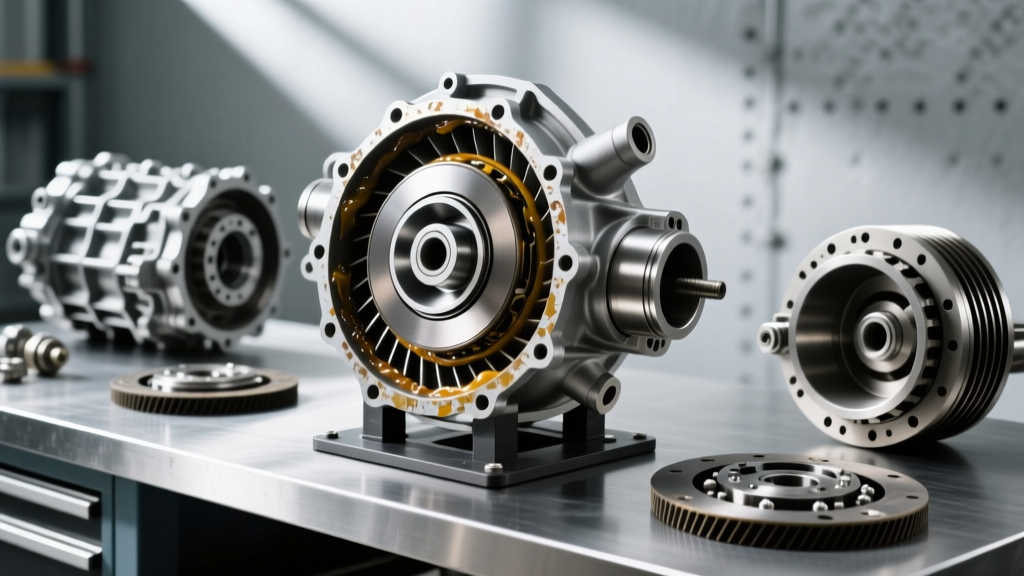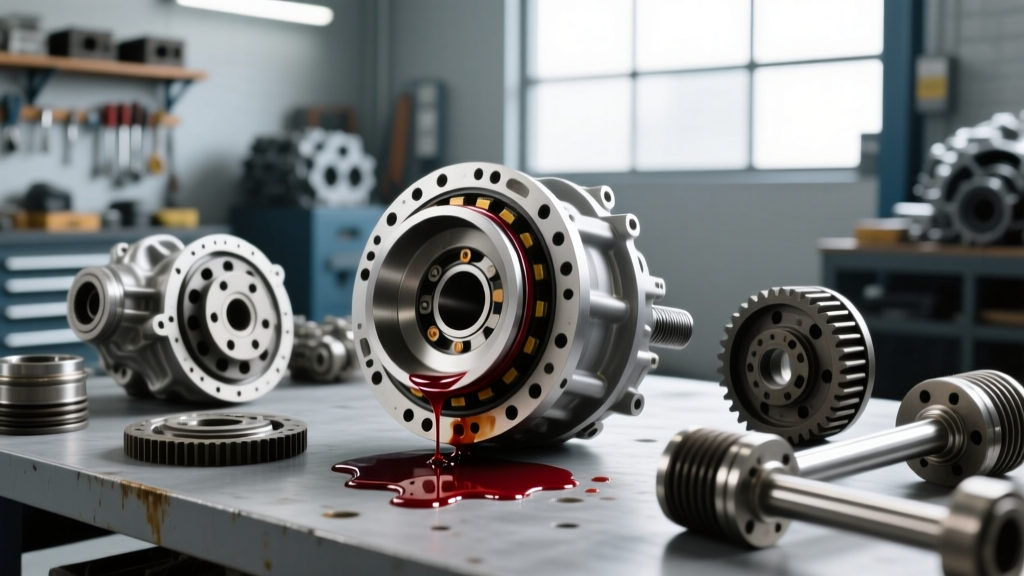
The E40D Torque Converter: A Preventive Maintenance Approach
The Ford E4OD (often searched as the E40D) transmission remains one of the most iconic heavy-duty automatic transmissions ever produced by the Blue Oval. Found primarily in 1989–1998 F-Series trucks, Broncos, and Econoline vans equipped with the 7.3L IDI/Power Stroke diesel or the 460ci V8 gas engine, this transmission is a brute. However, the E40D torque converter is highly susceptible to specific acoustic failures if preventive maintenance is neglected. In 2026, as these classic trucks continue to serve as reliable workhorses and restoration projects, understanding the subtle noises your torque converter makes is the difference between a simple fluid service and a catastrophic $3,500 transmission rebuild.
Torque converter noise is rarely an isolated event; it is a symphony of hydraulic, mechanical, and electronic warnings. According to diagnostic archives at Transmission Digest, over 60% of E4OD torque converter replacements are preceded by ignored acoustic symptoms such as high-pitch whining, low-frequency shudder, or metallic rasping. This guide provides a deep-dive, expert-level framework for diagnosing these noises before they destroy your transmission's front pump or planetary gearsets.
Acoustic Profiling: Identifying the Specific Sound
To accurately diagnose an E40D torque converter issue, you must first isolate the frequency, pitch, and operational condition of the noise. The E4OD utilizes a complex Pulse Width Modulated (PWM) Torque Converter Clutch (TCC) system and a high-capacity stator assembly. Here is how to decode the sounds emanating from your bellhousing.
1. The High-Pitch Whine (Cavitation and Fluid Starvation)
A persistent, high-pitched whine that changes pitch with engine RPM—rather than vehicle speed—is the hallmark of front pump cavitation. In the E4OD, this is rarely a failing pump itself. Instead, it is usually caused by fluid starvation reaching the torque converter impeller hub.
- The Inline Filter Collapse: Ford installed an inline transmission fluid filter on many E4OD applications. Over time, the plastic housing degrades and collapses under high line pressure, restricting flow to the converter.
- The Pickup Tube O-Ring: The O-ring sealing the transmission fluid pickup tube to the pump body hardens over decades of heat cycles. If it loses its seal, the pump draws in air alongside MERCON V fluid, creating a violent aerated whine inside the converter.
2. The Low-Frequency Shudder and Clunk (TCC Lockup Failure)
If you feel and hear a rhythmic "chuggle" or clunking noise when cruising between 35 and 50 MPH in Overdrive, you are experiencing TCC lockup failure. The E4OD uses a specific PWM solenoid to gradually apply the torque converter clutch. If the valve body bore wears out, or if the wrong fluid is used, the clutch rapidly engages and disengages, creating a severe mechanical shudder that sounds like driving over rumble strips.
3. The Metallic Grinding or Rasp (Stator One-Way Clutch Failure)
A metallic rasping or grinding noise that occurs only under heavy acceleration from a dead stop, and disappears above 20 MPH, points directly to the stator one-way roller clutch. When this clutch fails to lock in the overrunning direction, the stator freewheels improperly, causing the rollers to skip across the sprag race. This creates a distinct grinding noise and results in severe low-end torque loss.
Step-by-Step Preventive Diagnostics
Before removing the transmission, perform these non-invasive diagnostic steps to confirm the source of the noise. Always prioritize safety and use proper lifting equipment.
Expert Pro-Tip: Never use obsolete, original-spec MERCON fluid in an E4OD. The friction modifiers in original MERCON will destroy the E4OD's TCC material, causing immediate shudder. You must use Motorcraft MERCON V (Part # XT-5-QMC) or a certified equivalent, as confirmed by Motorcraft Chemicals & Lubricants.
Step 1: Hydraulic Line Pressure Testing
Connect a 0-300 PSI transmission pressure gauge to the E4OD's mainline pressure port on the driver's side of the case. Start the engine and let it reach operating temperature (180°F+).
- Idle in Drive: Should read 50–70 PSI.
- Idle in Reverse: Should read 90–110 PSI.
- WOT (Wide Open Throttle) in 1st Gear: Should spike to 230–275 PSI (depending on engine boost and modulator calibration).
If pressures are low across the board, the whining noise is confirmed as pump cavitation due to internal cross-leaks or a failing pressure regulator valve, not necessarily a bad torque converter.
Step 2: The Stall Speed Test
The stall test measures the torque converter's ability to multiply torque and the health of the stator clutch. Secure the vehicle, apply maximum braking, and floor the throttle for no more than 5 seconds.
- 7.3L Power Stroke / IDI Diesel: Normal stall is 1,800–2,100 RPM.
- 460ci Gas V8: Normal stall is 1,500–1,800 RPM.
If the engine RPM easily exceeds these numbers while the grinding noise is present, the stator one-way clutch has failed internally. The converter must be replaced or rebuilt with a billet stator.
Step 3: Electronic TCC Solenoid Verification
Using a multimeter, test the resistance of the E4OD TCC solenoid located inside the transmission pan on the valve body. The specification is typically 10–15 ohms at room temperature. If the solenoid reads out of spec, or if the wiring harness connector (often brittle on 90s Fords) shows corrosion, replace the solenoid (Ford Part # F4TZ-7G484-B) before condemning the torque converter clutch.
E40D Noise Diagnosis Data Matrix
Use the following matrix to cross-reference your symptoms with the required preventive action.
| Acoustic Symptom | Operational Condition | Probable Root Cause | Preventive Action / Repair |
|---|---|---|---|
| High-Pitch Whine | All RPM ranges, worsens under load | Pump cavitation, collapsed inline filter, or bad pickup O-ring | Drop pan, replace pickup O-ring, bypass or replace inline filter |
| Rhythmic Chuggle / Shudder | 35-50 MPH, TCC Lockup engaged (4th gear) | Worn valve body TCC bore, bad PWM solenoid, or degraded fluid | Flush with MERCON V, install Sonnax TCC valve sleeve, replace solenoid |
| Metallic Rasp / Grinding | 0-20 MPH under heavy throttle | Stator one-way roller clutch failure | Replace torque converter with HD billet stator unit |
| Single Loud Clunk | Shifting into Reverse or Drive from Park | Excessive converter end-play or worn flexplate | Check converter hub engagement, inspect flexplate bolts (20-34 lb-ft) |
Cost of Neglect vs. Preventive Replacement
Ignoring torque converter noise in an E4OD is a financial gamble you will lose. When a torque converter fails catastrophically—such as the stator tearing through the impeller or the TCC clutch material disintegrating—it sends a shower of hardened steel and friction material through the transmission's hydraulic circuits. This debris lodges in the valve body, ruins the governor, and scores the clutch drums.
Pricing Breakdown (2026 Estimates)
- Preventive Fluid & Filter Service: $150 – $250 (Includes 16 quarts of MERCON V and a new deep pan filter).
- TCC Solenoid & Valve Body Sleeve Repair: $350 – $500 (Pan drop, solenoid replacement, and Sonnax valve repair).
- Standalone OEM Torque Converter Replacement: $600 – $900 for the part (e.g., Ford Remanufactured), plus $800 – $1,200 in labor for R&R (Remove and Replace).
- Upgraded Billet Torque Converter: $900 – $1,400 (Brands like SunCoast Diesel or John Wood Automotive offer heavy-duty units with forged steel stators and triple-disc TCC clutches for modified 7.3L trucks).
- Complete Transmission Rebuild (Due to Debris Contamination): $3,500 – $5,500. This includes a full master rebuild kit, new hard parts, valve body recalibration, and labor.
Final Thoughts from the Workbench
The E4OD is an incredibly robust transmission when treated with respect. As discussed in the heavy-duty archives at Ford Truck Enthusiasts, the vast majority of E40D torque converter failures are secondary to poor fluid maintenance or the use of incorrect friction modifiers. By keeping your ears tuned to the specific whines, shudders, and grinds outlined in this guide, and by strictly adhering to MERCON V fluid specifications, you can easily keep your classic Ford truck shifting smoothly for hundreds of thousands of miles. Do not wait for the grinding to turn into silence; silence in a transmission usually means it has already died.