The 2018 Honda Pilot Torque Converter Recall: A Catalyst for Drivetrain Analysis
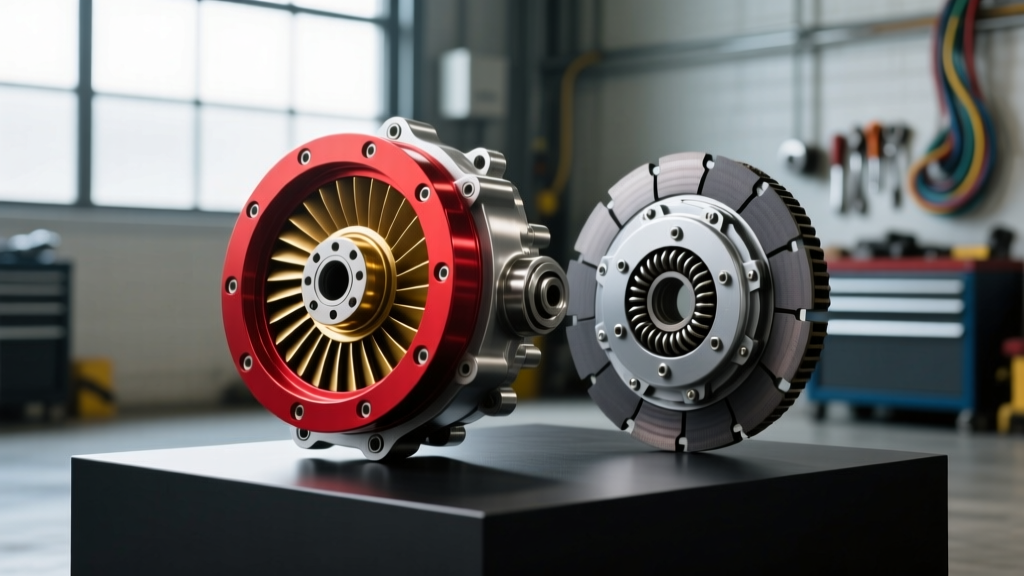
When discussing modern automatic transmission failures, few case studies are as illuminating as the 2018 Honda Pilot torque converter recall saga. While technically addressed through a series of Technical Service Bulletins (TSBs) and class-action settlements rather than a blanket NHTSA safety recall, the widespread torque converter shudder experienced by Pilot owners has become a benchmark for transmission diagnostics. For automotive technicians and drivetrain enthusiasts, this specific controversy provides the perfect backdrop to explore a fundamental engineering debate: the torque converter vs clutch comparison.
To understand why the 2018 Pilot—specifically those equipped with the ZF 9HP48 9-speed automatic transmission—suffered from debilitating low-speed shudder, we must dissect the physical differences between hydrodynamic fluid coupling and direct mechanical friction. By contrasting the Torque Converter Clutch (TCC) with traditional manual and dual-clutch systems, we can uncover the root causes of modern drivetrain NVH (Noise, Vibration, and Harshness) issues and the precise mechanical fixes required.
Hydrodynamic Coupling vs. Direct Mechanical Friction
At the heart of the torque converter vs clutch comparison is the method of torque transfer. A traditional manual transmission utilizes a dry friction clutch, while modern Dual-Clutch Transmissions (DCTs) use wet or dry friction packs. In these systems, torque is transferred through direct physical contact between friction materials and steel plates. When fully engaged, there is zero slip, resulting in near-100% mechanical efficiency.
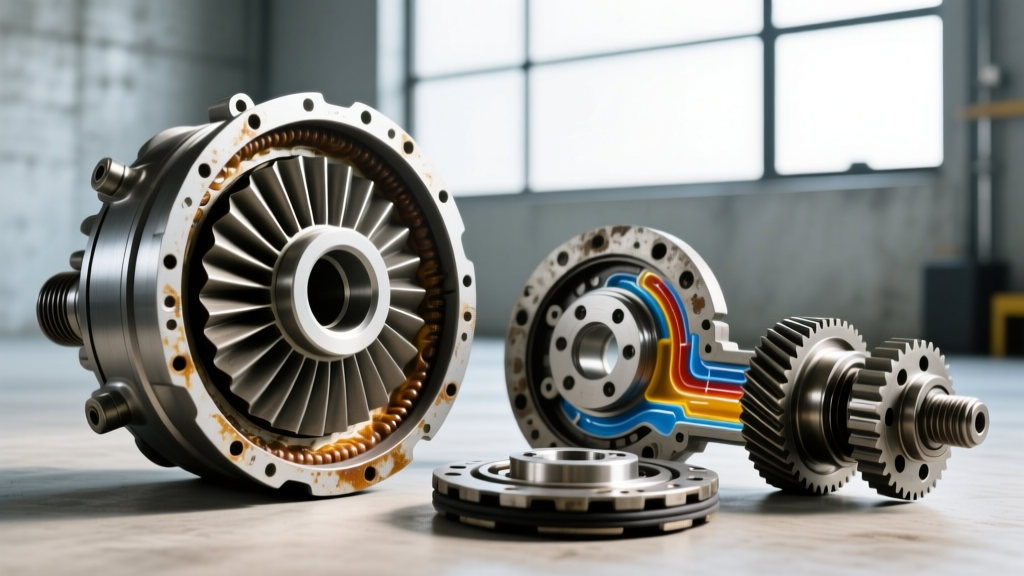
Conversely, a torque converter is fundamentally a fluid coupling device. It utilizes an impeller (driven by the engine), a turbine (connected to the transmission input shaft), and a stator (which redirects fluid flow to multiply torque). During initial acceleration, the torque converter relies on the shearing of Automatic Transmission Fluid (ATF) to transfer power. This hydrodynamic slip allows the engine to remain in its optimal power band while multiplying torque output—a feat a traditional friction clutch cannot achieve without severe wear.
The Role of the Torque Converter Clutch (TCC)
To eliminate the parasitic heat and efficiency loss caused by fluid slip during highway cruising, engineers introduced the Torque Converter Clutch (TCC). The TCC is essentially a friction clutch housed inside the torque converter. When applied, it mechanically locks the impeller to the turbine, bypassing the fluid coupling entirely. It is within this TCC mechanism that the 2018 Honda Pilot's ZF 9-speed transmission encountered its most significant engineering hurdle.
Technical Comparison: TCC vs. Traditional Clutch Systems
The table below outlines the critical engineering differences between a modern TCC (as found in the ZF 9HP48) and traditional friction clutch systems.
| Engineering Metric | Torque Converter (with TCC) | Traditional Friction Clutch (Manual / DCT) |
|---|---|---|
| Primary Coupling Medium | ATF Fluid Shear + Internal Friction Material | Direct Mechanical Friction (Dry or Wet) |
| Torque Multiplication | Yes (via Stator, up to 2.2:1 ratio) | No (Strict 1:1 mechanical ratio) |
| NVH Dampening | Excellent (Fluid absorbs engine harmonics) | Poor (Requires heavy Dual-Mass Flywheel) |
| Thermal Management | High heat generation during slip phases | Low heat generation when fully locked |
| Micro-Slip Capability | Continuous (Controlled via PWM solenoids) | Not viable (Causes rapid destruction) |
The Micro-Slip Phenomenon and the Pilot's Shudder
The core issue driving the 2018 Honda Pilot torque converter recall complaints is a phenomenon known as TCC micro-slip. To meet stringent EPA fuel economy and emissions standards, Honda and ZF programmed the 9HP48 transmission to apply the TCC as early as possible, often at very low RPMs in higher gears. However, locking the converter completely at 1,200 RPM would transmit severe engine torsional vibrations directly into the drivetrain, causing cabin noise and mechanical stress.
To solve this, the Transmission Control Module (TCM) commands the TCC to maintain a 'micro-slip'—typically 20 to 50 RPM of continuous, controlled slippage. This requires the TCC friction material to constantly slide against the converter cover, mediated by the ATF's friction modifiers.
Why the Friction Material Fails
Unlike a manual clutch, which only slips during driver-initiated gear changes, the TCC in the 2018 Pilot is slipping continuously during low-load highway cruising. Over time, the localized heat generated by this micro-slip degrades the specialized oleamide and ester-based friction modifiers in the ZF LifeguardFluid 9. As the fluid's chemical integrity breaks down, the TCC transitions from a smooth, hydrodynamic boundary lubrication state to a 'stick-slip' friction state. This stick-slip cycle manifests as the violent, rhythmic shudder felt by Pilot owners between 20 and 50 mph.
According to transmission tribology data from Sonnax, TCC shudder is rarely a failure of the physical friction disc itself, but rather a failure of the ATF's ability to maintain a stable coefficient of friction under continuous micro-slip thermal loads.
Diagnostic Realities and Repair Specifications
If you are diagnosing a 2018 Honda Pilot exhibiting torque converter shudder, it is vital to differentiate between a mechanical clutch failure and a TCC fluid dynamics issue. A traditional slipping clutch will typically exhibit RPM flares under heavy load and smell of burning friction material. TCC shudder, conversely, feels like driving over rumble strips at light throttle and is highly sensitive to temperature and fluid age.
Fluid Service and TSB Protocols
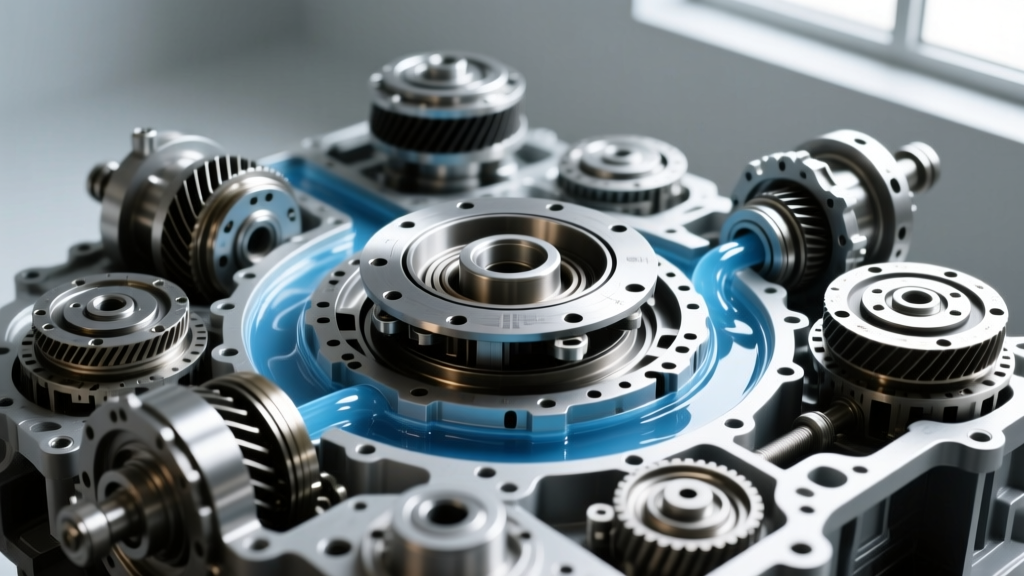
Before condemning the torque converter to replacement, Honda's TSB protocols mandate a fluid exchange and software update. The ZF 9HP48 transmission does not have a traditional dipstick or drain pan; it utilizes a bottom pan with an integrated plastic leveling tube.
- Drain and Fill Capacity: Approximately 3.8 Liters (4.0 Quarts).
- Dry Fill Capacity: 6.5 Liters (6.9 Quarts) for a completely dry transmission.
- Required Fluid: ZF LifeguardFluid 9 or Honda Genuine ATF DW-1 (Verify exact TSB requirement based on VIN, as early 9-speeds strictly required the ZF formulation).
- Leveling Temperature: Fluid must be leveled with the transmission pan temperature exactly between 40°C and 50°C (104°F - 122°F).
Performing three consecutive drain-and-fill procedures, interspersed with 10-mile drive cycles to cycle the TCC solenoid, resolves the shudder in approximately 60% of early-stage cases by replenishing the depleted friction modifiers.
Hard Parts Replacement: Specs and Costs
If the friction material inside the TCC has physically glazed or separated from the piston, a full torque converter replacement is mandatory. Continuing to drive with a degraded TCC will send metallic and friction debris through the transmission's mechatronic valve body, destroying the ZF 9-speed's delicate solenoid valves.
Replacement Data Points:
- OEM Part Number Reference: Honda 22000-5L9-E01 (ZF 9HP48 Torque Converter Assembly).
- Average Dealership Cost: $2,400 - $3,200 (Includes mechatronic sleeve and fluid).
- Independent Specialist Cost: $1,600 - $2,100 (Using high-quality aftermarket remanufactured units from suppliers like Sonnax or Jasper).
- TC-to-Flexplate Torque Spec: The M8 x 1.25 bolts securing the torque converter to the engine flexplate must be torqued to 18 lb-ft (25 Nm). Overtorquing these bolts will warp the converter cover, immediately destroying the new TCC seal and causing front pump cavitation.
Longevity: Preventing Future Drivetrain Degradation
The torque converter vs clutch comparison ultimately highlights a trade-off between mechanical simplicity and emissions-driven complexity. A manual clutch will easily survive 100,000 miles because it is not subjected to computer-controlled micro-slipping. The ZF 9-speed's TCC, however, is a victim of its own fuel-saving programming.
To ensure longevity beyond the scope of the 2018 Honda Pilot torque converter recall fixes, owners must abandon the 'lifetime fluid' myth perpetuated by manufacturers. For vehicles subjected to stop-and-go traffic, towing, or mountainous terrain, dropping the ZF 9-speed transmission pan and replacing the integrated filter and fluid every 45,000 miles is the only proven method to preserve the ATF's complex friction modifier chemistry. By understanding the delicate tribological balance inside the torque converter, technicians and owners can keep these highly efficient, yet fragile, drivetrain components operating smoothly for the life of the vehicle.