The Hydrodynamic Reality: Why ATF is the Lifeblood of Your Torque Converter
When mechanical engineers and transmission technicians debate power transfer methods, the comparison of a torque converter vs centrifugal clutch inevitably centers on how torque is multiplied and transmitted. A centrifugal clutch—commonly found in industrial pumps, go-karts, and small-engine applications—relies on mechanical friction. As engine RPM increases, weighted shoes push outward against a friction drum. It is a dry, mechanical process that requires zero hydraulic fluid to transmit power.
A torque converter, conversely, is a hydrodynamic marvel. It relies entirely on the shear forces of Automatic Transmission Fluid (ATF) to transfer kinetic energy from the impeller to the turbine. Because the fluid is the mechanical link, any degradation, aeration, or contamination of the ATF directly translates to catastrophic drivability symptoms. Understanding these fluid-specific failure modes is critical for diagnosing modern automatic transmissions like the GM 6L80, Ford 10R80, and ZF 8HP series.
Critical Torque Converter Fluid Issues and Symptoms
Unlike a centrifugal clutch that simply wears out its friction pads over time, a torque converter's health is inextricably tied to the chemical and physical properties of its fluid. Below are the most severe fluid-related issues we diagnose in the shop today.
1. TCC Shudder and Friction Modifier Depletion
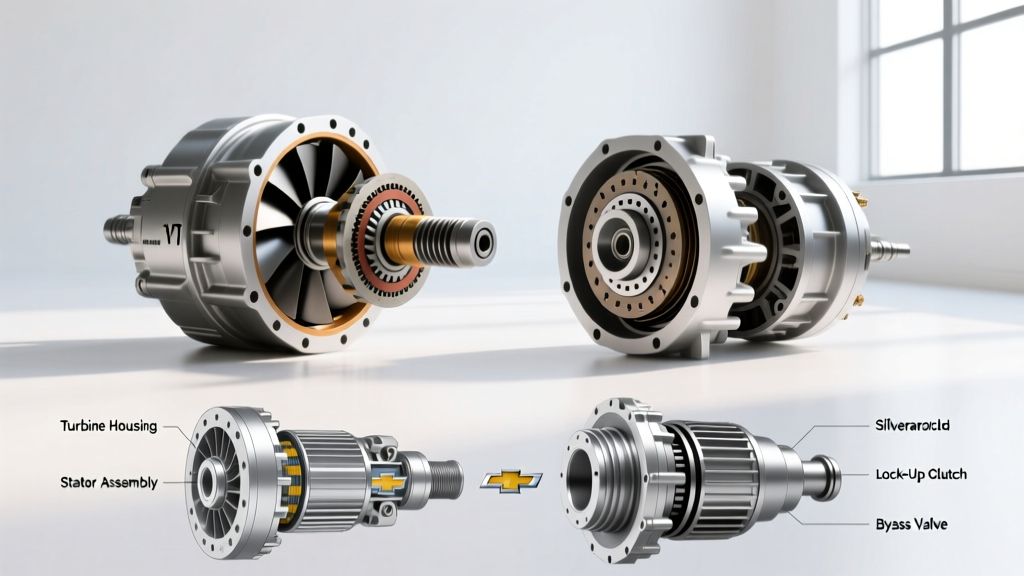
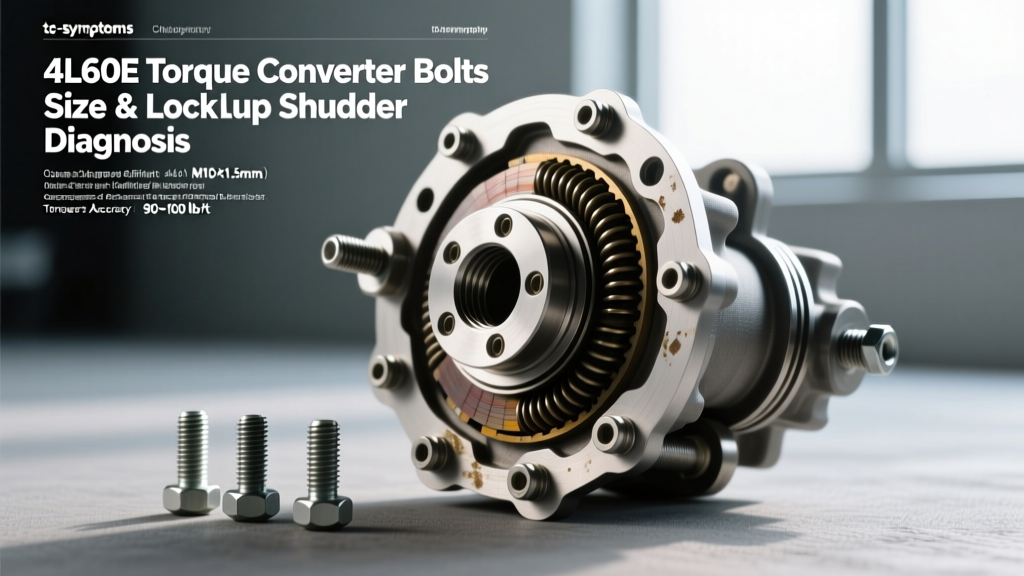
The Torque Converter Clutch (TCC) is a mechanical lockup mechanism designed to eliminate hydrodynamic slip at cruising speeds. In transmissions like the GM 6L80 and 8L90, the TCC applies via a highly modulated slip strategy to dampen engine vibrations. This requires precise friction modifiers in the ATF.
When ATF oxidizes or loses its friction modifiers due to extreme thermal cycling (often exceeding 220°F / 104°C in the converter housing), the TCC lining will aggressively grab and release. This manifests as a low-frequency shudder, typically between 1,200 and 1,800 RPM under light throttle. According to Sonnax technical resources, while valve body bore wear (specifically the TCC apply valve) is a common culprit, depleted friction modifiers in degraded ATF will mimic this exact mechanical failure.
2. Aeration and Mechatronic Starvation
Modern 8-speed and 10-speed transmissions utilize complex mechatronic units housed directly inside the transmission pan. These solenoids require a solid, non-compressible column of fluid to actuate clutch packs and manage TCC lockup. If the ATF becomes aerated (foamy) due to a clogged suction filter, low fluid level, or aggressive fluid churning inside a failing torque converter, the mechatronic unit will experience pressure drops.
In the ZF 8HP platform, aerated fluid leads to delayed shifts, harsh engagements, and TCC slip codes (such as P0741). ZF strictly mandates the use of specific ZF TE-ML approved fluids because their anti-foaming agents are calibrated to the exact shear rates of the 8HP's internal pump.
3. Cavitation and Stator Clutch Failure
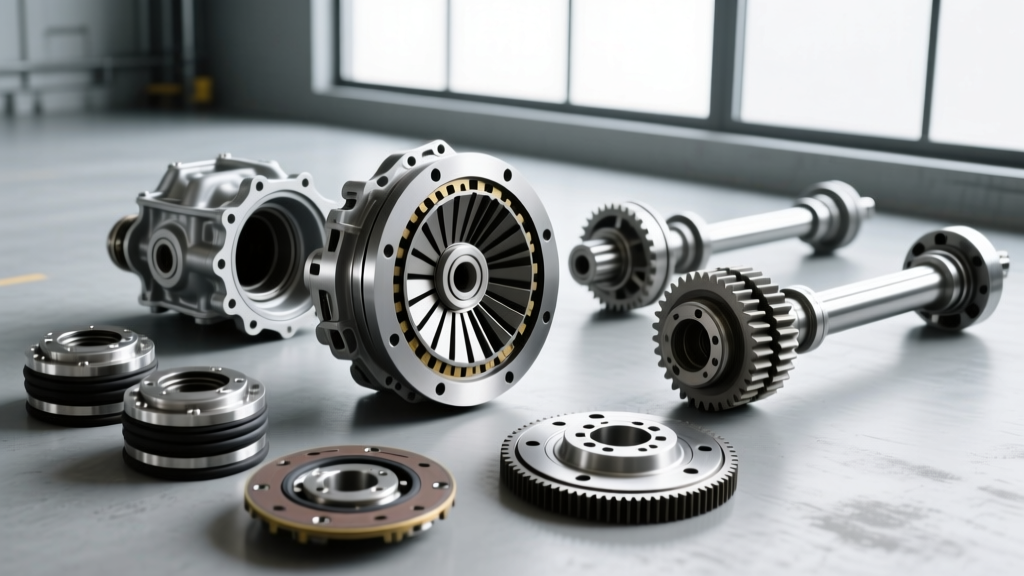
Cavitation occurs when localized pressure drops inside the torque converter cause the ATF to boil and form vapor bubbles. When these bubbles collapse against the impeller or stator blades, they cause microscopic pitting and severe whining noises. Cavitation is often triggered by using an ATF with the wrong viscosity index or by a restricted cooler line. Over time, the debris from cavitation pits the stator's one-way roller clutch, causing the converter to freewheel in both directions and resulting in a complete loss of torque multiplication off the line.
Comparative Analysis: Torque Converter vs Centrifugal Clutch
To fully grasp why torque converter fluid maintenance is so rigorous, it helps to contrast it directly with the maintenance profile of a centrifugal clutch system.
| Feature | Torque Converter (Hydrodynamic) | Centrifugal Clutch (Mechanical) |
|---|---|---|
| Power Transfer Medium | ATF Shear & TCC Friction Liner | Asbestos-free Friction Shoes / Drum |
| Fluid Dependency | Absolute (Fluid is the coupling) | None (Dry) or Splash-lubricated chaincase |
| Primary Failure Mode | ATF degradation, TCC slip, cavitation | Worn shoes, broken tension springs |
| Engagement RPM | Stall: 1,800 - 2,400 RPM (Varies) | Engagement: 2,000 - 2,500 RPM (Typical) |
| Maintenance Interval | 60,000 - 100,000 miles (Severe duty) | Replace shoes/drum when slipping occurs |
Expert Diagnostic Protocol for ATF Degradation
When a vehicle presents with TCC shudder or slip codes, do not immediately condemn the torque converter or the valve body. Follow this expert diagnostic sequence to rule out fluid-related anomalies.
Step 1: Thermal and Visual Inspection
Extract a sample of the ATF using a clean syringe from the dipstick tube or cooler return line. Healthy modern synthetic ATF (like DEXRON ULV or ZF LifeguardFluid 8) should be translucent and cherry red. If the fluid is dark brown, smells of burnt toast, or contains a fine metallic glitter, the TCC friction material has already delaminated. Expert Tip: Smear a drop on a white paper towel. If you see a distinct dark ring separating from a lighter ring, the fluid's additive package has chemically separated and failed.
Step 2: Verify Fluid Level at Operating Temperature
Aeration is frequently misdiagnosed as internal pump wear when it is actually a result of an incorrect fluid level. For the GM 6L80, the fluid level must be checked with the transmission fluid temperature (TFT) between 86°F and 122°F (30°C - 50°C), engine idling, and the vehicle perfectly level. The dry fill capacity is 11.2 quarts, but a standard pan-drop service only yields about 6.0 quarts. Underfilling by even 0.5 quarts will cause the suction filter to draw air, leading to immediate TCC slip codes.
Step 3: The Stall Test and Pressure Verification
Hook up a transmission line pressure gauge. Command the TCC to lock via a bi-directional scan tool. If line pressure remains stable but the TCC slip RPM fluctuates wildly, you are likely dealing with degraded fluid friction modifiers or a worn TCC friction surface inside the converter. If line pressure drops simultaneously with TCC slip, you have a hydraulic leak—often a worn TCC regulator valve bore in the valve body, requiring a Sonnax repair kit.
Best Practices for Fluid Exchange and Valve Body Preservation
If you determine the torque converter fluid is degraded but the converter has not yet suffered catastrophic mechanical failure, a proper fluid exchange is mandatory. However, technique matters immensely.
- Avoid High-Pressure Flushes: Never use a pressurized flushing machine on a high-mileage ZF 8HP or Ford 10R80. Dislodging varnish and TCC clutch debris can push it into the mechatronic solenoid screens, causing immediate valve body failure.
- Perform Multiple Drain-and-Fills: For the GM 6L80, drop the pan, replace the filter (ACDelco TF328 or equivalent), and refill. Torque the pan bolts to exactly 10 Nm (89 lb-in) in a crisscross pattern to prevent pan warping and suction leaks. Drive the vehicle for 500 miles to allow the new fluid's detergents to gently suspend old varnish, then perform a second drain-and-fill.
- Respect OEM Friction Specs: Never mix fluid standards. Using a generic "multi-vehicle" ATF in a transmission requiring DEXRON ULV (Ultra Low Viscosity) will result in immediate TCC shudder due to the incorrect friction coefficient and inadequate cooling flow through the tight-clearance stator support tubes.
- ZF 8HP Pan Replacement: On ZF 8-speed units, the filter is integrated into the plastic transmission pan. You cannot reuse the pan or the bolts. Install the new pan and torque the aluminum fasteners to 10 Nm. Do not attempt to reuse the stretch bolts.
Final Thoughts on Power Transmission Maintenance
The debate of a torque converter vs centrifugal clutch highlights two entirely different engineering philosophies. While a centrifugal clutch allows you to simply swap out a set of friction shoes and springs when it slips, a torque converter demands rigorous adherence to fluid chemistry, thermal management, and precise hydraulic pressures. By treating ATF not just as a lubricant, but as a vital, load-bearing mechanical component, you can prevent TCC shudder, preserve mechatronic integrity, and extend the life of modern automatic transmissions well past the 150,000-mile mark.