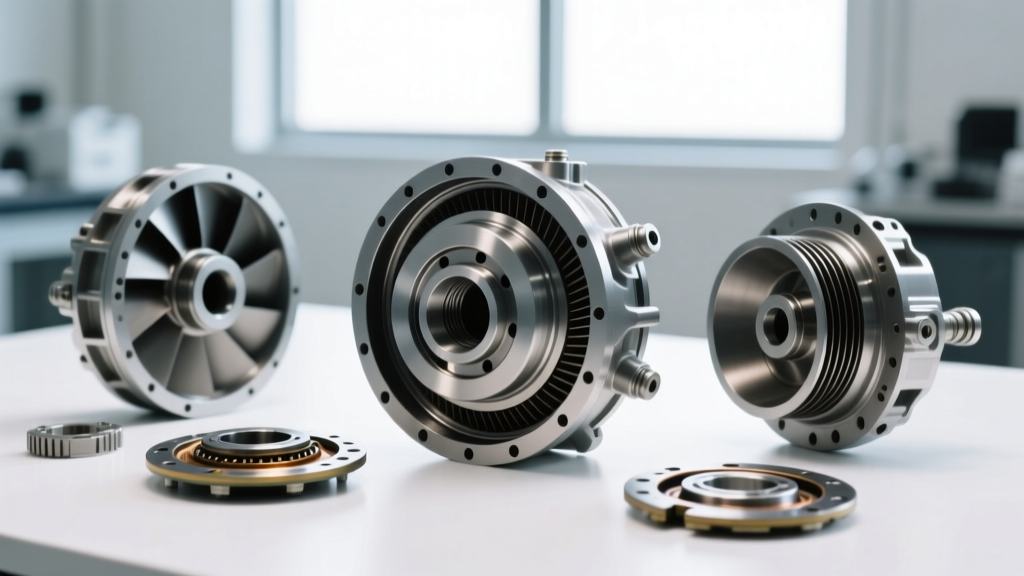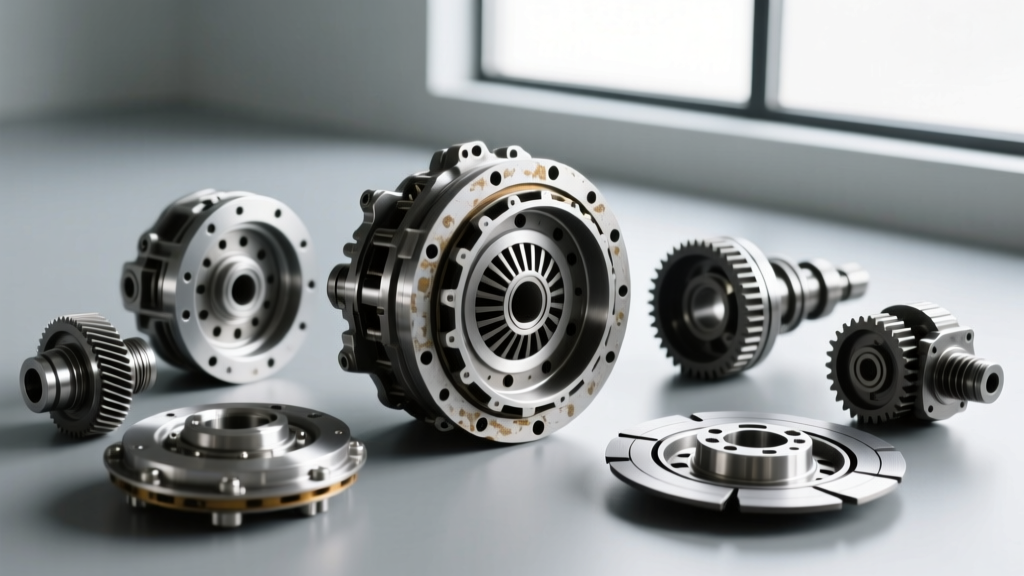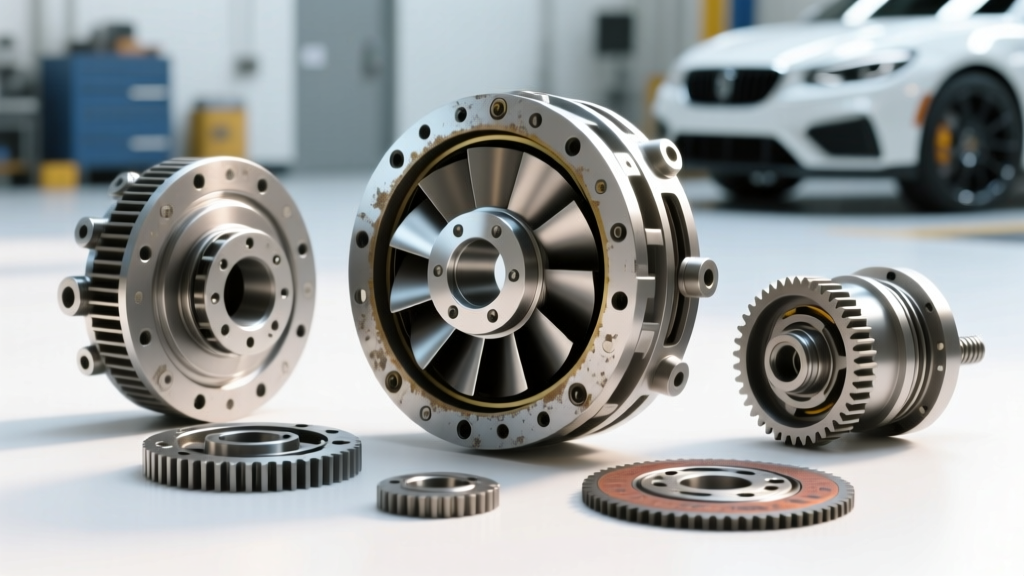
The Physics of TCC Shudder: Understanding the Stick-Slip Phenomenon
When addressing torque converter issues, few symptoms cause as much driver frustration as torque converter clutch (TCC) shudder. In modern automatic transmissions—such as the GM 8L90, Ford 10R80, and ZF 8HP70—the TCC is designed to slip continuously at a microscopic level (typically 20 to 40 RPM) during light throttle application in 4th through 8th gears. This controlled slip improves fuel economy and dampens engine NVH (Noise, Vibration, and Harshness).
However, as the automatic transmission fluid (ATF) ages, its friction modifiers deplete. Without these chemical modifiers, the clutch lining inside the torque converter transitions from a smooth, viscous coupling to a harsh 'stick-slip' state. The clutch grabs, stops the slip, over-torques, releases, and grabs again in rapid succession. This resonance usually manifests between 35 and 55 MPH under light acceleration (12-18% throttle position) and feels exactly like driving over highway rumble strips.
According to technical bulletins from the Automatic Transmission Rebuilders Association (ATRA), ignoring this shudder will eventually glaze or sheer the friction paper off the TCC piston, contaminating the entire hydraulic system with debris and leading to catastrophic valve body failure.
Diagnostic Protocol: Isolating Shudder from Misfires
Because TCC shudder occurs at highway speeds under load, it is frequently misdiagnosed as an engine misfire or a failing driveshaft U-joint. Proper diagnosis requires a bidirectional OBD2 scanner capable of reading live transmission PIDs alongside engine data.
Step 1: Monitor TCC Slip Speed
Connect your scanner and monitor the 'TCC Slip Speed' PID while driving at 45 MPH in 5th or 6th gear with steady throttle. A healthy system will show a steady slip of 20-40 RPM. If the PID oscillates wildly (e.g., jumping from -30 to +50 RPM repeatedly) in time with the vibration, you have confirmed TCC shudder.
Step 2: Rule Out Engine Misfires
Pull up Mode $06 or live misfire counters for all cylinders. An engine misfire will show a distinct spike in the misfire counter for a specific cylinder that correlates with the vibration. TCC shudder will not trigger misfire counters, though it may cause minor fluctuations in the MAP (Manifold Absolute Pressure) sensor readings.
Step 3: The Brake Tap Test
While the vehicle is shuddering at 45 MPH, lightly tap the brake pedal with your left foot. This triggers the brake light switch, which commands the Transmission Control Module (TCM) to instantly release the TCC. If the vibration immediately vanishes the millisecond you tap the brake, the issue is isolated entirely to the torque converter or TCC hydraulic circuit.
| Symptom Characteristic | TCC Shudder | Engine Misfire | Driveline / U-Joint Vibration |
|---|---|---|---|
| Speed/Load Dependency | 35-55 MPH, light throttle (12-18%) | Any speed, prominent under heavy load or idle | Speed-dependent (e.g., 60+ MPH), load-independent |
| Scanner Data Clue | TCC Slip RPM oscillates +/- 30 RPM | Cylinder-specific misfire counter increments | No engine/trans PID anomalies |
| Brake Tap Test Result | Vibration instantly stops (TCC releases) | Vibration continues (engine still misfiring) | Vibration continues or changes pitch slightly |
| Check Engine Light | Rarely (unless P0741/P2763 sets later) | Yes (P0300-P0308) | No |
Preventive Maintenance: The Critical Role of ULV Fluids
The most effective way to prevent torque converter issues related to shudder is strict adherence to modern fluid specifications and service intervals. The automotive industry's shift toward 8-speed and 10-speed transmissions necessitated the introduction of Ultra Low Viscosity (ULV) fluids. These fluids reduce parasitic drag but are highly sensitive to thermal breakdown and friction modifier depletion.
OEM Fluid Specifications and Part Numbers
- GM (6L80, 8L90, 10L90): Requires ACDelco Dexron ULV (Part # 10-9394). Warning: Dexron VI is NOT backward compatible with ULV transmissions and will cause immediate shudder.
- Ford (10R80, 10R140): Requires Motorcraft MERCON ULV (Part # XT-12-QULV).
- ZF (8HP70/8HP90): Requires ZF LifeguardFluid 8 (Part # S671.090.312). As detailed in the ZF 8-Speed Automatic Transmission documentation, using non-approved fluids voids the warranty and degrades the ZF-specific friction materials.
Service Intervals
While many manufacturers claim ATF is a 'lifetime' fluid, transmission experts universally reject this for vehicles subjected to towing, stop-and-go traffic, or extreme climates. For preventive maintenance, perform a drain-and-fill (not a high-pressure flush) every 60,000 miles for severe duty, or 80,000 miles for normal highway driving. A standard drain-and-fill on a 10R80 yields about 5.5 quarts, replacing roughly 40% of the total 13.1-quart capacity.
Targeted Mechanical Fixes and Valve Body Upgrades
If preventive maintenance was neglected and shudder has set in, a simple fluid change may not cure the issue if the TCC regulator valve bore in the valve body has worn out. Worn bores allow TCC apply pressure to leak, causing the clutch to slip and grab.
Valve Body Reaming and Oversized Valves
For the ubiquitous GM 6L80 and 6L90 transmissions, the Sonnax Technical Resources database highlights the TCC regulator valve as a primary failure point. The fix involves dropping the valve body, using a specialized reaming tool to bore out the worn aluminum sleeve, and installing an oversized anodized aluminum valve and end plug (Sonnax Zip Kit Part # 104740-03K). This restores hydraulic integrity and guarantees steady TCC apply pressure (typically 80-110 psi during slip).
Reassembly Torque Specifications
When reinstalling the transmission pump and torque converter after a repair, precise torque specs are mandatory to prevent pump binding and secondary vibrations:
- GM 6L80/8L90 Pump-to-Case Bolts: 89 lb-in (10 Nm). Over-torquing will warp the pump stator and destroy the bushing.
- GM Bellhousing-to-Engine Block Bolts: 37 lb-ft (50 Nm).
- Ford 10R80 Torque Converter-to-Flexplate Bolts: 26 lb-ft (35 Nm). Must be replaced with new OEM stretch bolts (Part # W719826-S437).
Cost Breakdown: Repair vs. Replace vs. Prevent
Understanding the financial implications of torque converter issues helps justify the cost of preventive maintenance. Below is a realistic 2026 market estimate for parts and labor (based on a $130/hour shop rate):
- Preventive Drain-and-Fill (ULV Fluid): $150 - $250. (Requires 5-6 quarts of OEM fluid and a new transmission pan/filter assembly, as modern filters are integrated into the plastic pan).
- TCC Solenoid / Mechatronic Sleeve Replacement: $450 - $850. (Often required on ZF 8HP units if the solenoid screen is clogged with clutch material, restricting TCC apply fluid).
- Valve Body Reaming & Zip Kit Install: $800 - $1,200. (Includes valve body removal, Sonnax kit, reaming tool rental/purchase, and fluid refill).
- Full Torque Converter Replacement: $1,800 - $3,200. (Requires transmission removal. A remanufactured torque converter costs $600-$900, but labor dictates the bulk of this expense, often requiring 8 to 12 hours of book time).
Final Thoughts on Drivability and Longevity
TCC shudder is rarely an isolated mechanical failure; it is a symptom of hydraulic degradation and friction material fatigue. By utilizing live data to accurately diagnose the stick-slip phenomenon, adhering strictly to ULV fluid specifications, and addressing valve body wear with oversized components, you can effectively eliminate torque converter issues and restore factory-smooth drivability to modern automatic transmissions.