The True Torque Converter Rebuild Cost for Bearing and Seal Failures
When an automatic transmission begins to whine, shudder, or suffer from delayed engagements, the root cause often traces back to internal torque converter bearing degradation or impeller hub seal failure. Unlike external engine seals, torque converter internals are hermetically sealed inside a welded steel housing. This physical reality fundamentally shapes the torque converter rebuild cost. In 2026, with the widespread proliferation of complex 8-speed and 10-speed automatics operating under high line pressures, understanding whether to send your unit to a specialized cut-and-weld rebuilder or simply install a remanufactured unit is critical for both your wallet and your transmission's long-term survival.
Diagnosing Internal Bearing and Seal Degradation
GM 6L80 / 6L90: Teflon Seal Wear and TCC Shudder
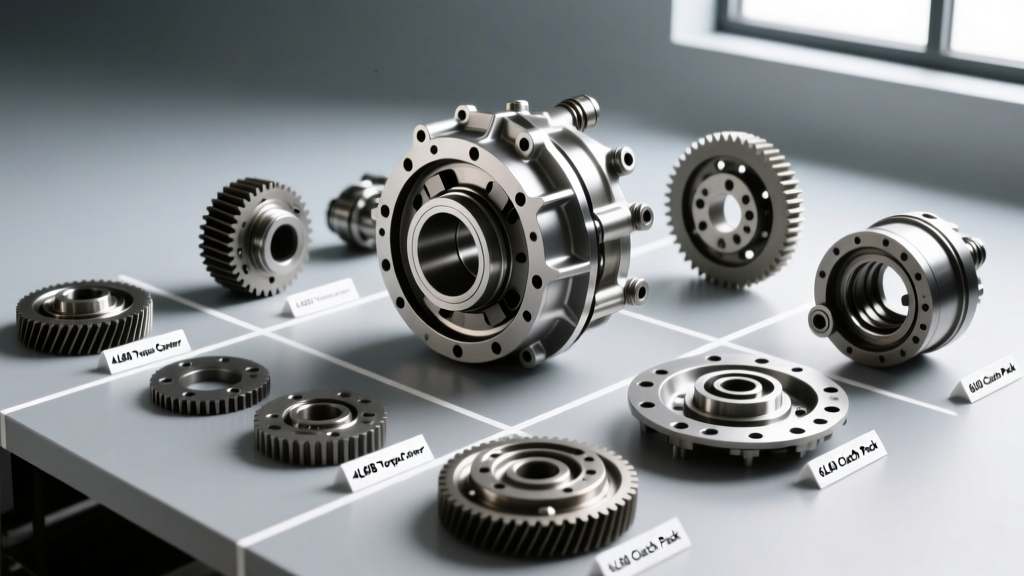
The GM 6L80 and 6L90 transmissions are notorious for stator shaft and Teflon sealing ring wear. The stator support relies on precision Teflon rings to separate the torque converter clutch (TCC) apply oil from the release oil. When the stator shaft journal wears down by even 0.002 inches, or the Teflon rings degrade due to thermal cycling, apply pressure bleeds off. The result is severe TCC shudder, slip codes (P0741 or P0742), and overheated fluid. Rebuilding the converter requires replacing the stator support bearing and upgrading to hardened stator shaft and Teflon ring kits to restore line pressure and eliminate the cross-leak.
ZF 8HP: Stator Bearing Whine
In the ZF 8HP (found in BMW, Audi, Jaguar, and Chrysler vehicles), the internal stator bearing supports the turbine shaft. A failing bearing presents with a high-frequency whine in Park and Neutral that noticeably diminishes when shifted into Drive or Reverse. This occurs because the load on the turbine shaft changes, temporarily centering the worn bearing cage. If ignored, the bearing cage disintegrates, sending metallic debris directly into the transmission's front pump and mechatronic valve body, leading to catastrophic hydraulic failure.
Ford 6R80: Impeller Hub Seal Cavitation
The Ford 6R80 utilizes a specific impeller hub seal that interfaces directly with the transmission front pump. Wear at this interface allows fluid to aerate, causing pump cavitation, a loud whining noise under heavy acceleration, and delayed forward engagement. The seal itself is inexpensive, but the labor to access it requires splitting the converter housing.
Fluid Contamination Analysis: Reading the Debris
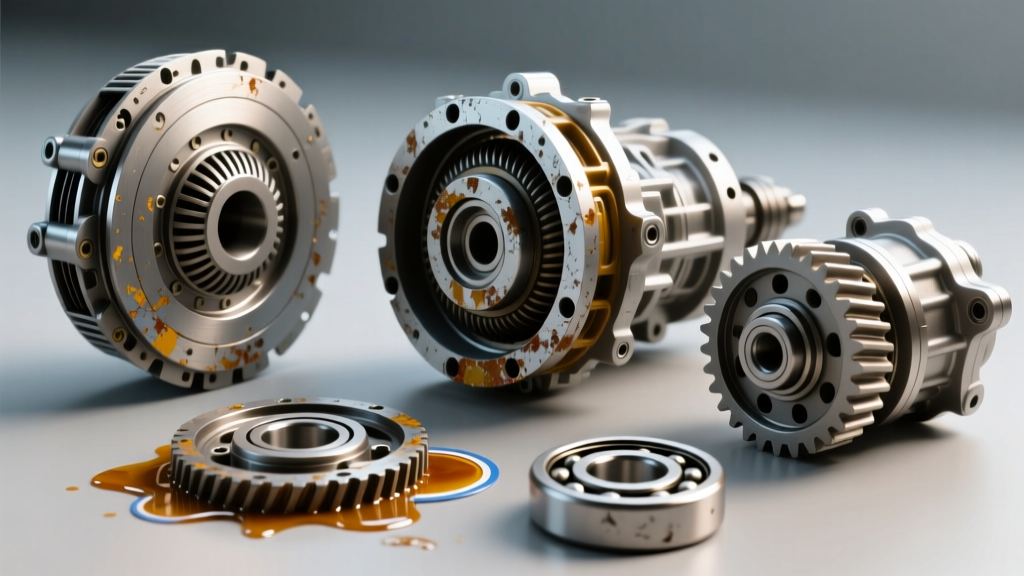
Before authorizing a torque converter rebuild, an expert technician will perform a fluid contamination analysis. Drain the fluid into a clean, white-lined pan. If the fluid exhibits a metallic glitter or 'sheen' under direct light, it is a primary indicator of stator or turbine bearing cage disintegration. Conversely, if the fluid is exceptionally dark, smells heavily burnt, and the transmission pan contains an abundance of friction material but minimal ferrous metal, the issue is more likely related to Teflon seal degradation causing TCC slip rather than a hard-part bearing failure. This distinction dictates whether a simple seal kit or a full bearing and hub replacement is necessary during the rebuild.
The Economics of Cut-and-Weld Machining
The phrase 'torque converter rebuild cost' is somewhat of a misnomer at the local neighborhood repair shop level. General automotive repair shops do not possess the specialized plasma cutters, precision lathes, and dynamic balancing machines required to slice open a torque converter, replace a $25 bearing, and weld it back together. The machining process involves cutting the perimeter seam, pressing out the old hub, lathe-turning the new hub for a precise interference fit, installing the new bearings and seals, welding the halves back together, and dynamically balancing the unit to within 0.05 oz-in. Finally, the unit must be pressure tested to 150 PSI to ensure the welds hold under extreme hydraulic load. Because of this overhead, the raw torque converter rebuild cost is driven entirely by specialized machine shop labor rather than the price of the internal seals.
2026 Cost Breakdown: Rebuild vs. Remanufactured Replacement
Because of the machining requirements, vehicle owners generally have two primary paths: sending the core to a specialized torque converter rebuilder, or purchasing a pre-built remanufactured unit from a distributor like Transtar Industries. Below is a comparative cost analysis for 2026.
| Service Type | Parts Cost | Specialized Labor | Total Estimate |
|---|---|---|---|
| Custom Rebuild (Bearings & Seals) | $80 - $150 | $350 - $600 (Machining & Balancing) | $430 - $750 |
| Remanufactured Unit (Direct Swap) | $350 - $650 | $0 (Core Charge Applies) | $350 - $650 |
| Dealership OEM Replacement | $900 - $1,400 | $0 | $900 - $1,400 |
Note: These costs reflect the torque converter unit only and do not include the R&R (Remove and Replace) labor to pull the transmission from the vehicle, which typically adds $800 to $1,600 depending on the drivetrain configuration (4WD vs 2WD).
Collateral Damage: The Hidden Costs of Ignoring TC Debris
When a stator or turbine bearing fails, the needle bearings or ball cages shed ferrous material into the converter. Because the torque converter acts as a centrifugal filter, heavy debris often gets trapped inside the outer walls. However, microscopic metallic particles escape through the cooler flow, embedding themselves into the transmission's friction clutches and scoring the front pump bushing. If you replace the torque converter without addressing the collateral damage, the new unit will fail within 10,000 miles. Budget for the following potential hidden costs:
- Front Pump Replacement: $400 - $800 (Scored pump gears require complete assembly replacement)
- Valve Body / Mechatronic Unit Flush or Replace: $800 - $2,200 (Metallic debris jams solenoids and shift valves)
- Complete Transmission Flush & Fluid: $180 - $300 (Requires 12-14 quarts of specialized fluids like Dexron ULV or ZF Lifeguard 8)
- Inline Cooler Filter Replacement: $45 - $90 (Mandatory to prevent trapped debris from re-entering the system)
Technical Specifications and Reassembly Torque Specs
If you are performing the R&R labor to access the torque converter, strict adherence to torque specifications is mandatory to prevent flexplate warping, bellhousing misalignment, or pump destruction. Below are critical specifications for common platforms:
- GM 6L80 TC-to-Flexplate Bolts: 46 Nm (34 lb-ft). Always use new OEM bolts (Part # 11561518) as they feature a specific thread-locking compound.
- ZF 8HP Bellhousing-to-Engine Bolts: 50 Nm + 90 degrees torque-to-yield specification.
- Ford 6R80 Converter Drain Plug: 28 Nm (21 lb-ft). Ensure the O-ring is replaced to prevent cooler line pressure leaks.
Expert Pro-Tip: When installing a rebuilt or remanufactured converter, you must verify the internal clearance. Using a straightedge across the bellhousing, measure the distance to the converter pilot hub. For most GM and Ford units, the converter must sit at least 1/8 to 3/16 of an inch behind the bellhousing mating surface. This ensures the front pump gear is not bound up upon bellhousing tightening. Failure to verify this depth will instantly shatter the front pump upon engine startup.
Expert Verdict: Sourcing the Right Components
For shops and advanced DIYers tackling the R&R labor, sourcing high-quality internal components is vital if you are coordinating with a machine shop for a custom rebuild. Sonnax Industries provides the gold standard for torque converter internal upgrades. For example, the Sonnax 58311-01K stator support bearing kit and their specialized Teflon sealing rings are mandatory upgrades for any GM 6L80 rebuild to prevent repeat failures. Similarly, consulting ATSG (Automatic Transmission Service Group) technical bulletins before tearing down a ZF 8HP will reveal updated bearing clearances and TCC apply strategies that OEM manuals sometimes obscure.
Ultimately, while the raw torque converter rebuild cost for bearings and seals is remarkably low (often under $100 in raw parts), the specialized machining labor, dynamic balancing requirements, and R&R overhead make a premium remanufactured unit the most logical, time-efficient, and warranty-backed choice for 90% of vehicle owners and independent repair shops in 2026.