The Mechanical Reality: What Happens If Torque Converter Fails?
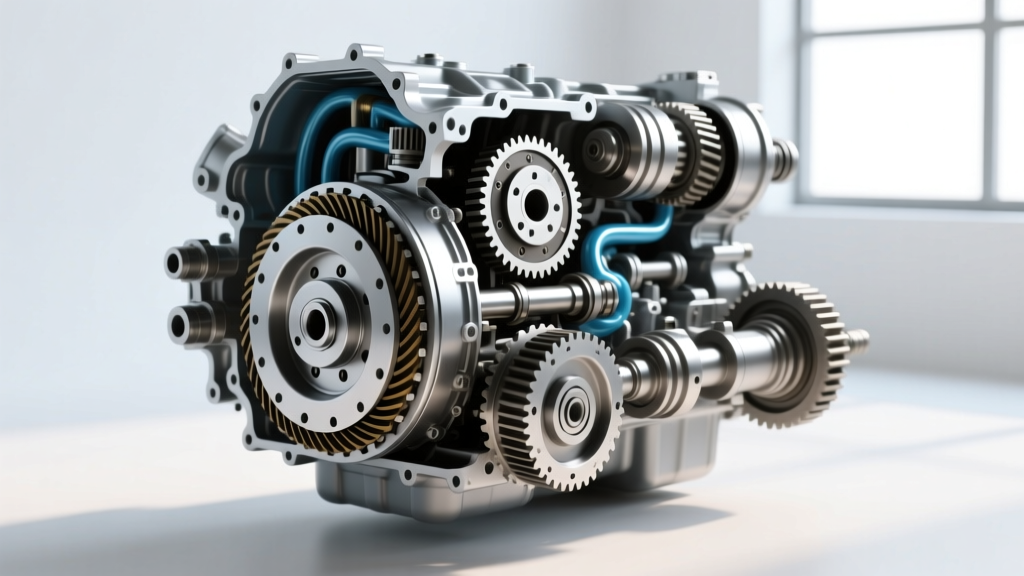
When drivers, fleet managers, and DIY mechanics ask what happens if torque converter fails, the answer is rarely isolated to the converter itself. A torque converter is not just a fluid coupling; it is a high-stress hydraulic pump, a clutch assembly, and a torque multiplier. When internal components like the Torque Converter Clutch (TCC) lining, the stator one-way clutch, or the internal thrust bearings fail, the resulting damage cascades through the entire transmission system.
In modern automatic transmissions, a catastrophic torque converter failure sends a shockwave of metallic debris and friction material through the hydraulic circuits. This material bypasses the converter's internal filter and travels directly into the transmission cooler lines, the radiator heat exchanger, and the valve body. If the stator seizes, the transmission fluid overheats rapidly, cooking the seals and clutch packs inside the main transmission case. Understanding this mechanical fallout is critical for accurately diagnosing repair costs and avoiding repeat failures.
2026 Cost Analysis: Model-Specific Price Breakdown
As of early 2026, inflation in automotive parts and rising shop labor rates have significantly shifted the baseline costs for drivetrain repairs. The cost to replace a torque converter varies wildly depending on the transmission architecture, the integration of electronic control modules, and the required fluid specifications. Below is a comprehensive cost breakdown for three of the most common automatic transmissions on the road today.
| Transmission Model | OEM Part Number | Part Cost (2026) | Labor Hours | Fluid & Misc. | Total Estimate |
|---|---|---|---|---|---|
| GM 4L60E (V8 Applications) | ACDelco 24230298 | $180 - $260 | 5.5 - 7.0 | $140 | $850 - $1,450 |
| GM 6L80 / 6L90 (Trucks/SUVs) | GM 24239160 | $380 - $520 | 6.5 - 8.5 | $210 | $1,350 - $2,100 |
| ZF 8HP (Chrysler / BMW) | ZF OEM (Varies) | $650 - $950 | 7.0 - 9.5 | $280 | $1,900 - $2,900 |
Note: Labor estimates are based on a national average independent shop rate of $135-$165 per hour. Dealership rates will increase the labor portion by 30-50%.
GM 4L60E: The TCC Solenoid & Valve Body Tax
The GM 4L60E is legendary for its ubiquity in rear-wheel-drive cars and light trucks, but it is equally notorious for torque converter clutch apply issues. When the TCC lining delaminates due to a failing Pulse Width Modulation (PWM) solenoid, the friction material shreds into the fluid pan and valve body.
Hidden Costs and Mandatory Upgrades
If you are replacing a failed torque converter in a 4L60E, simply swapping the unit is a guaranteed recipe for a comeback. The debris will lodge in the TCC regulator valve, causing the new converter to shudder or fail to lock up. According to engineering data from Sonnax Industries, the cast aluminum valve body bore wears out prematurely under these conditions.
- Mandatory Valve Body Upgrade: Installing a Sonnax TCC Regulator Valve Kit (Part # 77947-01K) costs roughly $45 in parts but requires dropping the pan and valve body, adding 1.5 hours of labor.
- PWM Solenoid Replacement: ACDelco Part # 214-1893 (approx. $35). Never reuse a solenoid from a system contaminated with friction material.
- Fluid Capacity: The 4L60E requires approximately 11.2 quarts of Dexron VI for a complete dry-fill and cooler line flush.
GM 6L80 & 6L90: TEHCM Risks and Shudder Fallout
The 6L80 and 6L90 transmissions utilize a massive 300mm torque converter with a highly engineered TCC piston. A common precursor to total failure in these units is severe torque converter shudder, often accompanied by Torque Signal Rationality faults (P2763 or P0700). When the converter finally fails, the financial stakes increase dramatically due to the TEHCM.
The TEHCM Contamination Factor
The Transmission Electro-Hydraulic Control Module (TEHCM) is mounted directly inside the transmission pan, bolted to the valve body. It houses the Transmission Control Module (TCM) and the solenoid pack. When a 6L80 torque converter disintegrates, metallic particles are drawn directly into the TEHCM's delicate pressure switches and solenoids.
Expert Warning: If you find heavy metallic paste on the TEHCM screen during a 6L80 torque converter replacement, the TEHCM must be replaced or professionally remanufactured. A new GM TEHCM (Part # 24254344) costs between $450 and $600, and requires GDS2 programming and a crankshaft variation relearn procedure. Failing to replace a contaminated TEHCM will result in immediate harsh shifts and TCC slip codes.
Furthermore, the 6L80 requires specific fluid protocols. Later models demand Dexron ULV (Ultra Low Viscosity), while earlier iterations use Dexron VI. Mixing these fluids or using generic multi-vehicle ATF will destroy the new converter's lockup clutch within 5,000 miles.
ZF 8HP: The Mechatronic and Integrated Filter Penalty
Found in millions of vehicles ranging from Dodge Chargers and Jeep Grand Cherokees to BMWs and Audis, the ZF 8HP transmission represents the pinnacle of modern shifting technology. However, its torque converter replacement cost is heavily inflated by its integrated design.
Unlike older GM units where the transmission filter is a cheap, drop-in plastic cartridge, the ZF 8HP utilizes a plastic transmission pan with the filter permanently molded into it. When a ZF torque converter fails, the entire fluid pan assembly must be discarded and replaced. An OEM ZF pan/filter assembly costs between $180 and $250 alone.
Additionally, the ZF Mechatronic unit (the combined valve body and TCM) is highly sensitive to the specific friction modifiers used in ZF LifeguardFluid 8. Flushing a contaminated ZF cooling system requires specialized equipment capable of reversing flow through the complex thermal management valve located in the transmission case. Total fluid volume is roughly 9.5 to 10.5 liters, and OEM ZF fluid commands a premium price, pushing the miscellaneous fluid and filter costs well past $250.
Mandatory Hidden Costs & Torque Specifications
Regardless of whether you are working on a 4L60E, 6L80, or ZF 8HP, proper reassembly requires adherence to strict torque specifications and auxiliary system servicing. Skipping these steps will void any parts warranty and lead to catastrophic secondary failures.
Cooler Line and Radiator Flushing
Every major transmission parts distributor, as noted in rebuild guidelines by Transmission Digest, mandates a complete cooler system flush. If metallic debris is left in the radiator heat exchanger, it will be sucked directly into the lubrication circuit of the new torque converter, scoring the stator shaft and destroying the front pump bushing. If a machine flush cannot guarantee 100% debris removal, the radiator or auxiliary cooler must be replaced (adding $250-$600 to the repair bill).
Critical Torque Specifications (GM V8 Applications)
Improper installation of the torque converter and flex plate leads to warping, cracked bellhousings, and catastrophic pump failure. Always use a calibrated torque wrench for the following:
- Flex Plate to Crankshaft Bolts: 37 lb-ft (50 Nm) in a star pattern. (Use new OEM bolts with factory threadlocker).
- Torque Converter to Flex Plate Nuts/Bolts: 35 lb-ft (47 Nm). Ensure the converter is fully seated into the transmission oil pump before tightening to prevent pulling the converter hub out of the pump gears.
- Bellhousing to Engine Block (M10 Bolts): 37 lb-ft (50 Nm).
- Bellhousing to Engine Block (M12 Bolts): 50 lb-ft (68 Nm).
The Final Verdict: Rebuild vs. Replace
So, what happens if torque converter fails and you ignore the secondary damage? You end up paying for the repair twice. When budgeting for a torque converter replacement in 2026, you must factor in the valve body upgrades, TEHCM inspections, and mandatory cooler flushes. For the 4L60E, the repair remains highly affordable and well within the reach of a competent DIYer. For the 6L80 and ZF 8HP, the integration of electronics and proprietary fluids pushes the repair firmly into professional territory, where specialized scan tools and flush machines are non-negotiable for a lasting repair.