The Anatomy of a Binding Torque Converter
When you separate an automatic transmission from the engine block and discover the torque converter won't spin freely, you are looking at a definitive mechanical red flag. A healthy torque converter should exhibit smooth, fluid viscous drag when rotated by hand. It should never grind, catch, or lock up. When a technician or DIYer notes that the 'torque converter won t spin freely' on diagnostic forums, it almost always points to severe internal friction caused by bearing collapse or seal binding.
From a cost analysis perspective, a binding torque converter (TC) is rarely an isolated issue. The mechanical interference that prevents the turbine or stator from spinning usually generates enough localized heat and debris to compromise the front pump assembly, stator shaft, and transmission fluid. In this 2026 cost guide, we will break down the exact failure modes of TC bearings and seals, the collateral damage they cause, and the real-world pricing for parts and labor across popular transmission platforms like the GM 6L80, 4L60E, and ZF 8HP.
Why the Torque Converter Binds: Bearings vs. Seals
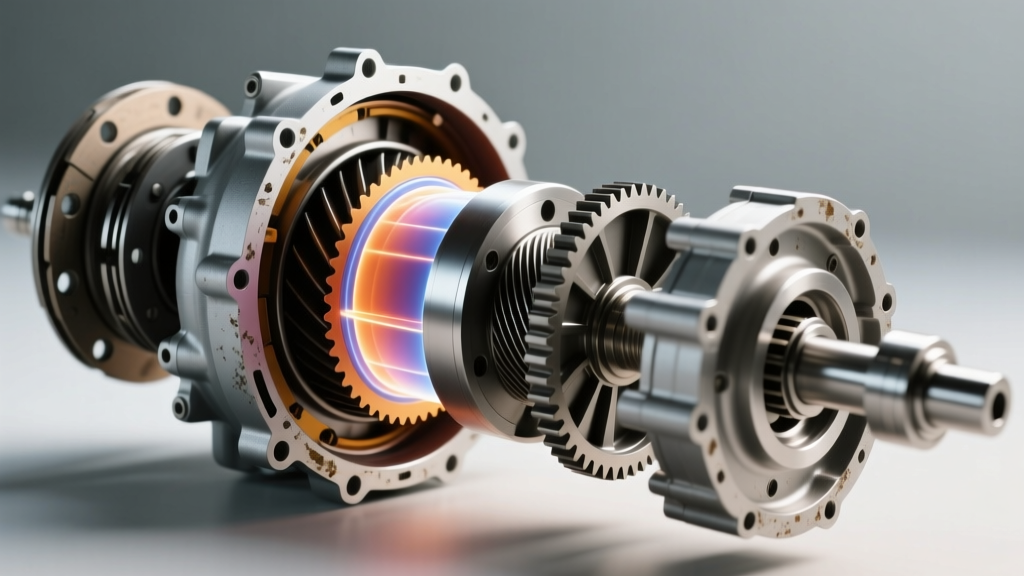
To understand the repair costs, you must first understand the failure mechanics. The torque converter houses three primary rotating elements: the impeller (driven by the engine), the turbine (driving the transmission input shaft), and the stator (multiplying torque). These components are separated by precision thrust bearings and supported by a complex network of seals.
1. Torrington Thrust Bearing Failure
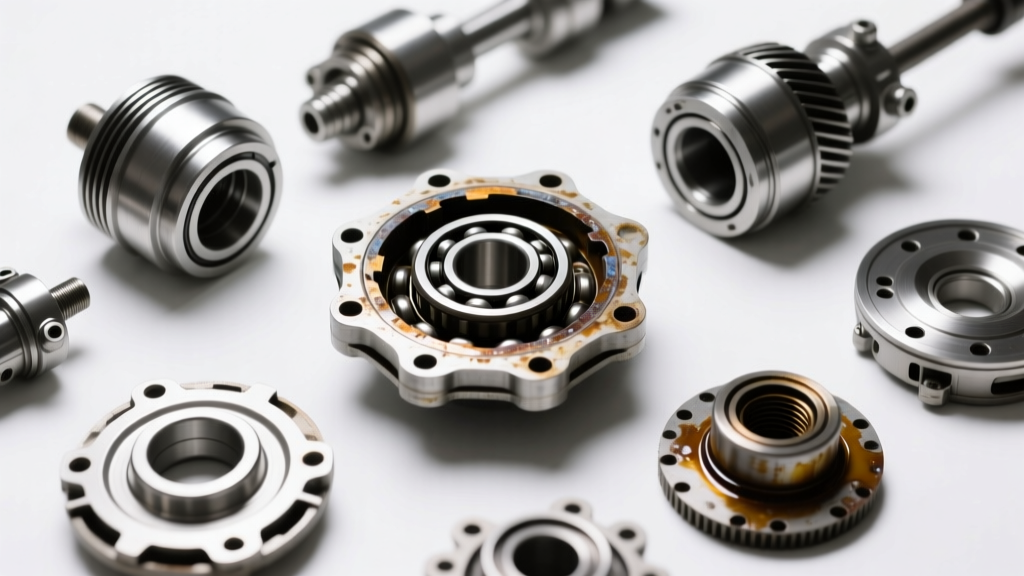
Modern torque converters utilize Torrington-style needle thrust bearings to separate the impeller, turbine, and stator. If the stator support bearing fails, the stator drops out of alignment and physically grinds against the turbine or impeller shell. This metal-on-metal contact creates immediate binding. According to Sonnax technical resources, bearing failure is often accelerated by contaminated fluid or excessive endplay caused by a worn stator shaft.
2. Stator Shaft and Front Pump Seal Drag
The torque converter hub rides on the front pump bushing and is sealed by front pump seals and stator shaft Teflon rings. If the TC hub becomes scored due to a lack of lubrication, or if the transmission overheats and melts the Teflon sealing rings, the seals can swell and bind against the hub. This creates a 'rubbery' resistance when you try to spin the converter by hand, mimicking a locked bearing.
Expert Insight: Never force a binding torque converter to spin using a breaker bar or impact tool. Applying excessive torque to the turbine spline will twist the internal hub, guaranteeing that the transmission input shaft will not seat properly during reinstallation, leading to immediate front pump destruction upon startup.
2026 Cost Breakdown: Parts, Labor, and Machine Shop Fees
Fixing a torque converter that refuses to spin requires dropping the transmission, cutting open the old TC (or replacing it), and inspecting the front pump. Below is a comprehensive cost matrix for 2026, reflecting current inflation-adjusted parts pricing and average shop labor rates ($130–$160/hour).
| Component / Service | DIY Cost (2026) | Pro Shop Cost (2026) | Technical Notes & Specifications |
|---|---|---|---|
| Remanufactured TC | $350 - $650 | $550 - $950 | Must match exact stall speed and hub depth. Includes new hub and bearings. |
| TC Rebuild (Machine Shop) | $250 - $400 | $350 - $500 | Requires cutting, new Torrington bearings, hub, and welding/balancing. |
| R&R Labor (Trans Drop) | $0 | $1,000 - $1,800 | 8-12 hours labor. Includes R&R, fluid refill, and adaptation resets. |
| Front Pump Seal & Bushing Kit | $25 - $60 | $80 - $150 | Mandatory replacement. E.g., Corteco or National seals. |
| Front Pump Assembly (If Scored) | $180 - $450 | $350 - $700 | Required if bearing debris scored the pump gears or housing. |
| Transmission Fluid (Full Fill) | $120 - $220 | $200 - $350 | 8-12 quarts. E.g., Dexron VI, ZF Lifeguard 8, or ATF+4. |
Transmission-Specific Cost Variables & Failure Modes
The financial impact of a binding torque converter varies wildly depending on the transmission model bolted to your engine. Here is how the costs and failure points break down for three of the most common automatic transmissions on the road today.
GM 6L80 / 6L90 (2006-2020+ Applications)
The 6L80 is notorious for torque converter hub wear and stator shaft issues. When the TC won't spin freely on a 6L80, it is frequently due to the internal stator support bearing collapsing, which sends needle bearings directly into the transmission oil pump.
- Common Collateral Damage: Oil pump gear scoring and stator shaft wear.
- Specific Parts: Sonnax stator support tube kits and updated front pump assemblies.
- Estimated Pro Repair: $2,800 - $3,500 (Includes R&R, new TC, pump, and Dexron VI fluid).
GM 4L60E (1993-2013 Applications)
In the legendary 4L60E, a binding converter is often tied to the front pump bushing walking out of its bore or the turbine bearing disintegrating. Because the 4L60E is an older, simpler design, parts are incredibly cheap, but the labor to pull the trans remains the bulk of the cost.
- Common Collateral Damage: Front pump housing destruction (the bushing seizes to the TC hub and rips the pump apart).
- Specific Parts: Sonnax 51000-01K heavy-duty front pump bushing.
- Estimated Pro Repair: $1,800 - $2,400.
ZF 8HP (8HP45 / 8HP70 / 8HP90)
Found in modern BMW, Audi, Dodge, and Ford vehicles, the ZF 8HP utilizes complex Teflon sealing rings on the stator support tube. If the torque converter won't spin freely, it may be due to a warped TC hub binding these seals, or a failed internal turbine bearing. ZF transmissions are highly sensitive to fluid levels and seal integrity.
- Common Collateral Damage: Stator support tube scoring and Mechatronic sleeve contamination.
- Specific Parts: ZF Lifeguard 8 fluid (approx. $45/quart in 2026) and OEM ZF mechatronic sealing sleeves.
- Estimated Pro Repair: $3,500 - $4,800 (ZF parts and specialized fluid drive up the cost significantly).
Hidden Costs: When Bearing Failure Destroys the Drivetrain
One of the most expensive mistakes in transmission repair is assuming a binding torque converter only requires a TC swap. If the internal bearings failed catastrophically, the resulting imbalance causes the torque converter hub to wobble at engine RPM. This wobble acts like a lathe against the front pump bushing and seal.
If you install a new torque converter without measuring the front pump bushing inner diameter or checking the seal surface on the TC hub for grooves, the new converter will begin leaking or wobbling within 500 miles. Furthermore, a binding TC can place immense stress on the flexplate. Always inspect the flexplate for hairline cracks around the bolt holes.
- GM Flexplate Torque Spec: M12 bolts typically require 60 Nm + 50 degrees of rotation.
- Ford Flexplate Torque Spec: Usually 60-80 ft-lbs depending on the engine displacement.
Diagnostic Checklist Before Spending Money
Before you authorize a $3,000 transmission pull, verify that the torque converter is actually the culprit. According to guidelines published by the Transmission Digest, misdiagnosing TC binding is common among novice mechanics. Follow this checklist:
- Verify Bellhousing Clearance: Ensure the transmission is fully seated against the engine block. A gap of even 1/8th of an inch can cause the TC to bind against the flexplate or dowel pins. Use a feeler gauge between the bellhousing and engine block.
- Check the Dowel Pins: If the engine block dowel pins are bent or missing, the transmission will sit at an angle, forcing the TC hub to bind inside the front pump bushing.
- Spin the Inner Spline: Insert a transmission input shaft (or a dedicated spline tool) into the turbine. Spin it by hand. You should feel smooth, heavy fluid drag. If it feels 'notchy' or grinds, the internal Torrington bearings are destroyed.
- Inspect the Hub: Run your fingernail across the TC hub where the front pump seal rides. If you feel deep grooves, the hub is ruined. Even if you replace the bearings, the grooved hub will instantly destroy the new front pump seal.
Final Verdict: Rebuild vs. Replace
When dealing with a torque converter that won't spin freely, the era of 'just replacing the seal' is over. The internal forces required to bind a torque converter mean that internal metal fatigue has already occurred. For 95% of applications in 2026, replacing the torque converter with a high-quality remanufactured unit (from suppliers like Stallion, Yank, or OEM) is the only financially sound decision. Attempting to rebuild a locked TC in a home garage without a commercial plasma cutter, balancing machine, and press will result in immediate vibration and subsequent transmission failure. Budget for the full R&R labor, a new TC, a front pump seal/bushing kit, and a complete fluid flush to ensure your drivetrain survives the next 100,000 miles.
For further reading on transmission teardown procedures and torque converter diagnostics, consult the Automatic Transmission Service Group (ATSG) technical manuals for your specific transmission model.