The Hidden Cost of Ignoring Front Differential Leaks
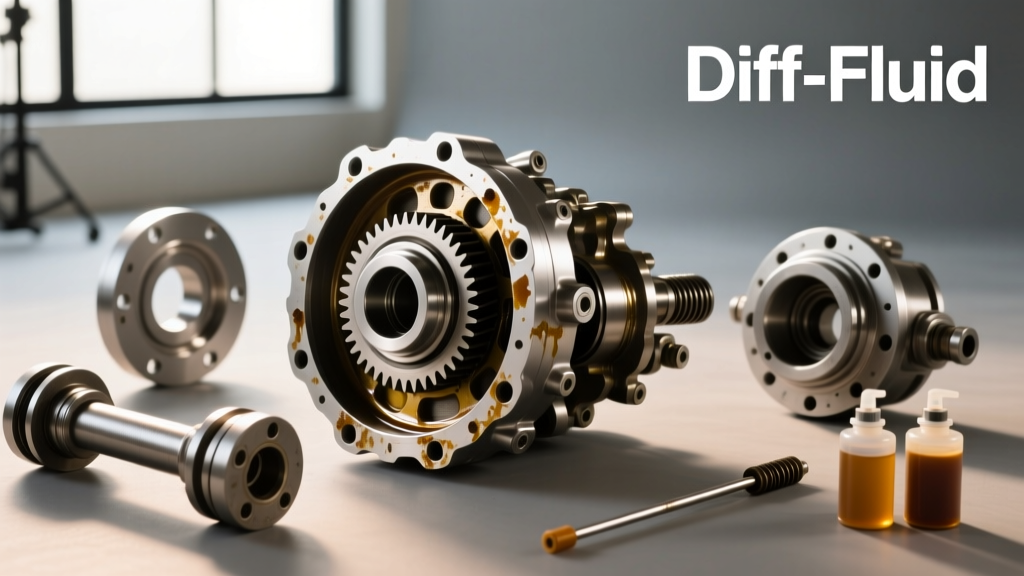
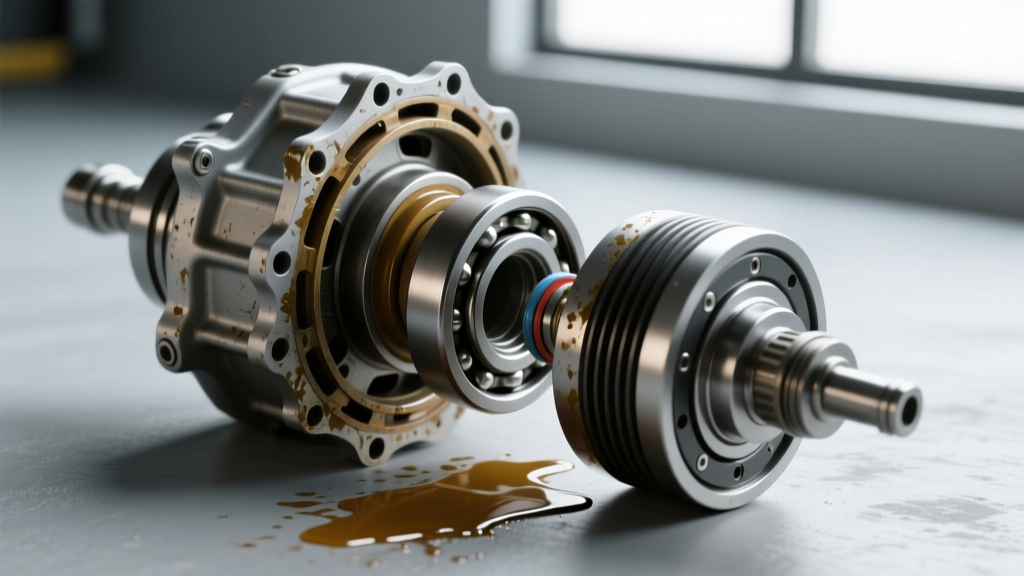
The Toyota Tacoma is renowned for its off-road durability, but the front drivetrain components are not immune to wear, especially when subjected to lifted suspensions, larger tires, and aggressive trail use. When you are tracking your toyota tacoma front differential fluid levels and notice a steady decline, the culprit is almost always a failing pinion seal or inner axle seal. While a minor weep might seem harmless, running the 8-inch front differential low on gear oil rapidly starves the pinion and carrier bearings. This lack of lubrication leads to catastrophic pitting, overheating, and eventual ring-and-pinion destruction. In 2026, with the cost of replacement OEM differential assemblies exceeding $2,500, mastering the art of seal and bearing replacement is a critical skill for any Tacoma owner or independent shop.
Diagnostic Matrix: Seal Weeps vs. Bearing Failure
Before tearing into the differential, it is vital to accurately diagnose whether you are dealing with a simple seal degradation or a deeper bearing failure. A seal replacement is a straightforward job, but if the bearing is compromised, the seal will fail again within a few hundred miles due to excessive flange runout.
| Symptom | Probable Root Cause | Required Action |
|---|---|---|
| Wetness around the pinion flange, no noise | Aged or torn pinion lip seal | Replace pinion seal, check crush sleeve preload |
| Fluid slung radially from the pinion yoke | Worn pinion bearing causing flange wobble | Replace pinion bearing, race, and seal; reset preload |
| Grinding or whining on deceleration | Pitted pinion bearing or improper gear backlash | Full differential rebuild; check ring and pinion contact pattern |
| Fluid leaking where the CV axle enters the diff | Torn inner axle seal or worn axle stub shaft | Replace inner axle seal; inspect CV stub for grooves |
Essential Parts, Fluids, and Tooling
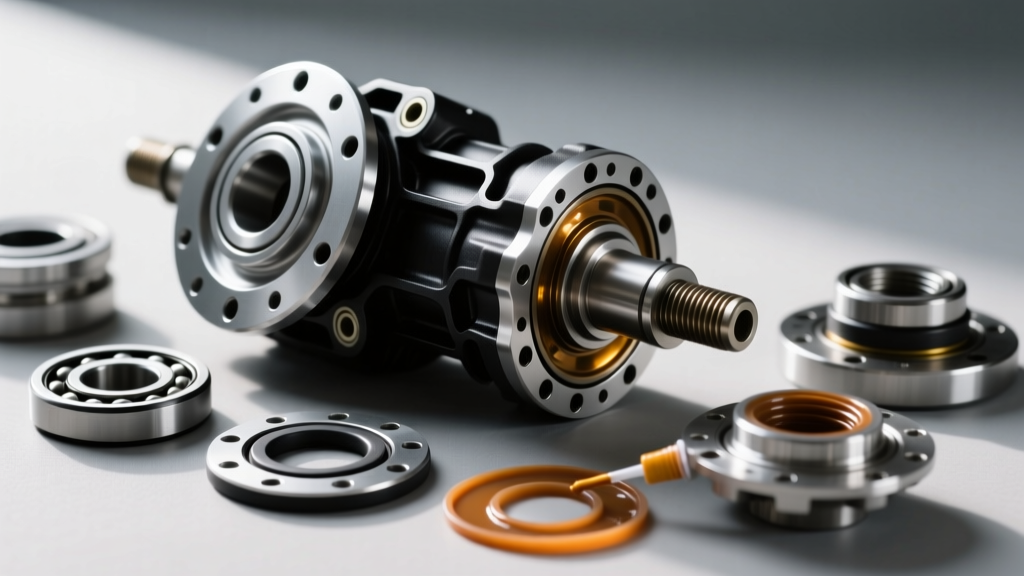
To execute this repair correctly, you must move beyond generic auto parts store kits. The Toyota 8-inch front differential (standard on most 2005-2023 Tacomas) requires precision components. According to engineering guidelines from Timken, using matched bearing and race sets is non-negotiable to maintain proper gear mesh and heat dissipation.
Component Breakdown
- Pinion Seal: Toyota OEM 90311-47027 or National 710984. Avoid unbranded imports; the rubber compound degrades rapidly under high-heat 4WD use.
- Inner Axle Seals: Toyota OEM 90316-47002 (Left/Right specific depending on year, verify with VIN).
- Pinion Nut: Toyota 90179-22012. This is a prevailing torque nut. Never reuse the old nut if you are retaining the OEM crush sleeve.
- Pinion Bearing: Timken SET 1026 (or equivalent NTN 6208) if the bearing surface shows spalling.
- Gear Oil: Toyota Genuine 75W-85 GL-5 (Part #08885-81016) or a high-quality synthetic 75W-90 GL-5. Capacity is approximately 1.58 Liters (1.67 Quarts).
The Crush Sleeve vs. Solid Spacer Debate
Expert Tip: The OEM crush sleeve is designed for one-time assembly line installation. Every time you torque the pinion nut to set the bearing preload, the sleeve crushes slightly. If you over-torque it by even a fraction, you must replace the sleeve, which requires pulling the pinion gear out of the housing—a massive undertaking. For any 2026 rebuild or seal swap, we highly recommend installing a Solid Pinion Spacer Kit (available from manufacturers like Yukon Gear & Axle). This replaces the crush sleeve with a solid machined spacer and shims, allowing you to safely tighten and loosen the pinion nut to achieve exact rotational torque without the risk of over-crushing.
Step-by-Step Pinion Seal and Bearing Replacement
If your diagnosis confirms a failing seal or a noisy bearing, follow this exact procedure to maintain the critical pinion bearing preload.
1. Measure Baseline Rotational Preload
Before removing any hardware, the differential must be at ambient temperature. Disconnect the front driveshaft. Using a beam-style or digital inch-pound torque wrench (such as a CDI 101-402), measure the rotational torque required to turn the pinion flange. Record this number. For a used bearing in good condition, this should be between 10 and 15 inch-pounds. If it reads 0 or feels loose, your bearing is already destroyed.
2. Flange Removal and Seal Extraction
Use a paint pen to mark the alignment of the pinion flange to the pinion shaft spline. This ensures you reinstall it in the exact same clocking position, minimizing driveline vibration. Use an impact wrench to remove the pinion nut. Attach a standard steering wheel or harmonic balancer puller to extract the flange—never pry it off with a crowbar, as this will score the sealing surface and warp the flange. Once the flange is off, use a dedicated seal puller to remove the old pinion seal. Clean the bore with brake cleaner and inspect the bearing surface. If the bearing is pitted, use a bearing puller to extract it and drive a new race into the housing using a brass drift.
3. Seal Installation and Preload Reset
Lubricate the lip of the new Toyota 90311-47027 seal with fresh gear oil. Use a seal driver of the exact outer diameter to tap it flush into the housing. Reinstall the pinion flange, aligning your paint marks. Thread on the new pinion nut. Using your inch-pound torque wrench, tighten the nut in small increments (10 ft-lbs at a time on your breaker bar) while checking the rotational torque. Stop tightening the moment your inch-pound reading matches your baseline measurement plus 3 to 5 inch-pounds (to account for the new seal's lip friction). If you are using a solid spacer kit, simply add or remove shims until the target rotational torque is achieved at your desired flange nut torque (typically 130-145 ft-lbs).
Axle Seal Extraction and Installation
Inner axle seals fail frequently on lifted Tacomas due to increased CV joint articulation and droop, which pulls the axle stub shaft slightly out of the seal lip. To replace these, you must drain the differential, remove the front CV axle assembly, and unclip the inner C-clip (if equipped on your specific model year) or pull the stub shaft. Use a long, hooked seal puller to extract the old seal from the depths of the axle tube. When driving the new 90316-47002 seal into place, ensure it is seated to the exact same depth as the original. A seal driven too deep will miss the sealing surface on the axle stub; a seal driven too shallow will prevent the CV axle from fully clicking into the carrier.
Refilling with the Correct Toyota Tacoma Front Differential Fluid
Once the seals and bearings are verified, the final step is the fluid fill. Selecting the correct toyota tacoma front differential fluid is paramount for the longevity of your rebuild. While older manuals sometimes cited 80W-90, modern 3rd-Gen Tacomas specify 75W-85 GL-5 synthetic gear oil for optimal cold-weather flow and high-temperature shear stability.
Remove the fill plug before you remove the drain plug—a classic mechanic's rule to ensure you aren't left with an empty differential and a stuck fill plug. Pump in 1.58 Liters of GL-5 fluid until it begins to weep from the fill hole. Reinstall the fill plug and torque to 29 ft-lbs. Wipe down the housing with degreaser to ensure any future leaks are easily identifiable.
2026 Cost Analysis: Dealership vs. DIY
Understanding the financial landscape of differential repairs helps justify the investment in high-quality tools and OEM parts.
| Repair Scope | Dealership / Specialty Shop (2026 Rates) | DIY Cost (Premium OEM/Aftermarket Parts) |
|---|---|---|
| Pinion Seal & Fluid Service | $650 - $850 | $120 - $160 |
| Both Inner Axle Seals & Fluid | $900 - $1,200 (Includes CV Axle R&R labor) | $150 - $220 |
| Full Pinion Bearing & Seal Rebuild | $1,400 - $1,800 | $250 - $350 (Includes solid spacer kit) |
Expert Troubleshooting: Post-Rebuild Whine and Leaks
If you complete the seal replacement and notice a high-pitched whine on deceleration, your pinion bearing preload is too loose, or the crush sleeve has collapsed. Do not ignore this; immediately re-check your rotational torque with an inch-pound wrench. If the flange is leaking immediately after the repair, inspect the pinion yoke sealing surface. Over time, the old seal lip wears a deep groove into the steel yoke. If you can catch your fingernail in this groove, the new seal will not mate properly. In this scenario, you must either use a speedi-sleeve to cover the groove or replace the pinion flange entirely. For more community-driven troubleshooting and torque verification, the archives at Tacoma World remain an invaluable resource for model-year-specific quirks.