Decoding the Toyota Tacoma Front Differential Diagram
Toyota Tacomas are legendary for their off-road capability, but the front drivetrain is subject to immense stress, especially when owners upgrade to oversized tires or frequently engage the front locker on high-traction surfaces. When a whine, howl, or clunk develops in the front end, guessing the root cause is a costly mistake. Instead, professional drivetrain builders rely on a Toyota Tacoma front differential diagram to map acoustic symptoms directly to internal hard parts.
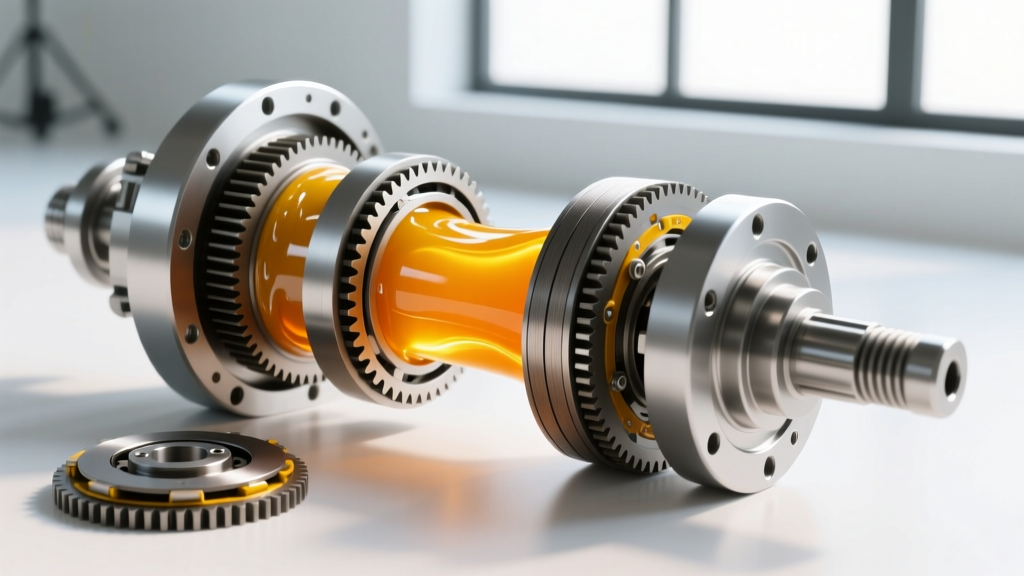
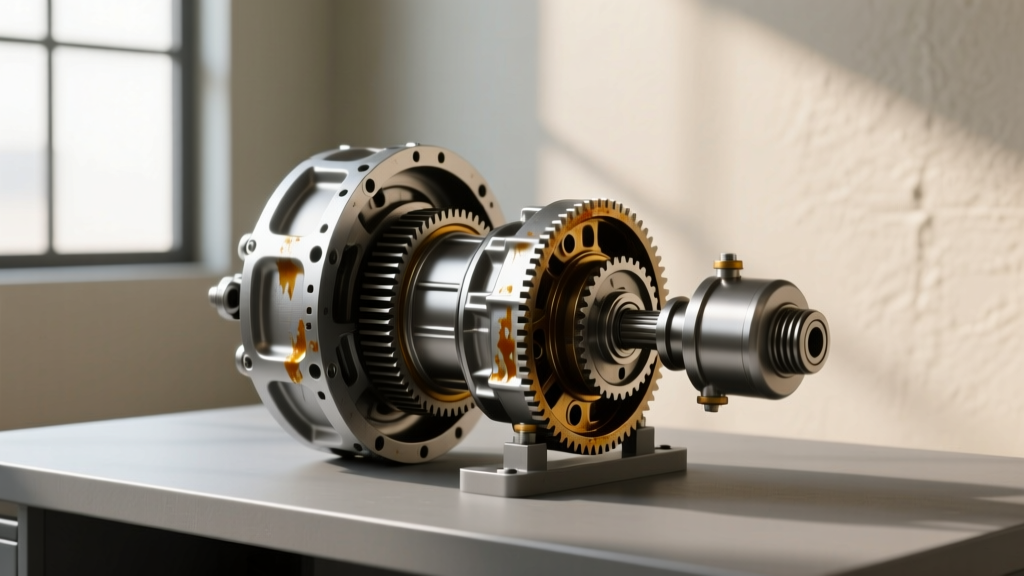
For the 3rd Generation (2016-2023) and the newer 4th Generation (2024-2026) Tacomas, the front differential is an 8-inch or 8.75-inch Clamshell Independent Suspension (CIS) drop-out design. Unlike the solid front axles of older trucks, this drop-out houses the ring and pinion, carrier, and side gears in a compact, oil-bathed aluminum housing. Understanding the exploded view of this assembly is the first step in accurate noise diagnosis.
3rd Gen vs. 4th Gen (2024-2026) Diagram Variations
While the core gear mesh principles remain identical, the 2024-2026 4th Gen Tacomas introduced the 8.75-inch front differential on TRD Pro, Trailhunter, and TRD Off-Road trims to handle the increased torque of the i-FORCE MAX hybrid powertrain. When pulling up the factory service diagram on Toyota TechInfo, you will notice the 8.75-inch variant utilizes larger carrier bearings, a reinforced pinion flange, and an updated electronic locking collar mechanism. Diagnosing noise on these newer models requires paying close attention to the E-Locker actuator fork and shift motor, which are common sources of high-pitched whining that amateurs often mistake for pinion bearing failure.
Mapping Acoustic Symptoms to Hard Parts
By cross-referencing the differential diagram with the specific driving conditions that trigger the noise, you can isolate the failing component without immediately tearing down the housing.
1. Drive Whine (Under Acceleration)
A whine that occurs only when you are on the throttle (loading the drivetrain) typically points to the drive side of the ring and pinion gear teeth. If the pinion depth is set too shallow during a previous rebuild, or if the pinion head bearing (located closest to the ring gear) is pitted, the gear mesh will sing under load. On the diagram, trace the pinion shaft to the inner bearing cup; this is your primary suspect.
2. Coast Whine (Deceleration)
If the front end howls when you let off the gas pedal between 35-55 mph, the issue usually lies on the coast side of the gear teeth or the pinion tail bearing. The tail bearing supports the pinion shaft near the companion flange. When it wears, the pinion gear deflects slightly away from the ring gear under deceleration load, creating a distinct, resonant howl.
3. Engagement Clunk and Backlash Lash
A sharp "clunk" when shifting from Reverse to Drive, or when letting out the clutch in 4WD, indicates excessive rotational play. Looking at the diagram, this play originates in three areas:
- Ring Gear Backlash: Worn carrier side bearings or improper shim thickness allowing the ring gear to rock.
- Spider Gear Thrust Washers: The internal cross-shaft and spider gears rely on thin thrust washers. When these disintegrate, the side gears slop against the carrier.
- E-Locker Collar Play: In TRD models, the locking collar that mates the side gear to the carrier can develop wear on its engagement teeth, causing a delayed, violent clunk when the locker actuates.
4. Differentiating CV Axle Noise from Differential Noise
Before condemning the front differential, you must rule out the inner CV axle joints. A failing inner CV tripod bearing will mimic a differential clunk on engagement and a rhythmic clicking during tight 4WD turns. Expert Tip: Grab the front CV axle shaft near the inner boot and push/pull it inboard and outboard. If you feel more than 2-3mm of in/out play, the inner CV joint is worn, and the differential is likely perfectly healthy.
Noise-to-Component Diagnostic Matrix
Use this matrix alongside your factory diagram to pinpoint the exact location of the failure before ordering parts from suppliers like Yukon Gear & Axle.
| Acoustic Symptom | Trigger Condition | Diagram Location / Component | Required Action |
|---|---|---|---|
| Pitch-changing Howl | Coasting at 40+ mph | Pinion Tail Bearing / Coast Gear Face | Replace pinion bearings; check pinion depth shim. |
| Steady Whine | Acceleration in 4WD | Pinion Head Bearing / Drive Gear Face | Adjust pinion depth; inspect gear tooth pitting. |
| Metallic Clunk | Shifting FWD to REV | Spider Gears / Side Gear Thrust Washers | Rebuild carrier; install new OEM thrust washers. |
| High-Pitched Grind | E-Locker Engagement | Actuator Fork / Locking Collar Teeth | Inspect shift motor fork for wear; replace collar. |
| Rhythmic Clicking | Tight turns in 4WD | Inner CV Axle Tripod (Not Diff) | Replace front CV axle assembly. |
Fluid Forensics: The First Step in Troubleshooting
Before unbolting a single bearing cap, drain the front differential fluid. The condition of the gear oil provides a literal window into the internal health of the assembly. The OEM fill for most 3rd and 4th Gen Tacomas is Toyota Genuine 75W-85 GL-5 Gear Oil (Part #08885-81080). The front differential capacity is typically 1.6 to 1.7 liters (approx. 1.7 - 1.8 quarts).
Reading the Drained Oil
- Fine Metallic Glitter (Suspended): Normal wear. The fluid will look slightly gray or silver under a flashlight. This is standard ring and pinion mating wear.
- Large Metallic Chunks or Shards: Catastrophic bearing cage failure or spider gear tooth breakage. The differential must be completely torn down, and the housing flushed with solvent to prevent debris from scoring the new bearings.
- Burnt Smell / Dark Black Sludge: Severe overheating, usually caused by low fluid levels (due to a leaking pinion seal or axle seal) or prolonged high-speed driving in 4WD on dry pavement.
Expert Best Practice: When refilling the front differential, always replace the aluminum crush washers on the drain and fill plugs. The torque specification for both the 24mm drain and fill plugs is exactly 29 lb-ft (39 Nm). Overtorquing can strip the soft aluminum threads of the drop-out housing, requiring a costly helicoil repair or housing replacement.
Precision Setup Specifications (8-Inch & 8.75-Inch Front Drop-Out)
If your diagnosis points to a gear or bearing failure, rebuilding the front differential requires strict adherence to factory tolerances. The Tacoma front diff does not use adjustable threaded carrier bearings like a Dana 44 or Ford 8.8; it uses shim-under-bearing setups. This means achieving the correct gear mesh pattern requires a press and precise measurement.
Critical Setup Tolerances
- Ring Gear Backlash: 0.005" - 0.007" (0.13 - 0.18 mm). Measured at the ring gear edge using a magnetic dial indicator.
- Pinion Bearing Preload: 10 - 15 in-lbs (for new bearings). This is measured using a beam-style inch-pound torque gauge on the pinion nut. *Note: Crushing the new pinion crush sleeve requires upwards of 250+ lb-ft of torque on the pinion flange nut, but the final rotational preload must land in the 10-15 in-lb window.*
- Ring Gear Runout: Maximum 0.003" (0.076 mm). Excessive runout indicates a warped ring gear or debris trapped between the ring gear and the carrier mounting face.
- Side Gear Clearance: 0.002" - 0.008". Measured by installing the axle shafts and checking rotational play.
When to Rebuild vs. Replace the Drop-Out
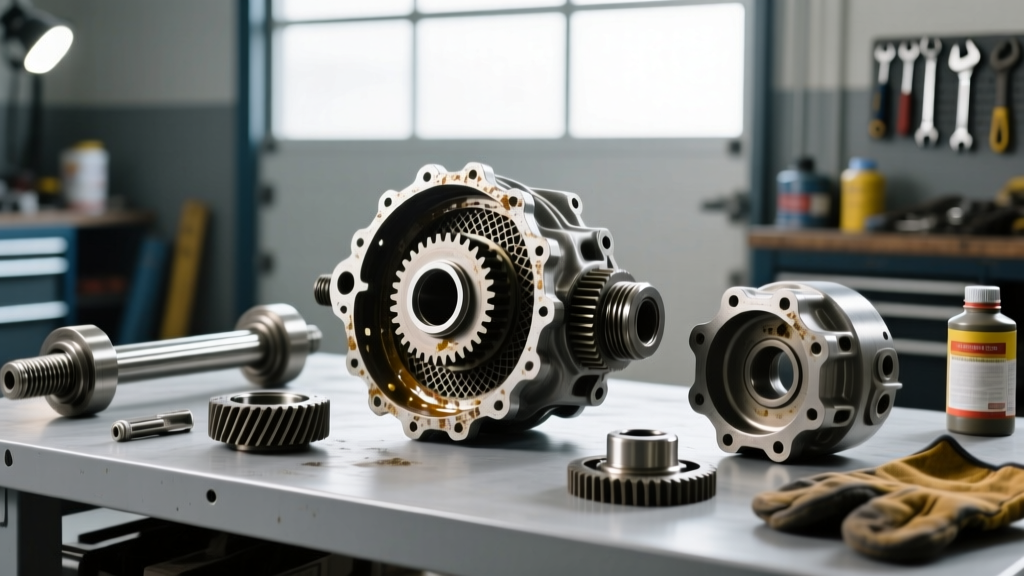
Because the Tacoma front differential is a "drop-out" (third member) style, you have a distinct advantage over solid axle owners: you can swap the entire center section without removing the front axle shafts or the differential housing from the truck. If the ring and pinion are severely damaged, or if the aluminum carrier bearing bores are scored (a common issue if a bearing spins in the housing), it is often more cost-effective and time-efficient to purchase a factory-assembled, pre-shimmed drop-out assembly from a Toyota dealer or a specialized builder rather than attempting a shim-under-bearing setup in a home garage.
However, if the noise is isolated to a leaking pinion seal, a worn E-Locker actuator, or minor bearing whine, pulling the drop-out, referencing the diagram, and executing a precision rebuild using high-quality Japanese bearings (Koyo or NTN) will restore your Tacoma's front drivetrain to factory-quiet operation for another 150,000 miles. For ongoing community-verified teardown guides and part number cross-references, the drivetrain sub-forums at TacomaWorld remain an invaluable resource for DIY mechanics tackling this exact repair in 2026.