The Hidden Mechanics of Limited Slip Differentials
When enthusiasts and daily drivers alike discuss drivetrain maintenance, the transmission and engine oil often steal the spotlight. However, the differential—specifically the Limited Slip Differential (LSD)—is a highly stressed, precision-machined assembly that demands meticulous lubrication. Understanding the mechanical benefits of changing differential fluid in an LSD requires a deep dive into how these torque-biasing systems operate under load.
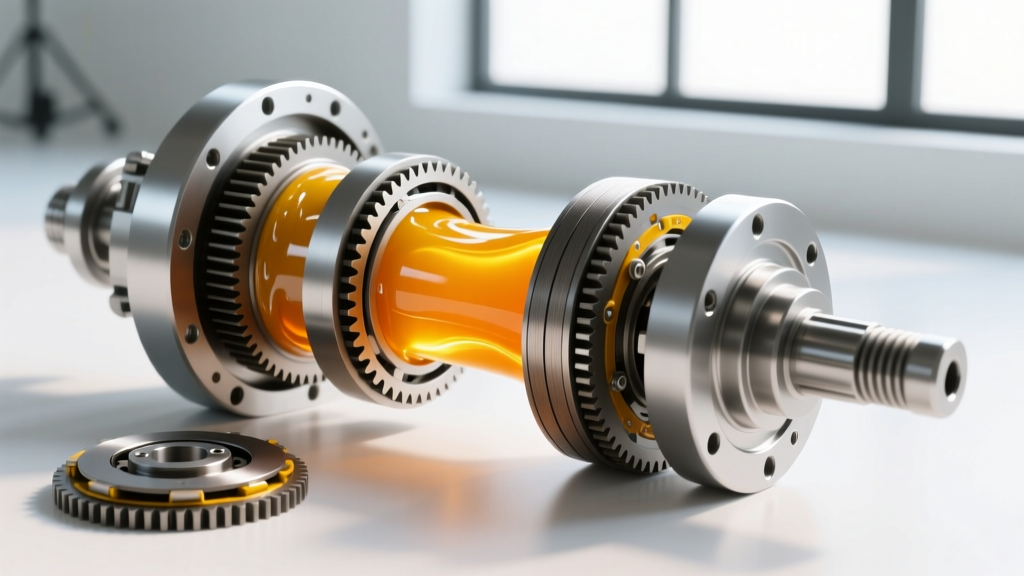
Unlike an open differential that sends power to the wheel with the least resistance, a clutch-type LSD utilizes a series of interleaved friction discs and steel plates to lock the axles together when slip occurs. Preload springs (often S-springs or coil springs) push the side gears outward, engaging the clutch packs against the differential case. When you navigate a tight corner, the outer wheel must spin faster than the inner wheel. The clutch packs must slip smoothly to allow this speed differentiation. If the lubrication fails, the transition from static to kinetic friction becomes violent, resulting in the notorious 'chatter' or 'stick-slip' phenomenon that can permanently scar the friction material.
Core Benefits of Changing Differential Fluid in LSDs
Why is this service so critical? The benefits of changing differential fluid extend far beyond simple lubrication; it is an active intervention in the chemical and mechanical preservation of the axle assembly.
1. Elimination of Chatter and Stick-Slip
The most immediate benefit of a fluid exchange is the restoration of the friction modifier additive package. Over time, the long-chain organic molecules responsible for altering the coefficient of friction shear down and deplete. When this happens, the clutches grab abruptly rather than slipping progressively. Fresh fluid with the correct LS (Limited Slip) additive package ensures the static friction coefficient remains slightly lower than or equal to the kinetic friction coefficient, completely eliminating cornering chatter.
2. Removal of Destructive Metal Particulates
LSDs naturally shed microscopic material from the friction discs during normal operation. Furthermore, the hypoid ring and pinion gears generate fine metallic dust during their initial break-in and subsequent high-load towing. Because most LSD axles (like the Ford 8.8 or Dana 44) lack a pressurized filtration system, these particulates remain suspended in the gear oil. Over 30,000 to 50,000 miles, this metallic slurry acts as a lapping compound, accelerating the wear of the pinion bearings and scoring the clutch plates. Draining the fluid removes this abrasive suspension.
3. Thermal Breakdown Prevention
For trucks and SUVs used in towing or off-road applications, differential temperatures can easily exceed 250°F (121°C). At these temperatures, conventional mineral-based gear oils experience severe oxidation and viscosity loss. The extreme pressure (EP) additives—typically sulfur-phosphorus compounds required for GL-5 hypoid gear protection—begin to thermally degrade. Changing the fluid restores the oil's film strength, preventing metal-on-metal contact between the ring and pinion gears under high-torque scenarios.
Fluid Chemistry: GL-5 Ratings vs. Friction Modifiers
Not all gear oils are created equal, and using the wrong specification in an LSD will lead to catastrophic failure. Standard GL-5 gear oils contain aggressive EP additives designed to protect the sliding contact patch of hypoid gears. However, these same sulfur-phosphorus additives can cause the friction clutches in an LSD to glaze or slip excessively if not balanced with a friction modifier.
Technical Note: Always verify if your chosen synthetic gear oil already contains friction modifiers. Fluids like Red Line 75W90 or Amsoil Severe Gear 75W-90 are pre-formulated for LSDs. If using a standard GL-5 fluid like Motorcraft SAE 75W-140 Synthetic, you must manually add a friction modifier (e.g., Motorcraft XL-3, part number EST-M2C118-A) to prevent clutch chatter.
According to lubrication engineers at Amsoil's technical department, synthetic base stocks offer superior shear stability compared to petroleum-based oils, meaning the fluid maintains its 75W-90 or 75W-140 viscosity grade much longer under the intense shearing forces of the clutch packs.
LSD Maintenance Protocol and Specifications
Performing an LSD fluid change requires precision. Over-torquing cover bolts can warp the differential housing or crush the gasket, leading to leaks. Under-filling the axle will starve the pinion bearing. Below is a reference table for some of the most common solid-axle LSD configurations found in modern and classic trucks.
| Axle Model | Ring Gear Size | Fluid Capacity | Cover Bolt Torque | Fill Plug Torque | LS Additive Required? |
|---|---|---|---|---|---|
| Ford 8.8 (Trac-Lok) | 8.8 inches | 2.5 - 3.0 Pints | N/A (Fill/Drain Plug) | 35-45 lb-ft (3/8" Allen) | Yes (4 oz typical) |
| GM 10-Bolt (Eaton Posi) | 8.5 / 8.6 inches | 4.2 Pints | 25 lb-ft | 30 lb-ft (3/8" Square) | Yes (2 oz typical) |
| Dana 44 (Trac-Lok) | 8.5 inches | 4.0 Pints | 30-35 lb-ft | 25-35 lb-ft | Yes (4 oz typical) |
| Toyota 8" (TRD LSD) | 8.0 inches | 3.2 Pints | N/A (Fill/Drain Plug) | 29 lb-ft (24mm Hex) | Yes (Specific LSD Oil) |
Note: Always consult the specific OEM service manual for your vehicle, as capacities and torque specifications can vary slightly by model year and housing design. For detailed torque and teardown specifications, the Dana Spicer Resource Center provides comprehensive service manuals for Dana 44 and Dana 60 axles.
Step-by-Step Execution for Clutch-Type LSDs
To maximize the benefits of changing differential fluid, follow this professional-grade protocol:
- Pre-Heat the Axle: Drive the vehicle for 15-20 minutes. Warm fluid flows faster and keeps abrasive particulates suspended, ensuring they drain out rather than settling at the bottom of the housing.
- Clean the Exterior: Use brake cleaner and a wire brush to remove caked mud and grease from the fill plug and cover. Introducing dirt into the axle is a primary cause of premature bearing failure.
- Drain and Inspect: If your axle has a drain plug (like the Ford 8.8), remove it. If it uses a cover (like the Dana 44), loosen the bottom bolts first to let the fluid drain into a catch pan before removing the cover entirely. Inspect the magnetic drain plug or the RTV sealant ridge. A fine, glittery paste is normal; chunky metal shards indicate severe gear or bearing failure.
- Surface Preparation: Scrape off all old RTV silicone or gasket material using a plastic scraper to avoid gouging the mating surfaces. Wipe down with acetone or brake cleaner.
- Re-Seal and Torque: Apply a continuous 3mm bead of high-temp RTV (like Permatex Ultra Black) if no gasket is used. Reinstall the cover and torque the bolts in a crisscross pattern to the specifications listed above.
- Fill and Add Modifier: Use a fluid transfer pump to inject the friction modifier first, followed by the GL-5 gear oil until it reaches the bottom of the fill hole threads.
Troubleshooting Post-Service Chatter
Occasionally, a technician or DIYer will perform a fluid change and immediately experience chatter during tight, low-speed turns. This does not necessarily mean the differential is broken. Clutch packs can become 'conditioned' to the degraded friction profile of the old, depleted fluid. When fresh modifier is introduced, the clutches may require a re-conditioning period.
To resolve this, find a large, empty, paved area (like a vacant parking lot). Drive the vehicle in tight, continuous figure-eight patterns for 10 to 15 minutes. This controlled slipping forces the fresh friction modifier into the porous surface of the clutch discs and burnishes the friction material, aligning the coefficient of friction with the new fluid chemistry. If the chatter persists after this procedure, the clutch packs may be permanently glazed or the preload springs may have fatigued, necessitating a complete LSD rebuild kit (such as the Eaton 19558-010 kit for GM 10-bolts, typically costing between $150 and $220 for parts).
Conclusion
The benefits of changing differential fluid in limited slip axles are undeniable. From preserving the delicate chemical balance required for smooth clutch engagement to physically removing destructive metallic abrasives, this maintenance task is non-negotiable for drivetrain longevity. Whether you are wheeling a Dana 44 on the trails or towing a heavy trailer with a Ford 8.8, adhering to strict fluid specifications, precise torque settings, and proper additive ratios will ensure your LSD operates flawlessly for hundreds of thousands of miles.