Diagnosing Differential Leaks on the 3rd Gen Toyota Tacoma
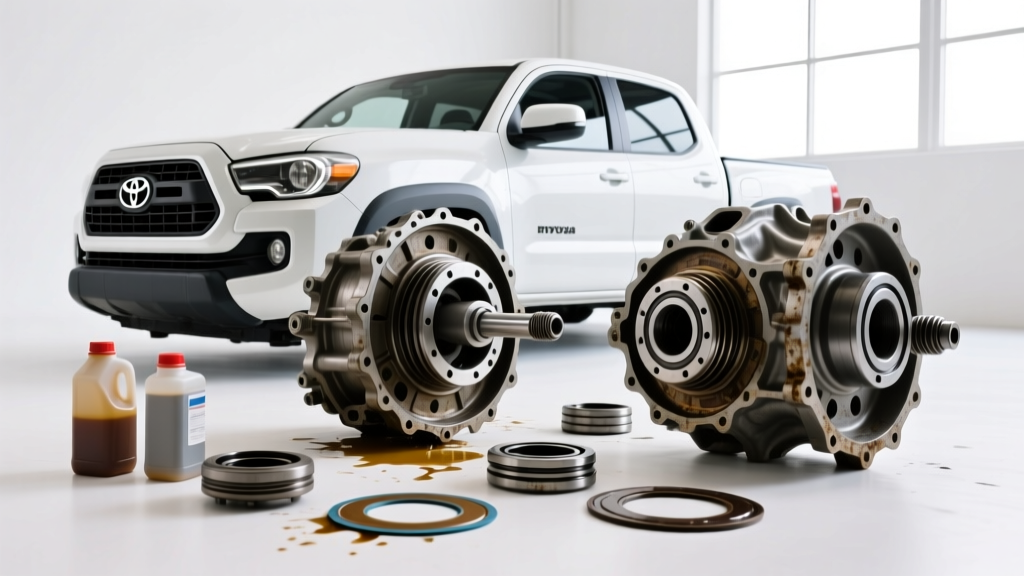
The 3rd generation Toyota Tacoma (2016–2023) is a cornerstone of the mid-size truck market, renowned for its robust part-time 4WD system. However, as these trucks accumulate mileage and endure off-road abuse, drivetrain seepage becomes a common grievance. When owners notice gear oil spotting on the driveway, it is the perfect opportunity to combine leak diagnosis with a comprehensive front and rear differential fluid change. Addressing seal failures before they lead to catastrophic gear starvation is critical for the longevity of your ring and pinion sets.
Before draining a single drop of fluid, a proper diagnosis is required. Differential leaks on the Tacoma typically manifest in three primary zones: the rear pinion seal, the rear axle shaft seals, and the front differential drain/fill plugs or CV axle seals. In 2026, professional drivetrain technicians increasingly rely on thermal imaging cameras alongside traditional UV dye to pinpoint the exact origin of gear oil seepage, as road grime and undercarriage splash can easily mask the true leak source.
Common Failure Points: Rear 8.0" vs. Front 7.5"
- Rear 8.0" Drop-Out Differential: The most frequent culprit is the rear pinion seal (Toyota P/N 90311-47027). High operating temperatures and driveline vibration cause the viton lip to harden and weep. Secondary leaks occur at the rear axle seals (Toyota P/N 90316-A0001), often exacerbated by worn wheel bearings or scored axle shafts.
- Front 7.5" Clamshell Differential: The front independent differential features an aluminum housing. Leaks here are commonly traced to the front axle seals (Toyota P/N 90316-80004) or, more frequently, seepage past the factory crush washers on the drain and fill plugs due to improper torque or thermal cycling.
Rear Differential Pinion Seal Replacement Procedure
Replacing the rear pinion seal is a precision task. The Tacoma's rear differential utilizes a collapsible spacer to set bearing preload. If you over-tighten the pinion nut, you will crush the spacer further, destroying the bearing preload and necessitating a complete differential rebuild.
Critical Warning: Never use an impact wrench to remove or install the rear pinion nut without first measuring rotational torque. According to factory service data via Toyota TechInfo, failing to match the original preload will result in rapid pinion bearing failure and whining noises under load.
Step-by-Step Pinion Seal R&R
- Measure Rotational Torque: With the rear wheels off the ground and the transmission in neutral, use an inch-pound beam-style torque wrench on the pinion nut. Record the rotational torque required to turn the pinion (typically between 8 to 14 in-lbs for used bearings).
- Mark and Remove: Use a paint pen to mark the exact position of the pinion nut relative to the pinion shaft threads. Unstake the nut using a cold chisel and remove it with a heavy-duty pinion flange holding tool.
- Extract and Install: Pry out the old seal. Before installing the new Toyota P/N 90311-47027 seal, pack the lip with multi-purpose grease to prevent dry-start scoring. Tap it in flush using a dedicated seal driver.
- Re-torque to Mark: Reinstall the flange and nut. Tighten the nut to your original paint marks, then check the rotational torque. Tighten in 5 ft-lb increments until your recorded inch-pound preload is achieved. Stake the new nut.
Front Differential Leak Repair and Thread Preservation
The front 7.5" differential on the Tacoma is a clamshell design bolted to the engine crossmember. Because the housing is cast aluminum, the threads for the drain and fill plugs are highly susceptible to stripping if over-torqued or cross-threaded during previous services. If you are performing a front and rear differential fluid change and notice stripped threads on the front diff, you must install a helicoil or upgrade to an oversized Fumoto valve setup to ensure a leak-free seal.
For front axle seal leaks, the repair requires dropping the front skid plate, draining the differential, and pulling the CV axle assembly. The inner tripod joint must be carefully extracted from the differential side gears to avoid damaging the internal snap rings. Always inspect the CV axle seal surface for deep grooves; if a groove is present, a speedi-sleeve must be installed, or the axle shaft must be replaced to prevent immediate recurrence of the leak.
Executing the Front and Rear Differential Fluid Change
Once all leaks are rectified, the final step is refilling the axles with the correct lubricant. The API Gear Oil Classifications mandate the use of GL-5 rated fluids for hypoid gear sets found in the Tacoma, as the extreme pressure (EP) additives are required to protect the sliding friction of the ring and pinion teeth.
Fluid Selection: E-Locker vs. Open Differential
A common misconception in the off-road community is the need for friction modifiers. If your Tacoma is equipped with the factory electronic locking rear differential (E-Locker), you do not need a limited-slip friction modifier additive. Friction modifiers are designed for clutch-pack LSDs (like the TRD Sport models). Adding them to an E-Locker or Open differential can actually reduce the protective film strength of the gear oil. A high-quality 75W-85 or 75W-90 GL-5 synthetic gear oil is all that is required.
Capacities, Torque Specs, and Service Data
The following table outlines the exact specifications required to complete the service without damaging the housings or under-filling the gears.
| Component | Fastener Size | Torque Specification | Fluid Capacity |
|---|---|---|---|
| Rear Diff Drain / Fill Plug | 24mm Hex | 36 ft-lbs (49 Nm) | 3.2 Quarts (3.0L) |
| Front Diff Drain / Fill Plug | 24mm Hex | 29 ft-lbs (39 Nm) | 1.6 Quarts (1.5L) |
| Rear Pinion Nut (30mm) | Preload Dependent | Match Preload + 3-4 in-lbs | N/A |
The Fill Procedure
Always remove the fill plug first before removing the drain plug. This golden rule of differential service ensures that if your fill plug is seized or stripped, you haven't just stranded your truck with an empty axle. After draining the old oil and inspecting the magnetic drain plugs for excessive metallic paste (a small amount of fine glitter is normal for hypoid gears; chunks are not), reinstall the drain plugs using brand-new aluminum crush washers (Toyota P/N 90430-24003).
Pump the new 75W-90 GL-5 synthetic gear oil into the fill holes until the fluid begins to weep out of the bottom edge of the fill port. For the rear differential, this is exactly 3.2 quarts. For the front, it is 1.6 quarts. Wipe down the housings with brake cleaner to remove any spills, which will make future leak detection significantly easier.
Cost Breakdown: Dealership vs. Driveway DIY (2026 Estimates)
Understanding the financial implications of drivetrain maintenance helps owners make informed decisions. Based on current market rates and parts pricing discussed extensively on the TacomaWorld 3rd Gen Forum, here is what you can expect to pay:
- Dealership Front and Rear Differential Fluid Change: $250 – $350. (Dealerships typically use bulk 75W-85 GL-5 and charge 1.5 hours of labor. They rarely include a deep-clean or rotational torque check).
- Independent 4x4 Shop Leak Diagnosis & Seal R&R: $450 – $700. (Includes rear pinion seal replacement, new crush washers, and synthetic fluid refill).
- DIY Driveway Service: $80 – $120. (Covers 5 quarts of premium synthetic GL-5 gear oil, 4 new OEM crush washers, and brake cleaner. Assumes you already own a 24mm socket, torque wrench, and fluid pump).
By taking a methodical approach to leak detection and adhering strictly to factory torque specifications, you can ensure your Tacoma's axles remain sealed, lubricated, and ready for the trail for hundreds of thousands of miles.