The Hidden Thermal Battle in Heavy-Duty Differentials
When you push a modern heavy-duty truck or a heavily modified SUV to its limits—whether towing a 14,000-pound fifth-wheel up a 6% grade or crawling through deep mud on 40-inch tires—the drivetrain generates immense heat. While most enthusiasts obsess over gear ratios, locker types, and axle shaft spline counts, the true unsung hero of drivetrain longevity is the chemical stability of the gear oil. In the high-stakes world of performance truck and SUV differential maintenance, relying on marketing claims is no longer sufficient. Instead, tribologists and lubricant engineers rely on a rigorous scientific method known as differential scanning calorimetry DSC testing to separate premium synthetic fluids from conventional mineral oils that will quickly fail under extreme thermal stress.
As we navigate the 2026 landscape of heavier trucks, increased aerodynamic drag, and higher factory torque outputs from engines like the Duramax L5P and Ford's 6.7L PowerStroke, understanding the thermal limits of your differential fluid is critical. This guide explores the science behind DSC testing, how thermal degradation destroys heavy-duty axles, and how to use this data to execute a performance-oriented differential upgrade.
What is Differential Scanning Calorimetry DSC Testing?
At its core, differential scanning calorimetry (DSC) is a thermoanalytical technique used to measure the difference in the amount of heat required to increase the temperature of a sample and a reference as a function of temperature. In the context of automotive lubricants, Machinery Lubrication notes that DSC testing is the gold standard for evaluating the oxidation stability and thermal breakdown point of gear oils.
When a gear oil is subjected to high temperatures in the presence of oxygen, it oxidizes. This chemical reaction forms sludge, varnish, and acidic byproducts that corrode precision-machined ring and pinion gears. DSC testing measures two critical metrics:
- Oxidation Induction Time (OIT): Following standards like ASTM D6186, the fluid is heated to a constant high temperature (often 180°C to 210°C) in an oxygen-rich environment. OIT measures the exact number of minutes it takes for the fluid's antioxidant additive package to deplete and rapid oxidation to begin.
- Onset Temperature: The fluid is heated at a constant rate. The onset temperature is the exact point where the chemical bonds of the basestock begin to break down and release exothermic heat, signaling catastrophic thermal failure.
For truck owners running Dana 60, Dana S110, or AAM 11.5-inch axles, these metrics dictate whether a fluid will survive a grueling mountain tow or turn into a corrosive sludge that destroys pinion bearings.
DSC Metrics: Conventional vs. Premium Synthetic 75W-90
To understand why performance upgrades require premium synthetic gear oils, we must look at the basestock chemistry. Conventional oils use Group I or Group II mineral basestocks, which contain impurities and irregular molecular structures that oxidize rapidly. Premium synthetics utilize Group IV Polyalphaolefins (PAO) or advanced Group V Esters, which offer uniform molecular chains and superior thermal resistance.
| Fluid Type | Basestock Group | DSC Onset Temp (°C) | OIT at 200°C (Minutes) | Thermal Volatility (NOACK) |
|---|---|---|---|---|
| Standard Conventional 75W-90 | Group II (Mineral) | 165°C - 175°C | 12 - 18 mins | 15% - 20% |
| Hydrocracked 'Synthetic Blend' | Group III | 190°C - 205°C | 35 - 45 mins | 8% - 12% |
| Premium PAO Synthetic (e.g., Amsoil/Red Line) | Group IV / V (PAO/Ester) | 230°C - 250°C+ | 85 - 120+ mins | < 4% |
As the data illustrates, a true Group IV PAO synthetic gear oil can withstand temperatures up to 50°C higher before the basestock itself begins to oxidize. Furthermore, the OIT is exponentially longer, meaning the extreme pressure (EP) additives—crucial for protecting hypoid gear sets—remain active far longer under severe towing conditions.
How Thermal Degradation Destroys Truck Axles
Why does this chemical data matter in the real world? When gear oil exceeds its thermal onset point, the consequences for your truck's differential are immediate and expensive.
'Thermal degradation doesn't just reduce viscosity; it actively transforms the lubricant into an abrasive and corrosive compound. The sulfur-phosphorus EP additives, designed to protect the ring and pinion under boundary lubrication, precipitate out of the fluid and form hard, abrasive particulates that score pinion bearings and accelerate gear wear.' — SAE International Drivetrain Tribology Papers
In heavy-duty applications, the pinion bearing is the most vulnerable component. It spins at driveshaft speed (often 2,500+ RPM on the highway) and handles the immense thrust load of the hypoid gear mesh. If the gear oil oxidizes and forms varnish, it restricts oil flow to the pinion bearings. The resulting localized heat spikes cause the bearing cages to fail, leading to catastrophic loss of pinion preload, excessive gear lash, and ultimately, a shattered ring gear.
The Performance Upgrade Guide: Fluids, Capacities, and Torque Specs
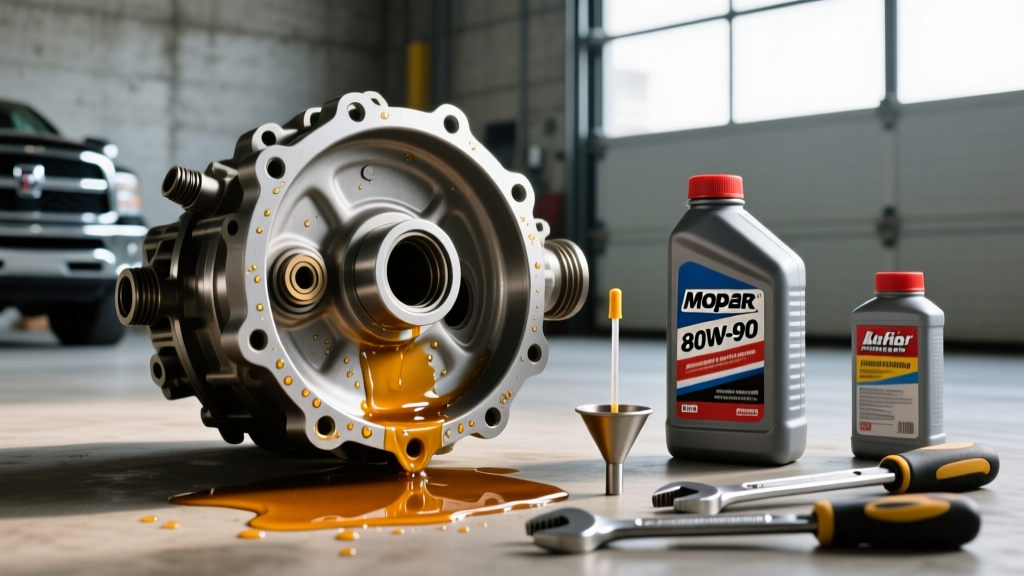
Upgrading your truck or SUV's differential fluid is one of the highest-ROI performance modifications you can perform. However, it must be done with precision. Improper torque specs on differential covers can lead to warping and leaks, while overfilling can cause fluid aeration and churning losses, which paradoxically generate more heat.
Top-Tier Fluid Recommendations
Based on DSC testing parameters and real-world fleet data, the following fluids are recommended for severe-duty truck and SUV applications:
- Amsoil Severe Gear 75W-90: Exceptional PAO basestock with a massive OIT reserve. Ideal for continuous heavy towing.
- Red Line 75W90 Gear Oil: Polyol ester and PAO blend. Offers incredible film strength for off-road shock loading and rock crawling.
- Royal Purple Max Gear 75W-90: Features proprietary Synerlec additive technology for excellent friction modification and heat dissipation.
Heavy-Duty Axle Service Specifications
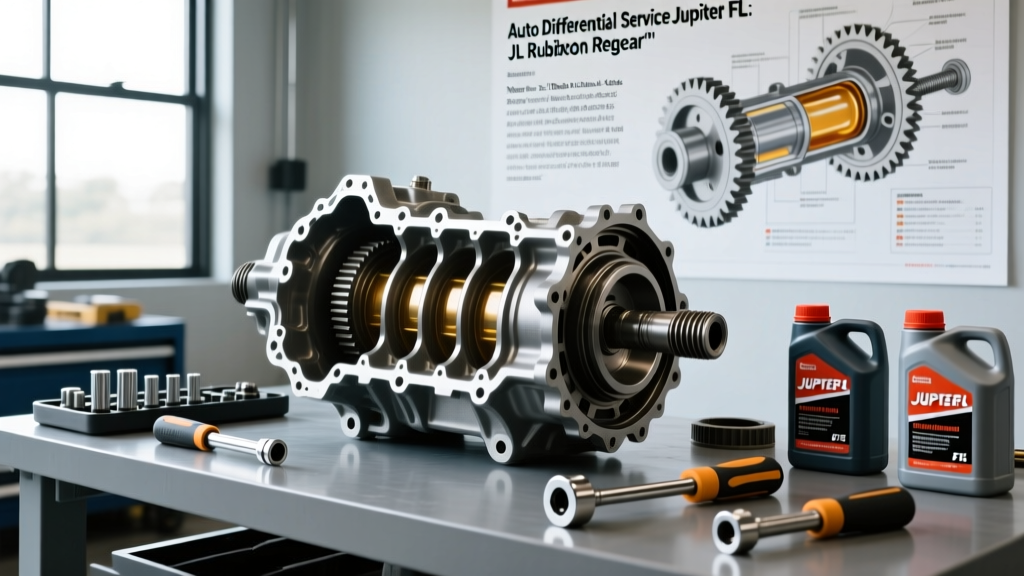
When performing a differential fluid swap, always adhere to OEM torque specifications to prevent housing distortion. Below are the specs for the most common heavy-duty truck axles:
- Dana 60 / Dana 70 (Front & Rear):
- Fluid Capacity: 3.5 to 4.0 Quarts (verify fill plug level)
- Cover Bolt Torque: 30 - 35 lb-ft (Use a star-pattern sequence)
- Fill Plug Torque: 25 - 35 lb-ft
- AAM 11.5-Inch (GM Heavy Duty Rear):
- Fluid Capacity: 3.5 Quarts
- Cover Bolt Torque: 25 lb-ft
- Fill Plug Torque: 25 lb-ft
- Ford 10.5-Inch Sterling (Super Duty Rear):
- Fluid Capacity: 3.7 Quarts
- Cover Bolt Torque: 30 - 35 lb-ft
- Fill Plug Torque: 35 lb-ft
Pro Tip: If your truck is equipped with an aftermarket differential cover (e.g., AFE, Mag-Hytec) featuring cooling fins and extra capacity, ensure you account for the additional volume. Always fill until the fluid is level with the bottom of the fill plug hole, unless the aftermarket manufacturer specifies a different level for modified suspension geometries.
Optimizing Your Truck's Differential Maintenance Interval
Most OEM manuals suggest differential fluid changes every 100,000 to 150,000 miles under 'normal' driving conditions. However, 'normal' rarely applies to lifted SUVs, off-road rigs, or trucks used for towing. The ASTM D6186 data on oxidation induction proves that under severe thermal cycling, the antioxidant packages in even the best synthetic fluids begin to deplete much earlier.
For performance-oriented trucks and SUVs, adopt the following severe-service maintenance intervals:
- Dedicated Tow Vehicles (Frequent >8,000 lb loads): Change differential fluid every 30,000 to 50,000 miles, or annually.
- Off-Road / Rock Crawling (High shock load, water intrusion risk): Change fluid every 15,000 miles, or immediately after any event where the axle is submerged in water (water contamination bypasses DSC thermal metrics and causes immediate emulsification and rust).
- Daily Driven / Light Duty: Change premium synthetic fluid every 60,000 to 80,000 miles.
By understanding the science of differential scanning calorimetry DSC testing, truck and SUV owners can look past flashy marketing labels and make data-driven decisions about their drivetrain fluids. Upgrading to a high-OIT, Group IV synthetic gear oil and adhering to strict, torque-spec-compliant maintenance intervals ensures that your ring and pinion gears, bearings, and axle shafts survive the extreme thermal battles of heavy-duty performance driving.