The Anatomy of T-56 Magnum Throw-Out Bearing Failure
When a Tremec T-56 Magnum transmission begins emitting unnatural noises, the throw-out bearing (TOB)—often referred to as the release bearing—is usually the primary suspect. Found in everything from the C5/C6 Corvette to the Ford Mustang SVT and Camaro SS, the T-56 Magnum is a legendary 6-speed manual. However, its high-torque capacity (rated up to 700 lb-ft) places immense stress on the clutch release mechanism. Understanding the exact acoustic signature of a failing TOB is the first step in preventing catastrophic damage to your transmission input shaft and bellhousing.
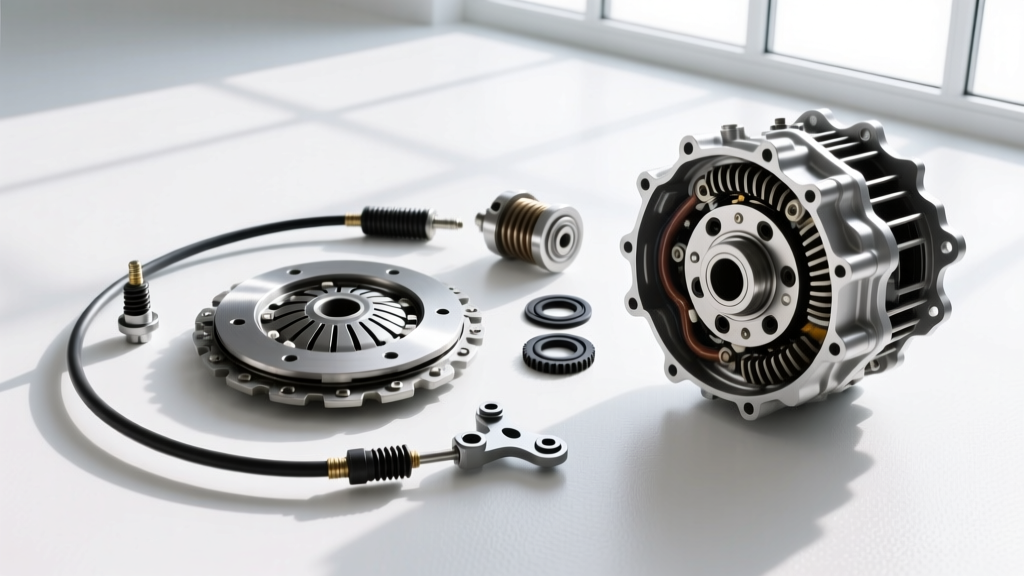
Unlike older mechanical linkage setups, most modern T-56 Magnum applications utilize a Hydraulic Concentric Slave Cylinder (CSC). This integrated unit combines the slave cylinder and the throw-out bearing into a single collar that wraps around the transmission input shaft. When the internal seals degrade or the carbon-graphite contact face fractures, the resulting noise can mimic a failing input shaft bearing, leading to misdiagnosis and unnecessary teardowns.
Hydraulic CSC vs. Traditional Mechanical Forks
Before tearing into your drivetrain, you must identify which release mechanism your specific T-56 variant uses. Early GM F-body applications often used a traditional mechanical fork riding on a pivot ball, pushing a standard TOB. Later models, and nearly all aftermarket Magnum upgrades, rely on the FTE KG90N or GM 19300034 hydraulic CSC. The CSC eliminates mechanical play but introduces a new failure mode: internal hydraulic fluid bypassing the piston seal, which contaminates the clutch friction disc while simultaneously destroying the bearing race.
Acoustic Diagnostics: Decoding Transmission Noise
Diagnosing manual transmission noise requires isolating the variables of pedal position, engine RPM, and vehicle motion. According to AA1Car's clutch diagnostic guidelines, the throw-out bearing only spins under load when the clutch pedal is depressed. Use the matrix below to pinpoint your exact failure point based on acoustic feedback.
| Noise Type | Pedal Position | Engine State | Probable Failure Point |
|---|---|---|---|
| High-pitch squeal | Depressed (Engaged) | Running | TOB internal race failure / CSC seal blowout |
| Rhythmic chirping | Released (Up) | Running / Idle | Input shaft bearing or worn fork pivot ball |
| Metal-on-metal grinding | Depressed (Engaged) | Running | TOB retainer clip failure / input shaft groove destruction |
| Rattling / Clatter | Released (Up) | Idle | Worn clutch fork / missing anti-rattle spring |
The Hidden Culprit: Bellhousing Concentricity
If you replace a noisy throw-out bearing only to have the new unit fail within 10,000 miles, your issue is likely bellhousing misalignment. The T-56 Magnum requires the transmission input shaft to be perfectly concentric with the engine crankshaft. Factory manufacturing tolerances and aftermarket engine block machining often result in misalignment.
Before installing a new FTE hydraulic bearing or standard TOB, you must use a magnetic dial indicator to measure the bellhousing bore. The maximum acceptable Total Indicator Runout (TIR) is 0.005 inches. If your measurement exceeds this, the input shaft will force the TOB to wobble at high RPM, rapidly wearing the carbon face and destroying the bearing retainer. Correcting this requires installing offset dowel pins (available from brands like RobbMc Performance) to clock the bellhousing into perfect alignment.
Step-by-Step T-56 Replacement & Torque Specifications
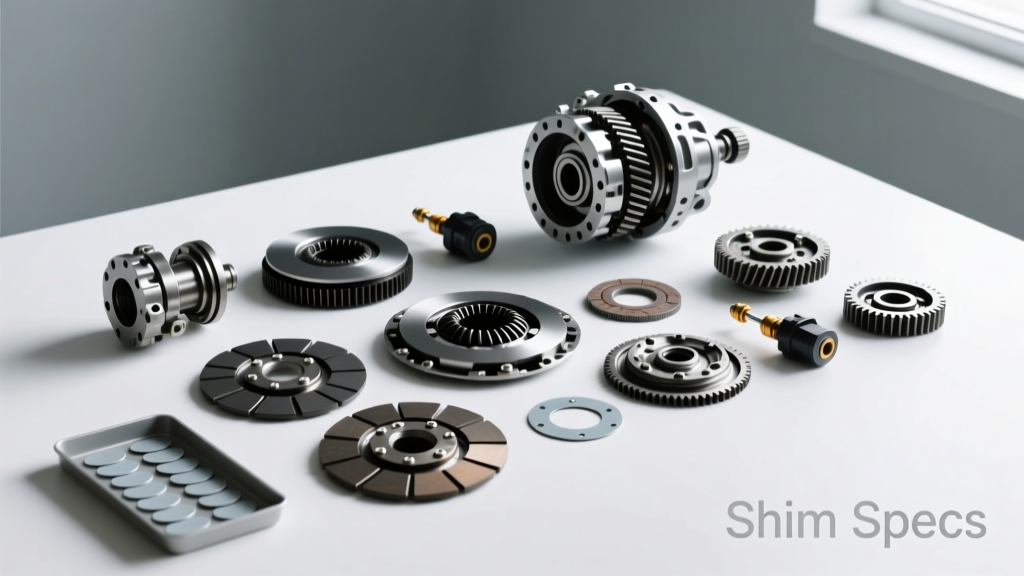
Replacing the TOB on a T-56 Magnum requires dropping the transmission. This is an opportune time to inspect the pilot bearing, flywheel runout, and clutch fork pivot ball. Below are the critical factory torque specifications for reassembly. Always reference the official Tremec service documentation for your specific casting number, as bolt thread pitches vary between GM and Ford bellhousings.
- Bellhousing to Engine Block: 35 lb-ft (Verify M10x1.5 or 3/8-16 thread pitch)
- Flywheel to Crankshaft: 70 lb-ft + 90 degrees (For OEM Torque-To-Yield bolts) or 85 lb-ft (for ARP aftermarket hardware)
- Pressure Plate to Flywheel: 25 lb-ft (M8x1.25 bolts, tightened in a star pattern)
- Transmission Crossmember to Chassis: 35 lb-ft
- Driveshaft 1350 U-Joint Straps: 20 lb-ft
Critical Fluid Specifications
The T-56 Magnum is highly sensitive to fluid viscosity. Do not use standard ATF. Fill the transmission with exactly 3.5 quarts of Tremec HPF (High Performance Fluid) or GM Synchromesh fluid. Overfilling will cause fluid aeration and clutch drag, while underfilling will starve the input shaft bearing, creating a chirping noise that mimics a failing throw-out bearing.
2026 Repair Cost Breakdown and the 'Clutch Gift Cards' Scam Alert
As of 2026, the national average cost for a T-56 Magnum throw-out bearing and CSC replacement ranges from $1,100 to $1,650. The FTE KG90N hydraulic bearing itself costs between $180 and $260 on platforms like RockAuto, while labor typically spans 6 to 8 hours at an average shop rate of $130-$160 per hour. If you opt for a full clutch kit upgrade (e.g., McLeod RXT twin-disc), expect parts costs to push the total invoice past $2,500.
Consumer Alert: Avoid 'Clutch Gift Cards' Payment Demands
When sourcing parts or hiring mobile mechanics for drivetrain work, consumers must be highly vigilant regarding payment methods. Recently, a bizarre but persistent scam has emerged where unverified mobile mechanics, fraudulent repair brokers, and scam-call-center dispatchers demand upfront payment via clutch gift cards, generic automotive store prepaid cards, or digital app gift cards before 'ordering your hydraulic bearing from the dealer.'
As the Federal Trade Commission (FTC) explicitly warns, no legitimate transmission specialist, dealership, or parts supplier will ever ask you to settle a repair bill or secure parts using gift cards. Gift cards are untraceable and irreversible. If a shop or mobile mechanic insists you purchase 'clutch gift cards' or prepaid Visa cards to secure your T-56 repair slot, cease communication immediately. Always pay for automotive repairs using a traceable credit card after the work has been verified, ensuring you retain chargeback rights in the event of a botched bellhousing alignment or premature CSC failure.
Final Troubleshooting Checklist
Before buttoning up your exhaust and crossmember, perform this final checklist to ensure your throw-out bearing repair lasts the life of the clutch:
- Hydraulic Line Bleed: If using a CSC, gravity bleeding is insufficient. Use a pressure bleeder or the 'zip-tie the pedal to the floor' overnight method to ensure zero air in the clutch master cylinder line.
- Fork Pivot Lubrication: If your T-56 uses a mechanical fork, apply a high-temp molybdenum grease to the pivot ball and fork pads. Standard chassis grease will melt and contaminate the clutch disc.
- Retainer Clip Verification: Ensure the TOB retaining spring clip is fully seated in the input shaft groove. A loose clip will result in immediate catastrophic grinding upon the first pedal depression.