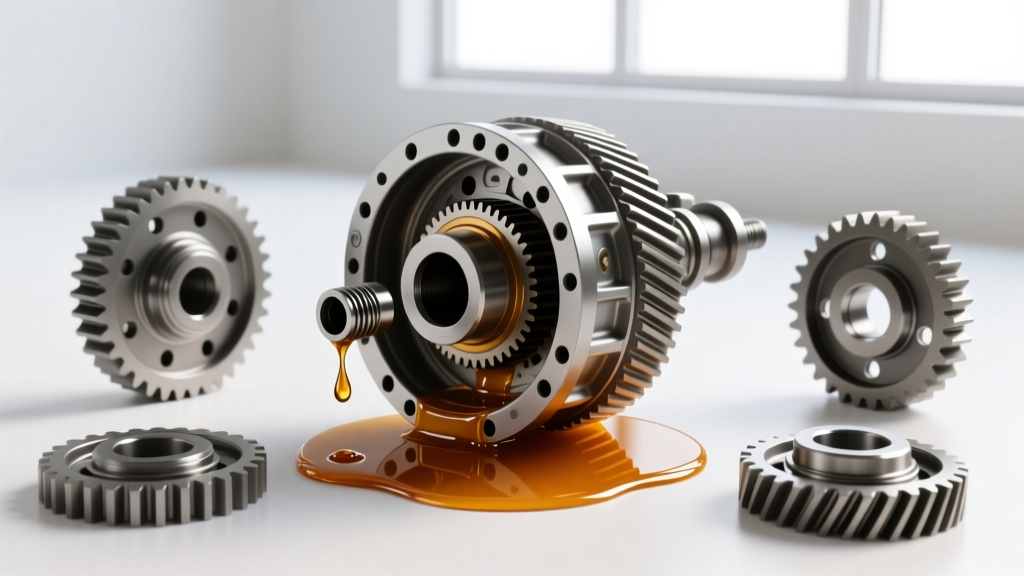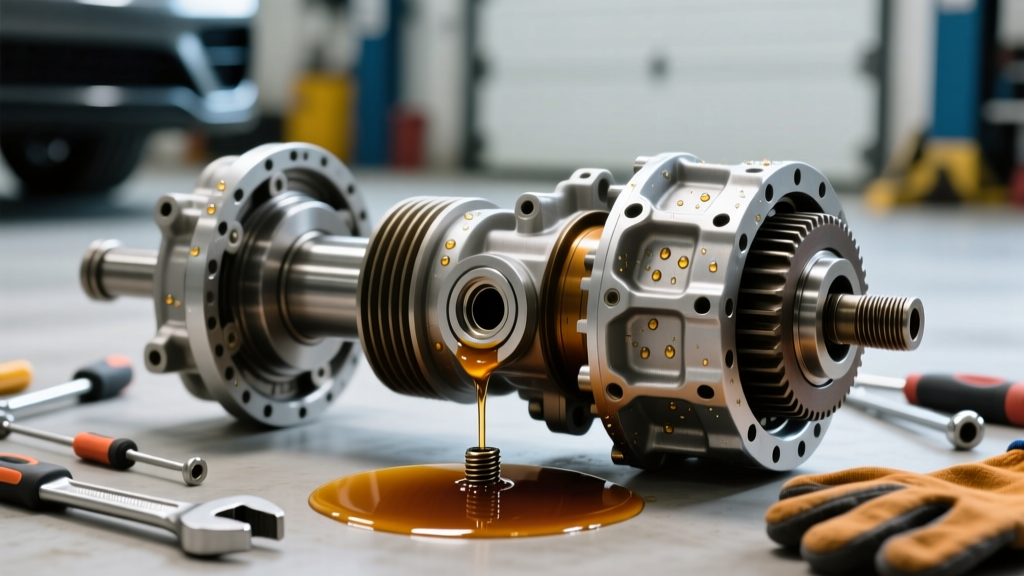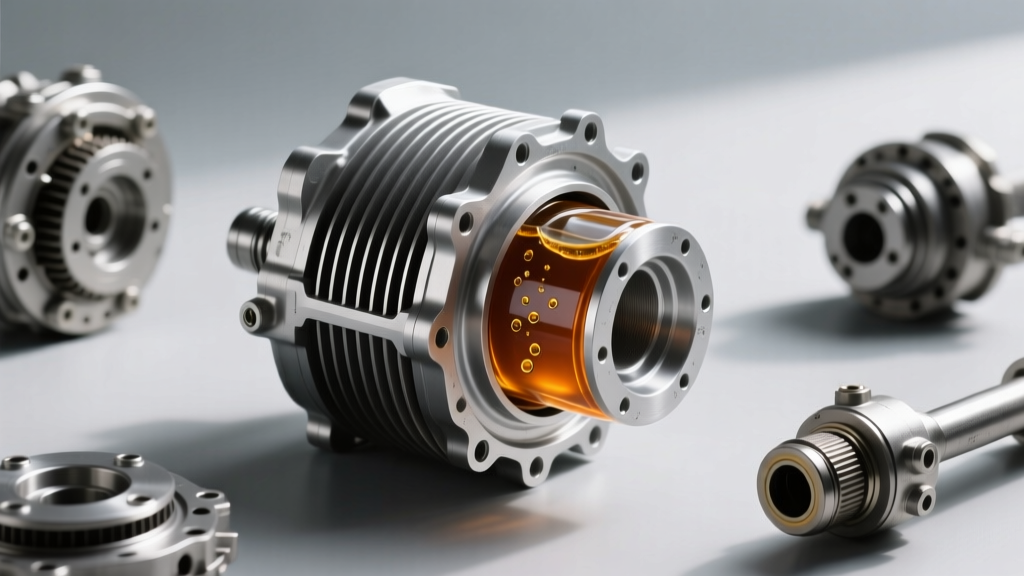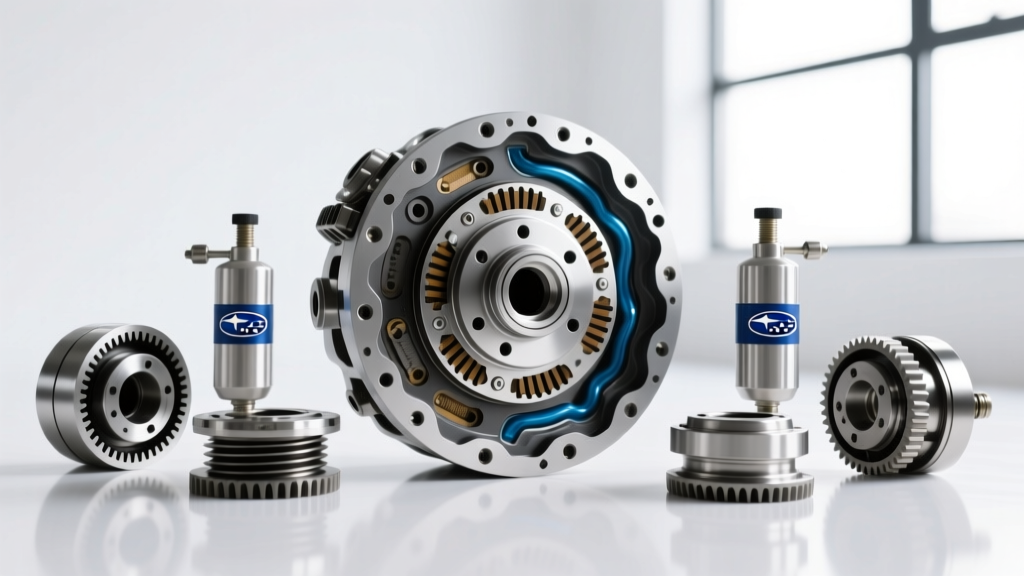
The Weak Link in Symmetrical AWD: Why Upgrade?
Subaru’s Symmetrical All-Wheel Drive system is a benchmark in the performance world, but the factory rear differential often becomes the primary bottleneck when horsepower levels rise or when vehicles are pushed on loose surfaces. Whether you are campaigning a GD-chassis WRX in time attack, rallying a GR STI, or simply trying to put 400+ wheel horsepower to the pavement in a 2026 VB-generation WRX, understanding your Subaru rear differential options is critical.
From the factory, non-STI models typically feature an open rear differential, while STI models utilize a Torsen-style or viscous limited-slip differential (LSD). While the OEM Torsen unit is excellent for predictable street driving, it suffers from a fatal flaw in aggressive motorsport: if one rear wheel lifts off the ground or loses all traction, the Torsen unit behaves like an open differential, sending zero torque to the grounded wheel. To solve this, the aftermarket offers specialized locking differential types tailored to specific performance applications.
Locking Differential Types for Subaru Platforms
Selecting the right locker requires matching the differential's internal mechanics to your specific driving discipline. The Subaru R160 (found in most WRX and early STI models) and R180 (found in late-model STIs and heavy-duty applications) differentials have robust aftermarket support.
Clutch-Type Limited Slip Differentials (1-Way, 1.5-Way, 2-Way)
Clutch-type LSDs use internal ramp angles and friction clutch packs to lock the axles together under load. They are the gold standard for circuit racing, time attack, and aggressive drifting.
- 1-Way: Locks only under acceleration. Ideal for front-wheel drive or vehicles that need stable braking characteristics, but rarely used in Subaru rear diffs.
- 1.5-Way: Locks fully under acceleration and partially under deceleration. The most popular choice for track-driven Subarus, providing trail-braking stability without causing excessive snap-oversteer on corner entry.
- 2-Way: Locks equally under acceleration and deceleration. Preferred for drifting and rally applications where maximum rear-end stability and slip angle control are required.
Top Tier Options: The Cusco Type RS is a budget-friendly 1.5-way or 2-way option utilizing cross-cut slits for smoother engagement. For elite motorsport, the OS Giken Super Lock uses a radial slit design allowing up to 14 friction plates in the R160 housing, providing immense locking torque with minimal chatter.
Helical / Torsen-Style Gear Differentials
Helical LSDs, like the renowned Quaife ATB (Automatic Torque Biasing), use helical cut gears rather than clutch packs. They provide infinite torque biasing without the wear, maintenance, or harsh chatter associated with clutch discs. The Quaife unit will seamlessly transfer torque to the wheel with grip, making it phenomenal for street performance, hill climbs, and tarmac rally. However, if a wheel lifts entirely off the ground, you must 'drag' the brake on the lifted side to create enough resistance for the helical gears to bias torque to the grounded wheel.
Spool and Welded Differentials
A spool physically locks both rear axles together permanently, ensuring a 50/50 torque split at all times. While this guarantees maximum forward bite in drag racing, it causes severe driveline bind, tire chirping, and premature CV joint failure on the street or in cornering scenarios. Welded differentials are a budget drag-racing alternative but are highly prone to cracking the ring gear or spider gears under shock loads.
Application Matrix: Selecting the Right Locker
| Discipline | Recommended Type | Top Brand / Model | Locking Behavior | Est. Price (2026) |
|---|---|---|---|---|
| Time Attack / Circuit | Clutch (1.5-Way) | Cusco Type RS / OS Giken | High lock on accel, moderate on decel | $850 - $1,600 |
| Rally / Drift | Clutch (2-Way) | OS Giken Super Lock | High lock on accel and decel | $1,400 - $1,800 |
| Street / Tarmac Rally | Helical (ATB) | Quaife ATB / Perrin | Torque biasing, no hard lock | $1,100 - $1,300 |
| Drag Racing | Spool | Aftermarket Billet Spool | 100% Locked Permanently | $300 - $500 |
The Critical Role of Differential Fluid in LSD Performance
Because an upgrade to your Subaru rear differential fundamentally changes the internal friction dynamics, treating this upgrade as a 'diff-fluid' project is paramount. The wrong gear oil will cause clutch-type LSDs to chatter violently, overheat, and prematurely destroy the friction discs.
Fluid Selection by Differential Type
For Clutch-Type LSDs (Cusco, OS Giken, Kaaz):
You require a high-shear GL-5 gear oil with specialized friction modifiers designed for limited-slip applications. Motul Gear 300 75W-90 is the benchmark for clutch-type diffs, offering exceptional thermal stability and the exact friction coefficient required for smooth clutch pack engagement. Alternatively, Red Line 75W-90 ShockProof contains a solid-film dispersant that cushions the clutch packs under the massive shock loads of AWD launches.
For Helical / Torsen Diffs (Quaife, OEM STI):
Helical diffs do not contain clutch packs and do not require friction modifiers. In fact, friction modifiers can reduce the efficiency of the helical gear biasing. Use a standard GL-5 fluid without LSD additives, such as Red Line 75W-90 NS (No Slip) or Amsoil Severe Gear 75W-90.
Expert Warning: Never use standard OEM Subaru Extra-S 75W-90 in an aftermarket clutch-type LSD. The OEM fluid lacks the necessary extreme pressure (EP) additives and friction modifiers to handle the localized heat generated by aftermarket clutch packs, leading to rapid glazing and failure.
Installation, Torque Specs, and Gear Setup
Upgrading the Subaru rear differential is not a simple 'drop-in' procedure. The ring gear must be removed from the factory carrier and installed onto the new LSD unit. This requires precision measurement and adherence to strict torque specifications to prevent catastrophic gear failure.
Ring Gear Fasteners and Torque
Subaru’s OEM ring gear bolts are often Torque-To-Yield (TTY) stretch bolts. When upgrading to a high-horsepower clutch locker, it is highly recommended to discard the OEM bolts and use an aftermarket fastener kit, such as the ARP Ring Gear Bolt Kit (typically part number 200001 or chassis-specific equivalents).
- OEM Bolt Torque: ~76 lb-ft (Yield limit).
- ARP 2000 Series Torque: 85 lb-ft to 95 lb-ft (using ARP Ultra-Torque lubricant on the threads and under the bolt head).
- Thread Prep: If reusing OEM bolts (not recommended for >350whp), apply medium-strength Loctite 243 and torque to 76 lb-ft.
Backlash and Pattern Verification
When mating the ring gear to the new LSD carrier, you must verify the backlash and gear contact pattern.
- Target Backlash: 0.005 to 0.007 inches (measured with a dial indicator at three equidistant points on the ring gear).
- Contact Pattern: Apply yellow gear marking compound. The pattern should be centered on the tooth face, slightly biased toward the heel under load. If the pattern is on the toe or root, you must adjust the pinion depth shim and side bearing preload shims accordingly.
Drain and Fill Plug Maintenance
The R160 and R180 housings utilize standard drain and fill plugs. Always remove the fill plug first to ensure you can actually refill the differential before draining it.
- Tool: 1/2-inch square drive or 14mm/17mm hex (depending on year and housing).
- Torque Spec: 32 to 36 lb-ft for the drain and fill plugs. Always replace the crush washers to prevent weeping.
- Capacity: Most Subaru rear differentials hold between 0.8 to 1.2 quarts (approx. 0.8 to 1.1 liters), depending on the specific housing and whether an aftermarket finned cover is installed.
Conclusion: Maximizing Your AWD Potential
Upgrading your Subaru rear differential transforms the vehicle's dynamic capabilities, translating the symmetrical AWD system's theoretical advantages into actual forward momentum. By carefully selecting between clutch-type, helical, or spool lockers based on your specific motorsport needs, and pairing that hardware with the exact specification of differential fluid and precision installation tolerances, you ensure a drivetrain capable of surviving the rigors of modern performance driving. Whether you are navigating the stages of a rally or attacking the apexes of a road course, the right rear differential is the cornerstone of Subaru performance.