The Anatomy of Rear Differential Fluid Degradation
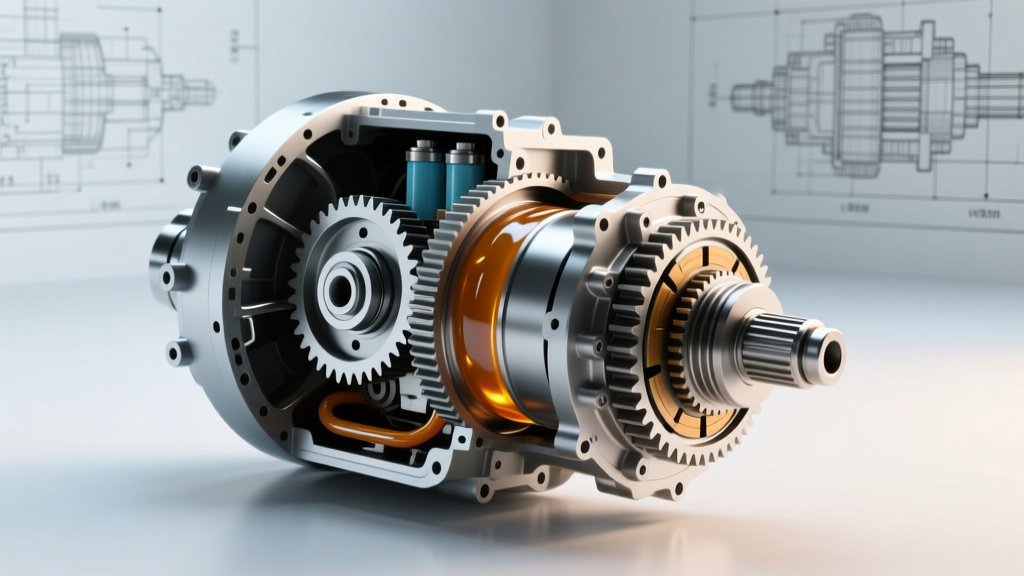
The hypoid gear set found in virtually all modern solid rear axles operates under extreme sliding friction and immense shear forces. Unlike the rolling friction in standard spur gears, the pinion gear in a rear differential intersects the ring gear below its centerline, creating a wiping motion that requires specialized Extreme Pressure (EP) additives—typically zinc, phosphorus, and sulfur compounds. When checking differential fluid on a high-mileage truck or SUV, you are not just verifying a volume level; you are analyzing the chemical and mechanical health of the entire rear drivetrain.
As of 2026, modern synthetic 75W-140 and 75W-90 gear oils offer vastly superior thermal stability compared to conventional 80W-90 mineral oils. However, this longevity can sometimes mask underlying mechanical wear. A synthetic fluid might maintain its viscosity despite severe bearing spalling or ring gear pitting. Therefore, a systematic approach to rear differential service and maintenance requires combining physical fluid inspection with auditory and physical symptom diagnosis.
Auditory Diagnostics: Mapping Rear Axle Noises
Before you even put a wrench to the drain plug, the differential will often tell you exactly what is wrong. The load state (acceleration, deceleration, or coasting) changes which side of the hypoid gear teeth are engaged, providing vital clues.
- Whining on Deceleration (Coast Side): This almost always points to a failing pinion bearing or incorrect pinion bearing preload. As the driveshaft pulls the pinion gear, worn bearings allow microscopic deflection, altering the gear mesh pattern.
- Howling on Acceleration (Drive Side): If the noise occurs only under load, suspect ring gear face wear, insufficient gear oil starvation, or incorrect ring and pinion backlash (typically spec'd between 0.005" and 0.009" depending on the axle).
- Clunking on Engagement: A distinct mechanical "clunk" when shifting from Reverse to Drive indicates excessive backlash. This can be caused by worn carrier bearings, a stretched ring gear bolt set, or worn spider gears inside the differential case.
- Chatter During Tight Turns: Specific to Limited-Slip Differentials (LSD), this shudder occurs when the clutch packs bind due to degraded friction modifier additives in the gear oil.
The Golden Rule When Checking Differential Fluid
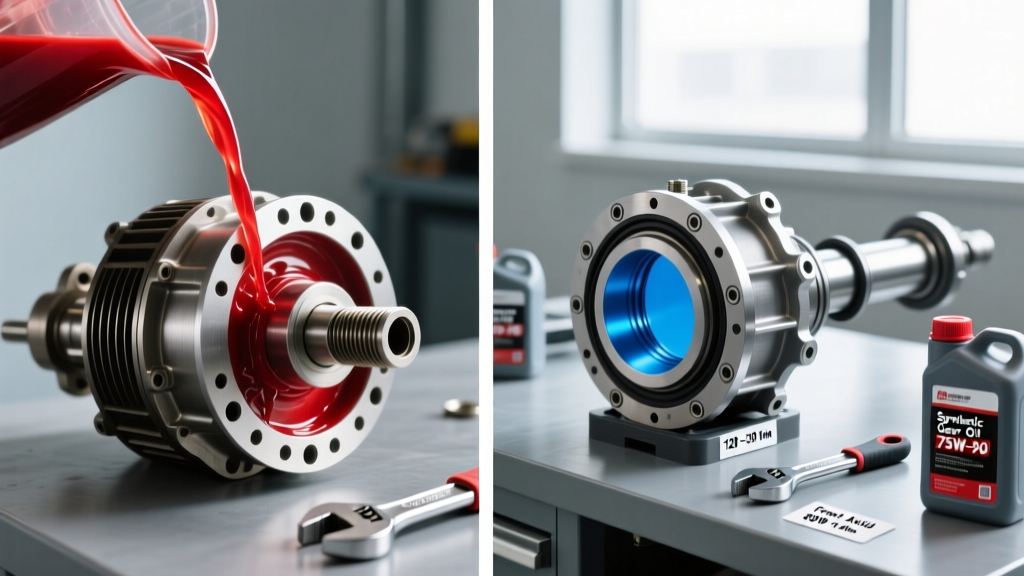
When performing rear differential service, the sequence of bolt removal is critical. Always remove the FILL plug before removing the DRAIN plug or unbolting the differential cover. If you drain the housing or remove the cover first, and subsequently find that the fill plug is seized, corroded, or stripped, you will be left with an empty differential and a stranded vehicle. By removing the fill plug first, you guarantee that you can refill the housing once the service is complete.
Ensure the vehicle is on a perfectly level surface. The fluid level should be exactly flush with the bottom edge of the fill plug hole. For axles without a traditional fill plug (such as some late-model GM 10-bolt axles that rely on a sealed cover with a top dipstick or fill tube), consult the specific OEM service manual for the exact fill volume.
Fluid Condition Diagnostic Matrix
Once the fluid begins to drain or is inspected via the fill hole, use this diagnostic matrix to determine your next mechanical steps. According to Dana Spicer Service Manuals, fluid condition is the most reliable indicator of internal component life.
| Fluid Appearance | Odor | Particulates / Texture | Diagnosis & Action Required |
|---|---|---|---|
| Amber / Translucent | Mild Sulfur | Smooth, clean | Healthy: Reinstall plug to factory torque spec. |
| Dark Brown / Opaque | Acrid / Burnt | Smooth but thick | Thermal Breakdown: Common in heavy towing. Flush, refill with full synthetic 75W-140, and consider an aluminum finned differential cover for increased heat dissipation. |
| Grey / Silver Sheen | Metallic | Fine glitter / paste | Bearing / Gear Wear: Normal break-in if under 10k miles. If high mileage, inspect pinion and carrier bearings for spalling. A full tear-down may be imminent. |
| Chunky / Black | Severe Burnt | Visible metal shards | Catastrophic Failure: Ring and pinion teeth are likely shearing. Do not drive. Requires complete differential rebuild and carrier replacement. |
| Milky / Chocolate Milk | Rancid / Damp | Emulsified | Water Intrusion: Submerged axle or failed pinion/axle seals. Flush with cheap 80W-90, drain, refill with premium synthetic, and replace all compromised seals. |
Rear Differential Service Specifications & Torque Data
Proper torque application is non-negotiable in rear differential service. Over-torquing cover bolts can warp the mating surface, leading to chronic leaks, while under-torquing can result in catastrophic fluid loss under load. Below are the baseline specifications for the most common light-truck and SUV rear axles found on the road today.
| Axle Model | Fluid Capacity | Recommended Viscosity | Cover Bolt Torque | Fill Plug Torque |
|---|---|---|---|---|
| Ford 8.8 / Super 8.8 | 2.5 - 3.0 Pints | 75W-140 Synthetic | 28 - 38 lb-ft | 33 lb-ft |
| Dana 44 (JK/JL/TJ) | 3.5 Pints | 75W-90 / 80W-90 | 30 - 40 lb-ft | 25 - 30 lb-ft |
| GM 9.5" (14-Bolt SF) | 3.0 Pints | 75W-90 Synthetic | 25 - 35 lb-ft | N/A (Top Fill) |
| Toyota 8.0" (Tacoma/4Runner) | 3.2 Pints | 75W-90 GL-5 | 35 - 45 lb-ft | 29 lb-ft |
Note: Always clean the mating surfaces with brake cleaner and use a high-quality RTV silicone (such as Permatex Ultra Black or The Right Stuff) if your axle utilizes a gasketless stamped steel cover. Allow the RTV to skin over for 10 minutes before torquing the cover bolts in a crisscross pattern.
Limited-Slip Additive Requirements
If your rear axle is equipped with a clutch-type Limited-Slip Differential (LSD)—such as the Ford Trac-Lok or Auburn Gear Pro-Series—the base gear oil is not enough. You must add a friction modifier to prevent the clutch packs from grabbing and releasing violently during low-speed cornering. AMSOIL Technical Data Sheets and OEM guidelines typically recommend 4 oz of friction modifier per standard differential fill. However, synthetic oils like AMSOIL Severe Gear or Mobil 1 Synthetic Gear Lube often contain built-in modifiers. If chatter persists after a fluid change with pre-modified synthetic oil, add an additional 2 oz of OEM-specific modifier (e.g., Ford XL-3 or GM 88900338) and perform a series of figure-eight maneuvers in an empty parking lot to burnish the clutch packs.
Edge Cases: When Fresh Fluid Won't Save the Gears
Troubleshooting rear differential issues requires knowing when to stop turning wrenches on the fluid and start turning wrenches on the gears. If you have verified the fluid level, confirmed the correct viscosity, and added the proper LSD modifier, but the axle continues to whine or clunk, the issue is mechanical.
One frequently overlooked culprit is the differential breather valve. Located on the upper axle tube, this one-way valve allows expanding air to escape as the gear oil heats up. If the breather clogs with mud or debris, internal pressure builds up and forces gear oil past the pinion seal or axle seals. If you are repeatedly replacing pinion seals and finding low fluid levels during your differential checks, replace the $5 breather valve before condemning the seals or bearings.
Furthermore, driveline angles heavily influence pinion seal life and bearing wear. If a lifted truck has an improper driveshaft angle, the pinion bearing is subjected to cyclical edge-loading that no amount of 75W-140 synthetic fluid can protect against. According to drivetrain specialists at Ring & Pinion Service Inc., correcting the pinion angle with adjustable control arms or shims is a mandatory prerequisite to any differential rebuild where premature pinion bearing failure has occurred.
Summary of Best Practices
Checking differential fluid is a foundational skill for any drivetrain enthusiast or professional technician. By combining a strict adherence to torque specifications, an understanding of hypoid gear chemistry, and a methodical approach to auditory symptom diagnosis, you can extend the life of your rear axle well past the 150,000-mile mark. Always prioritize the fill-plug-first rule, utilize full-synthetic GL-5 rated lubricants for heavy-duty applications, and never ignore the diagnostic clues hidden in the color and smell of your drained gear oil.