The Hidden Economics of Subaru Rear Differential Maintenance
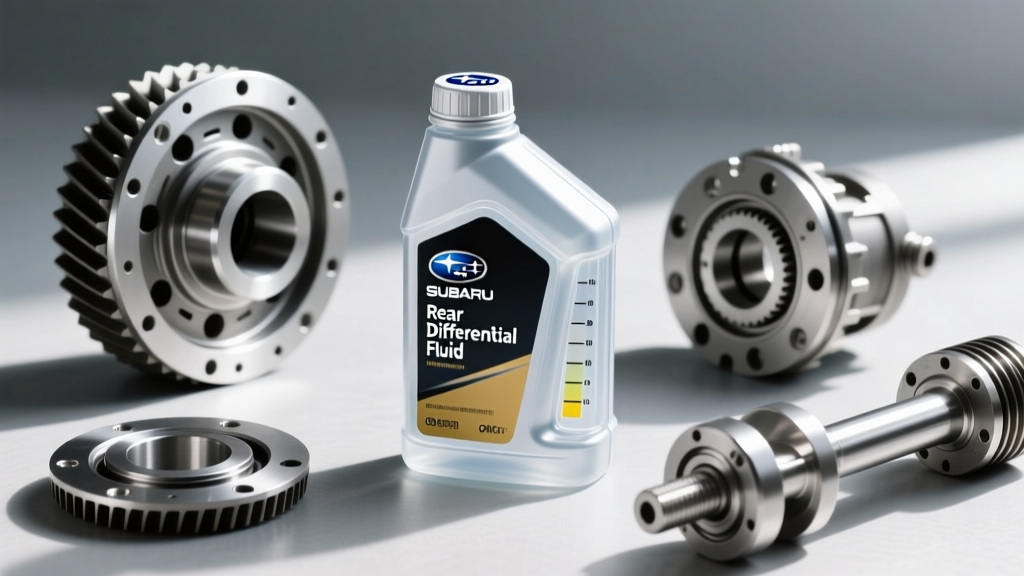
When evaluating the total cost of ownership for a Symmetrical AWD vehicle, understanding the exact requirements and pricing of subaru rear differential fluid is essential. Unlike the front transaxle, which shares a sump with the manual transmission or is integrated into the CVT, the rear differential is an isolated, hypoid gear-driven unit. It operates under extreme sliding friction and high thermal loads, especially when routing torque to the rear axle during AWD slip events. Yet, it remains one of the most frequently neglected maintenance items on modern Subarus.
As we move through 2026, the automotive aftermarket has seen a shift in synthetic gear oil pricing, while dealership labor rates continue to climb. Whether you are driving a high-mileage 2016 Outback, a track-prepped WRX, or a hybrid e-BOXER Crosstrek, selecting the correct viscosity and API rating is not just a matter of mechanical sympathy—it is a direct financial decision. In this guide, we break down the exact gear oil specifications, OEM versus aftermarket pricing matrices, and the real-world cost analysis of servicing your rear axle.
Decoding Gear Oil Specifications: Why API GL-5 is Non-Negotiable
The ring and pinion gear set inside a Subaru rear differential utilizes a hypoid gear design. Unlike standard spur gears that primarily roll, hypoid gears are offset, meaning the teeth experience a significant amount of sliding friction against one another. To prevent the protective oil film from shearing and the metal from microwelding together, the fluid must contain high levels of Extreme Pressure (EP) additives, typically Zinc Dialkyldithiophosphate (ZDDP) and Sulfur-Phosphorus compounds.
This is why the American Petroleum Institute (API) GL-5 specification is mandatory for your Subaru. While GL-4 fluids are excellent for the synchros inside a manual transmission, they lack the sheer concentration of EP additives required to protect a hypoid rear differential. Using a GL-4 fluid in the rear axle will inevitably lead to scored ring gears, whining bearings, and catastrophic differential failure within a few thousand miles.
Viscosity Selection: 75W-90 vs. 80W-90
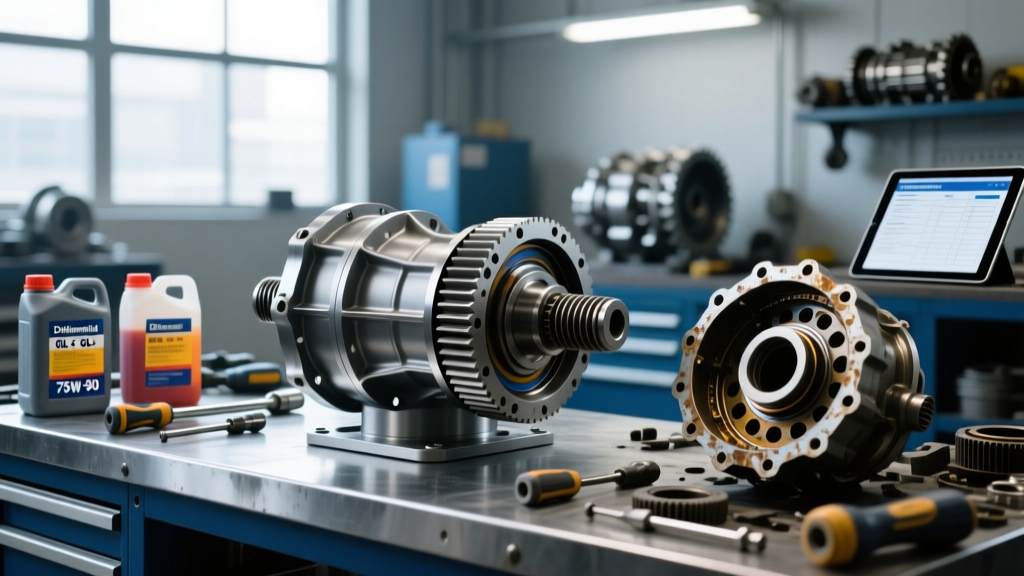
Subaru's factory fill and official service recommendation for the vast majority of their AWD lineup is 75W-90. This synthetic viscosity grade offers a critical advantage in cold climates. The '75W' winter rating ensures that upon a freezing cold start, the gear oil flows rapidly to the pinion bearings and carrier bearings, preventing dry-start scoring. While heavier 80W-90 or 85W-140 oils are popular in the off-road and heavy-towing communities, they introduce parasitic drag, reduce fuel economy, and can starve the pinion bearing of lubrication during winter mornings.
OEM vs. Aftermarket: A 2026 Price and Performance Matrix
The market for 75W-90 GL-5 synthetic gear oil is saturated, but not all formulations are created equal. Below is a cost and performance breakdown of the most common fluids used in Subaru rear differentials for the 2026 service year.
| Brand / Product | Viscosity & Spec | Est. Price (2026) | Best Application |
|---|---|---|---|
| Subaru Extra-HP (OEM) | 75W-90 GL-5 | $24.50 / Quart | Daily driving, warranty compliance, standard AWD. |
| Motul Gear 300 | 75W-90 GL-5 | $32.00 / Liter | Track use, WRX/STI high-heat environments. |
| Valvoline SynPower | 75W-90 GL-5 | $11.50 / Quart | Budget-conscious DIY, high-mileage commuter vehicles. |
| Red Line ShockProof | 75W-250 GL-5 | $28.00 / Quart | Heavy off-road use, towing, extreme shock loads. |
| Amsoil Severe Gear | 75W-90 GL-5 | $19.00 / Quart | Extended drain intervals, heavy-duty street use. |
Note: Prices reflect average 2026 retail pricing and may vary by region and supplier. Data sourced from industry aggregators and Valvoline Global Operations market guidelines.
Friction Modifiers and LSD Compatibility
A common point of confusion among Subaru owners is whether to add a Limited Slip Differential (LSD) friction modifier. The answer depends entirely on your specific differential type:
- Torsen / Helical Gear LSD (e.g., WRX, STI): These are torque-biasing, gear-driven differentials. They do not use clutch packs. Therefore, friction modifiers are unnecessary and should be avoided, as they can alter the torque-biasing ratio and cause unpredictable handling.
- Viscous Coupling LSD (e.g., Older Outbacks, Foresters): These rely on a sealed silicone fluid coupling. They also do not require clutch-style friction modifiers in the gear oil.
- Clutch-Type LSD (Aftermarket or specific JDM STI variants): If you have installed an aftermarket clutch-type LSD (like a Cusco or Kaaz), you must add a friction modifier (e.g., Motorcraft XL-3) to prevent clutch chatter during low-speed cornering.
- Open Differentials (e.g., Base Impreza, Crosstrek): No friction modifier required. Standard GL-5 is perfect.
Subaru's OEM Extra-HP 75W-90 already contains a mild, proprietary friction modifier package designed to be universally safe across their factory AWD lineup, making it a foolproof choice if you are unsure of your exact rear diff internals.
Real-World Cost Breakdown: DIY vs. Dealership Service
Because the rear differential is a separate unit, dealerships often bundle it into a '30,000-mile AWD Drivetrain Service,' which can carry a hefty premium. Let us break down the actual financial impact of your service choice.
The Dealership Route
- OEM Fluid (0.8L): $22.00
- Shop Supplies & Disposal: $12.00
- Labor (0.5 hours @ $185/hr avg): $92.50
- Crush Washers: $6.00
- Total Dealership Cost: ~$132.50
The DIY Route
- High-Quality Synthetic 75W-90 (1 Quart): $14.00
- OEM Aluminum Crush Washers (x2): $4.00
- Manual Fluid Transfer Pump: $8.50 (One-time purchase)
- Total DIY Cost: ~$26.50
Expert Insight: By performing the service yourself, you save over $100 per interval. Over a 150,000-mile ownership cycle (assuming 30k-mile intervals), that is a net savings of over $500—money that can be reallocated to higher-priority maintenance like CVT fluid flushes or brake line replacements.
Exact Capacities, Torque Specs, and Part Numbers
One of the most common mistakes DIYers make is overfilling the rear differential, which causes aeration, foaming, and blown axle seals. Always fill until the fluid is level with the bottom threads of the fill plug. Below are the baseline specifications for popular 2015–2026 Subaru platforms.
| Vehicle Platform | Differential Type | Approx. Capacity | Plug Torque Spec |
|---|---|---|---|
| WRX / STI (VA/VB Chassis) | R160 / R180 (LSD) | 0.8L - 1.2L | 35 Nm (26 lb-ft) |
| Outback / Legacy (Gen 5/6/7) | R160 (Open / Viscous) | 0.4L - 0.5L | 35 Nm (26 lb-ft) |
| Crosstrek / Impreza | R160 (Open) | 0.4L | 35 Nm (26 lb-ft) |
| Forester (SK/SK2) | R160 (Open / Viscous) | 0.5L - 0.8L | 35 Nm (26 lb-ft) |
Important: The fill and drain plugs typically require a 14mm or 17mm hex (Allen) socket depending on the specific casting year. Always remove the FILL plug first. If the fill plug is seized and you drain the fluid first, you will be stranded until you can extract the seized plug.
The True Cost of Incorrect Gear Oil Selection
Attempting to save $10 by using cheap, conventional 80W-90 GL-4 fluid from a discount auto parts store is a false economy. The hypoid gear sets in a Subaru rear differential are precision-machined with tight tolerances. When an inadequate fluid shears under the sliding friction of the pinion gear, the metal-to-metal contact generates microscopic steel shavings.
These shavings embed themselves into the carrier bearings, leading to a characteristic high-pitched 'whine' that increases with vehicle speed. Once the bearings and gear faces are scored, a simple $25 fluid change turns into a $1,500 to $2,500 differential rebuild or replacement from a salvage yard. Furthermore, using overly thick oils like 85W-140 in a daily-driven Crosstrek will cause the viscous coupling or AWD transfer clutches to work harder due to rear-axle drag, potentially leading to premature wear on the center differential or CVT transfer clutch assembly.
Final Verdict: Protecting Your AWD Investment
The cost to properly maintain your Subaru's rear axle is remarkably low when viewed through the lens of long-term ownership. By adhering strictly to the 75W-90 API GL-5 specification, utilizing fresh OEM aluminum crush washers, and applying the correct 35 Nm torque to your plugs, you ensure the longevity of your drivetrain. Whether you opt for the factory Subaru Extra-HP fluid for peace of mind, or a high-end synthetic like Motul or Amsoil for extreme conditions, the investment pays dividends in reliability, fuel efficiency, and the seamless AWD performance that defines the brand.