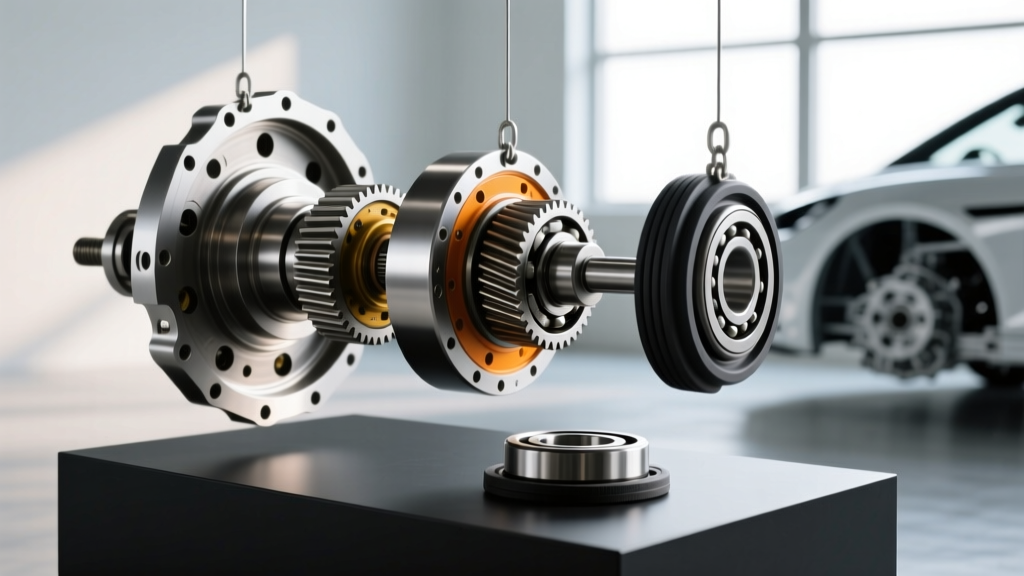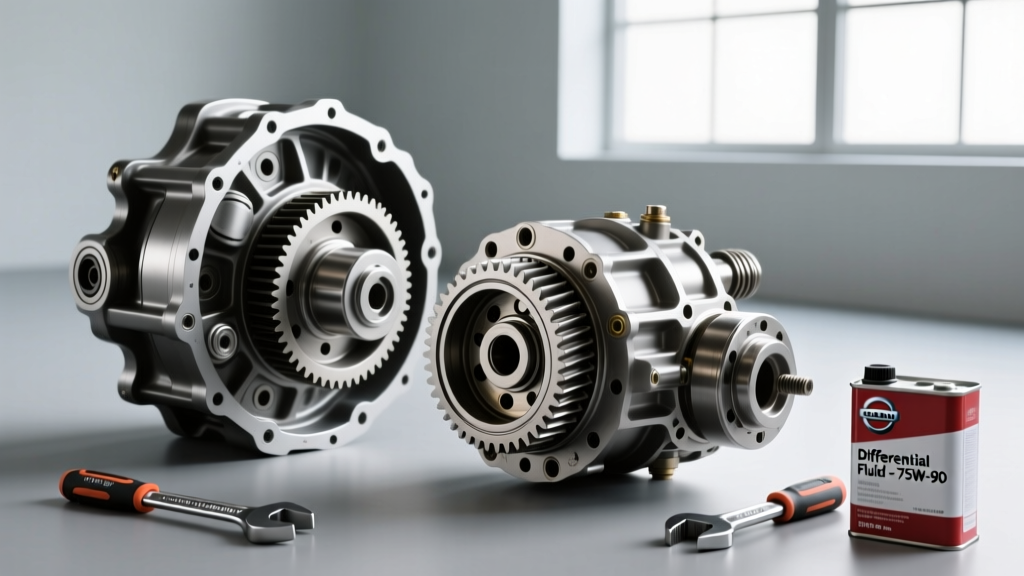
The Symptom: Torque Bind and AWD Shuddering
Every Subaru owner knows the distinct feel of symmetrical all-wheel drive, but few understand the delicate mechanical balance that keeps it operating smoothly. When a Subaru begins to exhibit torque bind—characterized by a harsh shuddering, hopping, or binding sensation during tight, low-speed turns—the immediate instinct is often to suspect the transmission or the tires. However, as we navigate the automotive landscape in 2026, with millions of aging Subaru CVT and manual drivetrains on the road, the root cause frequently traces back to a cascading failure originating from neglected driveline maintenance. While a routine Subaru rear differential oil change is a standard maintenance item, ignoring it can trigger a chain reaction that ultimately destroys the much more expensive center differential.
In this comprehensive diagnostic guide, we will explore the intricate relationship between your rear axle, tire tolerances, and the Subaru center differential. We will break down the exact diagnostic protocols, torque specifications, and failure modes required to isolate AWD binding, ensuring you do not misdiagnose a simple fluid degradation issue as a catastrophic transmission failure.
Anatomy of the Subaru Center Differential
To diagnose torque bind, you must first understand how Subaru routes power to the wheels. Unlike part-time 4WD systems that lock the front and rear driveshafts together, Subaru’s continuous AWD system utilizes a center differential to allow for rotational speed differences between the front and rear axles during cornering. Depending on your transmission, this takes one of two forms:
1. Viscous Coupling Limited-Slip Differential (VCLSD)
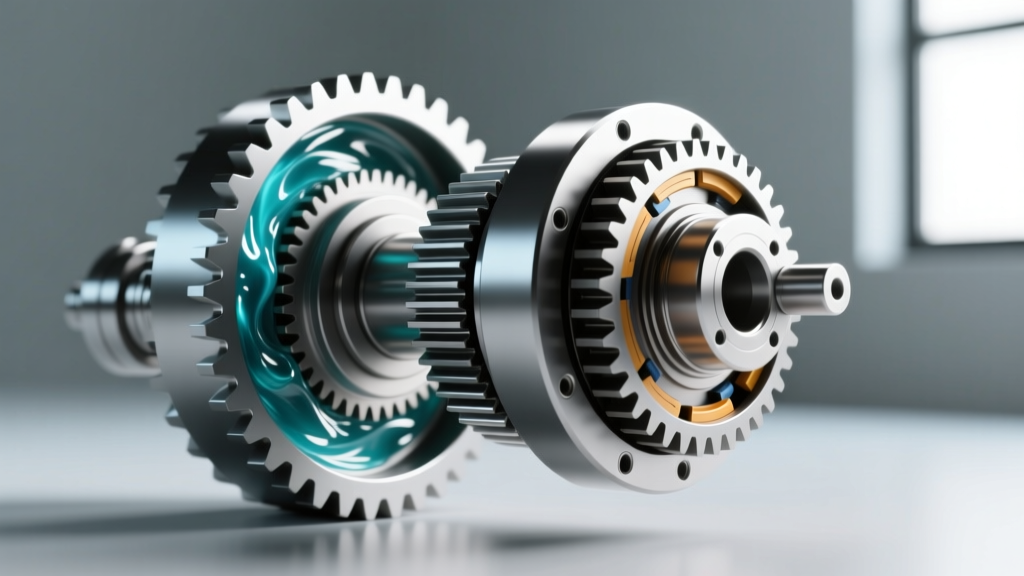
Found predominantly in Subaru’s 5-speed and 6-speed manual transmissions (e.g., WRX, STI, older Forester XT models), the VCLSD uses a silicone-based fluid sealed inside a drum with alternating inner and outer clutch plates. Under normal driving, the fluid allows for slight speed variations. When a speed delta becomes too great (like a wheel slipping on ice), the shear force heats the silicone fluid, causing it to rapidly expand and lock the plates together, transferring torque to the axle with grip.
2. Multi-Plate Transfer Clutch (MPTC)
Found in the 4EAT, 5EAT, and the ubiquitous Lineartronic CVT (which powers the vast majority of 2026 Subarus on the road), the MPTC is an electronically controlled, hydraulically actuated wet clutch pack located in the transmission’s extension housing. The Transmission Control Module (TCM) monitors steering angle, throttle position, and wheel speed sensors to dynamically adjust the duty cycle of the transfer clutch solenoid, seamlessly blending torque front-to-rear.
The Driveline Delta: How Rear Neglect Kills the Center Diff
How does a delayed Subaru rear differential oil change lead to center differential failure? The answer lies in parasitic drag and rotational mismatch.
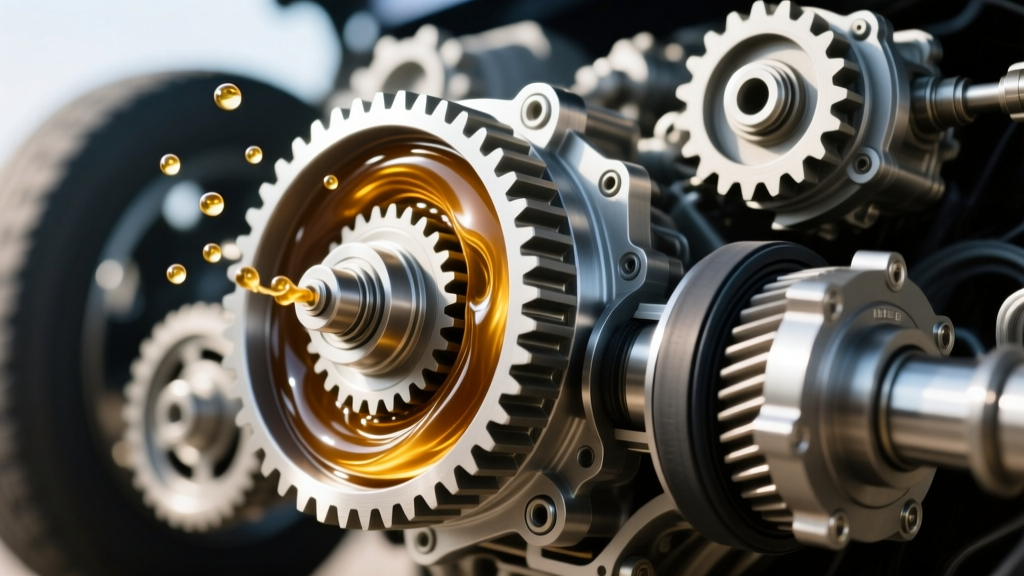
Gear oil, specifically the 75W-90 GL-5 fluid used in Subaru rear differentials, is subjected to extreme shear forces from the hypoid ring and pinion gears. Over time, the long-chain polymers that give the oil its viscosity break down. Furthermore, microscopic metallic particulates from normal gear wear accumulate in the fluid if the magnetic drain plug becomes saturated. As the rear differential fluid degrades, internal friction increases. This parasitic drag causes the rear axle to rotate at a fractionally slower speed than the front axle under load.
The center differential is designed to compensate for minor, temporary speed differences (like turning a corner). It is not designed to compensate for a constant, straight-line rotational mismatch caused by a binding rear axle. In a VCLSD, this constant shear overheats the silicone fluid, eventually blowing the internal O-ring seals and rendering the unit an open differential—or worse, causing it to seize entirely. In a CVT-equipped MPTC, the TCM detects the slip and constantly commands a higher duty cycle to the transfer clutch solenoid, glazing and eventually burning out the friction material on the clutch packs.
Step-by-Step Diagnostic Protocol
Before ordering a $2,500 replacement center differential or extension housing, perform this systematic diagnostic sequence to isolate the source of the torque bind.
Step 1: The Tire Circumference Measurement
Subaru’s AWD system is notoriously sensitive to tire variance. The factory service manual mandates that all four tires must be within 1/4 inch (6mm) of each other in total circumference. A single mismatched tire, or even uneven wear from a misaligned rear suspension, will force the center differential to work overtime.
- Tool Required: Stagger gauge or flexible steel measuring tape.
- Procedure: Mark the top of each tire and the floor. Roll the vehicle forward exactly one full rotation and measure the distance traveled for each tire. Compare the longest and shortest distances.
- Verdict: If the variance exceeds 1/4 inch, replace all four tires or have the larger tires professionally shaved to match the smallest tire.
Step 2: The FWD Fuse Test (Automatic/CVT Models)
For older 4EAT and 5EAT models, locate the FWD diagnostic drop-resistor box under the hood (usually near the passenger strut tower). Inserting a standard 10A or 15A fuse into this slot forces the TCM to drop voltage to the transfer clutch solenoid, effectively putting the car in FWD mode.
Note for 2026 Gen 3+ CVT Models: The physical FWD fuse trick has been largely phased out on modern Lineartronic CVTs. Instead, you must use the Subaru Select Monitor (SSM4) diagnostic software to access the TCM’s active test menu and manually force the transfer clutch duty cycle to 0%. If the torque bind disappears in FWD mode, the issue is isolated to the rear driveline (binding rear diff, seized parking brake shoes) or a burnt transfer clutch pack inside the extension housing.
Step 3: Rear Differential Fluid Inspection
Drain the rear differential and inspect the fluid. If the 75W-90 GL-5 fluid exits as a thick, glittering sludge with a burnt odor, the internal bearings or hypoid gears are failing, causing the mechanical bind. Replace the fluid using OEM Subaru Part #SOA635040 or a high-quality synthetic equivalent like Motul Gear 300 75W-90, and re-test for binding.
Center Differential Failure Matrix
| Failure Mode | Primary Symptom | Root Cause | Diagnostic Fix |
|---|---|---|---|
| Viscous Coupler Shear-Thinning | Front wheelspin on loose surfaces; no AWD engagement. | Age, thermal degradation, or continuous slip events. | Replace center diff assembly (Manuals). |
| Viscous Coupler Seizure | Severe hopping/binding in tight turns at all speeds. | Internal seal failure, silicone fluid cross-contamination. | Replace center diff assembly (Manuals). |
| MPTC Clutch Glazing | Intermittent bind, delayed AWD engagement from a stop. | Overheating due to mismatched tires or rear diff drag. | Flush CVTF/ATF, inspect extension housing clutch pack. |
| Transfer Solenoid Failure | Constant FWD, AWD warning light illuminated on dash. | Electrical fault, clogged solenoid screen from CVTF debris. | Replace transfer clutch solenoid (Part #38335AA030). |
Teardown, Torque Specs, and Replacement Costs
If diagnostics confirm that the center differential or MPTC assembly has suffered catastrophic mechanical failure, replacement is required. For manual transmission models, the center differential is housed within the main transmission casing, requiring a complete transmission teardown or a swap with a remanufactured unit. Expect to pay between $2,200 and $3,500 for a remanufactured Subaru manual transmission in 2026.
For CVT and Automatic models, the transfer clutch pack is located in the rear extension housing. This can be serviced without removing the entire transmission, though the rear driveshaft and crossmember must be dropped.
Critical Torque Specifications (CVT Extension Housing)
- Extension Housing to Transmission Case Bolts: 35 ft-lbs (47 Nm)
- Rear Driveshaft to Companion Flange Bolts: 58 ft-lbs (79 Nm)
- Center Support Bearing Carrier Bolts: 48 ft-lbs (65 Nm)
- Extension Housing Drain/Fill Plugs: 33 ft-lbs (44 Nm) - Always use new crush washers (Part #803926090)
When reassembling, the extension housing gasket (Part #38325AA030) must be sealed using a thin bead of Subaru OEM Three-Bond 1217G or equivalent anaerobic sealant to prevent CVTF leaks that will quickly destroy the new clutch pack.
The Complete AWD Fluid Trinity
Preventing center differential failure requires a holistic approach to driveline maintenance. The AWD system operates as a single, interconnected ecosystem. Performing a Subaru rear differential oil change every 30,000 to 50,000 miles is non-negotiable, but it must be paired with the rest of the driveline fluids to maintain rotational harmony.
- Front Differential: Integrated into the transmission on most models, but standalone on older turbo models. Requires 75W-90 GL-5.
- Center/Transmission: Modern Lineartronic CVTs require Subaru High-Torque CVTF (Part #SOA427V1600). Neglecting CVTF changes leads to clogged valve bodies and starving the transfer clutch of hydraulic pressure.
- Rear Differential: 0.8 Liters of 75W-90 GL-5. Ensure the magnetic drain plug is thoroughly cleaned of metallic sludge during every service.
By adhering to strict fluid intervals and monitoring tire wear tolerances, you protect the delicate torque-transfer mechanisms that make Subaru’s symmetrical AWD system an industry benchmark. For official service bulletins and wiring diagrams, always consult the Subaru Technical Information System or reference archived technical articles via EndWrench Magazine. Furthermore, communities like Bob Is The Oil Guy offer excellent real-world data on gear oil shear stability for high-mileage Subaru differentials.