The Fundamental Physics: Open vs. Limited Slip Architectures
When evaluating which differential type auto enthusiasts, off-roaders, and daily drivers should choose, the debate almost always narrows down to two primary architectures: the traditional open differential and the performance-oriented limited slip differential (LSD). As we navigate the 2026 automotive landscape, where advanced electronic traction control systems often mask mechanical drivetrain deficiencies, understanding the raw mechanical grip, torque biasing, and specific fluid dynamics of your axle is more critical than ever. Whether you are piloting a daily-driven Ford F-150, a trail-bound Jeep Wrangler, or a track-focused Mustang, the differential sitting between your drive wheels dictates how effectively engine torque reaches the pavement.
The Open Differential: Predictable but Limited
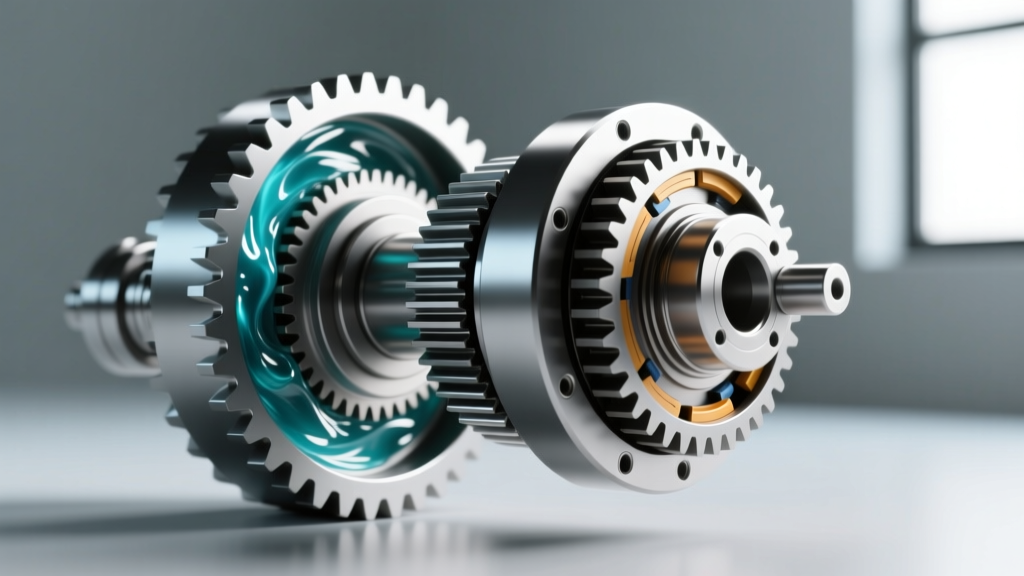
The open differential remains the undisputed king of OEM manufacturing due to its low cost, predictable on-pavement manners, and lack of driveline binding during tight cornering. Inside the carrier, a set of spider gears (pinion gears) mounted on a cross-pin allows the left and right side gears to rotate at different speeds. This is essential for cornering, as the outside wheel must travel a greater distance than the inside wheel.
However, the open differential operates on a strict physical law: it splits torque equally, but sends power to the path of least resistance. If your left rear tire is on dry asphalt and your right rear tire is on ice, the open differential will send 100% of the available torque to the slipping wheel. Because the traction limit of the ice is near zero, the vehicle goes nowhere. For highway cruising and standard commuting, this is perfectly adequate. For towing, off-roading, or performance driving, it is a severe bottleneck.
The Limited Slip Differential (LSD): Mechanical Grip
Limited slip differentials solve the open differential's traction flaws by introducing internal resistance to limit the speed differential between the two axle shafts. When one wheel begins to slip, the LSD transfers torque to the wheel that still has grip. In the modern aftermarket and OEM performance space, two distinct LSD designs dominate:
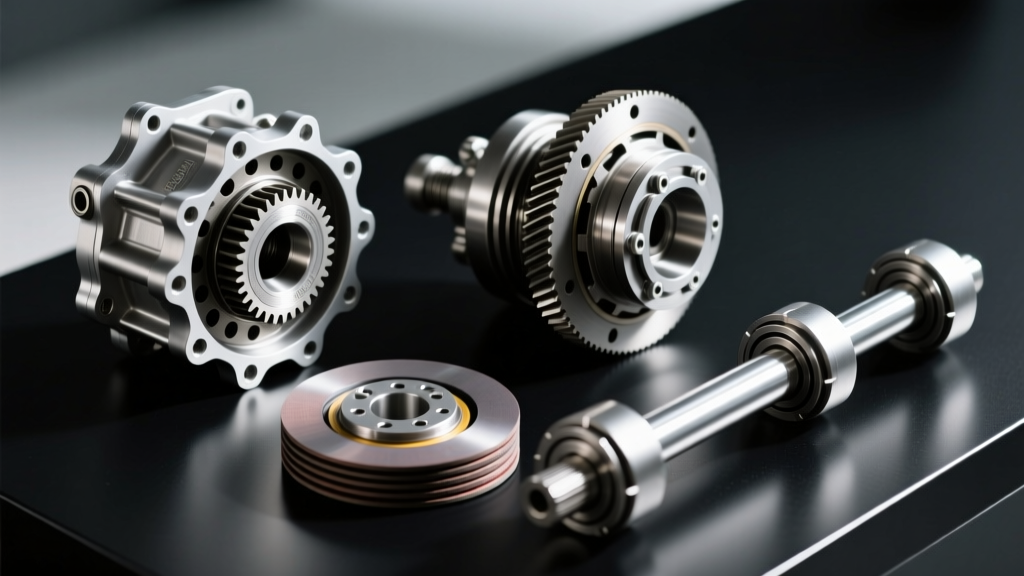
- Clutch-Pack (e.g., Eaton Positraction): Utilizes a series of alternating friction and steel clutch discs packed behind the side gears. Preload springs apply constant pressure to the clutch pack, forcing both axles to turn together until the torque differential overcomes the spring pressure, allowing the clutches to slip smoothly during cornering.
- Helical Gear (e.g., Detroit Truetrac): Employs a complex planetary helical gear set rather than friction clutches. Under load, the helical gears wedge against the differential case, creating a torque-biasing effect. These units are entirely gear-driven, meaning there are no friction clutches to wear out over time.
The Critical Role of Differential Fluid and Additives
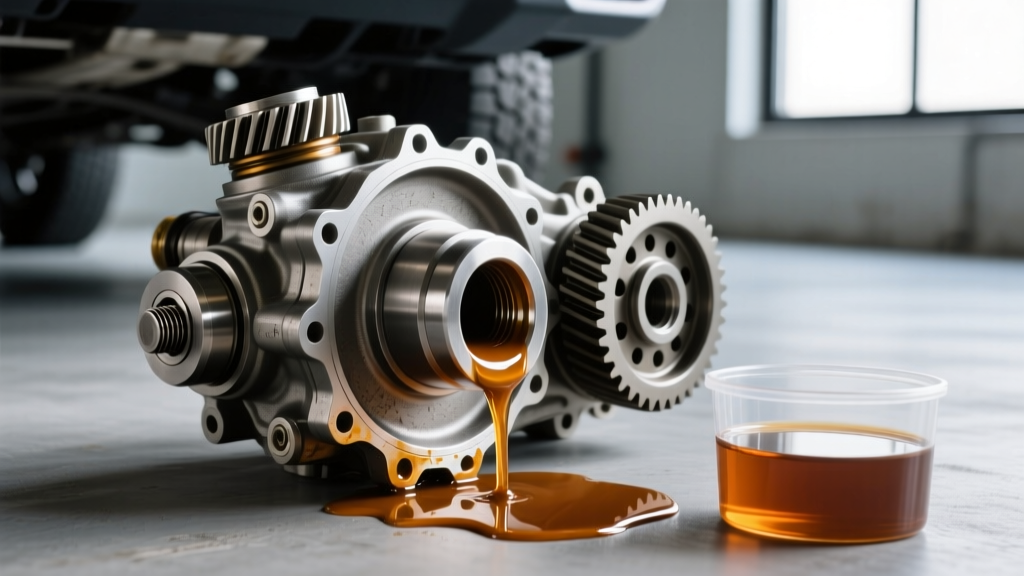
Because this guide falls under the purview of differential fluid maintenance, it is imperative to understand that gear oil is not merely a lubricant; it is a vital, load-bearing mechanical component. The hypoid gear sets (ring and pinion) found in solid axles like the Dana 44, Ford 8.8, and GM 10-bolt operate under extreme sliding pressures. This necessitates the use of API GL-5 rated gear oils, which contain high levels of sulfur-phosphorus Extreme Pressure (EP) additives to prevent the gear teeth from micro-welding and tearing under heavy loads.
Viscosity and Thermal Stability
For most modern light trucks and performance cars, 75W-90 or 80W-90 synthetic gear oil is the standard. Synthetic formulations, such as those detailed in the Red Line Oil Technical Resources, offer superior thermal stability. When towing heavy loads or crawling slow-speed rock gardens, differential temperatures can easily exceed 250°F (121°C). Conventional mineral oils will rapidly oxidize and shear out of grade at these temperatures, leading to catastrophic ring and pinion failure. Synthetic 75W-90 maintains its protective hydrodynamic film far beyond the limits of conventional 80W-90.
The Friction Modifier Imperative
The choice of differential fluid is directly tied to your chosen differential type. Clutch-type LSDs require a specialized friction modifier additive. Without it, the clutch packs will grab and release abruptly during low-speed cornering, resulting in a violent, chattering sensation from the rear axle. The friction modifier consists of long-chain polar molecules that coat the clutch discs, allowing them to slip smoothly before locking up.
Conversely, helical gear LSDs (like the Truetrac) and open differentials do not require friction modifiers. In fact, adding a friction modifier to a helical LSD can reduce the fluid's coefficient of friction too much, slightly diminishing the unit's torque-biasing capability. Always consult the manufacturer. For example, if using a standard GL-5 oil in an Eaton Positraction, you must add a dedicated modifier like Ford XL-3 or ACDelco Limited Slip Axle Lubricant Additive (Part No. 88900333). Alternatively, premium synthetic fluids like Motul Gear 300 75W-90 or Amsoil Severe Gear already contain the necessary friction modifiers for clutch-type LSDs out of the bottle.
Comparative Analysis Matrix
To help you make an informed buyer's decision, refer to the comparison matrix below detailing the operational characteristics and maintenance requirements of each setup.
| Feature | Open Differential | Clutch-Type LSD (Eaton Posi) | Helical LSD (Detroit Truetrac) |
|---|---|---|---|
| Torque Bias Ratio (TBR) | 1:1 (No biasing) | 2:1 to 3.5:1 | 2.5:1 to 3.5:1 |
| Traction on Split Surfaces | Poor (One-wheel peel) | Excellent | Excellent |
| Friction Modifier Required? | No | Yes (Critical) | No |
| Wear Items | Spider/Side gears (Minimal) | Clutch packs (Rebuildable) | Helical gears (Virtually wear-free) |
| Estimated 2026 Hardware Cost | $150 - $250 | $450 - $650 | $650 - $850 |
Real-World Maintenance: Capacities, Torque Specs, and Costs
Upgrading your differential or simply maintaining your existing setup requires strict adherence to factory specifications. Over-torquing differential cover bolts can warp the mating surface or crush the gasket, leading to slow weeping leaks that eventually starve the ring and pinion of oil. Below are the exact specifications for three of the most common axles on the road today.
Ford 8.8-Inch Axle
- Fluid Capacity: ~2.5 Pints (1.25 Quarts)
- Cover Bolt Torque: 28 - 38 lb-ft
- Drain/Fill Note: Most 8.8 axles do not have a drain plug; the cover must be removed for fluid changes. Use a high-quality silicone gasket (like Lube Locker) rather than cheap RTV to prevent debris from entering the gear set.
GM 8.5 / 8.6-Inch 10-Bolt Axle
- Fluid Capacity: ~2.1 Pints (1.05 Quarts)
- Cover Bolt Torque: 22 lb-ft
- Drain/Fill Note: The 10-bolt is notorious for stripped cover bolts if over-torqued. Use a calibrated inch-pound or low-range foot-pound torque wrench. Fill until fluid is level with the bottom of the fill plug hole.
Dana 44 Axle (Jeep/Truck Applications)
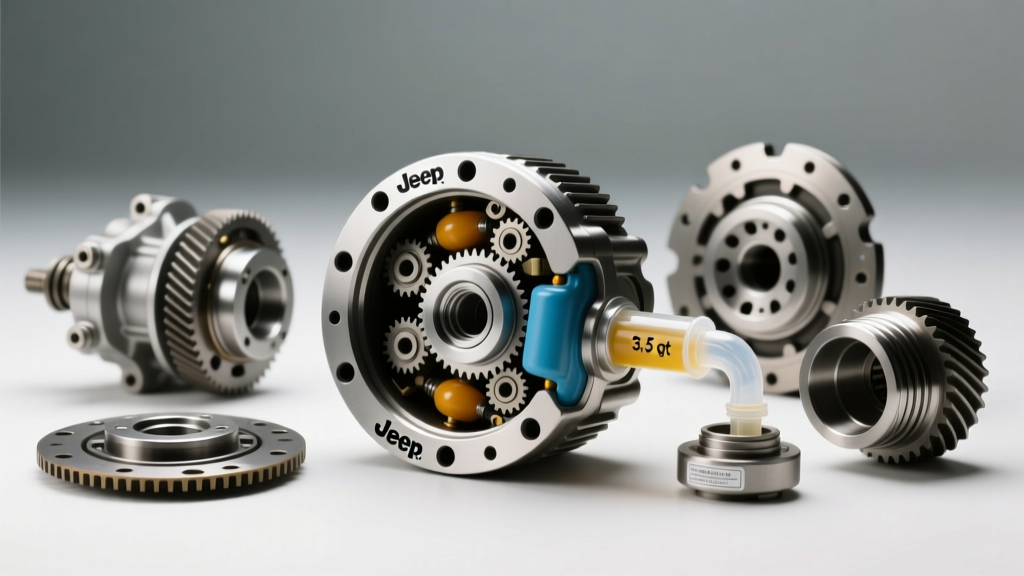
- Fluid Capacity: ~3.5 Pints (1.75 Quarts)
- Cover Bolt Torque: 30 - 35 lb-ft
- Drain/Fill Note: Often equipped with a 3/8-inch Allen drain plug. If equipped with an aftermarket deep-sump cover (e.g., ARB or Diff-Cover), capacity can increase to 4.5 pints, requiring an extra bottle of synthetic 75W-90.
Making the Final Drivetrain Decision
Choosing the correct differential type auto mechanics and enthusiasts recommend depends entirely on your vehicle's primary mission. If your truck is strictly a highway commuter or light-duty tow rig, an open differential serviced with high-quality synthetic 75W-90 GL-5 gear oil will easily outlast the vehicle's chassis. However, if you frequently encounter snow, mud, loose gravel, or demand maximum launch traction from a performance car, an LSD is a mandatory upgrade.
For weekend warriors who want a 'set-it-and-forget-it' traction upgrade, the helical gear Detroit Truetrac is the gold standard, requiring zero friction modifiers and offering a virtually maintenance-free lifespan. For drag racers and autocross competitors who need aggressive, predictable lockup characteristics, a clutch-type Eaton Positraction, paired with a meticulously maintained fluid and additive regimen, remains the ultimate choice. Whichever path you choose, remember that the mechanical grip of your differential is only as strong as the chemical film of the gear oil protecting it. Consult the Spicer/Dana Differential Catalog for exact carrier break and spline count verifications before purchasing your next drivetrain component.
Expert Tip for 2026: When breaking in a newly installed ring and pinion or a fresh clutch-type LSD, perform the first fluid drain and fill at exactly 500 miles. The initial wear-in process generates microscopic metallic debris that will become suspended in the gear oil. Flushing this out early prevents accelerated wear to the carrier bearings and clutch discs.
For further reading on specific Eaton traction-adding differentials and their exact preload specifications, refer to the Eaton Automotive Differentials Portal.