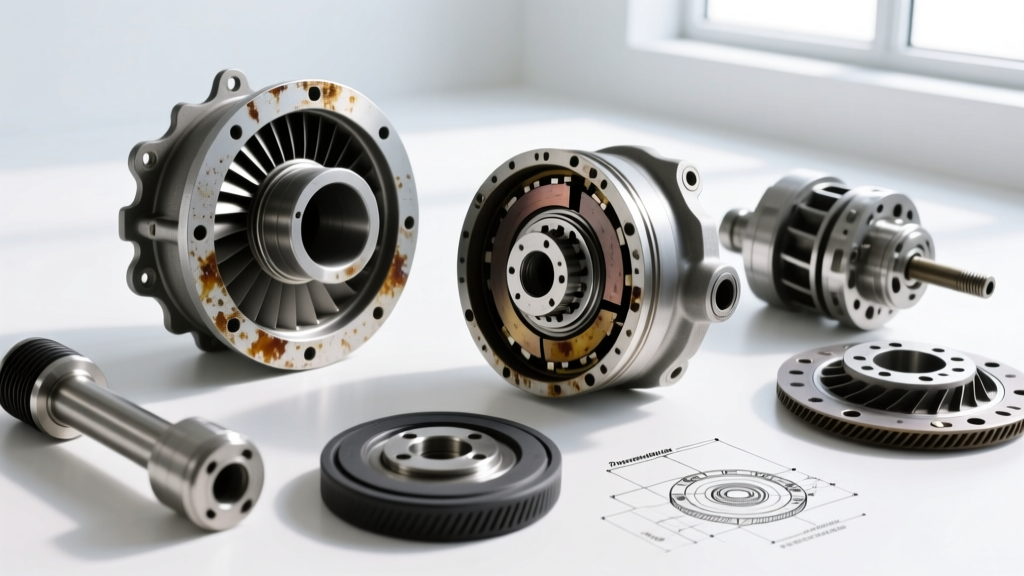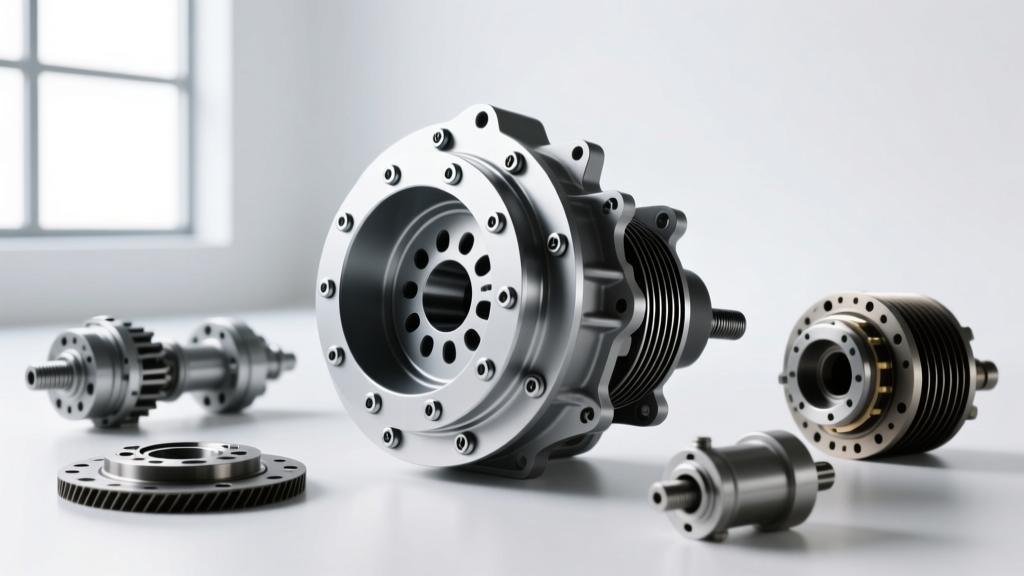
The Heart of Your Automatic: What is a Torque Converter?
If you own a classic Chevrolet Silverado, Camaro, or Corvette from the 1990s through the 2010s, you are likely familiar with the legendary GM 4L60E transmission. But bolted directly to the engine's flexplate, hidden safely behind the bellhousing, is the unsung hero of your drivetrain: the torque converter. For beginners, understanding a stock 4L60E torque converter can seem like deciphering alien technology. How does power get from a spinning engine to a stationary transmission without stalling the motor or snapping the input shaft?
The answer lies in hydrodynamics. Unlike a manual transmission that uses a mechanical friction clutch to physically lock the engine to the transmission, an automatic transmission relies on a fluid coupling. This guide breaks down the exact operation, internal anatomy, and common failure symptoms of the factory 4L60E converter, giving you the expert-level knowledge needed to diagnose, maintain, or upgrade your drivetrain.
Inside the Shell: The Four Main Components
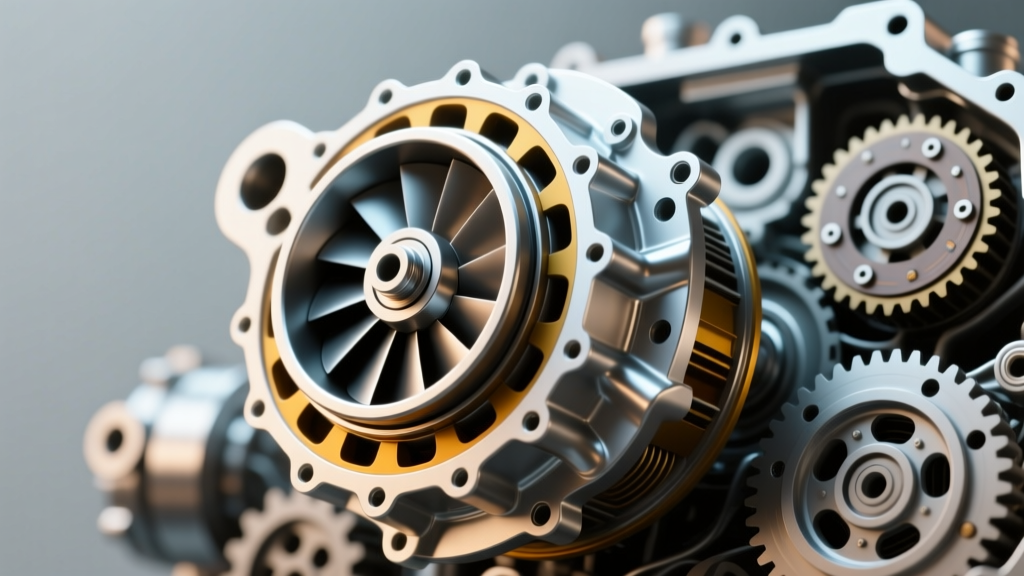
To understand how the unit operates, you must first look inside the welded steel donut. A stock GM 4L60E torque converter contains four primary elements, all bathed in automatic transmission fluid (ATF):
- The Impeller (Pump): Bolted directly to the converter's outer shell, the impeller spins at the exact same speed as the engine's crankshaft. Its curved fins act like a centrifugal pump, aggressively throwing ATF outward and toward the turbine.
- The Turbine: Connected directly to the transmission's input shaft, the turbine sits opposite the impeller. As fluid is blasted into the turbine's fins by the impeller, it forces the turbine—and thus the transmission—to spin.
- The Stator: The magic ingredient. Sitting in the very center between the impeller and turbine, the stator is mounted on a one-way clutch. It redirects the returning, turbulent fluid back into the impeller, effectively multiplying torque and preventing the fluid from fighting the pump's rotation.
- The Torque Converter Clutch (TCC): A friction-lined piston located at the front of the turbine. When applied, it mechanically locks the turbine to the impeller, eliminating fluid slip and creating a 1:1 direct drive.
The Three Phases of Hydrodynamic Operation
When you put your foot on the brake and shift into Drive, the converter enters its first phase. As you accelerate and reach highway speeds, it transitions through two more. Here is how the stock 4L60E torque converter manages these phases seamlessly.
Phase 1: Stall (Torque Multiplication)
When the vehicle is stationary but the engine is idling in gear, the impeller is spinning, but the turbine is held still by the brakes and the vehicle's weight. This is the 'stall' phase. Because the fluid is being redirected by the stator, the converter acts as a hydraulic lever. A stock 4L60E converter typically multiplies engine torque by a factor of roughly 2.0:1 to 2.2:1 at stall. This is what allows a heavy 5,000-lb Silverado to pull away from a stoplight with authority, even at a low 700 RPM idle.
Phase 2: Acceleration
As you release the brake and press the throttle, the turbine begins to catch up to the impeller's speed. The stator remains stationary on its one-way clutch, continuing to redirect fluid and multiply torque. During this phase, the transmission is doing the heavy lifting of moving the vehicle's mass.
Phase 3: Coupling
Once the turbine reaches about 90% of the impeller's speed (usually around 40-50 mph in higher gears), the fluid dynamics change. The fluid returning from the turbine now strikes the back side of the stator fins. This forces the stator's one-way clutch to unlock, allowing the stator to freewheel with the assembly. At this point, torque multiplication drops to 1:1, and the unit acts as a simple fluid coupling. However, a fluid coupling inherently suffers from 3% to 5% 'slip,' which generates immense heat and robs fuel economy.
Solving the Slip: The 4L60E TCC Lockup Mechanism
To eliminate that parasitic slip at highway speeds, GM equipped the 4L60E with a Pulse Width Modulated (PWM) Torque Converter Clutch. According to technical documentation from the Sonnax Technical Resources database, the PWM solenoid is a critical evolution over older on/off lockup valves.
Instead of slamming the clutch piston into the front cover (which would cause a violent, jarring shudder in the cabin), the 4L60E's PWM solenoid rapidly pulses the apply pressure. This allows the TCC to slip in a highly controlled manner—often just 20 to 50 RPM of slip—during engagement and light cruising. This controlled micro-slip absorbs harmonic engine vibrations, providing the fuel economy of a locked mechanical clutch with the smoothness of a fluid coupling.
Stock 4L60E Torque Converter Specifications
| Specification | Stock 4L60E Data |
|---|---|
| Converter Diameter | 298mm (11.75 inches) |
| Factory Stall Speed | 1,800 - 2,100 RPM |
| TCC Engagement | PWM Controlled (3rd & 4th Gear) |
| Internal Fluid Capacity | ~4.5 Quarts |
| Recommended Fluid | ACDelco Dexron VI (Backward compatible) |
| Flexplate Bolt Torque | 35 lb-ft (47 Nm) |
Diagnosing Failure: Symptoms of a Bad 4L60E Converter
Because the torque converter is a sealed, welded unit, internal failures eventually contaminate the entire transmission. Recognizing the early symptoms can save you from a complete $3,000 transmission rebuild. The Automatic Transmission Rebuilders Association (ATRA) frequently cites converter degradation as a leading cause of secondary transmission damage.
- TCC Shudder: The most common complaint. If you feel a vibration resembling driving over highway rumble strips between 40-60 mph, the friction material on the TCC piston is likely glazing or wearing off. The PWM solenoid can no longer maintain micro-slip, causing the clutch to rapidly grab and release.
- Loss of Low-End Power & Overheating: If the stator's one-way clutch fails and freewheels in both directions, the converter loses its ability to multiply torque. The vehicle will feel incredibly sluggish off the line, and transmission fluid temperatures will spike rapidly due to unmanaged fluid turbulence.
- Whining or Grinding Noises: The internal needle bearings that separate the impeller, turbine, and stator can disintegrate over time. A high-pitched whine that changes with engine RPM (not vehicle speed) usually indicates bearing failure. If ignored, metal shards will circulate through the transmission's valve body, destroying clutches and solenoids.
- Converter Ballooning: Under extreme pressure (or due to a faulty check ball), the thin steel shell of the converter can expand outward like a balloon. This pushes the flexplate forward, potentially cracking the flexplate or destroying the engine's crankshaft thrust bearing.
Replacement Costs and OEM Part Numbers
If your stock 4L60E torque converter has failed, replacement requires dropping the transmission. While aftermarket performance converters (like those from Circle D or Vigilante) are popular for modified trucks and Camaros, sticking to an OEM-spec replacement is best for daily drivers.
The standard OEM replacement part number is typically ACDelco Professional 242-18283 or GM original 24201395. Pricing for a quality remanufactured stock converter ranges from $180 to $240.
Total Estimated Replacement Cost:
- Remanufactured OEM Converter: $180 - $240
- Transmission Fluid (12 Quarts Dexron VI): $80 - $110
- Labor (R&R Transmission, 6-8 hours @ $120/hr): $720 - $960
- Total Average: $980 - $1,310
Expert Mechanic Tip: Never install a dry torque converter. Before sliding the replacement 4L60E converter onto the transmission pump gear, pre-fill it with at least 1.5 to 2 quarts of Dexron VI. If you install it dry, the initial engine start will cause the transmission pump to cavitate, potentially starving the internal clutches and bearings of lubrication for the first critical 10 seconds of operation, leading to premature failure.
Final Thoughts on Maintaining Your 4L60E
The stock 4L60E torque converter is a marvel of hydrodynamic engineering. By understanding how the impeller, turbine, and stator work together to multiply torque, and how the PWM clutch eliminates slip, you can better appreciate the smooth operation of your vehicle. To maximize the lifespan of your converter, adhere strictly to 30,000-mile fluid exchange intervals using high-quality Dexron VI, and ensure your transmission cooler lines are free of restrictions to keep operating temperatures below 200°F (93°C).