The Anatomy of a Sticky Clutch Pedal: Hydraulic vs. Mechanical Binding
When a driver experiences a sticky clutch pedal—one that fails to return to its upper stop or requires manual lifting with the toe—the immediate assumption is often a failed hydraulic master or slave cylinder. While hydraulic degradation is a common culprit, a sticky pedal is frequently a direct mechanical symptom of advanced clutch wear and end-of-life failure modes within the bellhousing. As an automotive transmission specialist, distinguishing between a hydraulic bypass issue and a physical mechanical bind is critical for accurate diagnostics and preventing catastrophic drivetrain damage.
A clutch pedal that sticks to the floor or exhibits a 'notchy' return stroke indicates that the release mechanism is encountering physical resistance. This resistance can stem from warped diaphragm spring fingers, severe input shaft spline corrosion, or a failing dual-mass flywheel (DMF). Understanding these clutch wear signs and lifespan indicators allows technicians and enthusiasts to accurately gauge the remaining life of the friction assembly and address the root cause before the transmission input shaft or release collar sustains irreversible scoring.
Mechanical Wear Signs: When the Clutch Assembly Fails
1. Diaphragm Spring Finger Grooving and Over-Extension
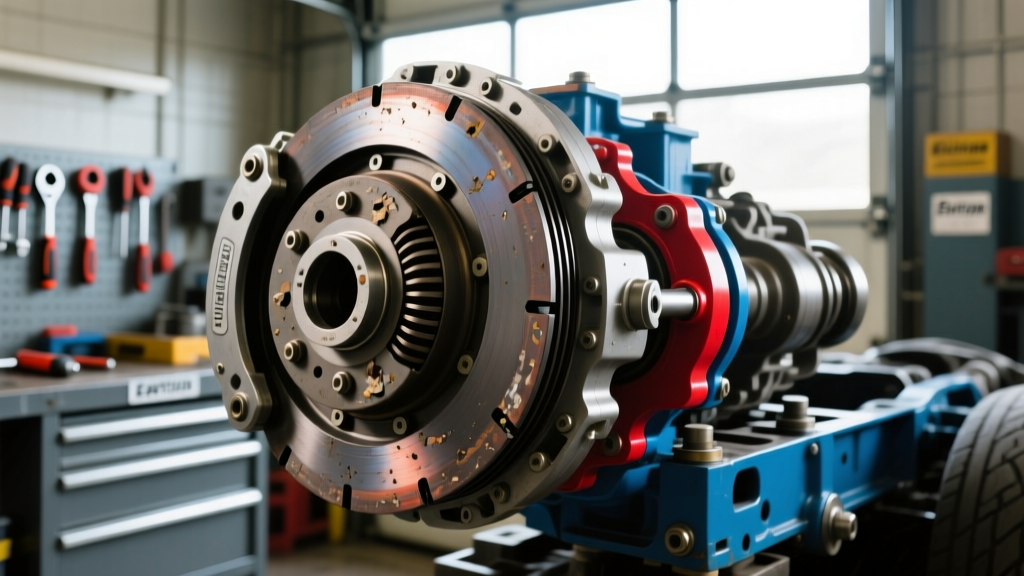
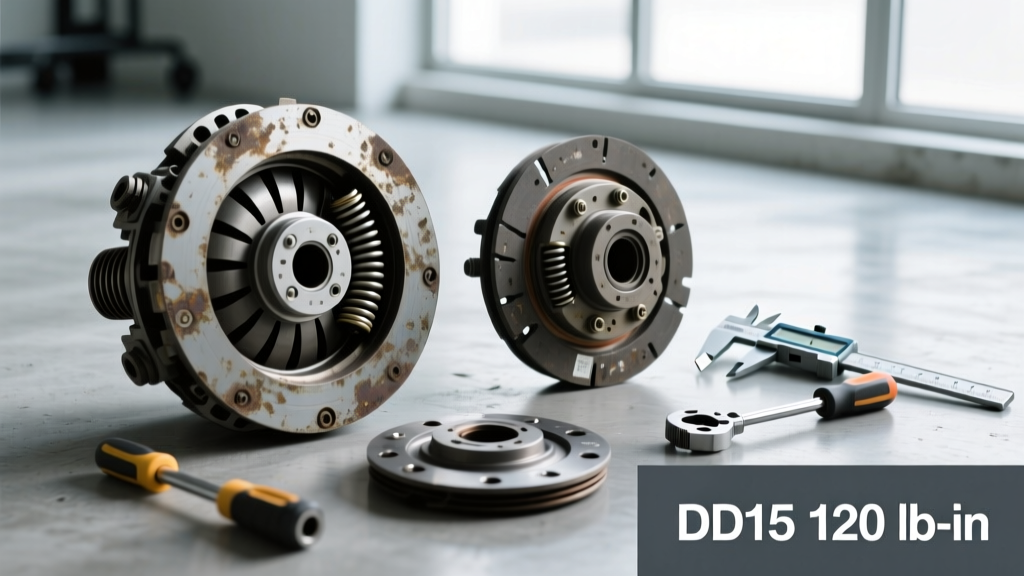
The diaphragm spring within the pressure plate serves as both the clamping force mechanism and the release lever. As the friction disc wears down over its lifespan (typically dropping from 8.0mm to 3.0mm of friction material), the pressure plate moves closer to the flywheel to maintain clamping force. This pivoting action forces the inner fingers of the diaphragm spring outward, toward the release bearing. According to technical bulletins from Schaeffler REPXPERT, if the clutch is driven well past its service life, these fingers can over-extend and wear deep grooves from constant contact with the throwout bearing. When the pedal is released, the worn grooves catch on the bearing collar, resulting in a distinctly sticky pedal feel that abruptly snaps free only when upward pressure is applied.
2. Input Shaft Spline Bind and Disc Hub Seizure
The friction disc hub rides on the splines of the transmission input shaft. For smooth engagement and disengagement, the disc must slide freely along these splines. However, exposure to moisture, inadequate high-temperature spline grease during previous installations, or extreme heat from aggressive track use can cause spline corrosion and carbon buildup. When the splines bind, the friction disc hangs up on the shaft. The clutch pedal will feel sticky or notchy because the mechanical linkage is fighting the physical friction of the seized disc hub. This is a definitive lifespan indicator that the friction assembly and potentially the input shaft require immediate replacement and machining.
3. Release Fork Pivot Ball Wear
In traditional external slave cylinder setups (common in Tremec T56 and Ford MT-82 applications), the release fork pivots on a hardened steel ball stud. Over tens of thousands of clutch actuations, the mild steel of the fork wears a divot into the pivot ball. This alters the geometric sweep of the fork, causing it to bind against the transmission bearing retainer collar. The resulting friction mimics a sticky hydraulic pedal, but the fault lies entirely in the mechanical wear of the bellhousing components.
Clutch Lifespan Indicators: Measurement and Tolerances
To accurately diagnose whether a sticky pedal is a minor adjustment issue or a sign of terminal clutch wear, precise measurements must be taken once the transmission is removed. The following table outlines critical wear thresholds based on SAE International drivetrain standards and OEM specifications.
| Component | New Specification | Wear Limit / Replacement Threshold | Failure Symptom |
|---|---|---|---|
| Friction Disc Thickness | 7.5mm - 8.5mm | < 3.0mm (or flush with rivets) | Slipping, high engagement point, finger over-extension |
| Diaphragm Finger Grooving | 0.0mm (Flush) | > 0.5mm groove depth | Pedal catch, sticky return, bearing noise |
| DMF Axial Runout | 0.0mm - 0.5mm | > 1.5mm Total Indicator Runout (TIR) | Chatter, pedal vibration, uneven wear |
| Master Cylinder Pushrod Freeplay | 1.0mm - 2.0mm | 0.0mm (Preloaded) | Compensation port blockage, pressure bind |
| Input Shaft Spline Backlash | < 0.10mm | > 0.25mm or visible scoring | Disc hub bind, sticky pedal, gear rattle |
Step-by-Step Diagnostic Protocol for Pedal Binding
Before dropping the transmission, a systematic elimination process is required to isolate the sticky clutch pedal symptom. Follow this diagnostic sequence to verify mechanical wear signs:
- Verify Master Cylinder Pushrod Clearance: Inspect the pedal box. There must be 1-2mm of freeplay between the pedal stop and the master cylinder pushrod. If the pushrod is preloaded (zero freeplay), thermal expansion of hygroscopic DOT 4 brake fluid will block the compensation port, causing hydraulic pressure to build and the clutch to drag, making the pedal feel stiff and sticky.
- Hydraulic Bypass Test: With the engine off, pump the clutch pedal rapidly. If the pedal slowly sinks to the floor and fails to return, but the fluid reservoir remains full, the internal seals of the master cylinder or the Concentric Slave Cylinder (CSC) are bypassing fluid. This is a hydraulic failure, not mechanical clutch wear.
- Bellhousing Inspection Cover Check: If the hydraulics test perfectly, remove the inspection cover on the bellhousing. Have an assistant depress the clutch pedal while you observe the release bearing and fork. Look for asymmetrical movement, binding on the input shaft collar, or visible grooving on the diaphragm spring fingers.
- Input Shaft Drag Test: With the transmission in neutral and the clutch depressed, listen for a metallic 'hissing' or grinding noise. This indicates the release bearing is being dragged across worn, grooved diaphragm fingers—a definitive lifespan indicator that the pressure plate is at end-of-life.
Expert Insight: 'Technicians often misdiagnose a failing Dual-Mass Flywheel (DMF) as a simple clutch wear issue. When the internal arc springs of a DMF collapse or the friction plate warps beyond 1.5mm of axial runout, the clutch disc cannot sit parallel to the flywheel. This causes the diaphragm spring to load unevenly, resulting in a pulsating, sticky pedal feel that worsens as the assembly heats up. Always measure DMF runout with a dial indicator before installing a new friction kit.'
Concentric Slave Cylinder (CSC) Lifespan and Internal Scoring
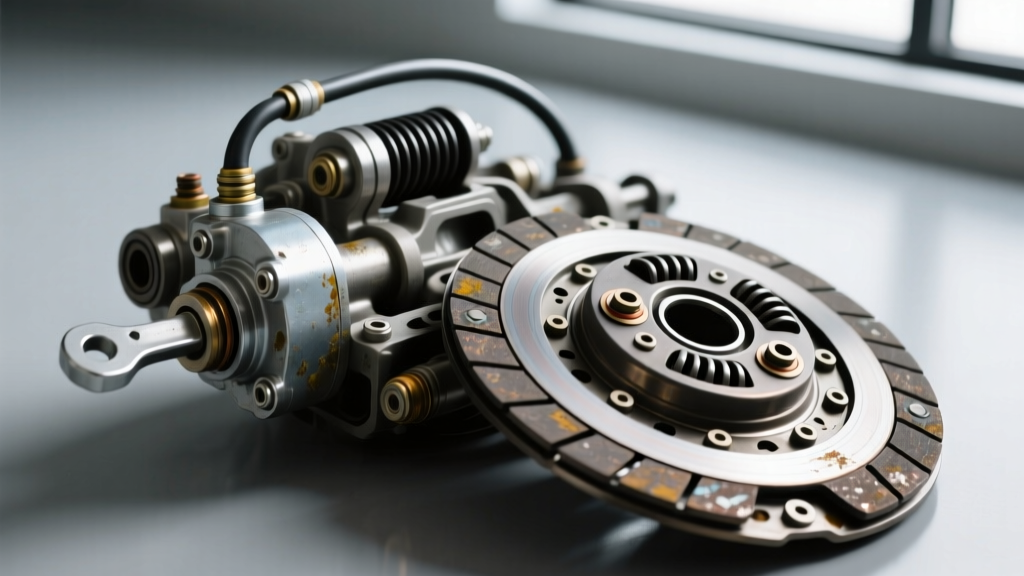
Modern manual transmissions, including the GM Tremec TR-6060 and Honda K-series applications, utilize a Concentric Slave Cylinder (CSC) that wraps around the transmission input shaft. The CSC eliminates the need for a mechanical release fork but introduces a critical wear point. The internal piston seal rides on a plastic or aluminum bore. Over time, heat and contaminated hydraulic fluid cause the bore to score. When the CSC seal bypasses, the pedal sticks to the floor. Furthermore, the CSC bearing surface can wear a lip into the pressure plate fingers. When diagnosing a sticky pedal on a CSC-equipped vehicle, the CSC and the friction assembly must be evaluated as a single, interdependent lifespan unit. Tremec documentation explicitly mandates replacing the CSC whenever the clutch friction assembly is serviced, as reusing a heat-cycled CSC is a primary cause of premature warranty returns and recurring pedal stick.
Replacement Costs, Torque Specifications, and Best Practices
Addressing a sticky clutch pedal caused by mechanical wear requires a comprehensive replacement strategy. Piecemeal repairs (e.g., replacing only the friction disc while reusing a grooved pressure plate or worn pivot ball) will result in immediate recurrence of the binding symptom.
- Parts Cost: A high-quality OEM-equivalent kit (such as a LuK RepSet Pro or Sachs Performance kit) typically ranges from $350 to $650. This should include the friction disc, pressure plate, release bearing/CSC, and alignment tool. Add $200-$400 if a Dual-Mass Flywheel replacement is required.
- Labor Costs: Transmission removal and installation generally requires 6 to 9 hours of book time. At an average independent shop rate of $120 to $160 per hour, expect labor to range from $720 to $1,440.
- Critical Torque Specs: When reinstalling, flywheel-to-crankshaft bolts must be torqued to exact OEM specifications. For example, many VW/Audi DMF applications require a torque-to-yield sequence of 44 lb-ft (60 Nm) plus an additional 90-degree turn. Pressure plate bolts should be torqued in a star pattern, typically to 18-22 lb-ft, using blue Loctite to prevent backing out under high-RPM vibration.
- Spline Lubrication: Apply a microscopic amount of high-molybdenum spline grease to the input shaft. Over-greasing will cause centrifugal force to throw the grease onto the friction material, ruining the new clutch immediately.
Conclusion
A sticky clutch pedal is a vital communication from your drivetrain. While hydraulic faults are common, ignoring the mechanical wear signs—such as diaphragm finger grooving, input shaft spline bind, and DMF runout—can lead to stranded vehicles and damaged transmission housings. By utilizing precise measurement tolerances and following a strict diagnostic protocol, you can accurately read the lifespan indicators of your clutch system and execute a definitive, long-lasting repair.