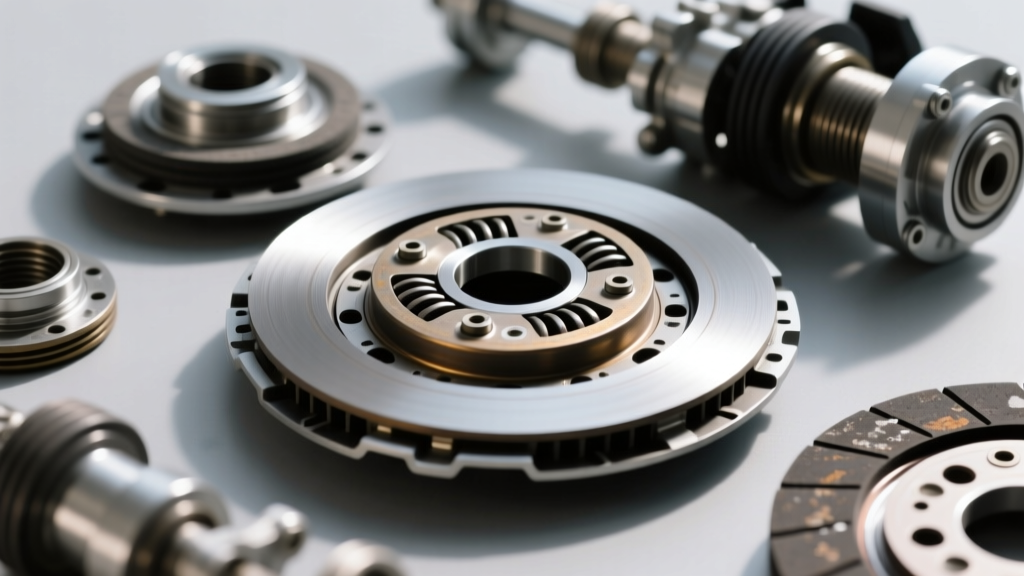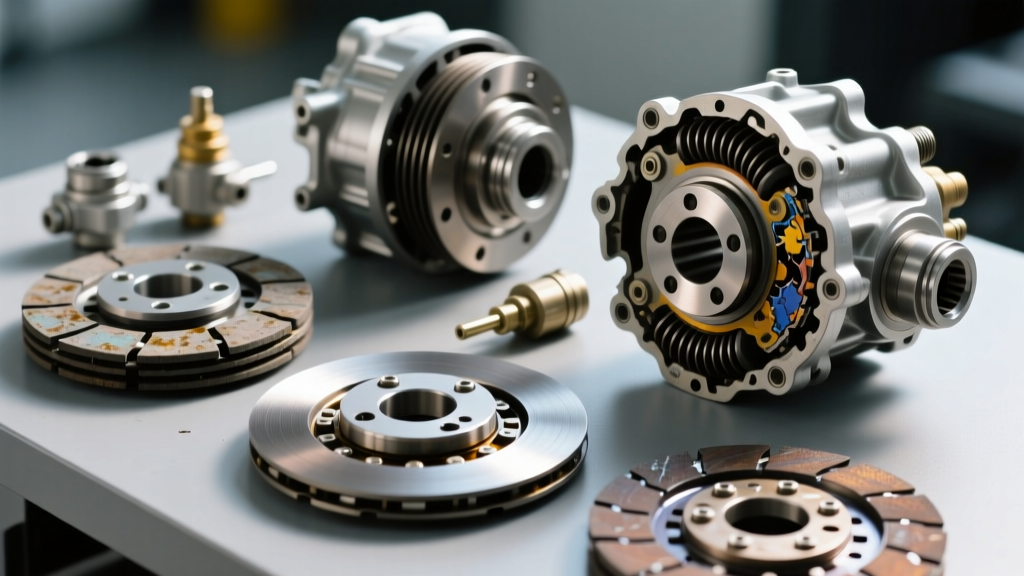
The Critical Role of the DD15 Fan Clutch in Heavy-Duty Applications
In the realm of heavy-duty commercial vehicles, the Detroit Diesel DD15 14.8L inline-six engine is a powerhouse designed for long-haul efficiency and massive torque output. However, managing the immense thermal energy generated by this engine requires a highly responsive cooling system. At the heart of this system is the fan clutch. Unlike the traditional friction clutches found in manual transmissions that connect the engine to the drivetrain, the DD15 fan clutch is an accessory drive clutch responsible for engaging and disengaging the engine cooling fan. When this component begins to fail, it creates a cascade of performance issues, ranging from severe parasitic horsepower loss to catastrophic engine overheating under heavy grades.
For fleet managers and independent owner-operators, understanding the diagnostic pathways and performance upgrade options for the DD15 fan clutch is essential for maximizing uptime and fuel economy. In this comprehensive 2026 performance and upgrade guide, we will dissect the anatomy of the DD15 fan clutch system, outline precise diagnostic procedures for common failure modes, and evaluate the heavy-duty upgrade paths available from top-tier manufacturers like Horton Industries and legacy Kysor systems.
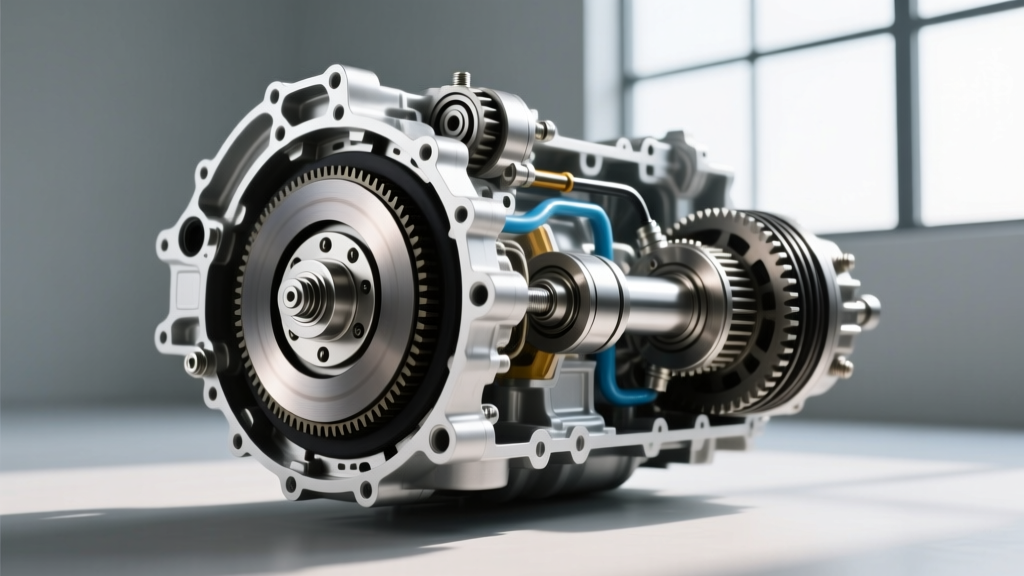
Anatomy of the DD15 Pneumatic Fan Clutch System
The vast majority of DD15 engines equipped in Freightliner Cascadia and Western Star models utilize a pneumatic, spring-engaged, air-disengaged fan clutch. This failsafe design is critical for commercial applications: if the truck loses air pressure or the electrical solenoid fails, the internal compression spring forces the friction plates together, engaging the fan to prevent engine meltdown.
The system relies on the Engine Control Module (ECM) to monitor coolant temperatures, intake manifold temperatures, and A/C head pressures. When cooling is required, the ECM grounds the fan control solenoid, venting the air pressure from the clutch actuator. The spring then engages the friction liner against the drive plate, locking the fan to the front gear train. Conversely, when cooling demands drop, the ECM cuts power to the solenoid, allowing 90 to 120 PSI of onboard air to compress the spring and disengage the clutch, allowing the fan to freewheel and reducing parasitic drag by up to 20 horsepower.
Top 3 DD15 Fan Clutch Symptoms & Diagnostic Procedures
Diagnosing a failing fan clutch requires a systematic approach, separating mechanical wear from pneumatic or electrical faults. Below are the three most prevalent symptoms encountered in heavy-duty commercial operations.
1. Continuous Roaring at Highway Speeds (Failed to Disengage)
If the fan remains engaged while cruising at 65 MPH on flat terrain, the engine will exhibit a loud, continuous roaring noise, and fuel economy will plummet due to parasitic drag. This symptom indicates that the clutch is failing to receive or utilize the air pressure required to compress the disengagement spring.
- Diagnostic Step 1: Connect a digital manometer to the air supply line at the clutch solenoid. Verify that the truck's secondary air system is delivering a minimum of 100 PSI.
- Diagnostic Step 2: Use a diagnostic scan tool to command the fan clutch OFF. Listen for the distinct 'click' of the solenoid valve. If the solenoid clicks but the fan remains engaged, inspect the air line for kinks or internal delamination.
- Diagnostic Step 3: If air pressure is present at the clutch housing but it fails to disengage, the internal O-rings or the air chamber diaphragm have likely ruptured, requiring a complete clutch replacement or rebuild kit.
2. Coolant Overheating Under Heavy Load (Failed to Engage)
Conversely, if the DD15 begins to push coolant temperatures past 225°F while pulling a loaded trailer up a 6% grade, the fan clutch is slipping or failing to engage. This is a critical failure mode that can lead to warped cylinder heads or blown head gaskets.
- Diagnostic Step 1: With the engine off and cool, attempt to rotate the fan blade by hand. A healthy, disengaged pneumatic clutch should offer slight resistance but turn smoothly. If it spins with zero resistance or feels completely seized, the internal friction material is compromised.
- Diagnostic Step 2: Command the fan ON via the ECM. Use an infrared thermometer to check the temperature differential across the radiator core. If the fan is engaged but the delta-T is minimal, the issue may be a clogged radiator or a failing water pump rather than the clutch itself.
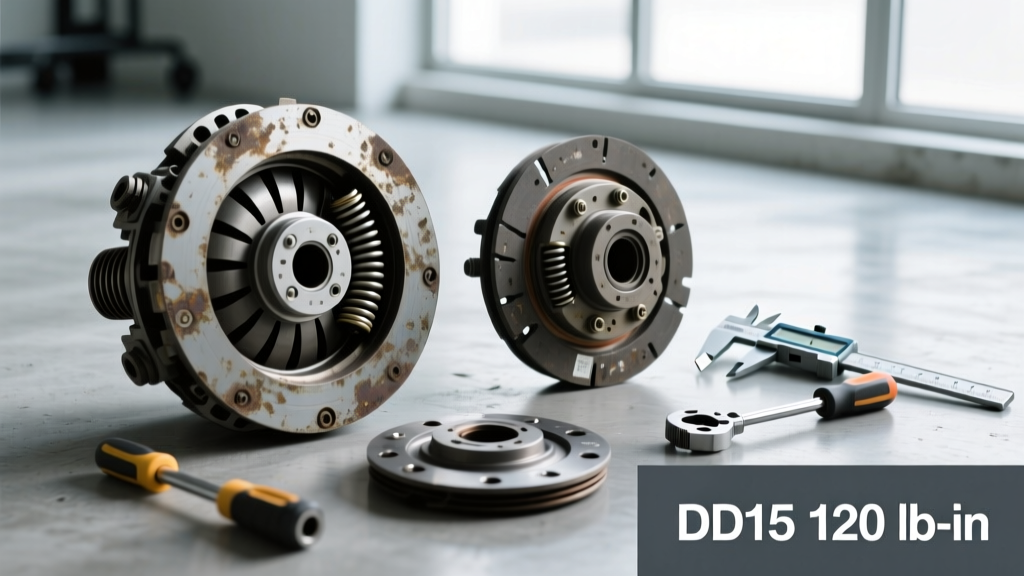
- Diagnostic Step 3: Inspect the friction liner. Heavy-duty clutches utilize a Kevlar or ceramic-infused friction disc. If the disc is glazed, contaminated with oil from a leaking front crankshaft seal, or worn past the 0.040-inch minimum thickness specification, the clutch will slip under high-load aerodynamic resistance.
3. High-Frequency Bearing Whine and Wobble
A high-pitched whine originating from the front of the DD15, accompanied by visible fan blade wobble, points to pilot bearing or hub bearing failure. The fan clutch assembly is subjected to immense gyroscopic forces and vibration. If the front cover mounting bolts are not torqued to specification, or if the internal bearings lose their grease retention, the entire assembly will oscillate, potentially destroying the radiator core.
Performance Upgrades: Pneumatic vs. Viscous Variable-Speed
For fleets looking to optimize the DD15 for maximum fuel efficiency and reduced acoustic cabin noise, upgrading from a traditional pneumatic On/Off clutch to a Viscous Variable-Speed fan clutch is a highly effective performance modification. Viscous drives utilize a silicone-based shear fluid to modulate fan speed infinitely, rather than relying on the binary engagement of a friction disc.
| Specification | Pneumatic On/Off (OEM Standard) | Viscous Variable-Speed (Performance Upgrade) |
|---|---|---|
| Actuation Method | Air Pressure / Mechanical Spring | Silicone Shear Fluid / Bimetallic Strip |
| Engagement Modulation | Binary (100% Locked or Freewheeling) | Infinite Variable (20% to 90% Slip) |
| Parasitic HP Loss (Max) | ~25 HP at 2100 RPM | ~18 HP at 2100 RPM (Optimized Slip) |
| Cabin Noise Profile | High (Abrupt Engagement Roar) | Low (Gradual Ramp-Up) |
| Maintenance Interval | 250,000 Miles (Friction Wear) | 500,000+ Miles (Sealed Fluid Unit) |
| Estimated Upgrade Cost | $650 - $850 (Replacement) | $1,100 - $1,450 (Conversion Kit) |
While the upfront cost of a viscous upgrade is higher, the reduction in parasitic drag translates to a 1.5% to 2.5% improvement in highway fuel economy, allowing the upgrade to pay for itself within 80,000 miles of long-haul operation. Furthermore, the elimination of the pneumatic air lines reduces the number of potential leak points in the truck's air brake system.
Precision Replacement: Torque Specs and Installation Protocol
Whether you are replacing a worn pneumatic unit with an OEM-equivalent Horton HT22 (Part # 1190-09-001) or performing a viscous conversion, adhering to Detroit Diesel torque specifications is non-negotiable. The DD15 front gear train operates under extreme torsional stress, and improper fastening will result in catastrophic harmonic failure.
- Air System Depressurization: Before unbolting any lines, drain the secondary air reservoir to ensure the clutch is in its spring-engaged state. This locks the fan hub, preventing it from spinning while you apply torque to the mounting bolts.
- Fan Blade Removal: Remove the 6 fan blade retaining bolts. Torque specification for reinstallation is 45 lb-ft (61 Nm). Apply a medium-strength threadlocker to prevent backing out due to vibration.
- Hub to Drive Plate Fasteners: The fan clutch hub is secured to the engine drive plate via 4 or 6 heavy-duty metric bolts (typically M12x1.25). The factory torque specification is 85 lb-ft (115 Nm). Always use a crisscross star pattern to ensure even clamping force across the friction surface.
- Solenoid and Air Line Testing: After installation, apply 120 PSI of shop air directly to the clutch air port before reconnecting the truck's electrical harness. Verify that the internal diaphragm compresses smoothly and the fan freewheels without metallic scraping.
2026 Market Pricing and Sourcing Strategy
Navigating the heavy-duty aftermarket requires an understanding of current supply chain dynamics. As of 2026, OEM-branded fan clutches sourced directly through Freightliner or Detroit Diesel dealerships typically carry a premium, ranging from $900 to $1,200 for the complete assembly. However, the OEM suppliers themselves—namely Horton and Kysor (now integrated under the Horton umbrella)—offer identical heavy-duty units through commercial truck parts distributors at a 20% to 30% discount.
When sourcing a replacement, always verify the core charge requirements. Most heavy-duty fan clutches carry a $150 to $250 core charge, making it highly economical to rebuild existing units using genuine friction liner and O-ring seal kits if the internal bearings and air chambers are structurally sound. For fleets operating in extreme ambient temperatures or high-altitude routes, bypassing the standard friction clutch in favor of a heavy-duty viscous drive remains the premier performance upgrade, ensuring that the DD15 maintains optimal thermal equilibrium while delivering maximum torque to the drivetrain.