Drivetrain Anatomy: How Many Differentials Does the 2020 STI Have?
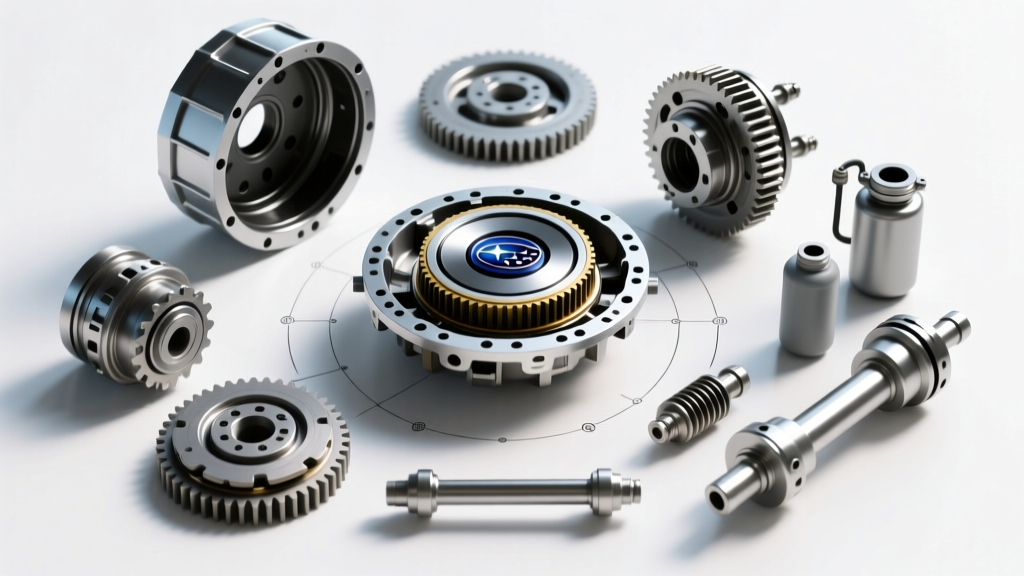
When enthusiasts and technicians ask, how many differentials does the 2020 STI have, the answer highlights the complexity of Subaru’s legendary Symmetrical All-Wheel Drive system. Unlike standard AWD vehicles that rely on a simple power take-off (PTO) or a basic viscous coupling, the 2020 Subaru WRX STI utilizes a highly sophisticated three-differential layout:
- Front Differential: A helical limited-slip differential integrated directly into the 6-speed manual transaxle casing.
- Center Differential: The iconic Driver Controlled Center Differential (DCCD), featuring a planetary gearset with an electromagnetic clutch and a mechanical limited-slip mechanism to manage front-to-rear torque split.
- Rear Differential: A dedicated Torsen (Torque Sensing) Type R160 limited-slip differential mounted in the rear subframe.
Understanding this tri-differential architecture is critical for accurate symptom diagnosis. Because the drivetrain is permanently locked in a mechanical AWD configuration, a whine, clunk, or binding sensation can easily be misdiagnosed. A failing center DCCD can mimic rear differential failure, and transmission gear whine often bleeds through the driveshaft, tricking the ear. In this guide, we isolate the rear differential (R160 Torsen), focusing on advanced symptom diagnosis, fluid degradation analysis, and precise maintenance protocols for the 2020 STI.
Isolating the Rear Differential: NVH Troubleshooting Framework
Noise, Vibration, and Harshness (NVH) diagnosis on a 2020 STI requires a systematic approach to separate rear differential faults from the transmission or center DCCD. The rear Torsen differential relies on helical worm gears and thrust washers rather than clutch packs, meaning it does not require specialized limited-slip friction modifiers, but it is highly sensitive to gear lash and bearing preload.
1. Whining and Howling: Gear Mesh vs. Bearing Failure
Gear whine is the most common complaint on higher-mileage STIs. To diagnose the rear differential, perform a loaded vs. coast-down test on a smooth, flat road at 45-55 mph.
- Drive-Side Whine (Under Load): If the noise occurs only when accelerating, the wear is typically on the drive (convex) side of the ring gear teeth, or the pinion bearing is failing to maintain proper pinion depth under torque.
- Coast-Side Whine (Deceleration): A howl that peaks when you lift off the throttle indicates wear on the coast (concave) side of the ring gear, or excessive ring gear backlash allowing the gears to separate slightly.
- Constant Pitch Whine: If the pitch changes strictly with vehicle speed (not RPM) and persists regardless of load or coast, suspect a worn rear pinion bearing or carrier bearing. Use an automotive stethoscope on the rear differential housing (specifically near the pinion yoke and the side bearing caps) while the vehicle is on a lift and the wheels are spun in gear to pinpoint the exact bearing.
2. Clunking and Driveline Lash
A sharp metallic clunk when shifting from 1st to 2nd gear, or when abruptly transitioning from braking to acceleration, often points to excessive ring-and-pinion backlash. The factory specification for the Subaru R160 rear differential backlash is incredibly tight: 0.004 to 0.007 inches (0.10 - 0.18 mm). If backlash exceeds 0.010 inches, the helical gears in the Torsen unit and the main ring-and-pinion will impact each other, causing severe shock loading. This requires removing the differential cover and measuring the backlash with a magnetic dial indicator mounted to the housing.
3. Cornering Bind and Chatter
While the Torsen LSD is gear-driven and avoids the clutch-pack chatter common in Subaru’s older viscous or plated LSDs, it can still bind during tight, low-speed parking maneuvers if the fluid has severely degraded. The helical spider gears rely on a precise hydrodynamic film of 75W-90 GL-5 gear oil. When the extreme pressure (EP) additives shear down and the base oil oxidizes, the thrust washers inside the Torsen unit experience metal-on-metal friction, resulting in a hopping or chattering sensation from the rear wheels.
Rear Differential Service: Fluid Specifications & Torque Data
Routine fluid service is the first line of defense against Torsen binding and gear wear. Subaru recommends inspecting the rear differential fluid every 30,000 miles and replacing it under severe driving conditions (track use, aggressive canyon driving, or frequent towing). Below is the exact service data for the 2020 STI rear differential.
| Parameter | Specification / Part Number |
|---|---|
| Fluid Type | 75W-90 API GL-5 Gear Oil |
| Fluid Capacity | 0.8 Liters (0.85 US Quarts) |
| Drain & Fill Plug Torque | 35.4 lb-ft (48 Nm) |
| Crush Washer Part # | 803918060 (18mm ID) |
| Ring Gear Backlash Spec | 0.004 - 0.007 in (0.10 - 0.18 mm) |
| Pinion Bearing Preload | 8 - 12 in-lbs (Rotating Torque) |
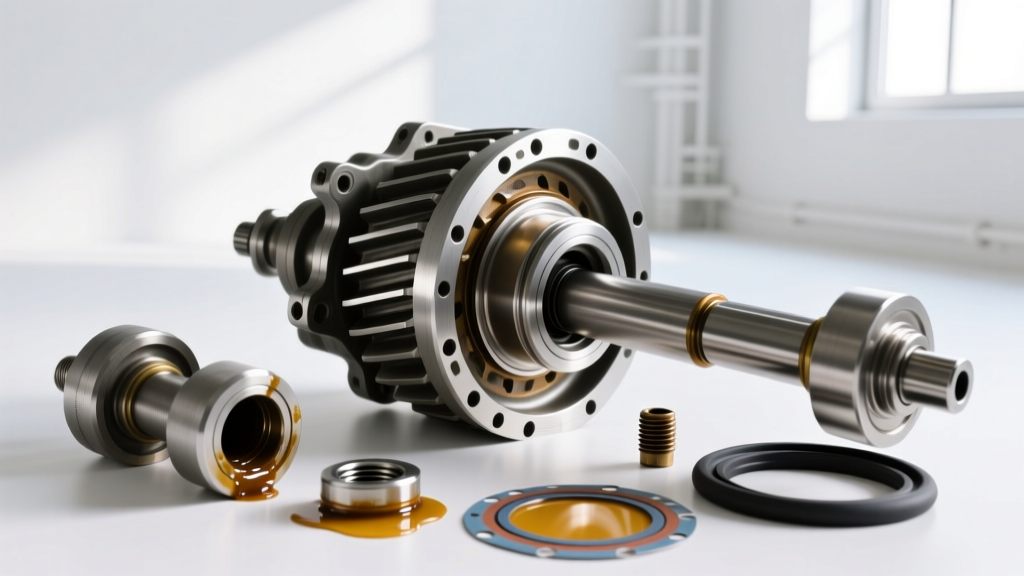
Note: Always source OEM Subaru crush washers or high-quality equivalents. Reusing stretched aluminum crush washers on the differential plugs is a primary cause of slow seepage, which leads to fluid starvation and catastrophic Torsen failure.
Step-by-Step Rear Differential Fluid Service Protocol
Performing a rear differential service on the 2020 STI is straightforward, but requires strict adherence to sequence to avoid stranding the vehicle with an empty differential.
- Preparation: Drive the vehicle for 10-15 minutes to bring the rear differential fluid up to operating temperature (approx. 140°F / 60°C). This suspends metallic particulates in the oil for a more complete drain.
- Access: Safely lift the vehicle on a four-post lift or jack stands, ensuring the chassis is level. An unlevel chassis will result in an under-filled or over-filled differential, leading to aeration or blown seals.
- The Golden Rule: Using a 1/2-inch drive ratchet, remove the FILL plug first. Never remove the drain plug before confirming the fill plug is free. If the fill plug is seized and you drain the fluid, the vehicle is immobilized until the plug is extracted.
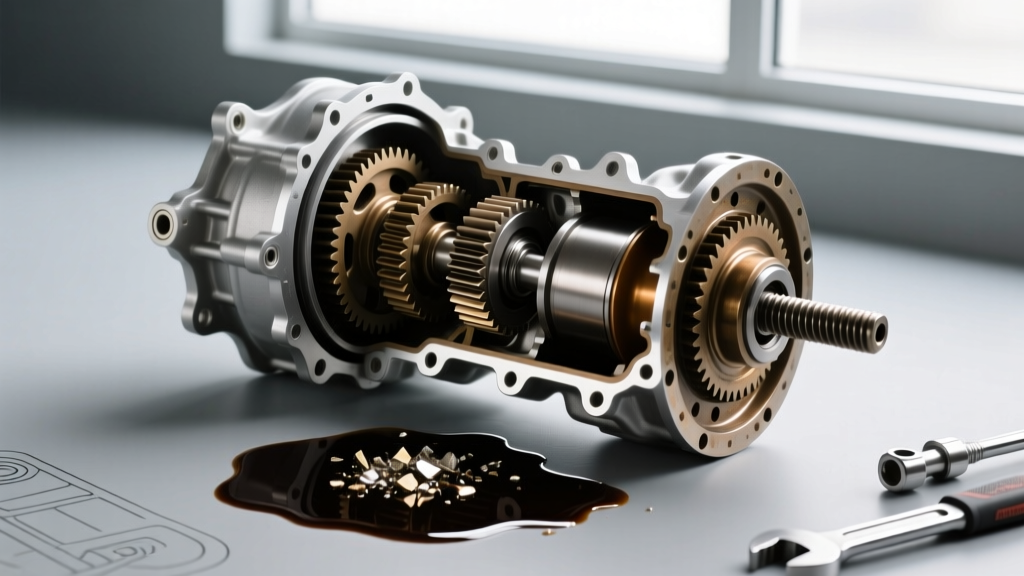
- Drain and Inspect: Remove the drain plug and allow the fluid to empty into a catch pan. Inspect the magnetic tip of the drain plug. A fine, silvery paste is normal wear from the Torsen helical gears. Large, jagged ferrous shards or brass-colored flakes indicate thrust washer or bearing cage failure, necessitating a full teardown.
- Refill: Install the drain plug with a new 803918060 crush washer. Torque to 35.4 lb-ft (48 Nm). Using a fluid transfer pump, fill the differential with 0.8L of high-quality 75W-90 GL-5 synthetic gear oil. For track-driven STIs, we recommend upgrading to a high-shear synthetic like Red Line 75W-90 NS or ShockProof Heavy, which resists thermal breakdown under extreme DCCD-induced torque loads.
- Final Torque: Once fluid begins to weep from the fill hole, wait 60 seconds for the level to settle. Install the fill plug with a new crush washer and torque to 35.4 lb-ft.
Advanced Diagnostics: Gear Pattern Reading and Rebuilds
If a fluid service and backlash check do not resolve a persistent whine, the rear differential must be removed from the vehicle and the rear cover dropped to inspect the gear wear pattern. Applying yellow gear-marking compound to the ring gear teeth allows you to read the contact patch.
- Ideal Pattern: The contact patch should be centered on the tooth face, slightly biased toward the toe (the narrower, inner end of the tooth), and cover about 50-70% of the tooth height.
- Heel Bias (Toward the outer edge): Indicates the pinion gear is too close to the ring gear. This requires adding shims to the pinion depth to move it away from the ring gear centerline.
- Toe Bias (Excessive inward): Indicates the pinion is too far from the ring gear. Pinion depth shims must be removed.
- Face/Flank Bias (High or Low): Dictated by the ring gear backlash. Adjusting the side bearing carrier shims alters the backlash and moves the pattern up or down the tooth face.
Setting up a Subaru R160 Torsen differential requires specialized tools, including a pinion depth gauge and an inch-pound torque wrench to measure pinion bearing preload via the collapsible crush sleeve. Because the 2020 STI utilizes a specific Torsen gearset that is not interchangeable with standard open differential carriers, sourcing replacement parts can be costly. A complete OEM rear differential assembly from Subaru TechInfo or a dealer network typically ranges from $2,200 to $3,500, while a professional rebuild using aftermarket Ring & Pinion master bearing kits and a refurbished Torsen unit averages $1,200 to $1,800 in labor and parts.
Summary: Protecting the STI's Rear End
Knowing how many differentials the 2020 STI have is just the beginning of mastering its drivetrain. The rear R160 Torsen differential is a remarkably robust piece of engineering, capable of handling well over 500 wheel-horsepower when properly maintained. By isolating NVH symptoms through load-testing, strictly adhering to 75W-90 GL-5 fluid intervals, and verifying backlash with precision measuring tools, you can ensure the rear differential operates flawlessly, translating the DCCD's complex torque splits into immediate, predictable traction.