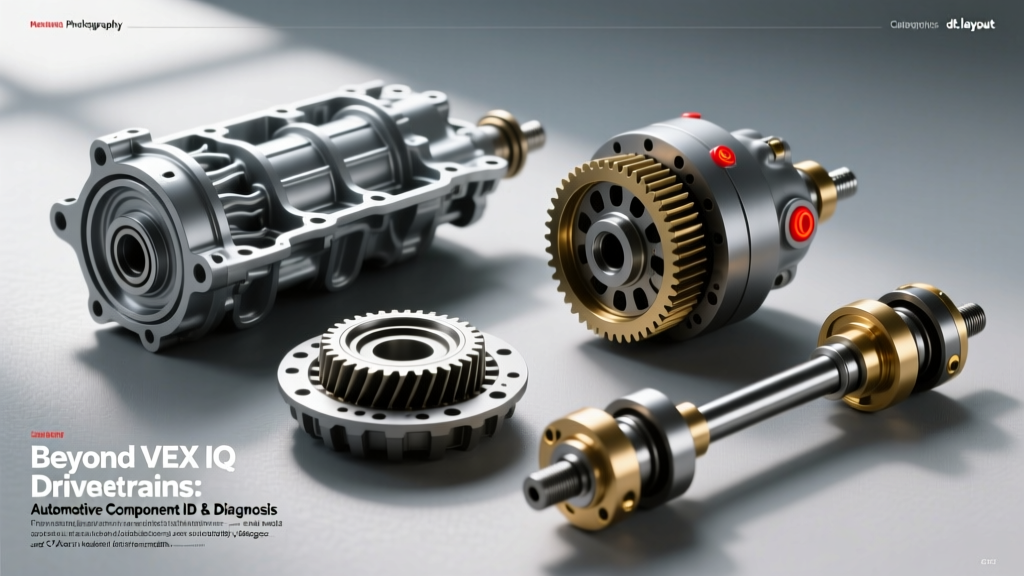
The Engineering Bridge: Cross-Disciplinary Drivetrain Diagnostics
At first glance, comparing a heavy-duty automotive transfer case to a mountain bike component seems unconventional. However, as of 2026, the fundamental physics of chain-driven torque transfer, sprocket engagement, and clutch-based modulation remain identical across scales. Whether you are diagnosing a slipping BorgWarner 4406 transfer case in a Ford F-150 or troubleshooting chain skip in a SRAM GX drivetrain on a trail bike, the mechanical failure modes—tensile elongation, pitch mismatch, and clutch drag—share the same engineering DNA.
For automotive technicians and drivetrain engineers, understanding the micro-mechanics of the SRAM GX drivetrain offers a masterclass in precision component identification. The narrow-wide tooth profiles and roller bearing clutches found in modern bicycle drivetrains directly parallel the torque-vectoring clutch packs and Morse chain sprockets used in modern automotive AWD systems. This guide bridges the gap, providing a cross-disciplinary troubleshooting framework for chain and clutch-based drivetrains.
Core Component Identification: Chains, Sprockets, and Clutches
Accurate symptom diagnosis begins with precise component identification. Both automotive 4WD systems and the SRAM GX drivetrain rely on three primary torque-transfer nodes: the drive sprocket, the chain, and the engagement clutch.
Automotive Chain-Driven Transfer Cases (e.g., BorgWarner 4406)
The BorgWarner 4406 and 4407 transfer cases, ubiquitous in 2004-2014 Ford F-150s and Expedition models, utilize an inverted-tooth Morse chain. Unlike standard roller chains, Morse chains use stacked, V-shaped link plates that engage with straight-cut sprocket teeth. This design distributes load across multiple teeth simultaneously, handling up to 2,500 lb-ft of input torque.
- Drive/Driven Sprockets: Machined from hardened powdered metal. Identification feature: straight-cut teeth designed for Morse link engagement.
- Clutch Pack: Located behind the rear output shaft, this multi-plate friction pack (often controlled by a gerotor pump or electromagnetic actuator) manages torque-on-demand (TOD) AWD engagement.
- Planetary Gearset: Provides the 2.64:1 low-range reduction, utilizing helical-cut gears for noise reduction.
The SRAM GX Drivetrain Architecture
The SRAM GX Eagle 12-speed system represents the pinnacle of tensile chain management. While it handles a fraction of the torque of an F-150, the shock loads from pedal strikes and the extreme cross-chaining angles demand aerospace-level metallurgy.
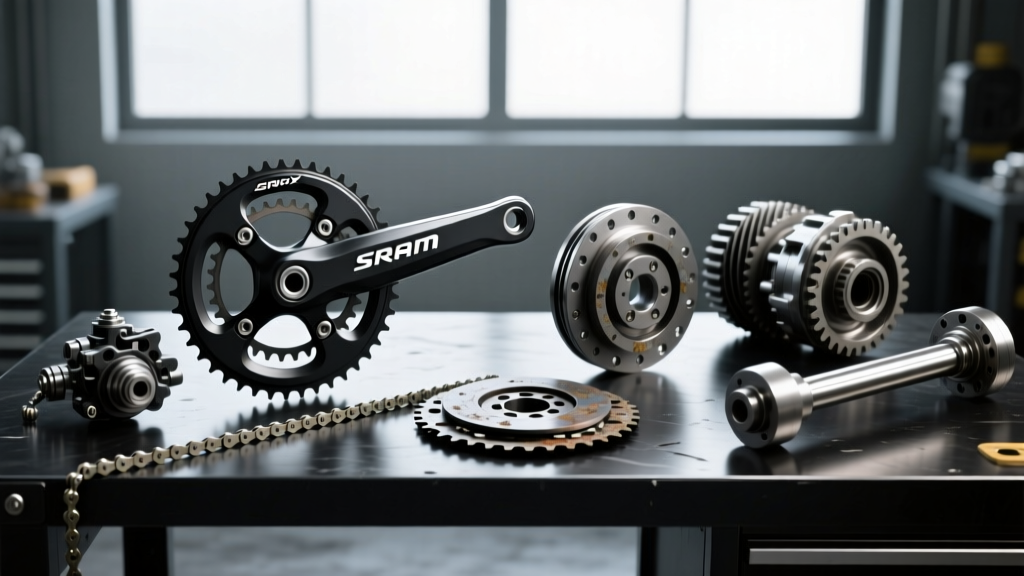
- X-SYNC 2 Chainring: Features a proprietary narrow-wide tooth profile. The tall, hooked teeth positively engage the inner and outer links of the chain, eliminating the need for a chain guide.
- PC-GX-1230 Chain: A solid-pin roller chain with a 12.7mm (1/2-inch) pitch. The outer plates feature a nickel plating for corrosion resistance and reduced friction.
- Type 3 Roller Bearing Clutch: Housed within the rear derailleur cage, this one-way roller clutch maintains chain tension over rough terrain, preventing 'chain slap' and derailment.
Symptom Diagnosis: Chain Stretch and Pitch Mismatch
The most common failure point in any chain-driven drivetrain is tensile elongation, colloquially known as 'chain stretch.' As the chain articulates, friction wears the pins and bushings, increasing the overall pitch length. When the elongated chain is forced onto a fixed-pitch sprocket, it rides higher on the teeth, causing catastrophic wear.
Automotive Symptoms: The 'Binding' and 'Whining' Phenomenon
In a BW4406 transfer case, chain stretch manifests as a distinct whining noise under load at highway speeds (45-65 mph), or as 'binding' during tight turns in AWD mode. As the chain elongates, it fails to seat deeply into the sprocket. Under high torque, the chain skips a tooth, sending a shockwave through the driveline that is often misdiagnosed as a failing rear differential or U-joint.
Diagnostic Test: Lift the vehicle on a 4-post hoist. Place the transfer case in AWD. Rotate the front output shaft by hand and measure the rotational backlash before the rear output engages. More than 15 degrees of free-play indicates severe Morse chain stretch or sprocket hooking. Replacement Part # HW-046 (Morse Chain) is required.
SRAM GX Symptoms: Chain Skip and Ghost Shifting
On a mountain bike, chain stretch results in 'chain skip' under heavy pedaling loads, particularly in the 10T and 12T cogs of the PG-1230 cassette. Because the 12-speed chain has an ultra-narrow 5.25mm outer width, even 0.5% elongation causes the chain to ride the ramps of the cassette rather than seating in the valleys.
Comparative Wear Limits and Torque Specifications
Proper maintenance relies on adhering to strict manufacturer tolerances. The table below compares the critical service specifications between the automotive BorgWarner 4406 and the SRAM GX drivetrain.
| Specification | BorgWarner 4406 (Auto 4WD) | SRAM GX Eagle (12-Speed) |
|---|---|---|
| Chain Type | Inverted Tooth (Morse Link) | Roller Chain (Solid Pin) |
| Max Wear Limit (Elongation) | 0.50% (Pin-to-Pin measurement) | 0.75% (Measured via CC-4 Tool) |
| Primary Engagement Clutch | Multi-plate Friction Pack (TOD) | Type 3 Roller Bearing (Derailleur) |
| Critical Torque Spec | Drain/Fill Plug: 22 Nm (16 lb-ft) | Cassette Lockring: 40 Nm (354 lb-in) |
| Fluid / Lubricant | Mercon V ATF (~1.9 Liters) | SRAM Chain Lube / Grease (Derailleur) |
| Service Interval | 60,000 Miles (Fluid Drain & Fill) | 500 Hours (Derailleur Clutch Rebuild) |
Troubleshooting the Clutch: Friction Packs vs. Roller Bearings
Both systems utilize clutches to manage tension and torque distribution, but their failure modes require entirely different diagnostic approaches.
Automative Transfer Case Clutch Shudder
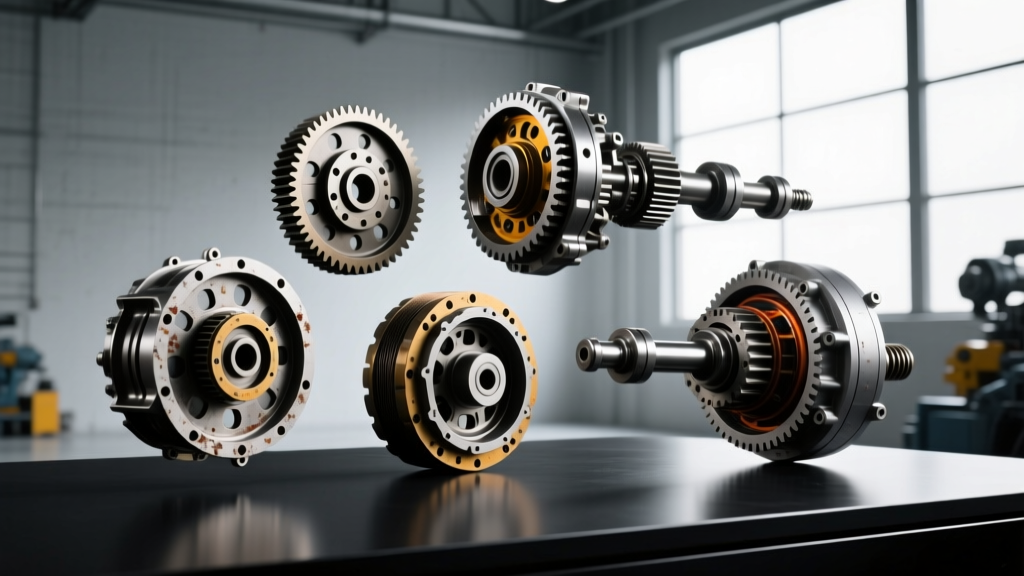
The TOD clutch pack in the BW4406 uses alternating steel and friction-lined plates. Over time, the friction material degrades, and the transfer case fluid becomes contaminated with metallic particulate. Symptom: A rhythmic 'shudder' or 'chatter' felt through the chassis during low-speed acceleration in AWD mode. Fix: Perform a drain and fill using exactly 1.9 liters of Mercon V. If shudder persists, the clutch pack (Part # 4406-700) must be replaced, as the friction material is permanently glazed.
SRAM GX Derailleur Clutch Drag and Chain Slap
The Type 3 Roller Bearing Clutch in the SRAM GX derailleur uses a one-way needle bearing encased in a sealed drum. When contaminated with dirt or when the internal grease dries out, the clutch either locks up completely (causing premature chainring wear and stiff shifting) or slips (causing violent chain slap). Symptom: The derailleur cage droops over rough terrain, and the chain strikes the chainstay. Fix: Disassemble the clutch drum using a 3mm hex and T25 Torx, clean the needle bearings with isopropyl alcohol, and repack with SRAM's specific Buzz Kill grease (Part # 00.7518.025.000).
Preventative Maintenance and Diagnostic Workflows
To maximize the lifespan of any chain-driven drivetrain, implement the following diagnostic workflows during routine service intervals.
- Visual Sprocket Inspection: Look for 'shark-fin' or hooked teeth. In the SRAM GX system, inspect the X-SYNC 2 narrow-wide teeth; if the 'wide' teeth are worn down to the height of the 'narrow' teeth, the chainring is compromised and will drop chains under lateral load.
- Pitch Measurement: Never guess chain wear. Use a calibrated pitch gauge. For the SRAM GX, insert the 0.75% side of the CC-4 tool. If it drops fully into the chain links, replace the chain immediately to save the $110+ cassette. For the BW4406, measure 10 links of the Morse chain; if the distance exceeds the factory spec by more than 1/16th of an inch, the chain and both sprockets must be replaced as a matched set.
- Fluid Analysis (Auto): When draining the transfer case, wipe the magnetic drain plug. A fine metallic paste is normal wear. Flakes or chunks of bronze indicate planetary gear thrust washer failure, requiring a complete teardown.
Conclusion
Whether you are turning wrenches on a 6,000-lb truck or tuning a high-performance mountain bike, the laws of mechanical engagement remain absolute. By applying the rigorous component identification and symptom diagnosis techniques used in automotive transfer cases to systems like the SRAM GX drivetrain, technicians can accurately predict failures, optimize torque transfer, and eliminate drivetrain binding. For more technical deep-dives, consult the BorgWarner Transfer Case Engineering Portal and the SRAM Technical Service Manuals.