The Hidden Physics of Drivetrain NVH
When enthusiasts and professional builders select aftermarket clutch discs, the primary focus is almost always on friction material—organic, Kevlar, sintered iron, or carbon. However, the hub design of the disc is equally critical to the survival of your transmission and the drivability of the vehicle. The internal combustion engine does not produce smooth, continuous rotational force; it delivers power in violent, discrete pulses. A four-cylinder engine at an 800 RPM idle generates over 26 torsional shockwaves per second. Without proper dampening, these harmonic frequencies will rattle transmission gears, accelerate spline wear, and ultimately shatter input shafts. This is where the engineering debate between sprung and unsprung clutch discs becomes paramount.
Anatomy of Torsional Dampening: Sprung Hub Clutch Discs
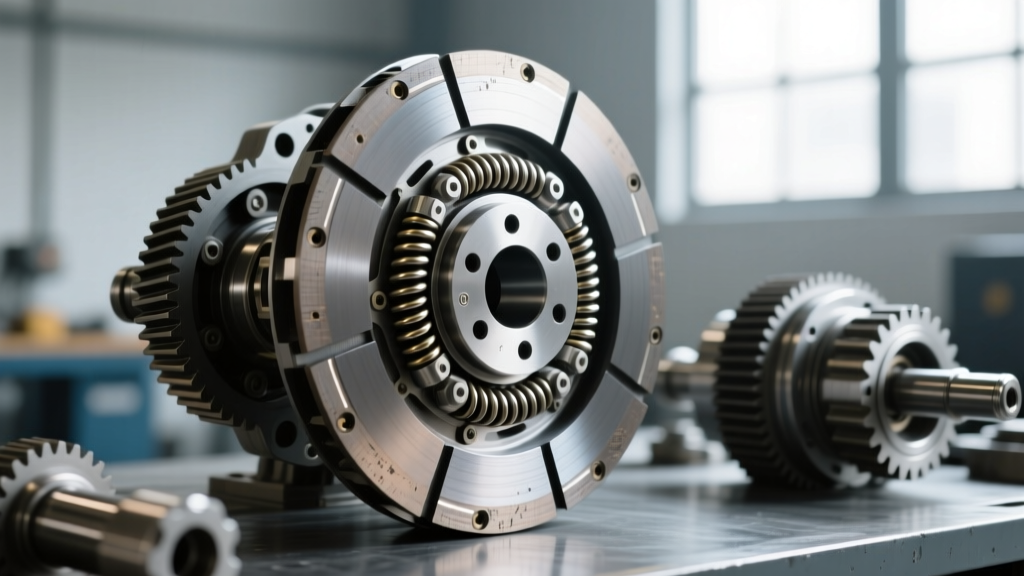
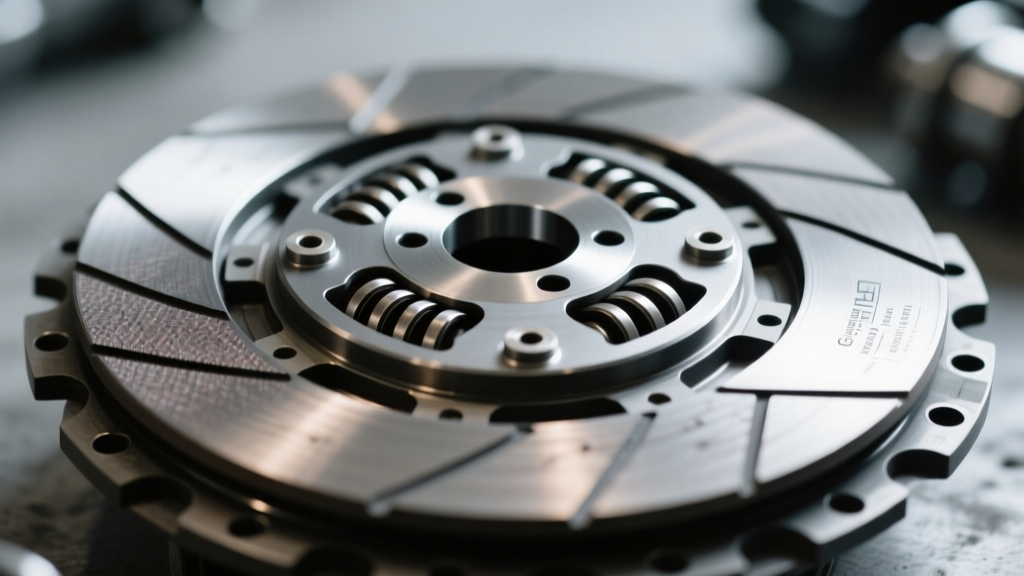
A sprung clutch disc features a hub assembly that is not rigidly welded to the outer friction plate. Instead, the hub sits inside a windowed steel retainer plate, separated by a series of heavy-duty coil springs (torsional dampers). As the friction plate engages the flywheel, engine torque compresses these springs before rotating the transmission input shaft.
Multi-Stage Dampening and Marcel Springs
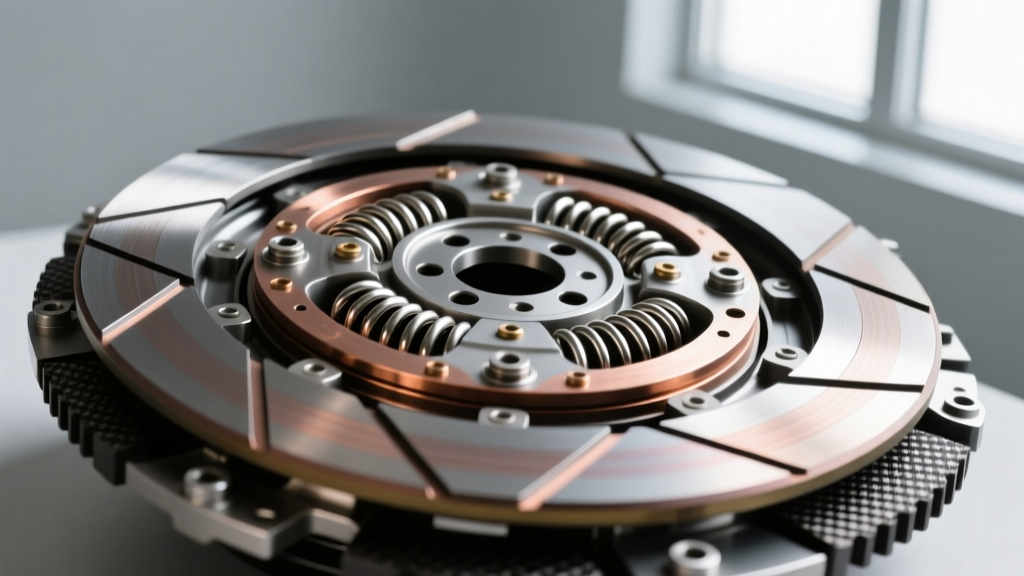
Modern high-performance sprung discs, such as those manufactured by Advanced Clutch Technology (ACT) or Exedy, utilize multi-stage dampening. Lighter springs engage first to absorb low-RPM idle vibrations, while stiffer secondary springs bottom out to handle high-torque shock loads during aggressive launches. Additionally, these discs often feature a "Marcel" spring (or cushion ring)—a wavy steel ring sandwiched between the two friction facings. This Marcel spring provides axial compliance, ensuring smooth pedal engagement and reducing clutch chatter during daily stop-and-go driving.
The Case for Rigid Hubs: Unsprung Clutch Discs
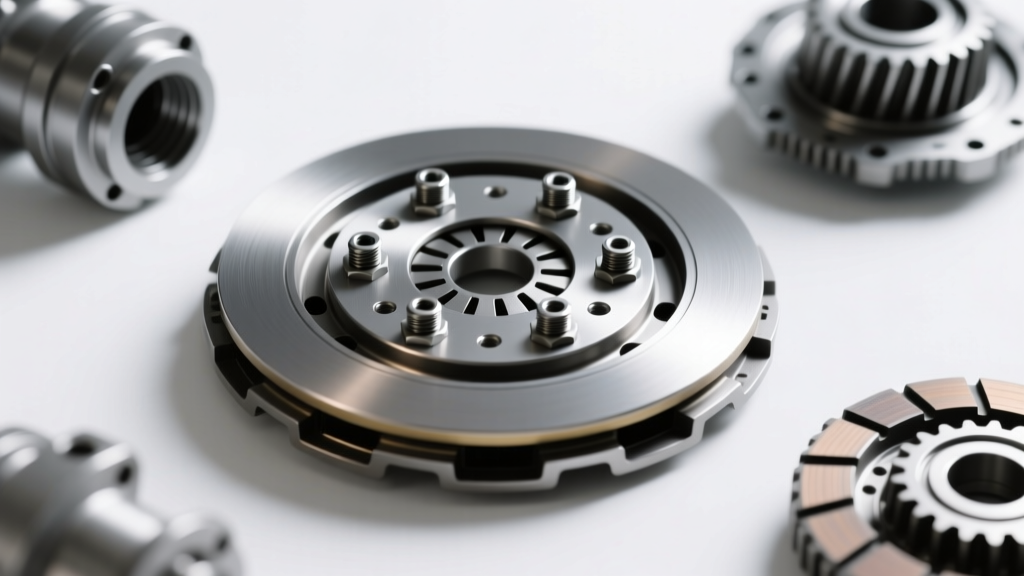
Unsprung (or solid hub/rigid) clutch discs eliminate the torsional springs entirely. The splined hub is riveted or welded directly to the friction plate carrier. This design offers several distinct advantages for dedicated motorsport applications:
- Reduced Rotational Mass: Removing the heavy steel hub plates and coil springs reduces the moment of inertia. This allows the engine to rev and drop RPMs faster, facilitating lightning-quick rev-matching and reducing shift times.
- Zero Hub Failure Risk: In extreme torque applications (e.g., 1,200+ lb-ft drag racing setups), the windows in a sprung hub can fatigue and crack, or the springs can sag and bind. A solid billet steel or aluminum hub eliminates this mechanical weak point.
- Thinner Profile: Without the bulky spring retainer plates, unsprung discs can be manufactured thinner, allowing for tighter packaging in multi-plate clutch assemblies.
The Dual-Mass Flywheel (DMF) Variable
The most common and costly mistake made in modern clutch replacements is misunderstanding the relationship between the flywheel and the clutch disc hub. Many late-model performance vehicles—including the Porsche 997 GT3, BMW E46 M3, and Ford 6.7L Powerstroke—utilize a Dual-Mass Flywheel (DMF) from the factory. In a DMF setup, the heavy torsional dampening springs are relocated from the clutch disc into the flywheel itself. Because the flywheel handles the NVH dampening, the OEM clutch disc is completely rigid (unsprung).
Expert Warning: If you replace a factory DMF with an aftermarket Single Mass Flywheel (SMF) conversion kit, you must install a sprung clutch disc. Installing a rigid, unsprung disc on an SMF will transfer all engine harmonics directly into the transmission, resulting in severe neutral gear rattle, accelerated input shaft bearing failure, and potential catastrophic gear tooth shearing.
Comparative Data: Sprung vs. Unsprung Specifications
| Feature | Sprung Hub (SMF Application) | Unsprung Hub (Race / SMF) | Unsprung Hub (OEM DMF Application) |
|---|---|---|---|
| Torsional Dampening | High (Internal to Disc) | None | High (Internal to Flywheel) |
| Rotational Inertia | Higher | Lowest | Low |
| NVH / Gear Rattle | Minimal | Severe (at idle) | Minimal |
| Typical Use Case | Street, Track Day, Rally | Dedicated Race Cars, Drag | OEM Replacement, Track (with DMF) |
| Avg. Price Range (2026) | $250 - $550 | $400 - $1,500+ | $300 - $700 |
Failure Modes and Edge Cases
Understanding how these components fail is critical for diagnostics and selection. According to technical data from South Bend Clutch, the most common failure of a sprung hub is "spring sag." Over time, the repeated compression of the torsional springs causes them to lose their temper and collapse. This results in a metallic clunking noise during engagement and a reduction in the disc's ability to absorb shock.
Conversely, unsprung discs fail primarily at the friction material or the rivets. Because there is no mechanical "give," the shock load of a hard launch on sticky tires transfers instantly through the hub. If the transmission input shaft spline is not properly lubricated with high-melting-point molybdenum grease, the rigid hub can gall and weld itself to the shaft, causing the clutch to drag or fail to disengage.
Real-World Selection Framework and Installation Specs
When selecting clutch discs for a specific build, follow this decision matrix:
- Identify the Flywheel: Are you retaining the OEM DMF, or converting to an SMF? (DMF = Unsprung Disc; SMF = Sprung Disc).
- Assess the Drivetrain Compliance: Vehicles with solid engine mounts, rigid aluminum subframes, and straight-cut aftermarket gears (like a Tremec T56 Magnum with a face-plated gearset) amplify NVH. A sprung hub is mandatory to prevent cabin drone and gear whine.
- Verify Spline Count and Hub Diameter: Ensure the hub matches the input shaft. For example, a standard GM LS T56 uses a 26-spline, 1.125-inch input shaft, while a ZF S6-53 (BMW) uses a 23-spline setup.
Critical Torque Specifications
Proper installation is just as vital as component selection. When installing the flywheel that mates to your chosen clutch disc, always adhere to OEM or fastener manufacturer torque specs. For example, when installing an aftermarket chromoly SMF on a GM LS engine, the standard M10x1.5 flywheel bolts require 74 lb-ft of torque plus a 90-degree turn. If using aftermarket ARP 2000 fasteners, the spec changes to a flat 90 lb-ft with ARP Ultra-Torque lubricant. Always use a calibrated dial torque wrench and angle gauge; relying on impact wrenches will lead to warped flywheels and uneven clutch disc wear.
Conclusion
The choice between sprung and unsprung clutch discs is not merely a matter of street versus track; it is a fundamental decision regarding drivetrain harmonic management. While the unsprung disc offers undeniable advantages in rotational mass and mechanical simplicity for dedicated racing, the sprung disc remains an engineering marvel essential for the longevity and refinement of street-driven and dual-purpose vehicles. Always match the hub design to your flywheel architecture, and prioritize torsional dampening to protect your transmission investment.