The True Cost of a Spec Stage 3 Clutch Upgrade
When building a 600+ wheel-horsepower street or strip car, the factory clutch is the first component to fail under aggressive boost or sticky rear tires. For many enthusiasts, a spec stage 3 clutch represents the sweet spot between streetability and track-day dominance. However, simply buying the kit is only the beginning of the financial commitment. The friction material you choose—organic, sintered iron, or ceramic—drastically alters not only the upfront price but also the long-term costs associated with flywheel wear, hydraulic upgrades, and drivetrain maintenance.
As of 2026, supply chain stabilization has normalized pricing for billet steel flywheels and high-end friction discs, but the hidden costs of mismatched materials can easily double your drivetrain budget. In this comprehensive cost analysis, we break down the exact pricing, lifespan, and hidden financial pitfalls of upgrading your manual transmission (such as the Tremec T56 Magnum or TR-3650) with different friction compounds.
Material Breakdown: Organic vs. Sintered vs. Ceramic
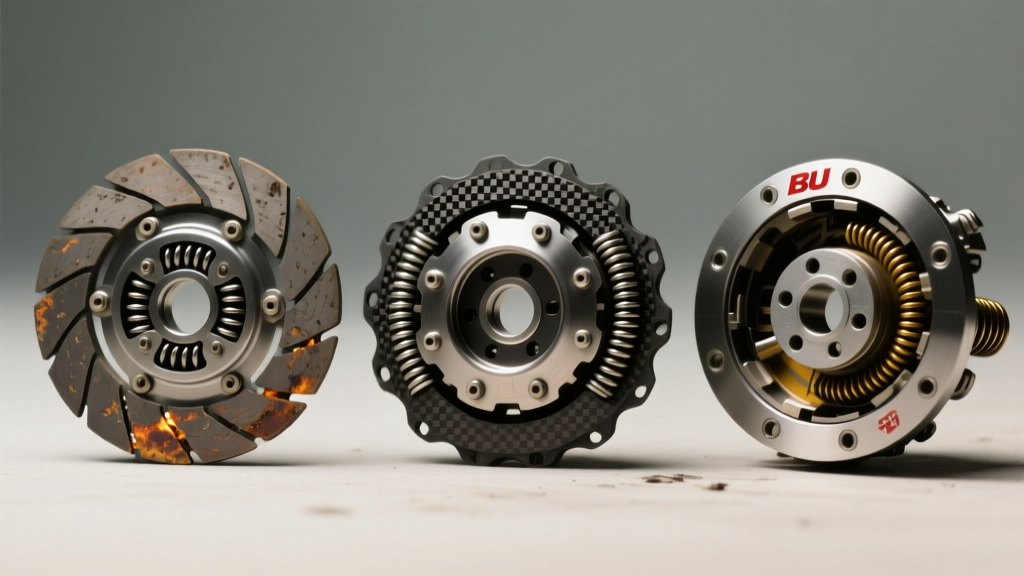
1. Full-Faced Organic: The Street-Friendly Baseline
Organic friction materials (often utilizing Kevlar or carbon-composite weaves) are the standard for daily-driven performance cars. A typical organic Stage 2 or entry-level Stage 3 kit, such as the SPEC SC392 for GM LS T56 applications, utilizes a full-faced disc with a sprung hub to dampen drivetrain shock.
- Upfront Cost: $450 – $580
- Torque Capacity: ~650 lb-ft
- Engagement: Smooth, OEM-like pedal feel.
- Failure Mode: Glazing and thermal fade under repeated hard launches or sustained track abuse.
Cost Analysis: While the initial purchase price is the lowest, organic clutches wear faster under high-heat conditions. If you track the car, expect to replace the disc every 20,000 to 30,000 miles. However, organic pads are gentle on the flywheel, meaning you can resurface a standard steel flywheel multiple times, saving you roughly $400 per replacement cycle compared to buying a new flywheel.
2. Sintered Iron: The Track-Weekend Compromise
Sintered iron is a powdered metal compound fused under extreme heat and pressure. Kits like the SPEC SC39SS (Stage 3+ Sintered) feature segmented 4-puck or 6-puck designs. This material offers a higher coefficient of friction and exceptional heat tolerance, making it ideal for drag racing and aggressive autocross.
- Upfront Cost: $650 – $820
- Torque Capacity: ~850 lb-ft
- Engagement: Aggressive; requires deliberate pedal modulation to avoid stalling at low RPMs.
- Failure Mode: Chatter-induced bellhousing fatigue and accelerated flywheel scoring.
Cost Analysis: Sintered iron is highly abrasive. You cannot use a standard cast-iron or aluminum flywheel with sintered material; it will chew through the friction surface in under 5,000 miles. You must pair this with a hardened billet steel flywheel (e.g., SPEC Part # NF20S, approx. $460). This immediately adds nearly $500 to your total parts list.
3. Ceramic Puck: Maximum Grip, Maximum Punishment
Ceramic friction materials provide the absolute highest coefficient of friction available for single-plate setups. A ceramic 6-puck disc grabs instantly, transferring massive torque loads directly to the input shaft.
- Upfront Cost: $750 – $950
- Torque Capacity: 950+ lb-ft
- Engagement: Extremely harsh; essentially an on/off switch.
- Failure Mode: Drivetrain shock leading to sheared input shafts, shattered ring-and-pinion gears, or broken axle shafts.
Cost Analysis: The ceramic disc itself is expensive, but the true cost lies in the collateral damage. The violent engagement of a ceramic puck clutch routinely breaks 8.8-inch rear differential gears and weak half-shafts. Furthermore, ceramic material transfers immense heat into the pressure plate and flywheel, often requiring complete replacement of the pressure plate assembly rather than just the disc during rebuilds.
2026 Price & Lifespan Matrix
To understand the true financial impact of your friction material choice, we must look at the cost-per-mile and required supporting modifications. The table below outlines the real-world expenses based on current 2026 market pricing for a standard V8 RWD application (e.g., Ford Coyote or GM LS3).
| Friction Material | Kit Price (Avg) | Required Flywheel | Flywheel Cost | Expected Mileage | Cost-Per-10k Miles |
|---|---|---|---|---|---|
| Full-Faced Organic | $515 | Cast/Billet Steel | $250 (Resurfaced) | 35,000 miles | $218 |
| Sintered Iron (6-Puck) | $735 | Billet Steel Only | $460 (New) | 25,000 miles | $478 |
| Ceramic (6-Puck) | $850 | Billet Steel Only | $460 (New) | 15,000 miles | $873 |
Pro-Tip: Never pair a sintered or ceramic puck clutch with an aluminum flywheel. The abrasive nature of the metallic compounds will gouge the aluminum friction surface, ruining a $600+ flywheel in a matter of weeks. Always use high-carbon billet steel for metallic friction materials.
Hidden Costs: Beyond the Clutch Kit
Budgeting for a spec stage 3 clutch requires looking at the entire hydraulic and mechanical ecosystem. Failing to account for these hidden costs is the primary reason enthusiasts end up with stuck pedals or premature bearing failures.
Hydraulic System Upgrades
High-clamp-load pressure plates (often exceeding 3,200 lbs of clamp force in Stage 3+ kits) place immense stress on factory hydraulic throwout bearings and master cylinders. For GM TR-6060 and T56 Magnum applications, the factory plastic slave cylinder is a known failure point. Upgrading to an aftermarket billet slave cylinder (such as the Tick Performance or McLeod units) costs between $180 and $280. Additionally, you will need to flush the system using high-quality DOT 4 or DOT 5.1 fluid (capacity is typically around 300ml), adding another $25 to your budget.
Bellhousing Alignment (Dial Indicating)
When upgrading to aggressive friction materials, the drivetrain experiences higher torsional vibrations. If your bellhousing is not perfectly aligned to the crankshaft centerline, the transmission input shaft will wobble, destroying the pilot bearing and transmission input seal. A proper dial-indicator alignment requires offset dowel pins (approx. $45) and a magnetic dial indicator setup. The maximum allowable Total Indicator Runout (TIR) is 0.005 inches. Paying a shop to perform this alignment typically adds $150 to $250 to your labor bill.
Precision Installation: Torque Specs & Clearances
To protect your investment and ensure the clutch engages properly without warping the pressure plate diaphragm, strict adherence to torque specifications is mandatory. Below are the baseline specs for common V8 manual applications (always verify with your specific factory service manual):
- Pressure Plate to Flywheel (M8x1.25 bolts - Ford Modular/Coyote): 22 – 25 lb-ft (Use medium-strength blue threadlocker).
- Pressure Plate to Flywheel (M10x1.5 bolts - GM LS): 35 – 40 lb-ft.
- Flywheel to Crankshaft (GM LS M11 bolts): 74 lb-ft, plus an additional 90-degree turn. (These are torque-to-yield and must be replaced with new ARP or OEM bolts during reassembly).
- Clutch Fork Pivot Ball: 30 lb-ft with anti-seize on the threads, high-temp grease on the ball contact patch.
For authoritative installation guidelines and torque specifications, always consult the Tremec service documentation for your specific transmission model, as over-torquing the pressure plate can distort the cover assembly, leading to uneven clutch release and premature wear.
Final Verdict: Where Should Your Money Go?
Choosing the right friction material for your spec stage 3 clutch ultimately comes down to your vehicle's primary use case and your willingness to absorb secondary drivetrain costs.
If your car sees 90% street duty with occasional drag strip passes, a full-faced organic or Kevlar blend is the most cost-effective choice. It saves your flywheel, preserves your rear differential, and offers a civilized driving experience. If you are building a dedicated track car or a 800+ HP drag setup where slip is not an option, the sintered iron material provides the best balance of extreme grip and manageable pedal effort. Reserve the ceramic puck strictly for purpose-built, tube-chassis or heavily reinforced drag cars where drivetrain shock is mitigated by wheelie bars and massive slicks.
Before pulling the trigger, ensure you have sourced a matching billet steel flywheel from a reputable manufacturer like Spec Clutch or Summit Racing, budgeted for hydraulic upgrades, and prepared your rear end for the sudden influx of traction. A clutch is only as good as the supporting components that allow it to function.